
Spiritual detox is defined as the intentional practice of clearing stagnant or negative energy from the mind, body, and spirit to restore emotional balance and inner clarity. Unlike a physical cleanse focused solely on diet, spiritual detox addresses what Ayurveda calls ama: the accumulated weight of emotional residue, mental clutter, and spiritual heaviness that builds over time. Methods range from sea salt baths and sage smoke cleansing to breathwork, sound healing with singing bowls, and forest bathing. Research confirms these practices produce measurable physiological changes, including improved vagal tone and reduced cortisol. This guide from Spiritualmethod explains the meaning, methods, science, and safe practice of spiritual detox in one structured framework.
What is spiritual detox and why it matters
Spiritual detox meaning goes beyond ritual. It is the process of releasing what no longer serves your emotional and spiritual health through deliberate, repeated practice. The concept appears across traditions: Ayurvedic medicine describes holistic purification as shodhana, a layered cleansing that addresses the physical body, the emotional body, and the wisdom body simultaneously. When ama accumulates, it manifests as brain fog, irritability, and a persistent sense of spiritual heaviness. That combination signals the need for a structured detox protocol, not just a weekend of rest.
The benefits of spiritual detox extend into measurable territory. Spiritual practices like meditation and prayer regulate the autonomic nervous system through direct interaction with the prefrontal cortex, producing improvements in self-control, patience, and emotional resilience. This means spiritual detox is not a metaphor for feeling better. It is a physiologically grounded process with documented outcomes. Spiritualmethod approaches this work as practical inner healing, not abstract philosophy.

Common types of spiritual detox practices
Spiritual cleansing practices span multiple traditions and sensory modalities. Each method targets a different entry point into the nervous system and emotional body.
- Water cleansing: Sea salt and Epsom salt baths draw out energetic residue and promote physical relaxation. Many practitioners add essential oils like lavender or frankincense to deepen the calming effect.
- Smoke cleansing: Burning sage, palo santo, or incense clears stagnant energy from a space or the body’s aura. This practice appears in Indigenous American, South American, and East Asian traditions.
- Salt cleansing: Placing bowls of sea salt in room corners absorbs dense or heavy energy. This is one of the simplest entry points for beginners.
- Sound cleansing: Tibetan singing bowls, chanting, and meditation music use vibration to shift energetic states. Sound meditation techniques work directly on the vagus nerve, supporting nervous system regulation.
- Nature connection: Walking barefoot on grass or soil (earthing) and forest bathing (shinrin-yoku) reduce cortisol and restore a sense of groundedness. The nature healing walk ritual at Spiritualmethod provides a structured approach to this practice.
- Breathwork and meditation: Pranayama, box breathing, and guided meditation activate the parasympathetic nervous system, shifting the body out of stress states.
These energy cleansing methods each offer calmness and emotional relief, particularly after overwhelming or high-stress periods. The table below compares the primary methods by effort level, access, and primary benefit.
| Method | Effort level | Access | Primary benefit |
|---|---|---|---|
| Salt bath | Low | Home | Physical relaxation, energetic release |
| Smoke cleansing | Low | Home | Space and aura clearing |
| Sound healing | Medium | Home or studio | Vagal tone improvement, stress reduction |
| Breathwork | Medium | Home | Cortisol reduction, nervous system reset |
| Forest bathing | Low to medium | Outdoors | Cortisol reduction, grounding |
| Meditation | Medium | Home | Emotional regulation, prefrontal cortex activation |
Pro Tip: Start with one method for two weeks before adding another. Layering too many practices at once makes it difficult to identify which one is producing results.
How spiritual detox affects your mind and body
The science behind spiritual detox is grounded in neuroscience and psychophysiology. Spiritual disciplines influence the prefrontal cortex and autonomic nervous system in ways that produce measurable improvements in emotional regulation. The prefrontal cortex governs executive function, impulse control, and the capacity to process difficult emotions without reactivity. When spiritual practices strengthen this region, practitioners report greater patience, reduced anxiety, and improved decision-making.
Phonation-based practices, which include chanting, toning, and mantra repetition, show particularly strong physiological results. A meta-analysis of 23 trials involving 1,247 participants found that these practices produced a vagal tone improvement with a standardized mean difference of 0.92 and a cortisol reduction with an SMD of 0.54. Those effect sizes are clinically significant, placing phonation-based spiritual detox in the same category as established stress-reduction interventions. This is not anecdotal wellness culture. It is documented physiology.
Ayurvedic medicine adds a complementary framework. The concept of ama covers physical toxins as well as emotional and spiritual clutter, and holistic detox protocols layer sensory reduction, dietary adjustment, and daily spiritual attention for the best outcomes. Addressing only one layer while ignoring the others produces incomplete results. A person who meditates daily but continues consuming inflammatory foods and emotionally toxic relationships will find their progress limited.
Pro Tip: Track one biomarker during your detox period, such as resting heart rate or sleep quality, using a wearable like a Fitbit or Oura Ring. Objective data makes the physiological benefits of spiritual practice visible and motivating.
Common challenges and pitfalls of spiritual detox
The most significant risk in spiritual detox is what psychologist John Welwood termed spiritual bypass: using spiritual practice to avoid emotional discomfort rather than process it. Spiritual bypass causes dissociation and nervous system dysregulation, producing symptoms like increased anxiety, emotional numbness, and chronic fatigue. These outcomes are the opposite of healing. They signal that the practice has become a form of avoidance.
Recognizing the difference between detox and dissociation requires honest self-observation. The following pitfalls are the most common patterns Spiritualmethod sees in practitioners beginning this work:
- Numbness mistaken for peace: Feeling nothing after a ritual is not the same as feeling calm. Numbness signals suppression, not integration.
- Ritual without presence: Performing smoke cleansing or salt baths mechanically, without attention or intention, reduces them to habit rather than healing.
- Overloading the schedule: Stacking meditation, breathwork, journaling, and fasting simultaneously overwhelms the nervous system rather than regulating it.
- Avoiding professional support: Spiritual detox complements but does not replace therapy or medical care for trauma, depression, or anxiety disorders.
- Expecting linear progress: Emotional material often surfaces in waves. A difficult day mid-detox is frequently a sign of integration, not failure.
“Healing unfolds when the nervous system feels safe and emotional processing is allowed, not when it is forced or bypassed.” — Dr. Kelly McCann, detoxing or dissociating
True spiritual detox requires embodiment. Emotions must be allowed to surface, be felt, and then released. Suppressing them through excessive ritual activity creates the same energetic congestion the practice is meant to clear.
How to do a spiritual detox safely and effectively
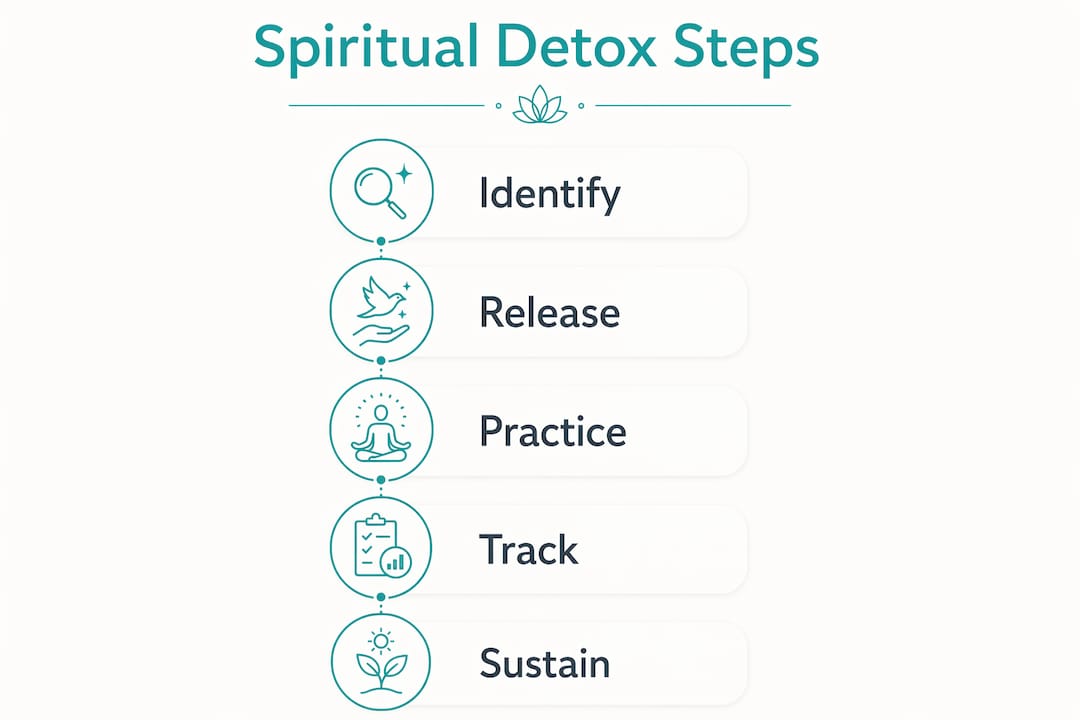
A safe and effective spiritual detox follows a structured framework built on intention, consistency, and gradual embodied practice. The following steps provide a practical starting point for anyone new to this work.
- Set a clear intention. Before beginning any ritual, state what you are releasing and what you are inviting. Intention directs the nervous system’s attention and gives the practice psychological coherence.
- Choose one primary practice. Select a method that resonates: a daily salt bath, a morning meditation, or an evening breathwork session. Consistency with one practice produces better physiological outcomes than rotating through many.
- Reduce external stimulation. Limit social media, news consumption, and high-stimulation entertainment during the detox period. The nervous system needs space to process what surfaces.
- Incorporate nature time. Even 20 minutes of walking barefoot or sitting outdoors supports cortisol reduction and grounding. Spiritualmethod’s aura cleansing techniques include nature-based methods that integrate well with indoor practices.
- Allow stillness and listening. Spiritual detox is not about forcing transformation. Healing integrates when the nervous system feels safe and emotions are processed at their own pace.
- Repeat the protocol. Structured practice protocols with repetition produce reliable improvements in heart rate variability and stress biomarkers. A minimum of 21 consecutive days is a practical starting point for building a detox routine.
- Journal after each session. Writing down what arose during practice supports emotional integration and tracks progress over time.
Ayurvedic guidelines for spiritual detox treat the process as an act of loving support rather than punitive cleansing. Self-compassion is not optional. It is the foundation that makes every other step effective.
Pro Tip: Pair your detox with a simple dietary adjustment, such as reducing caffeine and processed sugar for the duration. Physical and spiritual layers reinforce each other, and lighter digestion supports clearer emotional processing.
Key takeaways
Spiritual detox produces lasting results when it combines consistent practice, embodied emotional processing, and a structured multi-layer approach addressing the mind, body, and spirit simultaneously.
| Point | Details |
|---|---|
| Core definition | Spiritual detox is the intentional clearing of stagnant energy across mental, emotional, and spiritual layers. |
| Science supports it | Phonation-based practices improve vagal tone (SMD 0.92) and reduce cortisol (SMD 0.54) in clinical trials. |
| Bypass is the main risk | Spiritual bypass causes dissociation and anxiety; true detox requires feeling emotions, not suppressing them. |
| Consistency matters | Repeated practice protocols produce better nervous system outcomes than single or sporadic rituals. |
| Start structured | Set one intention, choose one practice, reduce stimulation, and repeat for at least 21 days. |
Why spiritual detox changed how I think about healing
Most people come to spiritual detox looking for relief. What they find, if they stay with it honestly, is something more demanding and more rewarding. I have worked with practitioners who performed elaborate rituals daily and still felt stuck. The common thread was not a lack of devotion. It was a lack of presence. They were doing the practice without being in the practice.
What shifted things for them, and for me personally, was understanding that the ritual is not the healing. The ritual creates the conditions for healing. The actual work happens in the moments of stillness when something uncomfortable surfaces and you choose to stay with it rather than reach for the next technique. That is where integration occurs.
The neuroscience confirms what contemplative traditions have always known: the prefrontal cortex strengthens through repeated, attentive practice. Not through volume or variety, but through depth and consistency. One salt bath taken with full presence and clear intention does more than seven performed on autopilot.
The Ayurvedic framing of detox as loving support rather than punishment is the piece I return to most often. Healing is not a correction of something broken. It is an act of attentive care toward something that has been carrying too much for too long. That reframe changes everything about how you approach the practice.
— Sean
Explore spiritual healing practices with Spiritualmethod
Spiritualmethod provides structured, practical resources for individuals ready to begin or deepen their spiritual detox practice.
Whether you are new to spiritual cleansing or looking to build a more consistent routine, the spiritual healing practices library at Spiritualmethod offers guided frameworks for inner balance across mind, body, and soul. From foundational methods like breathwork and meditation to more specific tools for releasing negative energy, each resource is designed to support real, embodied progress. Explore the full collection to find the practices that align with where you are right now in your healing process.
FAQ
What is the spiritual detox meaning in simple terms?
Spiritual detox is the deliberate process of clearing accumulated emotional, mental, and energetic residue to restore inner balance. It draws on practices like meditation, breathwork, salt baths, and sound healing to address what Ayurveda calls ama, or spiritual and emotional toxicity.
What are the signs of spiritual detox working?
Signs include increased emotional sensitivity as suppressed feelings surface, temporary fatigue as the nervous system recalibrates, and gradual improvements in clarity, patience, and emotional regulation. These responses indicate integration is occurring, not that the practice is harmful.
How long does a spiritual detox take?
A minimum of 21 consecutive days of consistent practice is a practical starting point. Research on phonation-based spiritual practices shows that repeated structured protocols produce measurable physiological improvements, making consistency more important than duration.
What is energy detox and how does it differ from spiritual detox?
Energy detox focuses specifically on clearing the body’s energetic field through methods like aura cleansing, Reiki, or sound healing. Spiritual detox is broader, encompassing energy work alongside emotional processing, mindset shifts, and spiritual practice across all layers of the self.
Can spiritual detox replace therapy or medical treatment?
Spiritual detox complements but does not replace professional mental health or medical care. For individuals managing trauma, depression, or anxiety disorders, spiritual practices work best as part of a broader support structure that includes qualified clinical guidance.