
A full moon ritual for beginners is really just a quiet moment you set aside for yourself. It’s about hitting pause, checking in with your inner self, and using the moon's bright energy to let go of what's weighing you down and get clear on what you want. You don't need a lot of fancy tools—often, a journal and a few minutes of peace are more than enough.
Table of Contents
- Why We're Drawn to the Full Moon
- Gathering Your Everyday Ritual Tools
- Preparing Your Mind and Space for the Ritual
- A Guided Full Moon Ritual You Can Follow Tonight
- Building a Consistent and Personal Moon Practice
- Answering Your First Full Moon Questions
Why We're Drawn to the Full Moon
Have you ever felt a strange pull to just stop and stare at a full moon? That feeling isn't new—it's an ancient instinct. For thousands of years, people all over the world have looked to the moon as a guide, a timekeeper, and a spiritual anchor. From ancient Mesopotamian cultures who saw the Moon as a divine clock to Celtic societies who built their calendars around its cycles, we’ve always had a special connection to it.
So when you decide to try a full moon ritual for beginners, you're not just hopping on a modern trend. You're tapping into something timeless.
A Spiritual Check-In That’s Older Than Time
Think of the full moon as a recurring appointment on your spiritual calendar. Just as its gravity pulls the ocean's tides, many of us feel its energy amplifies our own emotions and intuition. This makes it the perfect time to get honest with ourselves.
This isn't some new-age invention; it's one of our oldest spiritual traditions. People have been gathering under the full moon for ages. In fact, groups today carry on this legacy—the Pagan Awareness Network, for example, has held a Public Full Moon Ritual every single month since March 1997. When you do your own ritual, you're stepping into that long line of people who have found comfort and guidance in the moon's glow. If you're curious, you can explore the rich history of moon rituals to see just how deep these roots go.
The real power of a full moon ritual isn't in a single, perfect ceremony. It's in the consistency. It’s a scheduled moment each month to pause, recalibrate your inner compass, and consciously decide what to carry forward and what to leave behind.
The Energy of Release and Celebration
The full moon is the brightest point in the lunar cycle. It's a time of culmination, when everything is fully lit up—both in the sky and, often, within ourselves.
This phase is all about:
- Illumination: Suddenly, things that were hidden in the shadows—feelings, truths, nagging patterns—come into the light.
- Release: This is your chance to let go. Old habits, limiting beliefs, or anything else that no longer serves you can be intentionally released.
- Gratitude: It's also a time to look back at the last few weeks and acknowledge your progress. Celebrate how far you've come since the new moon.
Understanding this "why" is what makes a ritual feel meaningful. It’s the difference between just going through the motions and creating a practice that genuinely resonates. Knowing this context gives power to your actions, whether you’re journaling, meditating, or simply sitting in the moonlight.
Gathering Your Everyday Ritual Tools
One of the biggest misconceptions I see with beginners is the idea that you need a whole collection of fancy, mystical items to have a "real" full moon ritual. Let me be clear: that’s just not the case. The true power behind any ritual comes from your intention, not the price tag on your tools.
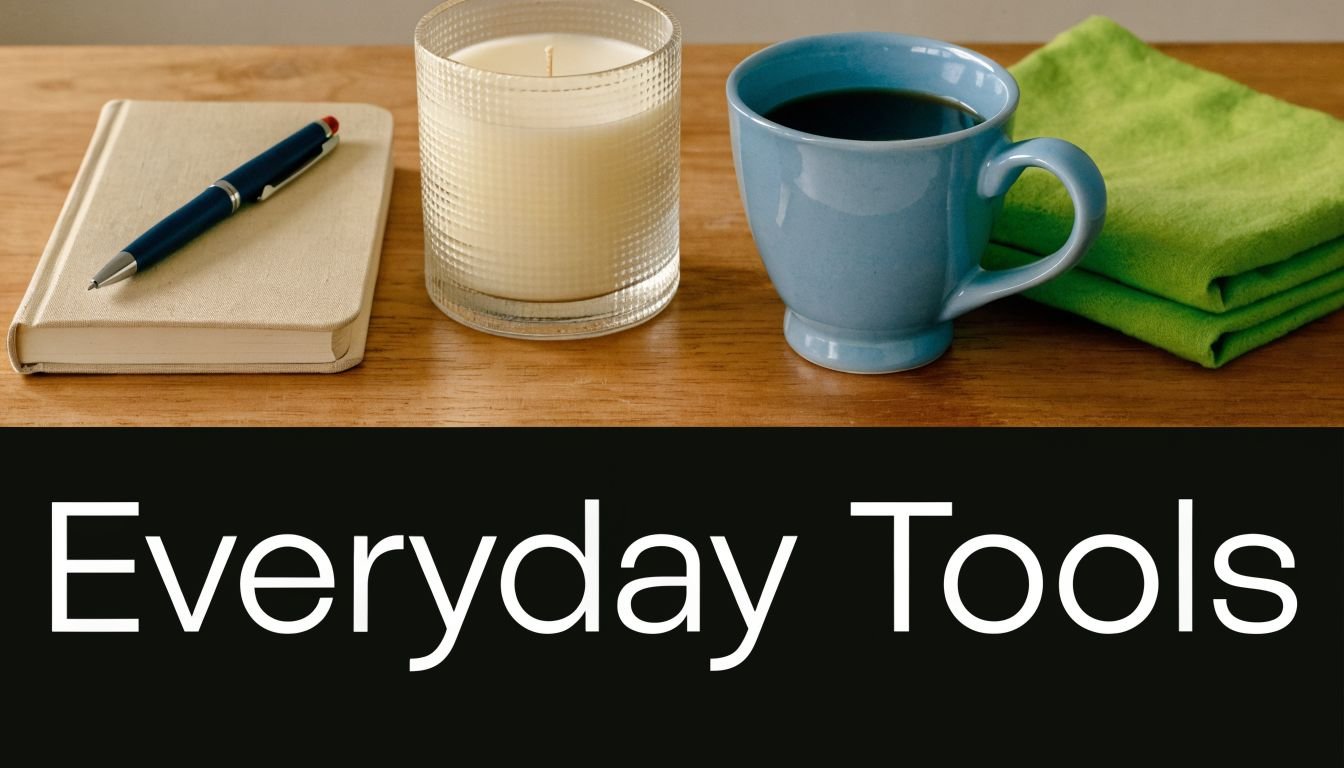
Chances are, you already have everything you need tucked away in your home. It’s all about creating a space that feels special and focused, and you can absolutely do that with simple, everyday objects. Don't let the idea of not having the "right" stuff hold you back. The most powerful rituals I've ever experienced were the ones that felt the most personal, using items that meant something to me.
Setting the Scene and Clearing the Air
First, let's talk about atmosphere. This is all about engaging your senses to signal that it's time to shift gears. A flickering candle is my go-to for instantly setting a sacred mood. It doesn't have to be anything special—any candle you have that you enjoy will do the trick.
When it comes to cleansing the energy of your space, you’ve got options. While many people love burning sage or palo santo, you can create the same shift in energy by:
- Lighting a stick of your favorite incense.
- Putting on a playlist of gentle instrumental music or a nature soundscape.
- Simply cracking open a window to let the moonlight and some fresh air flow through the room.
The goal here is to create a clear signal to your mind and body that this time is set apart from the rest of your day.
The Tools for Release and Intention
Now for the heart of the matter: the tools for release. A full moon ritual is all about letting go of what no longer serves you, and honestly, the most powerful tool for this is a simple pen and paper. Grab a notebook and a pen you like writing with—that’s all you need to journal your thoughts and get clear on what you’re ready to release.
You also don't need some elaborate altar. A cozy blanket on the floor, a cleared-off corner of your desk, or even just your lap can be your sacred workspace. A favorite mug holding water or herbal tea can easily take the place of a ceremonial chalice.
To make it even simpler, here's a quick look at some common ritual items and their easy-to-find alternatives.
Your Beginner's Full Moon Ritual Toolkit
| Tool Category | Common Item | Simple Alternative |
|---|---|---|
| Cleansing | Sage or Palo Santo | Incense, an open window, a bell |
| Atmosphere | Special Ritual Candle | Any candle, string lights, a salt lamp |
| Focus | Crystals | A meaningful stone, a seashell, a favorite photo |
| Release | Ornate Journal | Any notebook or piece of paper and a pen |
| Offering | Ceremonial Chalice | Your favorite mug with water, tea, or juice |
Think of this table as a starting point. The most important thing is choosing items that feel good and meaningful to you.
Remember, these tools are simply amplifiers for your own energy. A simple rock you found on a walk can be just as powerful as a store-bought crystal if it holds meaning for you. Your connection and intention are what matter most.
Of course, if you feel drawn to them, crystals can be a beautiful addition. They work a bit like energetic tuning forks, helping you focus your intentions. For example, Selenite is wonderful for cleansing, while Black Tourmaline is known for its protective qualities. If you're curious to learn more, exploring different crystals for healing and protection can be a great next step. Just remember to always trust your gut when choosing any item for your practice.
Preparing Your Mind and Space for the Ritual
I’ve found that the real power of a full moon ritual starts well before you light a candle or pick up a crystal. It begins with setting the stage. Think of it as creating a quiet bubble for yourself, a deliberate shift from the noise of your day into a more reflective, sacred headspace.
First, let's look at your physical space. You don't need a perfectly curated altar or an Instagram-worthy setup. Honestly, just a few minutes of tidying can work wonders. A cluttered space often leads to a distracted mind, so clear off a small table or even a corner of the floor. This simple act tells your brain it's time to focus.
Once you have a bit of clear space, try softening the environment. Dim the overhead lights and maybe light a candle or two. If you can, open a window to let the actual moonlight stream in—it’s the best ambiance there is.
Setting a Clear and Calm Atmosphere
With your space tidied, the next step is to clear the air, energetically speaking. The goal is to wash away any stress or stagnant vibes from the day so you're starting fresh. This might sound a bit "out there," but it's really just about intention.
Here are a few simple ways I like to do this:
- Sound: Ringing a small bell or a singing bowl is a personal favorite. The vibrations seem to just cut through heavy energy. Even playing a simple, calming instrumental track on your phone works beautifully.
- Smoke: If it's safe and you enjoy the scent, lighting a stick of Palo Santo or your favorite incense is a classic for a reason. Just let the smoke gently drift into the corners of your room.
- Intention: This is the easiest method of all and requires nothing but your mind. Close your eyes, take a deep breath, and just imagine a peaceful, silvery light filling your space, pushing out anything that feels chaotic or heavy.
Grounding Yourself for the Ritual
Now that your room feels calm, it's your turn. This is arguably the most important part. You can't connect with the moon's energy if your mind is still buzzing with your to-do list or replaying a conversation from earlier.
A quick grounding exercise is the bridge between your everyday self and your ritual self. It's the pause that allows you to arrive fully, ready to connect with the moon's energy and your own inner wisdom.
Start with just three intentional breaths. Try inhaling for a count of four, holding for four, and then exhaling slowly for a count of six. As you breathe out, consciously let your shoulders drop and feel the tension leave your face.
If your thoughts are still racing, don't worry—that's totally normal. There are some great techniques for how to calm an overactive mind. Another thing that helps is a quick body scan, just bringing your awareness from your toes all the way up to the crown of your head. This whole prep phase can take less than 10 minutes, but it makes all the difference in the world.
A Guided Full Moon Ritual You Can Follow Tonight
You've set the mood, cleared your space, and grounded yourself. Now for the main event. Think of this ritual as a starting point, not a strict set of rules. Feel free to linger where you feel a pull, skip what doesn't resonate, and truly make it your own. The real magic in any full moon ritual for beginners comes from your own presence and intention.
I like to break the ritual down into three parts: opening the space, doing the core work of releasing and calling in, and then closing with gratitude. This framework gives the experience a beginning, a middle, and an end, helping you stay focused and get the most out of the moon's powerful energy.
Setting the Stage and Opening Your Ritual
Settle into your prepared space. Let your eyes drift closed and bring your awareness back to your breath. Take three slow, deep breaths, and with each exhale, feel your body relax a little more, sinking into the present moment.
On your next breath, it's time to officially begin. You can say a simple opening statement, either out loud or just in your head. This isn't about getting the words perfect; it's about signaling to yourself and the universe that your ritual has started.
- A simple opening could be: "I open this space with peace and intention. I invite the light of the full moon to guide me as I release what's heavy and illuminate my path forward. I am safe, I am present, I am ready."
Saying these words creates a tangible shift, drawing a line between your everyday life and this sacred time you've carved out for yourself.
The Heart of the Ritual: Releasing and Manifesting
This is where your journal comes in. The full moon's bright light is perfect for illuminating what we're ready to let go of. On a fresh page, write the heading, "I Am Releasing."
Now, start writing. Don't hold back. Instead of just writing "stress," get specific. What does that stress feel like? Maybe it's "the need to control outcomes at work" or "anxious thoughts about a family conversation."
Let yourself explore what you’re ready to release:
- Old stories you tell yourself ("I'm not good enough," "I'm always late")
- Habits that drain your energy
- Lingering anger or frustration toward someone (or yourself)
- Fears that keep you playing small
Once your list feels complete, it's time for the symbolic release. Tear the paper into tiny pieces. As you do, really feel the weight of those things lifting off your shoulders. You might even say, "I release this with gratitude for what it taught me, and I let it go."
Next, grab a new sheet of paper for the fun part: manifesting. Title this page "I Am Welcoming." With the old cleared away, you've made space for the new. The full moon shines a spotlight on what’s possible. Write down what you want to call into your life.
A powerful trick here is to shift your language. Instead of "I want to be less anxious," try framing it as, "I am welcoming daily moments of peace and calm." Rather than "I hope I get that promotion," write "I am open and ready to receive the perfect career opportunity for my growth."
This moves your mindset from one of wanting and lack to one of powerful, active reception.
This simple flow is a great way to prepare your mind and surroundings for this deep work.
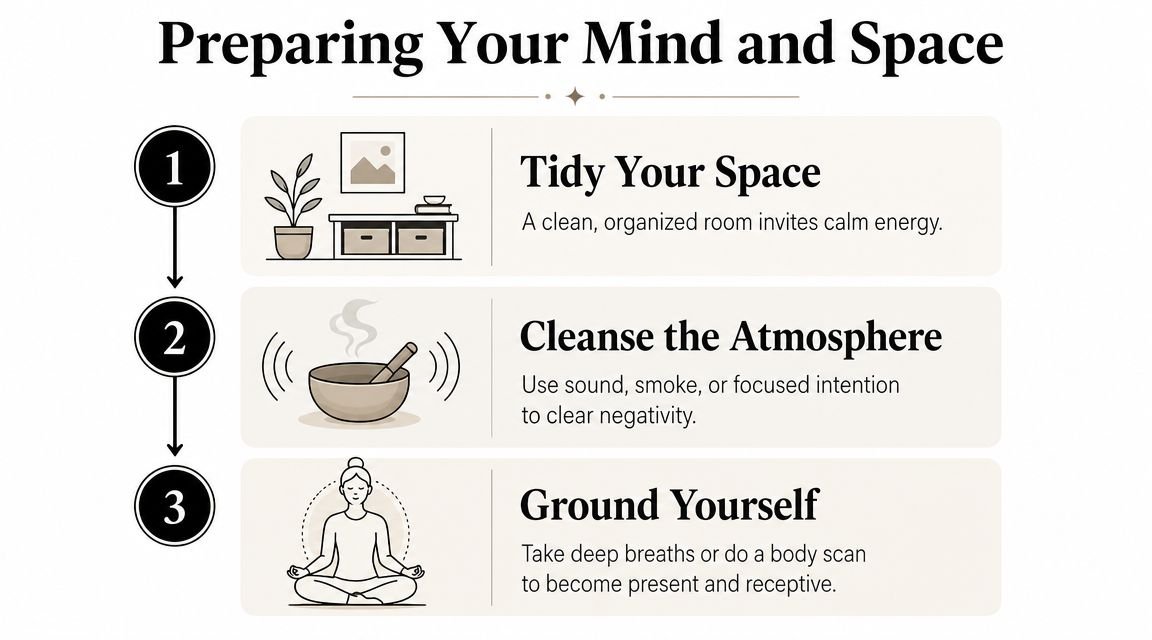
By tidying your space, cleansing the energy, and grounding yourself first, you show up to the ritual feeling clear, focused, and ready to receive.
Closing with Gratitude
To bring your ritual to a close, place your hands over your heart. Take a final moment to breathe. Feel the gratitude—for the moon, for the clarity you've gained, and most importantly, for yourself for taking this time.
Say a few closing words to seal your practice. Something simple works best.
- A simple closing could be: "My ritual is complete. I seal it with gratitude and love. Thank you."
Gently blow out your candle. That's it. You've completed your ritual.
Remember, a full moon practice can be this involved, or it can be as simple as journaling by moonlight or taking a relaxing bath. Making moon water, for example, is a popular practice with just three steps: fill a jar with water, set it under the moonlight, and state an intention over it. You don't even have to do it at the exact peak; the energy is potent for a three to five-hour window on either side, which gives you plenty of flexibility. For more ideas on weaving this into your life, you can discover more simple self-care rituals with the Farmer's Almanac to find what feels right for you.
Building a Consistent and Personal Moon Practice
That first full moon ritual can feel incredibly powerful, right? But the real magic happens when you show up time and time again. Consistency is what turns a single, powerful event into a genuine moon practice that builds real momentum in your life.
The simplest way I've found to get started is just to pull up a calendar at the beginning of the year and mark down every full and new moon. That's it.
Suddenly, it's not just a vague idea; it's an appointment you have with yourself. This small act is the first step in creating a steady rhythm of reflection and intention that flows with the moon's own cycle.
Understanding the Lunar Cycle
To really get the most out of this, it helps to think of the lunar cycle as a natural framework for growth. For now, let’s focus on the two main events: the new moon and the full moon.
New Moon: This is when the sky is dark, a quiet moment perfect for planting new seeds. During the new moon, we focus on setting intentions and getting crystal clear about what we want to welcome into our lives.
Full Moon: This is the peak, the harvest time. All that energy you put out during the new moon is now illuminated. It's a time to celebrate what has come to fruition or to consciously release what is standing in your way.
When you work with both of these phases, you create a complete cycle of manifestation and release. The words you choose during these times carry so much weight; you can learn more about how your word is your wand and its power to shape your reality.
Journaling is the thread that connects your rituals. It’s the record of your journey, showing you how far you've come and revealing patterns in your growth that you might otherwise miss.
After each ritual, even if you’re tired, take just five minutes to write down what happened. What did you let go of? What surprising insights came through? When you look back at these notes in a few months, you’ll be amazed at the perspective they give you and the progress you've made.
Answering Your First Full Moon Questions
When you’re just starting out with moon rituals, it's natural to have a few questions pop up. It’s easy to wonder if you’re doing it "right," but I want to reassure you—there's no single correct way. This is your practice. Let’s walk through some of the most common uncertainties I hear from beginners.
What if I Can't Actually See the Moon?
This is probably the number one question I get, especially from people in the city or those who just have a cloudy night. Don't worry about it one bit. You absolutely do not need a direct line of sight to the moon.
Think of it like the tide. The ocean doesn't need to see the moon to feel its pull, and neither do you. The moon's energy is a powerful force that's present whether there are clouds in the way or not. Your intention to connect is what truly matters here. Simply being near a window or even just taking a moment to acknowledge its presence is powerful enough.
How Do I Figure Out What to "Release"?
Feeling stumped on what to let go of is completely normal. If nothing huge comes to mind, the trick is to get curious about the small stuff.
Try asking yourself a few gentle questions:
- What felt heavy this past month, even in a small way?
- Is there a nagging thought that keeps replaying in my head?
- What little habit just isn't making me feel good?
You don’t have to release some life-altering trauma. Honestly, some of the most profound shifts come from letting go of the small things. Releasing "the pressure to always be busy" or "negative self-talk about my work" can create so much space and peace.
It's perfectly normal to get emotional during a ritual. In fact, it’s a good sign! The full moon is known for turning up the volume on our feelings, which is why it’s such a perfect time for release. If you feel a wave of sadness, relief, or even a burst of joy, let it happen. It means the energy is moving and you're unburdening yourself.
Are Crystals, Incense, and Other Tools Necessary?
The short answer is no, not at all. While things like crystals, smudge sticks, or candles are beautiful additions that can help you focus your energy and create a special atmosphere, they are just that: additions.
A deeply meaningful full moon ritual for beginners can be done with nothing more than you, a piece of paper, and your own thoughts. Your focus and your intention are the real tools here. Everything else is just an optional extra.
Pingback: How to Release Negative Energy A Practical Guide – Spiritual awakening guide