
Journaling for soul healing is defined as the deliberate practice of using structured, reflective writing to explore, process, and transform your inner emotional and spiritual life. This practice draws on methods like Pennebaker’s expressive writing protocol, gratitude journaling, and spiritual reflective writing, all of which carry both scientific and spiritual validation. Research confirms that structured journaling reduces anxiety symptoms by 9% and PTSD symptoms by 6% in clinical meta-analyses. The industry term for this broader practice is therapeutic journaling, and soul-centered journaling is its most spiritually oriented form. Spiritualmethod recognizes this practice as one of the most direct paths toward healing the mind, body, and soul together.
What does journaling for soul healing actually mean?
Soul healing through journaling goes beyond recording daily events. It is the practice of asking deeper questions, examining emotional patterns, and using writing as a conscious tool for spiritual growth. According to Wisdom Of The Spirit, soul journaling asks transformational questions such as “What is this experience trying to teach me?” rather than simply recounting what happened. That shift turns your journal from a logbook into a workshop for personal and spiritual development.
The neurological basis for this is well established. Writing engages the prefrontal cortex, the brain’s center for reasoning and regulation, while reducing reactivity in the amygdala, which drives raw emotional responses. Neurosity research confirms that journaling shifts emotional processing from amygdala-driven activation to prefrontal cortex regulation, improving both mood and memory. This means the act of writing is not just symbolic. It produces measurable changes in how your brain handles emotional pain.

Soul journaling is also a practice of self-discovery and spiritual growth across different life seasons. It uncovers buried truths and provides perspective that ordinary reflection rarely reaches.
What do you need before starting a soul healing journal?
Effective therapeutic journaling begins with preparation, not just a blank page. Three conditions matter most: emotional readiness, a physically safe space, and the right mindset.
Emotional readiness means acknowledging that some entries will surface difficult feelings. You do not need to be in a stable emotional state to begin, but you do need a willingness to sit with discomfort without immediately escaping it.
Your physical space matters more than most guides admit. A private, quiet environment reduces the instinct to self-censor. Privacy is the single most practical tool for honest writing. Research confirms that complete, unfiltered honesty produces better health outcomes than holding back private content. A locked physical notebook or a password-protected digital app both serve this purpose.
Tools to consider:
- A dedicated notebook, such as a Leuchtturm1917 or a simple composition book, reserved only for healing work
- A digital option like Day One or Notion for those who prefer typing
- Optional grammar tools like Grammarly or Hemingway Editor if writing anxiety is a barrier
- A timer to keep sessions focused
Mindset essentials:
- Practice non-judgment toward your own writing. Spelling, grammar, and structure are irrelevant here.
- Commit to patience. Psychological benefits appear within 1–2 weeks of consistent practice, but deeper cognitive shifts develop over months.
- Set realistic time expectations. You do not need an hour a day.
Pro Tip: When selecting journaling prompts for the soul, choose questions that open rather than close. “What am I avoiding feeling right now?” produces more healing than “What happened today?”
Which journaling techniques best support emotional healing?
Not all journaling methods produce the same results. The technique you choose shapes the type of healing you experience.
| Technique | Core Benefit | Ideal Use Case |
|---|---|---|
| Expressive Writing | Physical and emotional healing | Processing grief, trauma, or major life events |
| Gratitude Journaling | Mood uplift and spiritual connection | Daily maintenance and positive reframing |
| Analytical/Third-Person | Cognitive restructuring | Breaking rumination cycles |
| Reflective Spiritual Journaling | Spiritual growth and meaning-making | Life transitions and existential questions |
| Free Writing | Emotional release and clarity | When you feel blocked or overwhelmed |
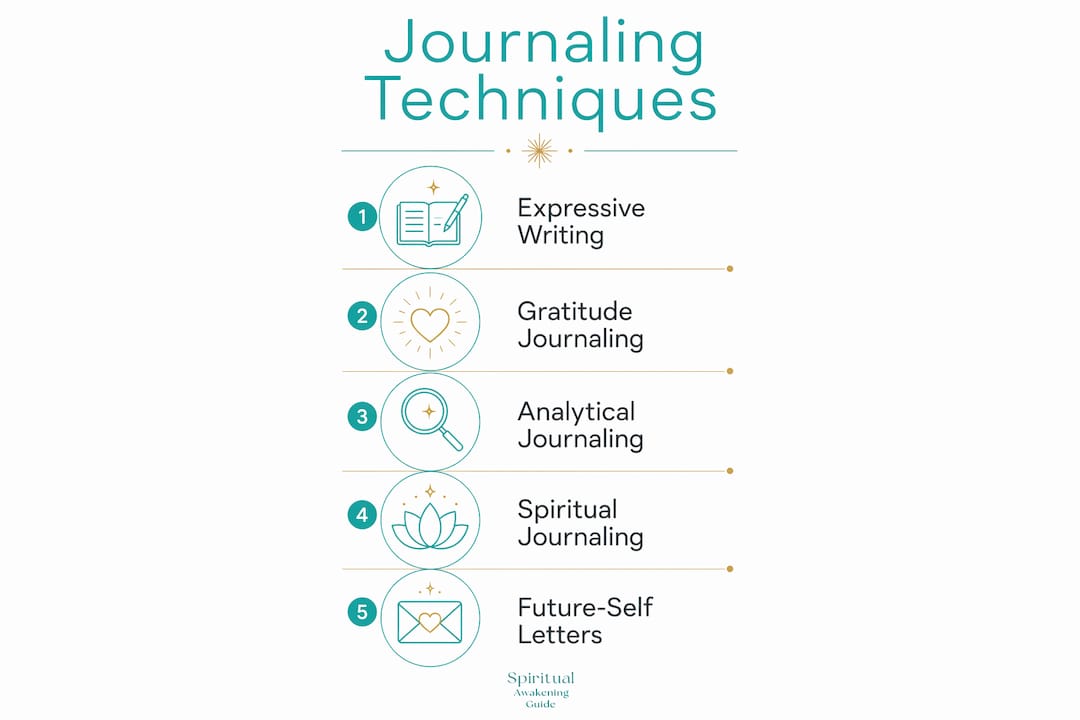
Expressive writing is the most research-supported method. Pennebaker’s protocol requires only 15–20 minutes per day for 3–4 days to trigger measurable psychological and biological benefits. The physical healing data is striking. In reviewed studies, 76.2% of expressive writing participants fully healed from biopsy wounds compared to 42.1% of controls. Writing about emotional pain accelerates the body’s own repair processes.
Gratitude journaling works differently. It does not process pain directly. Instead, it builds a counterweight of positive emotional experience that supports spiritual connectivity and daily mood regulation. Three specific entries per session, written with genuine attention rather than habit, produce the strongest results.
Analytical or third-person journaling is the most underused technique. Writing about yourself as if advising a friend, using “he,” “she,” or your own name instead of “I,” creates cognitive distance from emotional reactivity. Analytical writing reduces emotional reactivity while pure emotional venting can temporarily worsen mood. This distinction matters enormously for anyone prone to rumination.
Reflective spiritual journaling asks the questions that Wisdom Of The Spirit identifies as central to soul work: “What is this trying to teach me?” and “Who am I becoming through this experience?” These prompts shift the writer from victim of circumstances to conscious author of their own story.
Pro Tip: If you notice your entries cycling through the same complaints without resolution, switch from venting to analytical mode. Write the same situation in third person and ask what advice you would give a close friend in that position.
How to structure your journaling sessions for deep healing
A structured session produces more healing than an open-ended one, especially for beginners. The following format works for most practitioners.
- Set your intention (2 minutes). Before writing a single word, state in one sentence what you want to explore or release in this session. Write that sentence at the top of the page.
- Create your environment (2 minutes). Remove your phone from the room or silence all notifications. Light a candle or use a scent you associate with calm. These physical cues train your nervous system to enter a reflective state.
- Write without stopping (15–20 minutes). Use a timer. Do not edit, reread, or pause. The goal is uninterrupted flow, not polished prose.
- Reflect and close (5 minutes). Read what you wrote. Underline one sentence that surprises you. Write two sentences about what that sentence reveals.
- Review past entries (weekly). Set aside 10 minutes each week to read entries from the previous seven days. Patterns become visible at this level that are invisible session by session.
The table below summarizes practical session formats based on your available time and healing goal.
| Session Format | Duration | Best For |
|---|---|---|
| Pennebaker Expressive | 15–20 min, 3–4 days | Trauma processing, emotional release |
| Gratitude Practice | 10 min daily | Mood maintenance, spiritual grounding |
| Future-Self Dialogue | 20 min, weekly | Goal clarity, identity work |
| Thematic Prompt Session | 15–25 min | Specific emotional or spiritual questions |
| Free Writing | 10–15 min | Clearing mental clutter before deeper work |
Pairing your journaling practice with daily spiritual practices deepens the healing effect. Journaling after meditation or prayer, for example, produces entries with greater emotional depth because the nervous system is already in a regulated state.
Pro Tip: Future-self dialogues, where you write a letter from the version of yourself five years from now, are particularly effective for breaking through present-moment despair. That future self already knows you survived.
What challenges arise in soul healing journaling, and how do you overcome them?
Every practitioner encounters obstacles. Recognizing them early prevents abandonment of the practice.
Common challenges and solutions:
- Emotional overwhelm. If a session surfaces more pain than you can manage, stop writing and use a grounding technique such as the 5-4-3-2-1 sensory method. Return to the entry the next day rather than forcing through it.
- Perfectionism and writer’s block. The belief that entries must be well-written is the most common barrier for new practitioners. Write one ugly sentence. The rest follows.
- Pure venting without reflection. This is the most clinically significant pitfall. Pure emotional venting can worsen mood temporarily and maintain rumination rather than resolving it. Every venting entry needs at least one reflective question at the end.
- Inconsistency. Attach journaling to an existing habit, such as morning coffee or the ten minutes before sleep, rather than treating it as a standalone commitment.
- Stagnation. If entries feel repetitive after several weeks, introduce a new prompt format or switch techniques entirely.
“Journaling is a self-management tool, not a replacement for therapy, especially in complex trauma or severe mental health conditions.” — Simply Psychology
This distinction matters. Therapeutic journaling supports healing and builds self-awareness. For individuals managing severe depression, active trauma responses, or complex PTSD, journaling works best as a complement to professional mental health support, not a substitute for it. Spiritualmethod consistently encourages practitioners to seek qualified guidance when emotional material exceeds what self-guided work can safely hold.
Key takeaways
Soul healing through journaling requires honest, reflective writing practiced consistently, using structured techniques that engage the brain’s reasoning centers rather than simply venting raw emotion.
| Point | Details |
|---|---|
| Honesty drives results | Unfiltered, complete disclosure produces stronger psychological and biological benefits than surface-level entries. |
| Technique selection matters | Analytical and reflective methods outperform pure venting for long-term emotional wellness and cognitive restructuring. |
| Short sessions are sufficient | Pennebaker’s protocol shows 15–20 minutes for 3–4 days triggers measurable healing without requiring daily hour-long commitments. |
| Structure accelerates progress | Setting an intention, writing without stopping, and reviewing past entries weekly creates compounding healing over time. |
| Know the limits | Journaling is a self-management tool; complex trauma and severe mental health conditions require professional support alongside the practice. |
What i have learned about honest writing and the soul
I want to be direct with you about something most journaling guides skip. The hardest part of this practice is not finding time or the right notebook. The hardest part is writing the sentence you do not want to admit is true.
I have sat with my own journal and written around the real thing for weeks. Circling it. Describing its edges. Naming everything except the center. The entries felt productive. They were not. The moment I wrote the actual truth, the one I had been avoiding, something shifted. Not dramatically. Not instantly. But the weight of carrying an unspoken thing lifted.
That experience aligns with what the research confirms. Writing with deep honesty is the critical variable for health benefits. Superficial entries do not produce strong biological or psychological improvements. The soul responds to truth, not performance.
My advice to anyone beginning this practice: write the sentence you are afraid to write. Not to share it. Not to solve it immediately. Just to let it exist on paper outside of you. That act alone begins the healing.
Imperfection in this practice is not a problem to fix. It is the practice itself. Every messy, incomplete, grammatically broken entry is evidence that you showed up honestly. That is the only standard that matters here.
— Sean
Deepen your healing practice with Spiritualmethod
Journaling opens the door. Sacred ritual deepens the work. Spiritualmethod offers practical, structured resources that pair directly with your journaling practice to support healing at every level.
If your journaling sessions are surfacing spiritual questions or a desire for deeper ritual, the guide on sacred rituals for healing at Spiritualmethod shows you exactly how ceremony and intentional practice amplify the inner work you are already doing on the page. For those ready to explore the full spectrum of spiritual healing practices, Spiritualmethod provides structured frameworks that integrate journaling with meditation, moon rituals, and transpersonal healing methods. Your journal is the foundation. These practices build the rest of the structure.
FAQ
What is the difference between journaling and soul healing journaling?
Soul healing journaling, also called therapeutic or spiritual journaling, asks transformational questions about meaning and growth rather than simply recording events. The focus shifts from what happened to what the experience is teaching you.
How long does it take to see results from healing through journaling?
Psychological benefits such as reduced anxiety appear within 1–2 weeks of consistent practice. Deeper cognitive and spiritual changes develop over several months of regular, honest writing.
Can journaling replace therapy for emotional healing?
Journaling is a self-management tool, not a clinical treatment. For complex trauma or severe mental health conditions, it works best alongside professional therapy rather than as a replacement for it.
What are the best journaling prompts for the soul?
Effective soul-centered prompts include questions like “What is this experience trying to teach me?”, “What emotion am I avoiding right now?”, and “Who am I becoming through this challenge?” These open-ended questions promote reflection over simple recounting.
Is expressive writing the same as journaling for emotional wellness?
Expressive writing is one specific method within the broader practice of journaling for emotional wellness. Pennebaker’s expressive writing protocol focuses on writing about traumatic or stressful experiences for 15–20 minutes over 3–4 days to trigger measurable healing benefits.
Recommended
- Discover Spiritual Healing Practices for Inner Peace
- The Role of Sacred Rituals in Healing Mind and Soul
- How to Release Negative Energy A Practical Guide
- Explore mind-body medicine and holistic wellness with guides on meditation, yoga, spiritual detox, and transformative healing. Read practical insights now. – Spiritual Awakening Guide: Clarity, Peace, Growth
Ultimately, journaling for soul healing is about finding your voice and honoring your truth.
Your commitment to journaling for soul healing becomes a testament to your own journey.
Utilizing journaling for soul healing helps you navigate life’s challenges with greater ease.
As you explore your thoughts through journaling for soul healing, clarity often emerges.
Each entry in your journaling for soul healing practice adds depth to your personal narrative.
Engage with the process of journaling for soul healing to create lasting change in your life.
Through your journey of journaling for soul healing, you may rediscover lost parts of yourself.
Practicing journaling for soul healing allows you to embrace vulnerability and authenticity.
Journaling for soul healing can illuminate the path to self-acceptance and understanding.
Each moment spent journaling for soul healing brings you closer to your authentic self.
By practicing journaling for soul healing, you can cultivate a sense of inner peace.
With journaling for soul healing, you can document your emotional journey and milestones.
Journaling for soul healing is a pathway for clarifying your intentions and desires.
Developing a routine of journaling for soul healing helps maintain focus on your goals.
Your reflections through journaling for soul healing can lead to transformative insights.
When you engage in journaling for soul healing, you create a dialogue with yourself.
Journaling for soul healing supports emotional release and clarity, enhancing your well-being.
Through journaling for soul healing, you will find new perspectives on your life challenges.
As you document your experiences, journaling for soul healing helps you process difficult emotions.
Each page of your journaling for soul healing journey brings you closer to understanding your true self.
Engaging in journaling for soul healing fosters resilience during challenging times.
Journaling for soul healing acts as a mirror, reflecting your inner landscape as it evolves.
Making time for journaling for soul healing allows you to connect with your thoughts and emotions deeply.
Through journaling for soul healing, you can create a safe space for expressing your innermost feelings.
As you practice journaling for soul healing, you may uncover patterns that reveal your personal growth.
Journaling for soul healing can be a means to document significant life events and their impacts.
Each session of journaling for soul healing contributes to your journey of self-discovery.
Incorporating journaling for soul healing into your daily routine can enhance self-awareness and mindfulness.
Through journaling for soul healing, you can document your progress and reflect on the changes you notice.
Maintaining a consistent habit of journaling for soul healing encourages you to confront your innermost thoughts.
Each entry in your journaling for soul healing practice holds the potential to unlock deeper understanding.
By engaging in journaling for soul healing, you are actively participating in your own emotional and spiritual growth.
Journaling for soul healing can bring profound insights and clarity about your life’s journey.