
Kundalini awakening is defined as the activation and progressive integration of latent spiritual energy stored at the base of the spine, which then ascends through the body’s chakra system to expand consciousness and reorganize the nervous system. Understanding how kundalini awakening works requires both a scientific lens and a grounded respect for classical yogic tradition. Recent 2026 research published in Frontiers in Behavioral Neuroscience frames this process as a measurable neurophysiological event, not a purely mystical occurrence. The Awareness Journey framework and the documented account of Gopi Krishna both confirm that this process unfolds in stages, carries real risks, and demands careful preparation.
How kundalini awakening works: the science behind it
Kundalini awakening is not an instantaneous mystical event. According to a 2026 neurophysiological model, it is an active nervous system reorganization process with measurable physiological markers. This reframing matters because it gives practitioners a concrete framework for tracking progress and recognizing risk.
The research introduces the Neural Dispersion Index (NDI), a measure of nervous system coherence that tracks four distinct stages of the kundalini awakening process:
| NDI Stage | NDI Score | Description |
|---|---|---|
| Fragmentation | Above 60 | Dysregulated baseline; high stress reactivity |
| Dormant Baseline | 40–60 | Stable but unawakened nervous system |
| Progressive Integration | 25–40 | Active reorganization; energy ascending |
| Threshold Coherence | Below 25 | Deep integration; expanded awareness |
The awakening state itself corresponds to Stage II, progressive integration, where heart-rate variability improves and cortisol rhythms normalize. These are not subtle changes. They represent a measurable shift in how the autonomic nervous system regulates the body.

Physiologically, the process involves bottom-up reactivation of neural pathways, increased prefrontal regulatory capacity, and improved hormonal balance. This means the brain becomes better at managing emotional responses, stress, and self-awareness over time. The NDI framework also establishes clinical contraindications, including active psychosis, severe trauma history without professional support, and cardiovascular instability, as conditions requiring medical clearance before any intensive practice.
Pro Tip: If you are working with a teacher or therapist during this process, ask them to track physiological markers like sleep quality, emotional reactivity, and stress response over weeks, not days. Progress in kundalini integration is gradual and cumulative.
What methods are used to awaken kundalini energy?
Traditional and contemporary approaches to the kundalini awakening process fall into two broad categories: active and passive. Both have legitimate roles, and both carry distinct requirements for preparation and guidance.
Active methods involve systematic practice under qualified instruction:
- Yoga postures (asana): Specific sequences open the spine and prepare the body’s energy channels for increased flow.
- Pranayama: Breath control techniques like Kapalabhati and Bhastrika directly stimulate the nervous system and activate pranic energy.
- Meditation and visualization: Focused awareness on the chakras or energy centers guides the ascent of kundalini energy with intention.
- Shatkarma: Purification practices that cleanse the body and nervous system before awakening attempts, reducing the risk of overwhelming experiences.
- Mudra and bandha: Hand gestures and energy locks that direct and contain the flow of activated energy.
Passive methods center on surrender and receptivity:
- Shaktipat transmission: A qualified teacher transmits spiritual energy directly to the student, often producing a temporary awakening experience. Shaktipat is considered one of the most direct routes to initial activation, but it requires a genuinely qualified teacher.
- Surrender practices: Deep meditative states of non-resistance that allow the process to unfold organically.
Preparation is not optional. The purification of body and nervous system before awakening attempts is a foundational requirement in classical yoga traditions. Premature awakening without this foundation risks self-deception, physical distress, and psychological instability. Gopi Krishna’s account is the most documented cautionary example: his unguided awakening produced overwhelming heat and agitation that persisted until he learned to balance energy flow across the ida and pingala channels, the two primary yogic energy pathways flanking the spine.
What are the signs and stages of kundalini awakening?
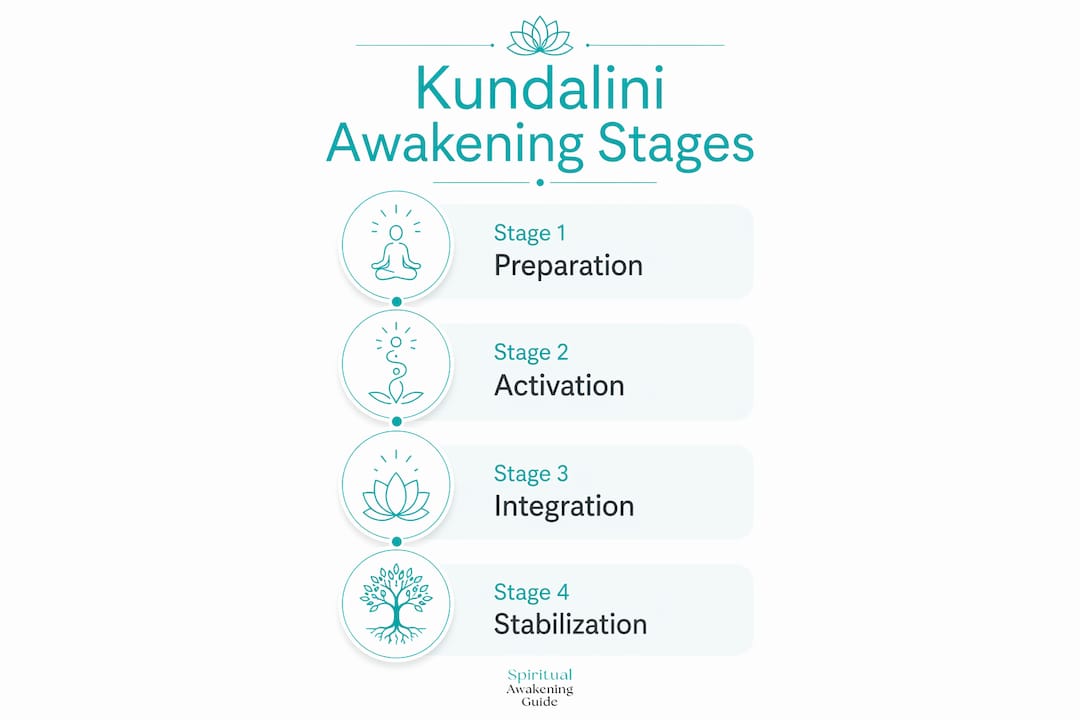
The kundalini awakening process unfolds in recognizable stages, though the timeline varies significantly between individuals. Understanding these stages helps you distinguish healthy progression from distress.
Initial activation: The first signs of kundalini awakening include warmth, tingling, or pressure sensations along the spine. Energy pulses through the chakras are common, along with vivid dreams and heightened sensory awareness. These early experiences are often subtle and easy to dismiss.
Emotional cleansing: This stage is frequently misunderstood. Buried fear, grief, shame, resentment, and guilt surface with unexpected intensity. Suppressed emotions rising during this phase are part of the healing process, not evidence that something has gone wrong. The nervous system is releasing stored material that blocked integration.
Spontaneous kriyas: Physical movements, trembling, or involuntary gestures occur as the body discharges accumulated tension. These can be startling but are generally self-limiting when the practitioner remains grounded and non-resistant.
Expanded awareness and integration: As the process matures, clarity, compassion, and a stable sense of presence emerge. This is the stage where the benefits of kundalini awakening become most apparent, including improved emotional regulation, deeper self-awareness, and a more grounded relationship with daily life.
Pro Tip: Keep a daily journal during active awakening stages. Tracking emotional patterns, sleep quality, and physical sensations over weeks gives you and any supporting practitioner a clear picture of whether you are integrating or escalating.
A common misconception is that kundalini awakening produces continuous bliss. The reality is that the emotional cleansing stages can feel destabilizing. Stability comes through consistent integration practices, not through the intensity of peak experiences.
How do you manage kundalini awakening safely?
Safe management of the kundalini awakening process requires knowing the difference between typical progression and a genuine emergency. This distinction can protect both your physical health and your psychological stability.
A kundalini emergency is defined as an uncontrolled eruption of awakening symptoms that overwhelms the individual’s capacity to function. The symptoms of kundalini emergency include:
- Seizure-like episodes or uncontrollable physical convulsions
- Persistent insomnia lasting more than several consecutive days
- Suicidal ideation or severe depressive episodes
- Inability to perform basic self-care or maintain daily responsibilities
- Psychotic-like symptoms including hallucinations or paranoid thinking
These symptoms require immediate medical or trauma-informed mental health intervention. Do not attempt to manage them through spiritual practice alone.
Grounding practices are the first-line response to overwhelming kundalini symptoms. If symptoms respond to grounding, the experience is likely a manageable activation. If symptoms do not respond and continue to escalate, clinical escalation is required. The Kundalini Emergency
For typical awakening experiences that feel intense but manageable, the following grounding approaches are effective. Spiritualmethod’s guide on grounding techniques offers structured practices specifically suited to managing anxiety and energetic overwhelm. Physical grounding through walking barefoot, eating root vegetables, and reducing meditation intensity are all practical first steps.
One critical safety note: never discontinue psychiatric medications without physician guidance, even if you believe your symptoms are spiritually sourced. The Sanctuary Symbolic Integration Method offers a trauma-informed framework for individuals navigating the intersection of spiritual emergence and mental health. Seeking a therapist who understands spiritual emergence, rather than one who pathologizes it, is a meaningful distinction worth researching before a crisis occurs.
Key takeaways
Kundalini awakening works as a progressive nervous system integration process that requires preparation, grounded practice, and informed support to unfold safely and productively.
| Point | Details |
|---|---|
| Neurophysiological process | Awakening is measurable via NDI stages, heart-rate variability, and cortisol normalization. |
| Preparation is required | Purification practices like shatkarma and pranayama must precede intensive awakening attempts. |
| Stages follow a pattern | Activation, emotional cleansing, kriyas, and integration occur in sequence, not all at once. |
| Emergency signs are real | Seizures, suicidal ideation, and persistent insomnia require immediate clinical intervention. |
| Integration determines outcome | Steady daily practice and emotional honesty produce lasting transformation more reliably than peak experiences. |
What i have learned about kundalini after years of practice
The most persistent mistake I see in spiritual communities is the pursuit of awakening as a destination rather than a process. People arrive at intensive retreats, push through pranayama sequences they are not ready for, and then interpret the resulting overwhelm as spiritual progress. It is not. It is the nervous system signaling that it needs more time.
What actually produces lasting growth is the unglamorous work: consistent daily practice, honest emotional inventory, and the willingness to slow down when the body asks for it. The emotional resilience required to sit with grief or fear as it surfaces during kundalini stages is more valuable than any peak experience. Gopi Krishna’s account is instructive precisely because his crisis came from bypassing preparation, not from the energy itself.
Kundalini is not a tool for escaping ordinary life. The practitioners I have seen integrate it most successfully are the ones who became more present in their relationships, more honest about their limitations, and more patient with the pace of real change. The science now confirms what classical teachers always taught: this is a biological and psychological reorganization that takes time, support, and self-awareness to complete.
— Sean
Start your kundalini integration journey with Spiritualmethod
Spiritualmethod offers structured resources for individuals at every stage of the kundalini awakening process, from initial activation to long-term integration. Whether you are navigating early signs of awakening or seeking grounded methods for emotional cleansing, the guides available through Spiritualmethod provide practical, accessible support.

Explore the sacred rituals for healing that support mind and soul integration, or deepen your understanding through the spiritual healing practices guide designed for inner peace and self-awareness. Spiritualmethod’s approach combines traditional wisdom with practical frameworks, giving you the tools to move through this process with clarity and confidence rather than confusion or fear.
FAQ
What is kundalini energy?
Kundalini energy is defined as latent spiritual energy stored at the base of the spine, described in yogic tradition as a coiled force that, when activated, ascends through the chakra system to expand consciousness and reorganize the nervous system.
How long does kundalini awakening take?
The kundalini awakening process unfolds over months to years, not days. The 2026 NDI research confirms it is a progressive nervous system integration with distinct measurable stages rather than a single event.
What are the first signs of kundalini awakening?
Early signs include warmth, tingling, or pressure sensations along the spine, vivid dreams, spontaneous emotional releases, and heightened sensory awareness, as documented across multiple clinical and experiential accounts.
Can kundalini awakening be dangerous?
Yes. A kundalini emergency involving seizures, suicidal ideation, or persistent insomnia requires immediate medical or trauma-informed mental health intervention and should not be managed through spiritual practice alone.
Do you need a teacher to awaken kundalini?
Working with a qualified teacher significantly reduces the risk of premature or unbalanced awakening. Gopi Krishna’s documented experience demonstrates that unguided activation can produce severe physical and psychological distress without proper preparation and support.
Recommended
- Your Practical Spiritual Awakening Guide
- How to Raise Your Vibration: A Practical Guide for 2026
- Bio – Spiritual awakening guide
- Unlock Your Invisible Power: A Practical Guide
How kundalini awakening works is a central theme in many spiritual discussions today.
Lastly, understanding how kundalini awakening works enriches your connection to others on a similar path.
Grasping how kundalini awakening works can transform your meditation practice into a powerful tool.
Ultimately, understanding how kundalini awakening works leads to more profound spiritual insights.
When you know how kundalini awakening works, you can approach the journey with confidence.
Understanding how kundalini awakening works is a fundamental step in personal transformation.
By studying how kundalini awakening works, individuals can tailor their experiences to their needs.
People often seek to understand how kundalini awakening works before diving into practices.
Knowing how kundalini awakening works allows for more intentional practices.
Ultimately, understanding how kundalini awakening works fosters trust in the journey.
Understanding how kundalini awakening works can help mitigate common fears about the process.
Many guides explain how kundalini awakening works, providing valuable insights for practitioners.
Learning about how kundalini awakening works can inspire a dedicated practice.
Understanding how kundalini awakening works is crucial for those desiring deeper spiritual insights.
By understanding how kundalini awakening works, practitioners can share their experiences with others.
To truly understand how kundalini awakening works, one must engage with the process over time.
Exploring how kundalini awakening works helps demystify the experience for newcomers.
Many individuals seek to understand how kundalini awakening works within a therapeutic framework.
Understanding how kundalini awakening works can also aid in emotional resilience.
Many people wonder how kundalini awakening works and how it impacts their daily lives.
When you grasp how kundalini awakening works, you can set realistic expectations for your journey.
Understanding how kundalini awakening works can transform your approach to meditation.
Many books explain how kundalini awakening works and offer guidance for practitioners.
There are numerous resources available for those wanting to learn how kundalini awakening works.
Understanding how kundalini awakening works also highlights the importance of community support.
Learning how kundalini awakening works can lead to deeper insights into one’s own psyche.
Many practitioners are curious about how kundalini awakening works in relation to emotional healing.
Understanding how kundalini awakening works is essential for anyone exploring this spiritual journey.