
New moon intentions are short, specific statements of what you want to grow or change, written and reviewed on the day the Moon is darkest in its cycle. The single most useful action right now is this: write one present-tense intention and pair it with one concrete next step you can take soon. A contributing writer, Sean, built this guide around that simple, repeatable structure.
TL;DR:
- Writing one clear, present-tense intention paired with a specific next action increases follow-through based on research on goal setting and implementation intentions.
- Schedule your new moon ritual on the day of the new moon or shortly afterward, when the symbolic reset feels most powerful and before daily routines interfere.
- Keep intentions specific and actionable, avoiding vague language or broad wishes, and include an if-then plan to clarify exactly when and how to act.
- A simple ritual involves journaling, choosing one life area, writing an intention, and creating an actionable next step, which can take from ten to forty-five minutes.
- Consistency matters more than perfection; showing up each month and revisiting your intention fosters a recurring habit that improves long-term follow-through.
Table of Contents
- What the new moon is and why it works for intention setting
- Why setting intentions helps: what the evidence says
- Step-by-step new moon ritual you can start tonight
- Examples: ready-to-use intention phrases
- Common mistakes to avoid during your ritual
- How SpiritualMethod and Sean can help you go deeper
- A perspective on consistency over perfection
- Take the ritual further with SpiritualMethod’s guides
- FAQ
- Sources
What the new moon is and why it works for intention setting
A new moon happens when the Moon and Sun share the same position in Earth’s sky, so the Moon’s lit side faces away from us and it typically isn’t visible. NASA’s Eclipses and the Moon’s Orbit page places the average synodic month, meaning the time from one new moon to the next, at 29.53059 days. That steady rhythm is what makes the new moon useful as a monthly checkpoint rather than a mystical trigger.
Practitioners often describe the new moon as a symbolic blank slate, a natural pause before the Moon’s light builds again through the waxing crescent and first quarter phases. The practical takeaway is timing: schedule your ritual on the day of the new moon or shortly thereafter, while the symbolic reset still feels close, and before daily routines crowd out the intention.

Why setting intentions helps: what the evidence says
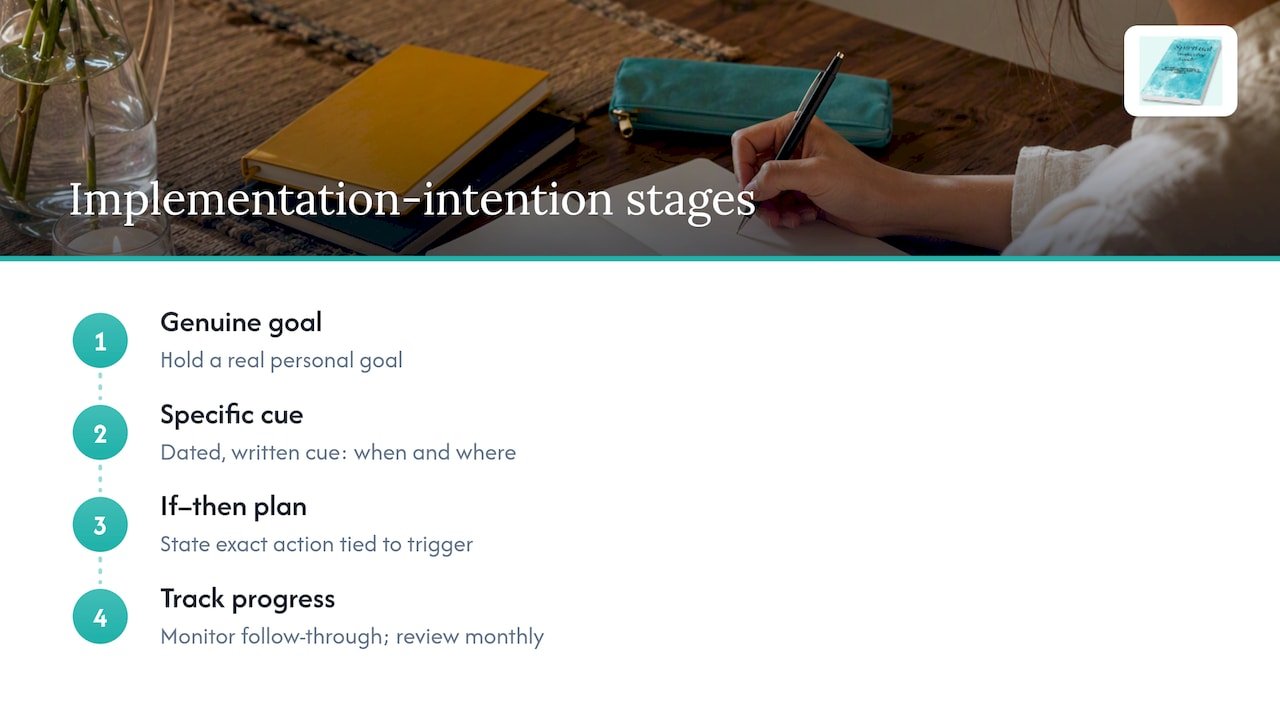
A large systematic review and meta-analysis published through the American Psychological Association found that goal setting has a small positive effect on behavior change, and that effect grows when goals are specific, moderately difficult, and attached to a plan or some form of tracking. A vague wish rarely moves anyone. A dated, written intention with a next step attached does more work.
That is where implementation intentions come in. Research on goal intentions and implementation intentions shows that if-then planning, stating exactly when, where, and how you’ll act, improves follow-through for people who already hold a genuine goal. A new moon ritual gives you a recurring, low-effort cue to write that if-then plan down. The ritual itself doesn’t cause the outcome. It creates a monthly habit of specificity and accountability, which is what the research actually supports.
Step-by-step new moon ritual you can start tonight
This ritual works with minimal supplies and scales from ten minutes to a longer session.
Preparation checklist
- A journal or notebook and a pen.
- A quiet space where you won’t be interrupted for at least ten minutes.
- A candle is optional; this ritual works with no flame at all.
Follow these steps:
- Sit somewhere quiet and take five slow breaths to settle your attention.
- Write down what’s been on your mind this month, good or difficult, in a few lines.
- Choose one area (career, money, relationships, health, or creativity) to focus on.
- Write a single present-tense intention for that area.
- Add one implementation intention: “If [specific trigger], then I will [specific action].”
- Read the intention aloud once, then close your journal to mark the ritual as complete.
Pro Tip: Keep the intention on one line. If it takes more than one sentence to say, it’s probably two intentions.
For a 10-minute version, skip the candle and the reflection notes and move straight to writing the intention and its if-then plan. For a 45-minute version, add a short daily spiritual practice before you write, and revisit the differences between new and full moon rituals to decide what to release versus what to begin. Track your intention weekly using a simple check mark system in your journal or a dedicated intention journal prompt so you can see, by the next new moon, what actually moved.
Examples: ready-to-use intention phrases
Vague intentions are hard to act on. Specific, present-tense phrasing gives you something to check your progress against.
- Career: “I do work that fits my skills, and I’m compensated fairly for it.”
- Money: “I track my spending weekly and save with intention.”
- Creativity: “I make time each week to create without judging the result.”
- Relationships: “I communicate what I need clearly and calmly.”
- Self-care: “I rest without guilt when my body asks for it.”
- Health: “I move my body in ways that feel good, most days.”
- Confidence: “I speak up for myself in situations that matter to me.”
- Focus: “I finish one meaningful task before checking my phone.”
- Boundaries: “I say no to requests that drain me without over-explaining.”
- Gratitude: “I notice and name one good thing each day.”
For a shorter ritual, a single micro-prompt works just as well: “What is one thing I’m ready to begin this month?” Write the answer, then stop there.
Common mistakes to avoid during your ritual
A few habits quietly undercut the practice.
- Avoid vague “becoming” language like “I am becoming successful,” since it has no clear finish line to check against.
- Don’t skip the if-then plan. An intention without a next action is just a wish.
- Don’t treat the ritual as a guaranteed outcome; treat it as a monthly structure for clarity and follow-through, which is what the goal-setting research actually supports.
- If sharing your intentions publicly makes you feel pressured rather than accountable, keep them private instead; some people prefer a quiet period before revisiting what they wrote.
How SpiritualMethod and Sean can help you go deeper
This ritual works well on a single sheet of paper, but a structured framework helps many people stay consistent past the first month. Downloadable guides are available built around this kind of routine-based practice, including ritual templates, habit trackers, and journaling prompts that extend the steps above into a repeatable monthly system. Sean, who contributed this guide, focuses on practical, self-guided methods rather than abstract theory, which is why the ritual above leans on concrete steps instead of broad promises.
If you want a complementary approach for the opposite phase of the cycle, the beginner full moon manifestation guide covers no-fire options in the same practical style.
A perspective on consistency over perfection
I think the real value of a new moon ritual isn’t the Moon at all. It’s the recurring checkpoint. Miss a month, skip the candle, write a messy intention: none of that matters as much as showing up again next cycle. Try one ritual this month and judge it by whether you took the next action, not by how it felt.
— Sean
Take the ritual further with SpiritualMethod’s guides
Once you’ve tried the ritual above, a structured framework can help you keep the habit going past one cycle. SpiritualMethod’s downloadable guides include the Spiritual awakening guide, priced at $20 one-off, which pairs grounding and intention-setting practices with trackers built for ongoing use rather than a single session.

- The guide maps closely to the ritual steps above, with templates for writing and reviewing intentions each month.
- It includes reflective journaling prompts you can use alongside the intention journal prompts referenced earlier.
- You get a forgiving tracker designed for routine-based habit building rather than strict streaks.
Visit the Spiritual awakening guide to see what’s included before your next new moon.
FAQ
What intentions do you set on a new moon?
Most people set intentions tied to a specific area of life they want to grow, such as career, money, relationships, creativity, or self-care. The most effective versions are short, present-tense, and paired with one concrete next action rather than a broad wish.
What can you manifest on a new moon?
There’s no guarantee tied to the lunar phase itself; the new moon works as a monthly checkpoint for writing down and reviewing specific goals. Research on goal setting shows that specific, plan-backed goals see better follow-through than vague ones, regardless of timing.
What not to do during a new moon?
Avoid vague, passive phrasing like “I am becoming,” since it gives you nothing concrete to check progress against. Skipping the if-then action plan, or treating the ritual as a guaranteed outcome instead of a behavior-change tool, are the two most common mistakes.
What spells should you do on a new moon?
SpiritualMethod’s approach favors practical rituals over spellwork: a short grounding exercise, a written present-tense intention, and an if-then action plan. This structure draws on implementation intention research rather than any claim of guaranteed magical effect.
How do new moon rituals differ from other lunar phase rituals?
A new moon ritual focuses on starting something new and writing a fresh intention, while a full moon ritual tends to focus on release or reflection. The new moon versus full moon guide breaks down how to adapt your practice to each phase.
Sources
- Eclipses and the Moon’s Orbit – NASA (GSFC)
- Unique effects of setting goals on behavior change: Systematic review and meta-analysis – APA