
The pillow manifestation method is a simple bedtime ritual: write one clear, behavior-focused intention, place it under your pillow, and let sleep keep that intention active in your mind. The practical effect is modest but real: it can sharpen attention and memory around a goal, helping you notice and act on opportunities the next day. It is not a guaranteed cause of outside events. Tonight, try writing a single sentence describing one action you will take tomorrow, then slide it under your pillow before you fall asleep.
TL;DR:
- The pillow manifestation method primarily influences attention and memory, helping you notice and act on opportunities related to your goal the next day.
- Writing a specific, behavior-focused intention in present tense and pairing it with a concrete action enhances its effectiveness, regardless of whether you handwrite or type it.
- Sleep preferentially consolidates future-relevant memories, making intentions before sleep more likely to remain accessible and influence your next-day focus.
- Repeating the ritual or practicing it for 21 days is not supported by research; consistency and clear, actionable intentions matter more.
- Expect subtle effects such as improved recall or dreams about your goal, and give the practice one to two weeks to assess its potential benefits.
Table of Contents
- How to perform the pillow manifestation method step by step
- Why the ritual can influence attention and memory
- Common variations and mistakes to avoid
- What to expect overnight and how to word it responsibly
- Quick checklist and templates to use tonight
- Spiritual Method’s perspective on pillow rituals and habit-based healing
- A structured option if you want templates and trackers
- Sources
- FAQ
How to perform the pillow manifestation method step by step
The ritual works best when it is specific and brief. A vague wish gives your mind nothing to act on, while a concrete, behavior-focused line gives it something to hold onto overnight.
- Choose one goal. Pick a single intention rather than a list, since focus matters more than quantity.
- Write it in the present tense and tie it to an action, such as “I will send the application tomorrow morning” rather than “I want a new job.”
- Fold the paper once or twice and place it under your pillow, near where your head will rest.
- Read the line aloud once or twice before lying down.
- Visualize the action calmly for a minute, picturing yourself actually doing it.
- Let go of the phrase and allow yourself to fall asleep normally.
Wording that includes a next step tends to work better than wording that only states a wish. A line like “I will take the first step toward X tomorrow” gives your intention a job to do once you wake up, and framing it with brief gratitude, such as “I’m grateful for the chance to try this,” can soften the tone without changing the structure. You can pair this with gratitude ritual steps if you want a fuller evening practice.
Social media often recommends repeating the phrase a set number of times or continuing the ritual for 21 days straight. There is no research establishing those numbers as necessary, so treat them as optional habits rather than requirements. Handwriting the note is commonly preferred because the physical act of writing slows you down and forces specificity, though typing and printing a line works too if that fits your routine better. Keep the paper flat and out of reach of pets or small children, and avoid anything that could be a choking or fire hazard near bedding.
Pro Tip: Write your intention as an if-then plan, such as “If I see the job posting again tomorrow, then I will apply,” since this format is easier for your mind to carry into sleep.
Why the ritual can influence attention and memory
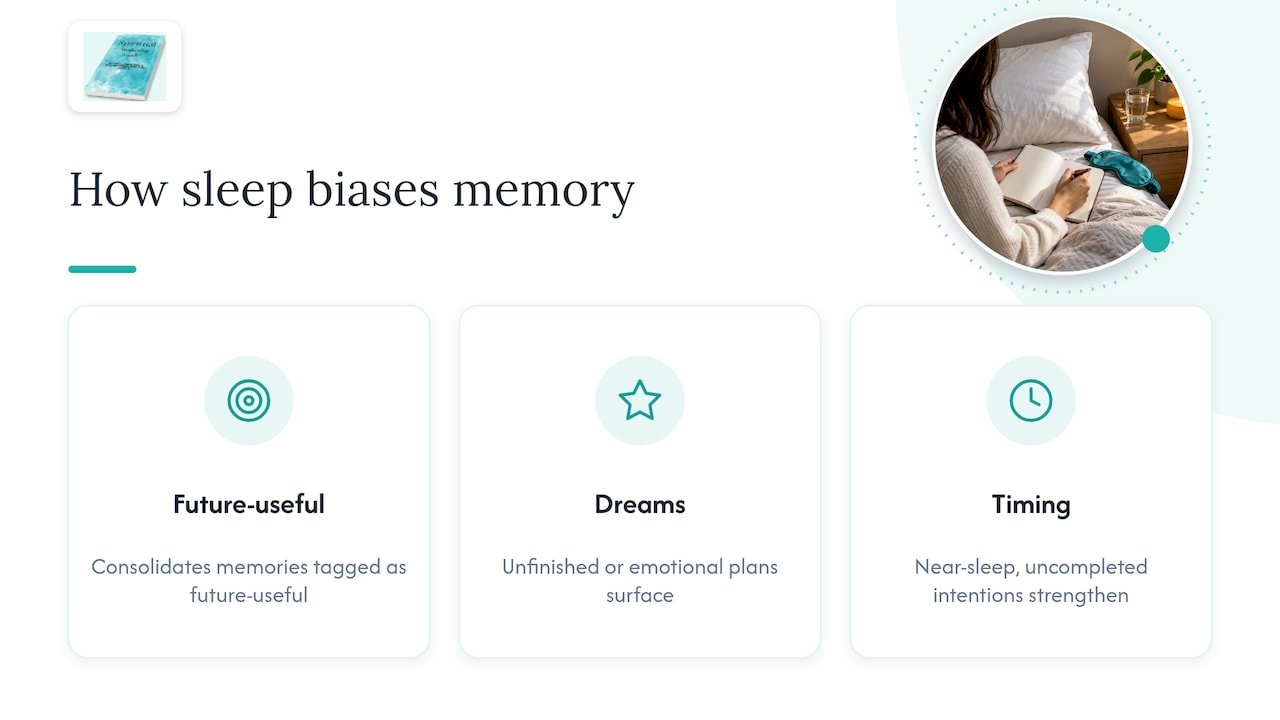
Sleep does not treat every memory equally. Research on sleep-dependent memory shows that the brain preferentially consolidates memories expected to be useful in the future, which helps explain why a pre-sleep intention might stay more accessible the next day. If you tag a thought as relevant before falling asleep, your brain appears to treat it as worth keeping.
Dream research adds another piece. Studies on intentions and dream content show that unfinished or emotionally engaging plans often surface in dreams, and task-related dreaming has been linked to improved next-morning performance in controlled learning experiments. Prospective memory research further suggests that intentions formed close to sleep, especially when left uncompleted, are the ones most likely to benefit from overnight consolidation.
Sleep preferentially consolidates memories expected to be used in the future, and pre-sleep training can be reflected in dreams and next-morning performance.
None of these findings show that writing a wish under a pillow causes external events to happen. They show that sleep can bias what you notice, remember, and act on, which is a meaningfully different claim. The honest framing is attention and memory, not cause and effect on the outside world.
Common variations and mistakes to avoid
Online guides vary widely in their advice, and some of it works against you. A few patterns are worth flagging before you build a nightly habit.
- Repeating a phrase any fixed number of times is not supported by sleep research, so focus instead on a calm bedtime habit without obliging counting.
- “Reality shifting” scripts that claim to move you to another version of reality go beyond grounded intention-setting and should be treated as a separate practice, not confused with this one.
- Wording that tries to control another person’s feelings or decisions is both ethically questionable and outside what any sleep-based ritual can support.
- Promising yourself an exact dollar amount or a specific date for an outcome sets up disappointment that has nothing to do with sleep science.
- A stronger approach is mental contrasting: name the goal, then name the real obstacle in your way, which research on behavior change finds more effective than imagining success alone.
- Pairing the written intention with one concrete morning action, such as sending an email or making a call, converts a wish into a plan.
What to expect overnight and how to word it responsibly
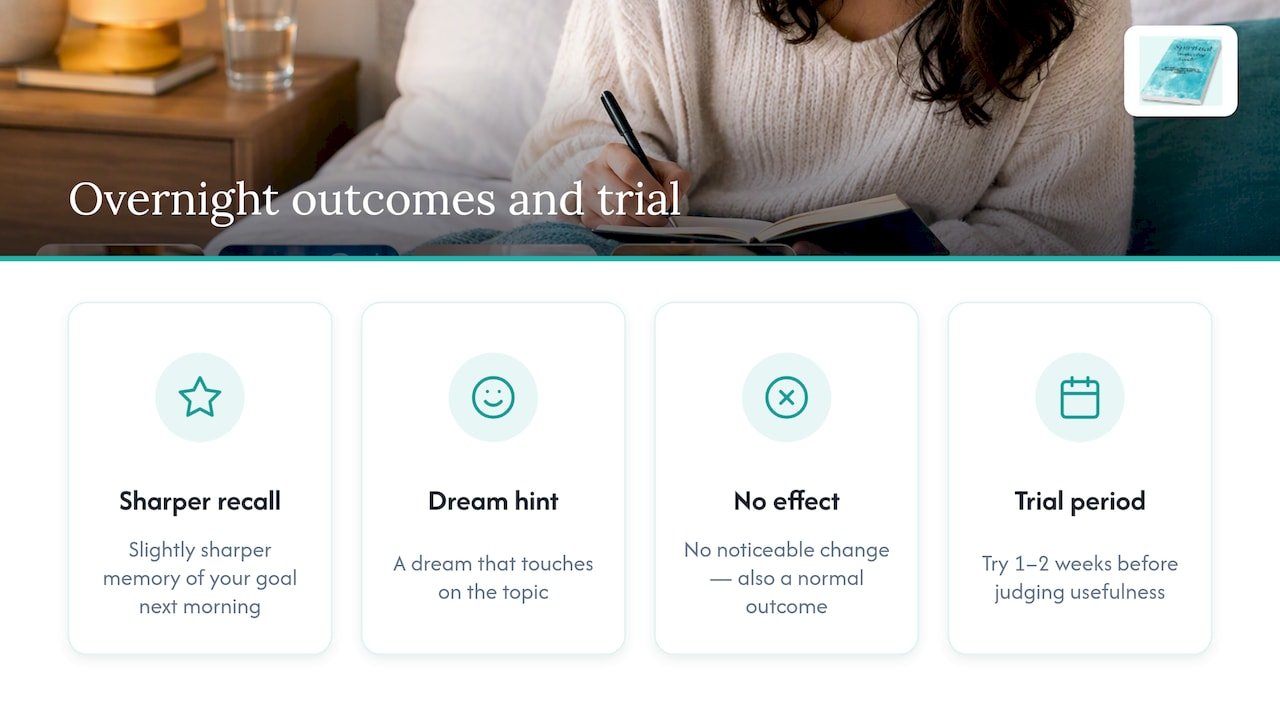
Most nights, nothing dramatic happens. You might notice slightly sharper recall of your goal the next morning, a dream that touches on the topic, or simply no effect at all, and all three are normal outcomes. Give the practice one to two weeks before deciding whether it is useful for you.
Word your intention around your own behavior rather than someone else’s choices, and avoid promising yourself specific financial or medical results that the ritual cannot deliver. If repeating the phrase starts to feel like fixation rather than a calm bedtime habit, that is a sign to scale back or stop. The most reliable version of this practice includes one measurable action for the next day, since that is the part you actually control. For more on separating a felt intention from a concrete goal, see intention versus goal.
Quick checklist and templates to use tonight
- Pick one goal, not a list.
- Write it in present tense with a next-day action attached.
- Fold the paper and place it under your pillow.
- Read it once, visualize calmly, then sleep.
- Follow through on the action the next morning.
| Template | Example wording |
|---|---|
| Action-based | “I will apply to the role tomorrow morning.” |
| If-then plan | “If I wake up early, then I will go for a walk.” |
If you forget the ritual one night, simply resume the next evening rather than restarting a count. If the phrase feels forced, shorten it until it sounds like something you would actually say to yourself.
Spiritual Method’s perspective on pillow rituals and habit-based healing
A pillow note works best as one small piece of a larger practice rather than a stand-alone fix. It pairs naturally with journaling, structured intention-setting, and approaches like the 369 manifestation method, each reinforcing the habit of turning a wish into a specific, repeatable action. For readers who want more structure around these rituals, templates and habit trackers can offer a way to build consistency over weeks rather than relying on memory alone.
— Sean
A structured option if you want templates and trackers
Readers who like the pillow ritual but want more scaffolding around it often find a single nightly note is not enough to build a lasting habit. The spiritual awakening guide is a downloadable toolkit priced at $20 one-off, built around structured rituals, journaling prompts, and habit trackers that extend a practice like this one into a fuller routine.

Inside, you will find:
- Ritual scripts for intention-setting that go beyond a single bedtime line.
- Habit trackers designed to hold you accountable to next-day actions.
- Journaling templates that pair well with the affirmation wording covered here, similar to the approach in affirmation journaling.
Readers who want a ritual with more built-in structure, rather than relying on memory alone, may also find value in the abundance-focused practices at Abundant Pathways. Access to the guide is instant after checkout, so you can start using the templates the same night you complete your purchase.
FAQ
Does pillow manifestation really work?
It can work as an attention and memory tool rather than as a direct cause of outside events. Writing a specific, behavior-focused intention before sleep may help you notice related opportunities the next day, based on research showing sleep favors future-relevant memories.
What’s the most powerful manifestation method?
No single method has been shown to outperform the others, since each relies on the same basic ingredients: a specific intention, repetition, and a concrete next action. Pairing any ritual, including the pillow method, with mental contrasting tends to improve follow-through more than wishing alone.
Does the pillow trick actually work?
The trick itself, placing paper under a pillow, has not been tested directly in research. What is supported is the underlying process: sleep can bias memory and attention toward goals you focus on before falling asleep.
How does the pillow method work?
You write a specific, action-oriented intention, place it under your pillow, and let sleep process it overnight. Prospective memory research suggests intentions formed close to sleep and left uncompleted are more likely to stay mentally active the next day.
Can you type your intention instead of handwriting it?
Yes, typing and printing the line works as well as handwriting it, since the research supports the role of a clear, specific intention rather than the method of writing it. Some people prefer handwriting because it slows them down and forces more specific wording.