
Somewhere between the notifications, the deadlines, the healing work, and the constant effort to hold yourself together, it's easy to feel spiritually scattered. You may know you need peace, but when your mind is racing and your body feels tight, abstract spiritual advice can sound distant. “Think higher thoughts” doesn't help much when you're exhausted, overstimulated, or carrying old pain.
That's where lessons in truth becomes surprisingly relevant. H. Emilie Cady's work isn't just a historical spiritual text. It offers a disciplined way of returning to what is steady, sacred, and whole within you. Yet many readers still face one practical problem. Existing content on Lessons in Truth rarely addresses how these 19th-century New Thought principles integrate with contemporary wellness modalities like energy work, crystal healing, or somatic practices, which leaves a gap for people who want tangible daily rituals and body-based practices, as noted by TruthUnity's material on Emilie Cady's work.
This guide meets that gap directly. It brings Cady's teachings into ordinary life, where nervous systems get overwhelmed, emotions surface unexpectedly, and spiritual growth has to happen in real time.
Table of Contents
- Finding Your Center in a World of Chaos
- What Are the Original Lessons in Truth
- Core Teachings for a Modern Spiritual Practice
- Daily Rituals to Embody Your Truth
- Healing Anxiety and Emotional Blocks with Truth
- Begin Your Journey with the Spiritual Method
Finding Your Center in a World of Chaos
Some people arrive at spiritual practice because they're curious. Many arrive because they're worn down. They've been holding too much for too long, and something inside knows there has to be a quieter way to live.
When spiritual ideas stay stuck in the mind
A common frustration appears after the first burst of inspiration. You read beautiful teachings about peace, divine presence, and inner power, but you still don't know what to do when your chest tightens, your thoughts spiral, or your energy feels heavy by late afternoon.
That's why Cady's work still matters. It doesn't begin with outer control. It begins with the inner seat of perception. It asks what becomes possible when you stop treating yourself as cut off from life, support, and meaning.
Practical rule: If a teaching can't accompany you through stress, grief, or confusion, it hasn't yet become embodied wisdom.
Why this old text speaks to modern overwhelm
Lessons in Truth came from a different century, but the human struggle it addresses is familiar. People still confuse their passing thoughts with their deepest identity. They still look outside themselves for safety, permission, and proof that they're enough.
Cady offers another path. She teaches that spiritual truth isn't something you perform. It's something you remember, practice, and live from. For a modern reader, that means pairing inner work with grounded rituals that help the body feel safe enough to receive it.
A candle, a quiet breath, a hand over the heart, a clearing bath, a few moments with a journal. These aren't decorations around spiritual life. They can become the doorway back into it.
What Are the Original Lessons in Truth
A reader opens Lessons in Truth expecting a small book of uplifting sayings. Instead, they meet a course of study. H. Emilie Cady first published it in 1895, and its staying power comes from that structure. The book is organized as 12 lessons, each meant to train perception, prayer, and daily practice so a person can live from spiritual truth rather than from fear or habit.
That matters for modern seekers because Cady was not writing for occasional inspiration. She was teaching a method. Her lessons ask the reader to move the center of life inward, then test that inner shift in ordinary moments. In modern terms, 19th century metaphysical teaching starts to meet present-day wellness practice. A truth statement in the morning, a pause before reacting, a written prayer before sleep. The philosophy becomes useful when it enters the body and the schedule.
A spiritual method with clear working parts
At the center of Cady's teaching is a demanding idea. Divine life is present everywhere, and the human self is not cut off from it. If that feels abstract, a radio offers a helpful comparison. The music is already in the air, but a receiver has to be tuned to hear it clearly. Cady's lessons treat the mind and heart in a similar way. The spiritual reality is not absent. Perception needs training.
Her language of denial and affirmation often confuses new readers, so it helps to slow down here.
Denial means refusing to give final authority to fear, lack, resentment, or appearances. It is not pretending pain does not exist. It is more like refusing to let a passing storm define the whole climate.
Affirmation means choosing to agree with what is deepest and truest about life, God, and the self. It is not forced cheerfulness. It is disciplined inner speech.
Readers who have studied older wisdom streams may notice a family resemblance between Cady's approach and Hermetic teachings on inner reality and perception in the Corpus Hermeticum. Both ask a person to examine how consciousness shapes experience. Cady's contribution is her practical simplicity. She turns that insight into repeated spiritual exercises.
Why the lessons endured
The book lasted because readers could use it. It gave people a repeatable pattern for prayer, thought, and self-observation.
Early student testimonials connected with Cady's work often describe relief from anxiety, greater steadiness, and a stronger sense of direction after weeks of faithful practice. Those reports are best read as historical observations, not as guaranteed outcomes or marketing promises. The value of the book lies in its consistency. It teaches people how to interrupt fear, return to truth, and practice that return until it becomes more natural.
This makes the text more grounded than it first appears. Under the older language, Cady is asking practical questions. What thought are you feeding? What story are you repeating? What inner atmosphere are you creating before you speak, decide, or pray?
The change Cady asks a reader to make
Cady asks for more than positive thinking. She asks for spiritual maturity.
- See appearances without surrendering to them. A painful condition may be real as an experience, but it does not have the final word on identity or possibility.
- Use thought with intention. The mind can rehearse fear all day, or it can be trained toward truth through prayer, attention, and repetition.
- Make practice ordinary. A short morning affirmation, a few quiet breaths at noon, and an evening release prayer bring the teaching out of theory and into life.
Her method treats inner life as a place of practice. That is why Lessons in Truth still speaks to readers now. It offers an old spiritual map, but it also supports the kind of daily grounding, emotional healing, and energy care that modern seekers are actively trying to build.
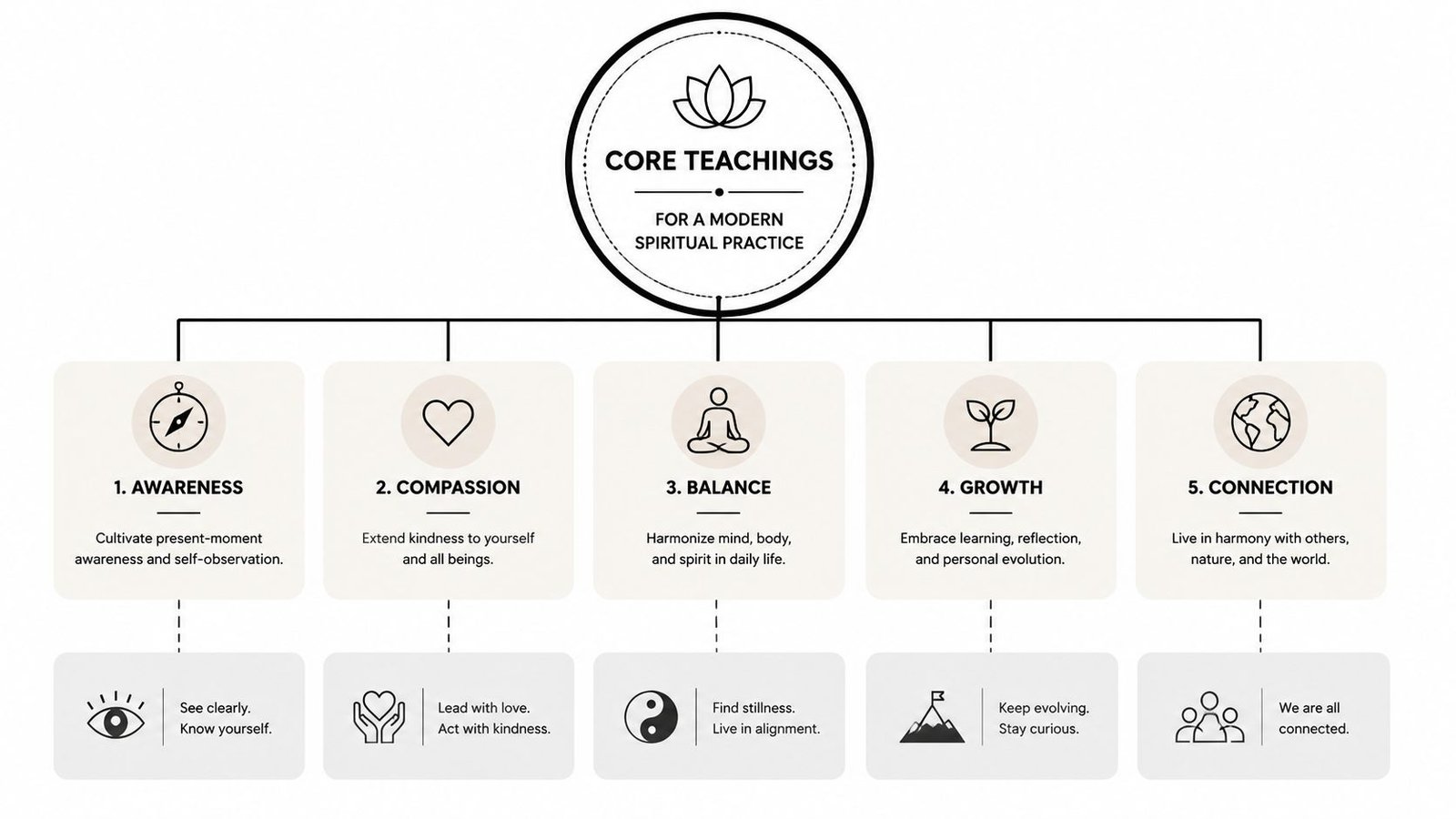
Core Teachings for a Modern Spiritual Practice
The original language of Lessons in Truth can feel formal at first. Once translated into plain language, its ideas become direct and usable. You don't need to memorize old metaphysical terms to work with its core wisdom. You need a clear grasp of what the teachings are asking you to do inwardly.
Oneness instead of separation
One of Cady's core teachings is that you are not cut off from divine life. In modern language, this means your deepest self isn't isolated, abandoned, or spiritually orphaned. When you feel disconnected, the practice isn't to create truth from scratch. It's to return to it.
This teaching can soften the panic that says, “I'm alone in this.” It invites a different inner statement: “Support is not absent, even if I can't feel it yet.”
Thought as direction
Thought doesn't control every event, but it does shape how you meet life. A useful analogy is a GPS. If you keep entering fear as the destination, your internal system keeps recalculating around fear. Affirmation changes the destination.
That doesn't mean forcing fake positivity. It means giving the mind a truer direction. Readers who want a parallel framework may notice overlap with the principles commonly associated with the Kybalion, where mental alignment plays a central role in how experience is interpreted and directed.
Release and renewal
Cady's denial and affirmation practice can be understood as a two-part reset.
First, you release what doesn't belong in the deepest sense.
Then, you plant what does.
Here's how that can sound in everyday language:
- Release: “This fear is loud, but it is not my deepest truth.”
- Renew: “Peace is still available to me now.”
- Repeat: “I can return to that peace again and again.”
Truth must become embodied
Many readers get stuck because they understand the teaching mentally but don't feel it in their bodies. That's a real obstacle. If your shoulders are tense, your breath is shallow, and your system is braced for threat, spiritual ideas may stay abstract.
A modern spiritual practice works better when it includes physical cues of safety and presence.
- Breath: Slows the rush of mental noise.
- Touch: A hand on the chest or belly can anchor awareness.
- Environment: Light, scent, sound, and order can support a settled inner state.
- Repetition: Small acts done daily help truth move from concept into reflex.
You don't have to choose between spiritual depth and practical ritual. The ritual can be the bridge that helps the teaching land.
When read this way, lessons in truth is not outdated. It becomes a living method for remembering who you are, while giving your body and mind a way to cooperate with that remembering.
Daily Rituals to Embody Your Truth
Spiritual insight becomes sturdy when you give it a place to live in your day. A ritual doesn't need to be elaborate to be meaningful. It needs to be intentional, repeatable, and honest.
Some days your practice may last twenty minutes. Some days it may last three. What matters most is that your rituals help you return to clarity rather than perform spirituality for appearances.
Morning grounding and intention
The opening minutes of the day often set the emotional tone that follows. If you wake up and immediately reach for your phone, your attention gets claimed before your inner life has a voice.
A grounding morning ritual can be simple:
- Sit upright before speaking to anyone. Let your body register that you are here.
- Place both feet on the floor. Feel the contact point and take several slow breaths.
- Name your intention for the day. Choose one sentence that reflects truth rather than pressure.
- Write a short check-in. Ask, “What do I need to stay centered today?”
If you want a steady framework for building this habit, practices like those gathered in daily spiritual practices for grounding and consistency can help you turn a good intention into a rhythm.
Grounding prompt: “Today I choose to move from steadiness, not urgency.”
Energy protection and cleansing
People often get confused by the phrase “energy protection.” It doesn't need to mean fear of other people. It can mean caring for your inner atmosphere with the same seriousness you give your home.
You might notice that certain spaces, conversations, or media leave you feeling foggy and depleted. A cleansing ritual helps you reset before that heaviness hardens into your mood.
Try a short sequence like this:
- Open a window: Let the room breathe.
- Use smoke or scent mindfully: If you work with smudging, move slowly and with intention. If smoke isn't practical, use incense, a hydrosol, or a cleansing spray.
- Choose one crystal with a clear purpose: Hold it while naming what you are releasing and what you are welcoming.
- Finish with sound: A bell, chime, or a few moments of gentle music can mark the reset.
The key is not superstition. The key is attention. When you cleanse a space with intention, you often become more conscious of the thoughts and impressions you're carrying.
Moon phase rituals for manifestation and release
Moon rituals can give emotional and spiritual work a natural rhythm. They help many people organize intention, release, and renewal in a way that feels cyclical rather than forced.
Here is a practical framework:
| Moon Phase | Energy Focus | Ritual Example (from Spiritual Method) | Affirmation Theme |
|---|---|---|---|
| New Moon | Beginning and clarity | Set intentions in a journal, light a candle, and speak one clear desire aloud | I welcome a fresh start aligned with truth |
| Waxing Moon | Building and commitment | Repeat a daily affirmation, tend your altar, and take one concrete action toward your intention | I nourish what I am ready to grow |
| Full Moon | Illumination and gratitude | Take a sacred bath, reflect on what has come to light, and offer thanks | I see clearly and receive with gratitude |
| Waning Moon | Release and completion | Cleanse your space, write down what you are ready to let go of, and safely discard the note | I release what no longer belongs to me |
This kind of ritual works well because it joins inner language with visible action. You aren't only hoping for change. You are giving change a container.
A short evening reset
Evening practice should feel like exhale, not homework. If the day has been noisy, end with a ritual that signals closure.
Try this combination:
- Warm water or bath: Let the body soften.
- Low lighting: Reduce stimulation.
- One sentence of reflection: “Where did I abandon myself today, and where did I stay with myself?”
- One affirmation for sleep: Choose something restful rather than ambitious.
A useful evening affirmation is simple: “I release today. I rest in what is real.”
These rituals matter because they teach your system something profound. Truth is not only an idea you agree with. It is a way you inhabit the day.
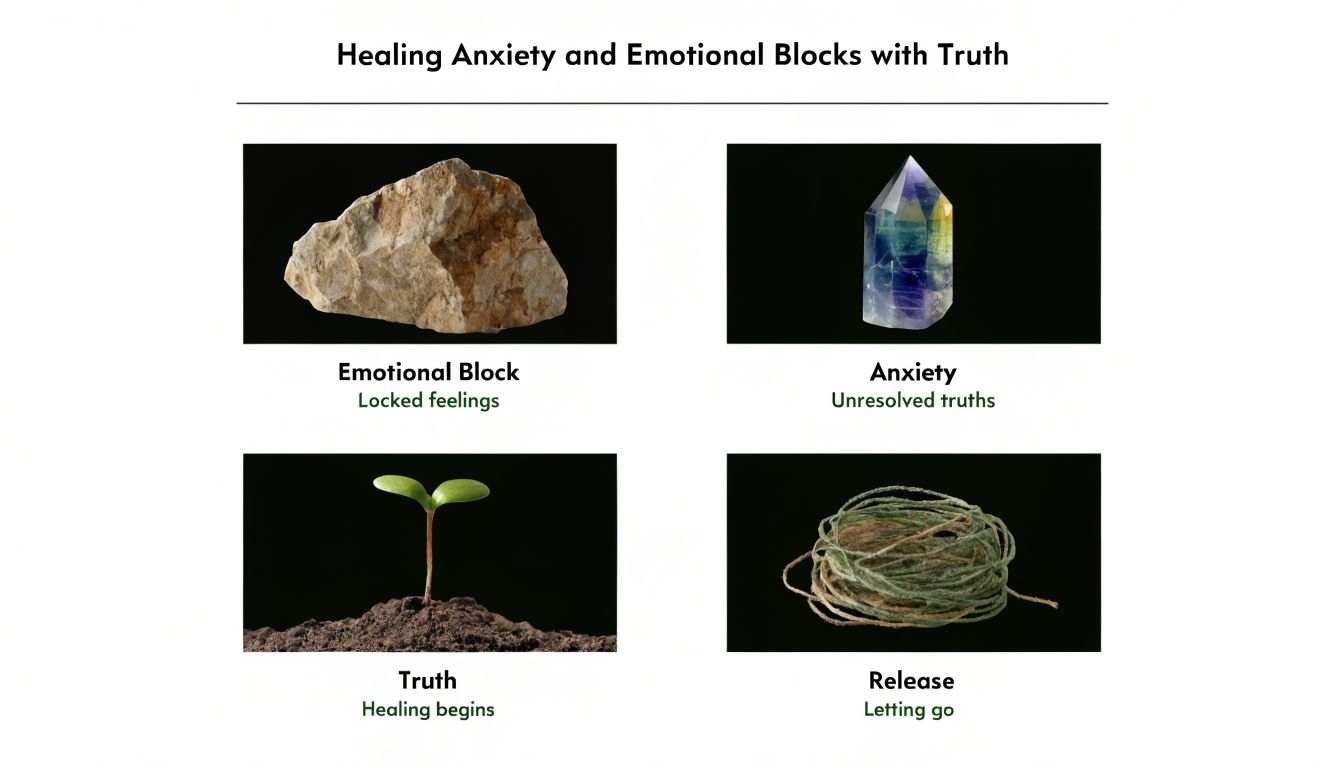
Healing Anxiety and Emotional Blocks with Truth
For many people, the hardest part of spiritual teaching isn't understanding it. It's applying it when anxiety is active or old pain rises to the surface. In those moments, even wise words can feel out of reach.
Contemporary seekers struggling with anxiety or past wounds often report difficulty applying Lessons in Truth because the framework doesn't adequately address how to work with a dysregulated nervous system or process intense pain. It also leaves a real question open about whether affirmations should come first, or whether grounding and emotional regulation need to come before spiritual understanding, as noted in the material discussing these challenges in relation to Cady's framework.
Why positive thinking can feel impossible
If your nervous system is braced, an affirmation can sound like a demand. You may say, “I am at peace,” while your body is signaling the opposite. That mismatch can create shame instead of relief.
This doesn't mean the teaching is false. It means timing matters. A body in alarm usually needs safety before it can absorb a new belief.
Common signs that regulation should come first include:
- Racing thoughts: Your mind keeps scanning for danger.
- Tight breath: You can't settle into a full exhale.
- Emotional flooding: One trigger sends you into overwhelm quickly.
- Spiritual resistance: Affirmations feel irritating, numb, or impossible to believe.
When truth feels inaccessible, gentleness is often more effective than intensity.
A gentler order for spiritual healing
A more compassionate sequence is often this: regulate the body, allow the feeling, then introduce the spiritual reframe.
Start with the body. Sit down. Lengthen the exhale. Hold something textured, warm, or grounding. If you need movement, choose slow stretching or a short walk before any deeper inner work.
Then name what is happening without judgment. “I feel afraid.” “I feel activated.” “I feel grief in my chest.” This isn't spiritual failure. It is honest contact with your present state.
Only after that does affirmation become useful. And when it does, softer language often works better than absolute statements.
Instead of:
- Forced affirmation: “Nothing is wrong.”
Try:
- Grounded truth: “I am safe enough to be with this feeling.”
- Gentle orientation: “This moment is hard, and I am still held.”
- Open possibility: “Peace may be closer than I think.”
This approach protects you from spiritual bypassing. It doesn't ask you to deny pain in a superficial way. It asks you to stop making pain your final identity.
A helpful healing rhythm can look like this:
- Pause the spiral
- Support the body
- Name the emotion
- Choose one believable truth
- Repeat it without force
That sequence allows lessons in truth to become merciful rather than rigid. For people healing anxiety or emotional blocks, that difference matters.
Begin Your Journey with the Spiritual Method
The gift of lessons in truth is that it invites both reverence and practice. It asks you to treat your inner life as worthy of care, training, and patience. Cady's wisdom becomes much more usable when it's paired with rituals that steady the body, clarify the mind, and help truth move from theory into lived experience.
You don't need a perfect routine. You need a sincere one. A few grounding breaths in the morning, a cleansing pause after a difficult interaction, an evening release practice, and a gentler approach to affirmation can begin changing the atmosphere of your days.
What lasting practice usually looks like
Spiritual growth rarely appears as one dramatic breakthrough. More often, it looks like small returns.
- You notice faster when you're ungrounded.
- You recover more gently after emotional overwhelm.
- You stop forcing affirmations that your body can't receive.
- You build trust in simple rituals that bring you back to yourself.
A sustainable spiritual life isn't built on intensity. It's built on repeatable acts of remembrance.
When support helps
Many people understand these ideas but struggle with consistency. They want structure. They want rituals they can follow. They want guidance that honors both spiritual truth and emotional reality.
That's where a practical companion can make a real difference. Journals, mood tracking, reflection prompts, cleansing routines, and sacred bathing practices can help turn a meaningful insight into a lived path.
If you're ready for a clear next step, Spiritual Method offers a compassionate, practical guide for building this kind of embodied spiritual life. It includes grounding rituals, energy-clearing practices, intention-setting tools, sacred bathing guidance, reflection templates, and supportive resources for staying consistent. If you've been feeling stuck, drained, or disconnected from your center, it can help you turn inner truth into a daily practice you can actually sustain.