
Being yourself is a practice of small, honest choices made daily, not a single moment of revelation. The most useful next step you can take right now is a 10-minute inner-check: sit quietly, ask “What do I actually feel or need in this moment?” and write the answer without editing it. That single act, repeated consistently, is where authentic self-expression begins. Psychologist Dr. Stephen Joseph, Brené Brown’s vulnerability research, and the practical frameworks at Spiritualmethod.com all point to the same conclusion: living authentically requires structured inner work, not just permission to “be yourself.”
Table of Contents
- Why “just be yourself” is misleading advice
- Three mindset shifts that make sustained authenticity possible
- Daily micro-practices for authentic self-expression
- When deeper healing work is the right next step
- How to stay authentic in relationships and social settings
- Realistic timeline, costs, and when to seek professional help
- Your 7-day starter plan for being yourself
- Key Takeaways
- Why the “just be yourself” shortcut costs more than it saves
- Spiritualmethod resources for your next step
- Useful sources and further reading
Why “just be yourself” is misleading advice
The phrase sounds encouraging, but it leaves out the most important part: which self, and how do you find it? Dr. Stephen Joseph argues that authenticity is built, not preserved. Most people carry internalized voices from parents, teachers, and cultural norms that feel like their own preferences but are not. Telling someone to “just be yourself” when those voices are running the show produces more performative behavior, not less.
A controlled first-impression study with 204 participants found that instructions to “be yourself” did increase expressive accuracy, meaning observers read people more distinctively. However, the same study found no significant effect on likability or immediate well-being. Authenticity, in other words, makes you more visible but does not automatically make social situations easier.
Two common misinterpretations compound the problem. First, people equate authenticity with impulsive honesty, saying whatever they feel without regard for context. Second, they treat it as a destination rather than an ongoing practice. Both framings stall real progress.
Three mindset shifts that make sustained authenticity possible
Before any practice works, the internal frame has to change. These three shifts, grounded in research, prepare you for the daily work ahead.
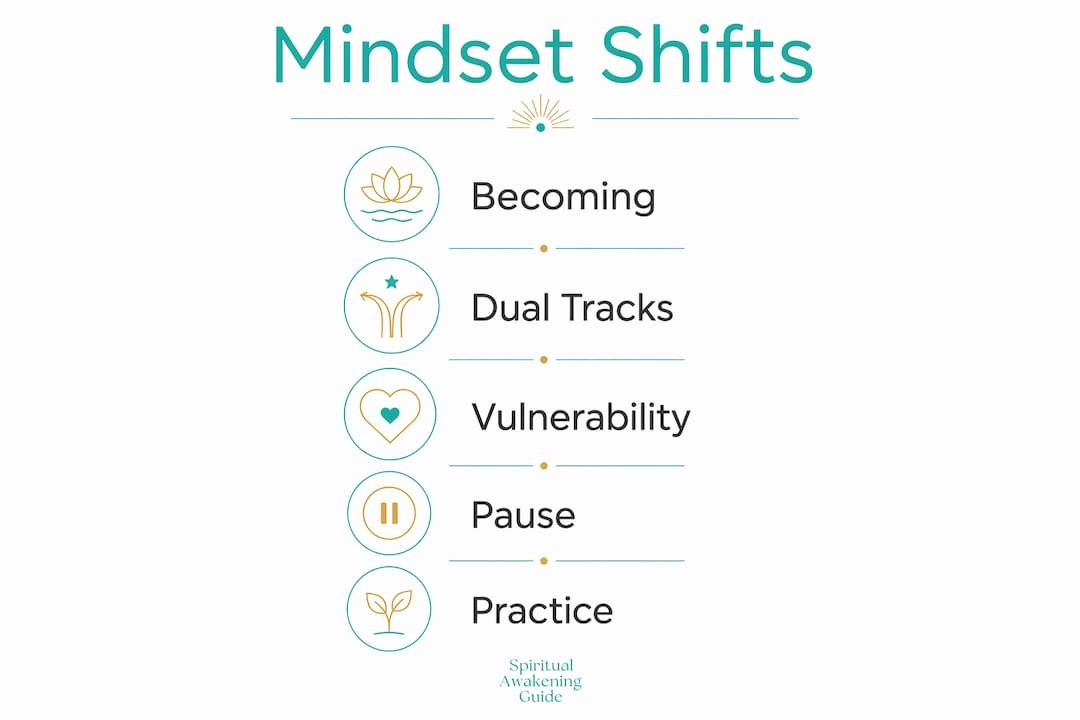
Shift 1: Authenticity is becoming, not revealing. Carl Jung’s concept of individuation, as covered by Psychology Today, frames the true self as a lifelong integration of the persona (the face you show the world) and the shadow (the disowned parts). You are not uncovering a buried gem; you are assembling one through disciplined reflection.
Shift 2: Hold two tracks simultaneously. A practical two-track model means cultivating a private inner voice while also learning to navigate external social expectations without losing your center. Structured solitude, such as reducing social media and scheduling quiet time, builds the inner track so it is strong enough to hold its ground in social settings.
Shift 3: Vulnerability is a skill, not a risk. Brené Brown’s research establishes that vulnerability practices reduce shame and allow more honest expression when paired with self-compassion. Imperfect courage, showing up as you are rather than waiting until you are “ready,” is the mechanism.
Pro Tip: When you notice a strong “should” thought (“I should want this,” “I should be fine with that”), pause and ask: “Whose voice is this?” If the answer is not clearly your own, treat it as data, not instruction.
Daily micro-practices for authentic self-expression
These four practices are safe, repeatable, and require no prior experience. Start with one and add others as they become routine.
- Morning journaling (5 minutes). Use one of these prompts: “What am I pretending not to feel today?” / “What would I do if no one’s opinion mattered?” / “What boundary did I let slide yesterday?” Write without stopping or correcting. The journaling for soul healing framework at Spiritualmethod offers structured templates if open-ended prompts feel too loose.
- Grounding breath before expression (2 minutes). Before a difficult conversation or social situation, try box breathing: inhale 4 counts, hold 4, exhale 4, hold 4. Two full cycles reset the nervous system enough to respond from choice rather than reflex. Spiritualmethod’s grounding exercises expand this into a full somatic practice.
- Micro-boundary practice. Choose one low-stakes situation each day to say “no” or redirect without over-explaining. A workable script: “That doesn’t work for me right now, but thank you.” No apology, no lengthy reason. Practice this in writing first if saying it aloud feels difficult.
- Low-stakes authenticity testing. Share a genuine opinion in a setting where the stakes are low, a preference in a group chat, a real answer when someone asks how you are. Scale up gradually as confidence builds.
Pro Tip: Build an “authenticity anchor” ritual: a 3–5 song playlist, a physical object you associate with your clearest self, or a short phrase you repeat before high-pressure situations. Practical clinicians use these anchor toolkits to prevent chameleon responses under stress.
When deeper healing work is the right next step
Daily micro-practices address the surface layer. When patterns persist despite consistent effort, inner-child work and shadow work offer a deeper entry point.
| Method | What it involves | Best entry point | Caution |
|---|---|---|---|
| Inner-child work | Dialoguing with younger emotional states through writing or visualization | Self-guided journaling prompts | Pause if strong distress arises; resume with support |
| Shadow work | Identifying and integrating disowned traits projected onto others | Journaling: “What irritates me most in others?” | Can surface suppressed grief or anger; pace carefully |
| Soul integration | Reclaiming fragmented identity through ritual and reflective practice | Guided exercises, soul retrieval examples | Best done with a trauma-informed guide for complex histories |
A simple inner-child entry exercise: write a letter from your adult self to yourself at age 8–10. Describe one situation where that child felt unseen or misunderstood. Then write a short reply from the child’s perspective. Read both aloud. The goal is acknowledgment, not resolution in one sitting.
Self-guided work is appropriate when emotional responses are manageable and no active trauma history is present. Consult a licensed therapist or trauma-informed coach when sessions consistently produce dissociation, intrusive memories, or emotional flooding that does not settle within 24 hours. Astrology and personalized tarot readings can also serve as reflective entry points for readers who prefer archetypal frameworks alongside structured inner work.
How to stay authentic in relationships and social settings
Authenticity does not mean broadcasting every internal state. It means choosing honest expression with appropriate context.
- Family boundary script: “I love you, and I’m not able to discuss that topic right now.”
- Work boundary script: “I can take that on after I finish the current priority. Can we revisit Thursday?”
- Romantic boundary script: “When X happens, I feel Y. What I need is Z.”
Selective expression means being honest with strategy: you choose when and how to share, not whether to be real. An authenticity buddy, a trusted friend or peer who knows your growth goals, provides accountability and a reality check when social pressure pulls you toward performance.
Common setbacks include reverting to people-pleasing after conflict, or feeling exposed after a genuine disclosure. A short recovery script for both: “That felt uncomfortable, and I did it anyway. That counts.” Normalizing discomfort as evidence of growth, rather than proof of failure, is one of the more durable reframes available.
Realistic timeline, costs, and when to seek professional help
Small observable changes in expressive behavior, such as noticing when you are performing versus responding genuinely, typically appear within a few weeks of consistent micro-practice. Deeper integration of identity, where authentic responses become the default rather than the effortful choice, generally takes months to years.
| Approach | Estimated cost | Timeline |
|---|---|---|
| Self-guided practices (journaling, breathwork) | Free | Weeks for initial shifts |
| Group programs or online courses | — | 1–3 months |
| Individual therapy (US average) | — | 6–24 months for deeper work |
| Trauma-informed coaching | — | months to years |
Seek professional support when self-guided work consistently triggers emotional flooding, when daily functioning is affected, or when the same patterns repeat despite months of effort. Authenticity aligned with values tends to increase life satisfaction over time, but it can also surface relationship friction as performed versions of yourself give way to more honest ones. That friction is a normal part of the process, not a sign something has gone wrong.
Your 7-day starter plan for being yourself
- Day 1: Morning journal using the prompt “What am I pretending not to feel today?” (5 minutes)
- Day 2: Practice box breathing before one conversation (2 minutes)
- Day 3: Say “no” or redirect once without over-explaining
- Day 4: Write a short inner-child letter to your 8–10-year-old self
- Day 5: Share one genuine opinion in a low-stakes setting
- Day 6: Reduce social media by one hour; use that time for solitude and reflection
- Day 7: Review your journal entries; write three sentences on what you noticed about yourself this week
At the end of Day 7, ask: “Which practice felt most natural?” Double down on that one in week two. The 7-step inner peace guide at Spiritualmethod offers a structured framework for extending this into a longer practice arc.
Pro Tip: Measure small wins by tracking one specific behavior change per week, not a mood or feeling. “I said no once without apologizing” is a measurable win. “I felt more authentic” is not.
Key Takeaways
Authentic self-expression is built through consistent inner work, not discovered in a single moment of clarity.
| Point | Details |
|---|---|
| Authenticity is constructed | Dr. Stephen Joseph’s framework shows it requires unlearning internalized voices, not just permission to “be yourself.” |
| Daily micro-practices work | Journaling, box breathing, and micro-boundary exercises produce observable behavioral shifts within weeks. |
| Deeper work needs pacing | Inner-child and shadow work are effective but should be paused if emotional flooding occurs; professional support is appropriate then. |
| Social navigation requires strategy | Selective expression and boundary scripts allow honest communication without unnecessary conflict. |
| Spiritualmethod supports the path | Spiritualmethod.com offers structured journaling guides, grounding exercises, and inner-child healing resources as a practical next step. |
Why the “just be yourself” shortcut costs more than it saves
The conventional framing of authenticity as a natural state you simply return to is, practically speaking, the most expensive version of the advice. It implies no work is needed, which means most people wait for a feeling of readiness that never arrives. What the research actually shows, from Joseph’s unlearning model to the expressive-accuracy data, is that authenticity is a skill built through repetition in progressively higher-stakes settings.
The practices in this guide are not shortcuts. They are the actual mechanism. A 10-minute journal entry does more for authentic self-expression than a week of passive self-reflection, because it forces specificity. A micro-boundary practiced in a low-stakes conversation builds the neural pathway that holds under pressure. The timeline is longer than most people want, and the relationship friction is real. But the alternative, a life organized around performed versions of yourself, carries its own costs, and those compound quietly over years.
Spiritualmethod resources for your next step
Spiritualmethod.com offers a structured path for spiritual seekers who want to move beyond the 7-day starter plan into deeper, guided inner work. Where most general wellness content stops at awareness, Spiritualmethod provides step-by-step exercises for the mind-body-soul connection and a full practical framework for inner-child healing practices that directly extends the work begun in this guide.
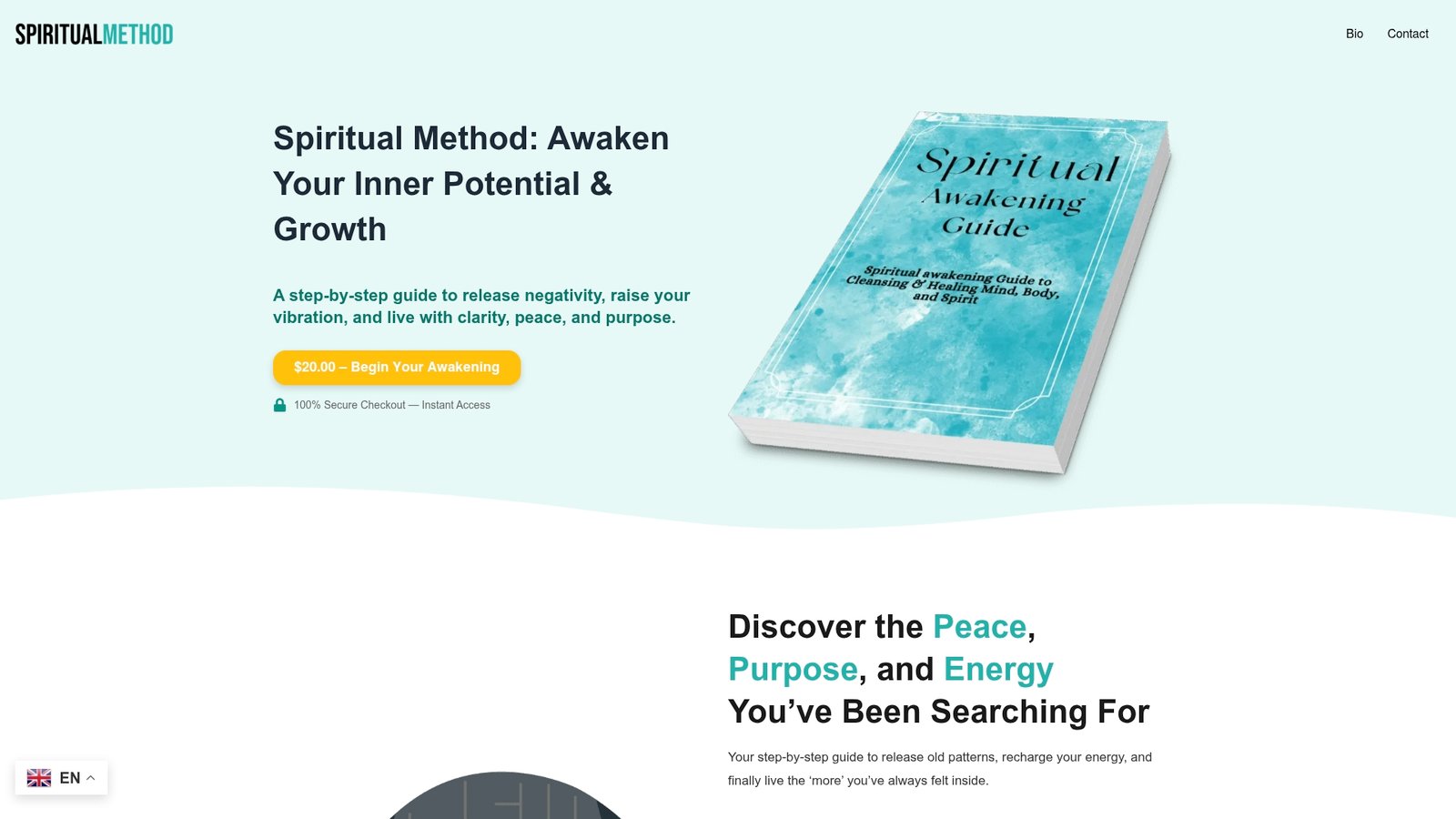
The inner-child healing guide walks through the same letter-writing and visualization techniques outlined above, with additional prompts, pacing guidance, and integration exercises designed for self-guided use. Visit Spiritualmethod.com and start with the inner-child healing guide as your concrete next step after completing the 7-day plan.
Useful sources and further reading
- Just Be Yourself? Effects of an Authenticity Manipulation on Expressive Accuracy in First Impressions — SAGE Journals
- Why “Just Be Yourself” Is Terrible Advice, According to Psychology — Vice / Dr. Stephen Joseph
- How to Stay True to Yourself — Psychology Today
- You Are the Only Unique Thing You Have to Offer the World — Psychology Today
- Stay True to Yourself — Brené Brown — Oprah Daily
- How to Be Your True Self — Psychology Today
- Being Weird: Why Your Uniqueness Is Your Strength — Ordinary Introvert
- How to Be True to Yourself and Avoid Life’s #1 Regret — Marie Forleo
- Inner Child Healing Practices: A Practical 2026 Guide — Spiritualmethod
- Mind Body Soul Connection Explained — Spiritualmethod
- Why Astrology Is a Self-Discovery Tool for Personal Growth — Tarosyn