
You might be here because you saw the phrase book of ceremonial magic in a video, a used bookstore, or a late-night search spiral. The words can feel magnetic and unsettling at the same time. They sound heavy. Formal. Maybe even dangerous.
That reaction is normal.
Many modern spiritual seekers start with gentle practices like meditation, journaling, cleansing a room, or working with moon phases. Then, sooner or later, they run into older occult language: grimoire, Goetia, Key of Solomon, ceremonial magic. It can feel like stepping from a candlelit yoga studio into a stone library full of coded symbols and stern instructions.
The good news is that these books don't have to be approached as forbidden objects or all-or-nothing systems. They can be understood as historical records of how earlier practitioners tried to create order, intention, and protection in spiritual work. If you read them that way, they become much less intimidating.
This guide takes that approach. It will help you understand what a book of ceremonial magic is, what lives inside one, why historical practitioners treated the rituals so seriously, and how modern readers can draw out safer, gentler principles for personal practice without reenacting the more severe parts of old grimoires.
Table of Contents
- Your Introduction to Ceremonial Magic
- What Is a Book of Ceremonial Magic
- Inside a Grimoire The Core Components
- The Ritual Structure of Ceremonial Magic
- Safety and Ethics in Magical Practice
- Adapting Ancient Magic for Modern Spirituality
- Your Path Forward and Further Reading
Your Introduction to Ceremonial Magic
A reader once described their experience like this: they started with breathwork and crystal grids, felt grounded, then opened a discussion about grimoires and instantly felt out of their depth. The words were unfamiliar. The tone felt severe. They worried that even reading about ceremonial magic might pull them somewhere they didn't want to go.
That fear often comes from how ceremonial magic is framed in popular culture. Films and social media tend to flatten it into spectacle. In reality, historical ceremonial magic is usually more structured and more scholarly than sensational. It involves systems, correspondences, prayers, timing, symbolism, and strict preparation. In many cases, the texts read less like thrill-seeking manuals and more like technical handbooks for sacred procedure.
Practical rule: You don't need to believe in every claim inside a grimoire to learn from its structure.
That distinction matters. If you approach these books as historical maps of spiritual method, they become easier to study calmly. You can notice what older practitioners valued: discipline, protected space, clear purpose, and careful closure. Those principles aren't foreign to modern wellness work. They're already present when you set an intention before meditation, cleanse your room after a hard day, or create a bedtime ritual to help your nervous system settle.
Ceremonial magic can still be intense material. Some grimoires contain instructions that many modern readers should treat as historical content rather than practice guides. But understanding them doesn't require fear. It requires context, patience, and a willingness to separate symbolism from sensationalism.
What Is a Book of Ceremonial Magic
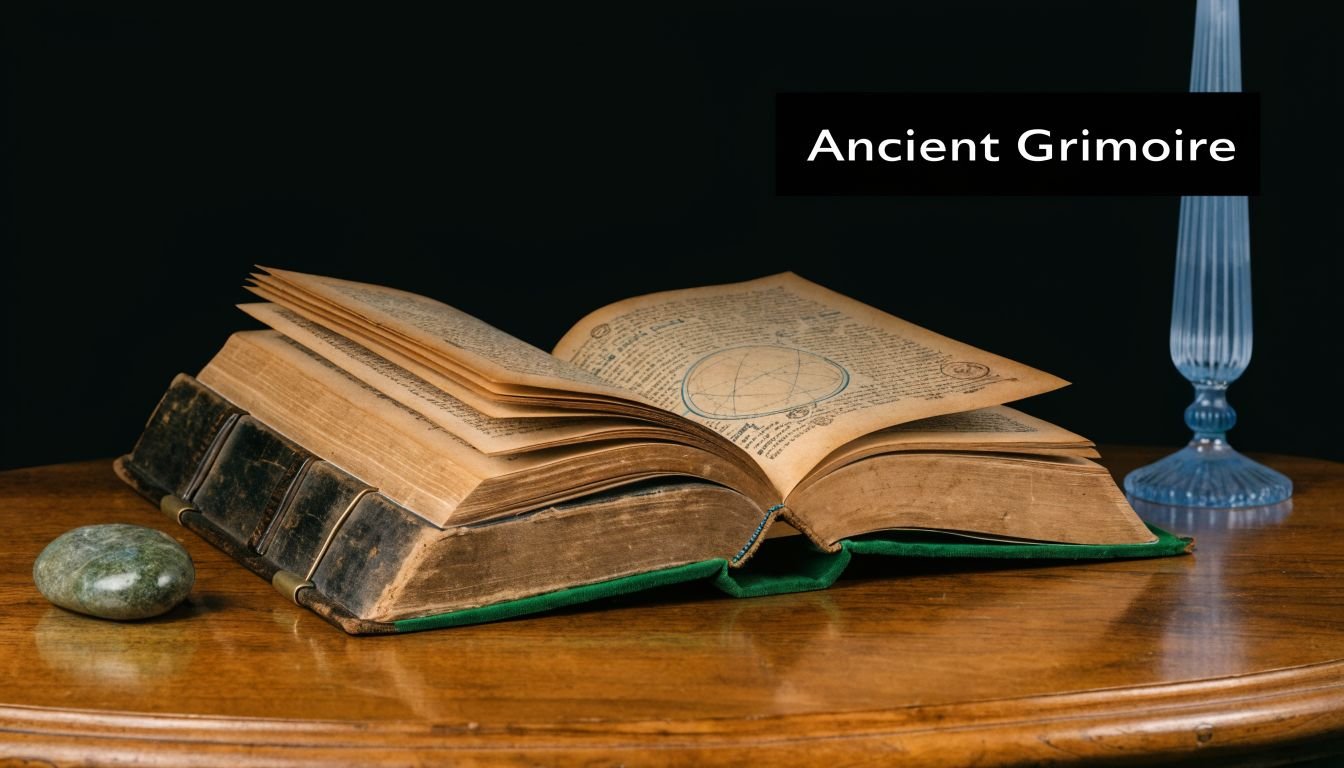
A book of ceremonial magic usually refers to a grimoire, a text that collects ritual knowledge, symbolic systems, and instructions for interacting with spiritual forces. Think of it less as a casual spellbook and more like a dense operations manual from another era.
A grimoire is more than a spellbook
A modern reader might expect a list of spells with quick instructions. That isn't usually what these books are. Grimoires often combine theology, cosmology, spiritual hierarchies, ritual timing, diagrams, names of angels or spirits, protective formulas, and rules for the practitioner's conduct.
Arthur Edward Waite played a major role in making this material more accessible to later readers. His The Book of Ceremonial Magic was first published in a limited run in 1898 under the title The Book of Black Magic and of Pacts, and it synthesized and analyzed medieval grimoires such as the Key of Solomon, the Grimoire of Honorius, and the Goetia, as noted in Waite's publication history and overview. That matters because Waite did more than present dramatic legends. He organized and examined older material in a way that helped readers study it as a body of tradition.
You can think of a grimoire as spiritual technology on paper. It tries to answer questions like these:
- What force are you trying to contact
- When should the ritual happen
- What tools or symbols are required
- How do you protect yourself
- How do you close the work cleanly
That level of procedure can feel rigid. But it also reveals something useful. Historical ceremonial magic wasn't random. It was built on the idea that intention becomes stronger when it is carefully shaped.
Famous grimoires at a glance
| Grimoire | Approx. Origin | Primary Focus |
|---|---|---|
| Key of Solomon | Medieval or Renaissance European tradition | Ritual procedure, tools, circles, pentacles, timing |
| Goetia | Early modern compilation within the Lesser Key of Solomon tradition | Evocation of spirits and their sigils |
| Grimoire of Honorius | Medieval and later manuscript tradition | Ritual authority, conjurations, spirit work |
| Black Pullet | Later European grimoire tradition | Talismans, occult secrets, symbolic operations |
A grimoire often tells you as much about the worldview of its era as it does about ritual practice.
For a beginner, that's the healthiest place to start. Read these texts as records of how people organized sacred action, not as pressure to perform everything they describe.
Inside a Grimoire The Core Components
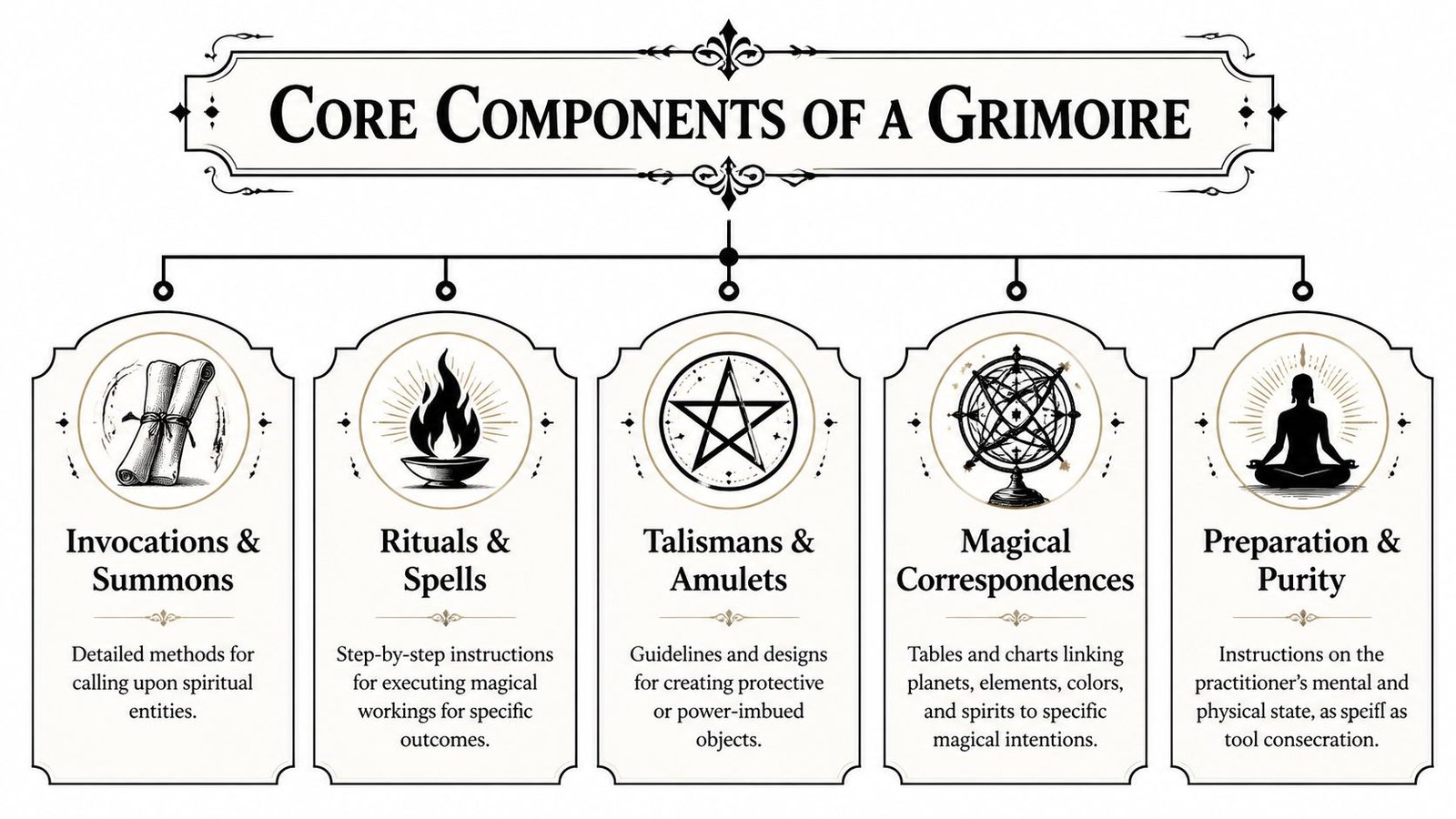
Open a grimoire and you'll notice something quickly. It isn't loose or casual. The parts work together like a formula. If one piece is missing, the whole operation is considered unstable.
Why symbols and timing mattered
In Waite's synthesis of texts like the Key of Solomon, he describes the construction of a magical circle with sigils of the seven planetary angels and notes that successful theurgy depends on exact timing, such as planetary hours and the waxing moon, along with operator purity, according to this edition of Waite's text. For the historical practitioner, these details weren't decorative. They were functional.
If that sounds strange, compare it to baking bread or mixing medicine. The ingredients alone aren't enough. Timing, temperature, sequence, and cleanliness all matter. Grimoires apply that same logic to sacred work. A name must be written correctly. A prayer must be said in order. A circle must be prepared precisely. The practitioner must be mentally and physically ready.
The main building blocks
Here are the components readers most often find confusing at first.
Sigils are symbolic marks associated with angels, spirits, or powers. You can think of them as ritual signatures. In grimoire logic, they identify and focus the operation.
Correspondences connect planets, days, colors, metals, herbs, divine names, and spiritual beings. These systems tell the practitioner what fits together. Mercury might be used for communication, Saturn for limits or severity, the Sun for illumination.
Circles and boundaries serve as protection and containment. A magic circle wasn't just a drawing on the floor. It represented a controlled sacred environment.
Invocations and conjurations are formal spoken addresses. Some call upon divine help. Others summon or command spirits. The language is often elevated, repetitive, and very deliberate.
Purification rules govern the operator's state. Fasting, prayer, bathing, abstinence, and confession appear because the practitioner was expected to arrive prepared, not scattered.
A short comparison makes this easier to see:
| Component | Historical purpose | Modern plain-language analogy |
|---|---|---|
| Sigil | Identify a spiritual force | A visual focus point |
| Planetary timing | Match the ritual to a cosmic pattern | Choosing the right time for a task |
| Circle | Protect and define sacred space | Setting boundaries before deep inner work |
| Invocation | Direct consciousness through spoken intent | A focused affirmation or prayer |
| Purification | Prepare mind and body | Grounding before meditation |
Many readers get stuck on the dramatic parts, especially names of spirits or complex diagrams. But the deeper pattern is simpler. A grimoire assumes that attention must be trained. You don't drift into sacred work. You prepare, focus, act, and close.
When a ritual text seems complicated, ask what function each part serves. Protection, focus, timing, authority, or closure.
That question keeps the material readable. It also helps modern seekers extract wisdom without getting tangled in fear or fantasy.
The Ritual Structure of Ceremonial Magic
Ceremonial magic follows sequence. That's one reason it can feel intimidating. The ritual isn't improvised the way a personal prayer might be. It is arranged more like a sacred performance with defined roles, cues, and closing steps.
Preparation came first
Before the central act of any ceremony, the operator was expected to prepare thoroughly. In grimoire tradition, preparation could include cleansing the body, selecting the proper day and hour, readying incense, arranging tools, and entering a focused mental state.
That preparation wasn't busywork. It created psychological seriousness. It told the practitioner, "I'm leaving ordinary space and entering sacred space." Modern readers can understand this immediately. You already do a softer version when you lower the lights, silence your phone, and take a few breaths before journaling.
Some students of ritual theory find it helpful to compare this to stagecraft. Before a performance begins, the set is built, the costumes are ready, the lighting is chosen, and everyone knows their marks. Ceremonial magic treated the unseen world with that same degree of formality. If you want a wider grounding in how ritual systems are interpreted in occult practice, this overview of magick theory and practice offers a useful companion perspective.
The working had a clear sequence
Once preparation was complete, the ritual proper began. While different grimoires vary, the internal logic often moves in a recognizable pattern.
Mark the sacred boundary. This usually means casting or entering the circle, arranging names, sigils, or symbols, and defining the space as protected.
State the authority of the work. Many grimoires rely on divine names, prayers, psalms, or formal declarations to frame the action within a higher order.
Perform the central operation. This could be invocation, prayer, talisman consecration, petition, or evocation, depending on the text.
Maintain the boundary. The ritual often includes repeated words, gestures, or commands intended to preserve focus and control.
The structure matters because it keeps the practitioner from wandering. It creates a container. Even if you set aside the supernatural claims, the procedural rhythm itself can have a strong effect on concentration.
Closing the ritual mattered
Beginners often overlook the end. Grimoires usually did not.
The closing phase might include a formal dismissal, thanksgiving, banishing, and a return to ordinary awareness. In practical terms, this is the ritual equivalent of tidying the room after deep emotional work. It signals that the experience is complete and that you are no longer in the heightened state of the ceremony.
- Dismissal prevents the working from feeling open-ended.
- Banishing clears residue and reasserts order.
- Grounding helps the practitioner return to everyday life.
- Record keeping allows reflection instead of obsession.
That last point is surprisingly modern. Writing down what happened can keep spiritual practice anchored. It gives the mind somewhere to place the experience instead of replaying it endlessly.
Safety and Ethics in Magical Practice
Some grimoires are fascinating. Some are beautiful. Some are unsettling for good reason. Historical ceremonial magic includes material that many people should approach with caution, especially when it involves coercive spirit work, necromancy, or obsessive attempts to force results.
Why caution belongs here
Waite's discussion of goetic systems and necromancy emphasizes serious risk. The verified summary notes that he cites historical trials in which a high percentage of practitioners suffered psychological collapse, and that he implicitly endorses mitigation such as the Lesser Banishing Ritual of the Pentagram, which was reported in Golden Dawn circles to reduce adverse effects, as described in this referenced discussion of Waite's analysis.
You don't have to read that as proof of every occult claim to take the warning seriously. Intense symbolic work can affect vulnerable minds. So can sleep disruption, isolation, obsession, and suggestibility. A person who approaches ritual in a dysregulated state can spiral into fear, grandiosity, or fixation.
Key safeguard: If a practice weakens your clarity, increases compulsion, or makes daily life less stable, step back.
Ethics matter just as much as safety. A lot of old ritual literature assumes a command-and-control model. It speaks the language of domination, threats, and force. Many modern seekers will find that spiritually misaligned. That's a healthy instinct. If your spiritual path is built on healing, consent, reverence, and grounded self-awareness, you don't need to adopt hostile ritual frameworks.
Protection starts before any ritual
Real protection isn't a dramatic tool on an altar. It starts with discernment.
Know your motive. Are you seeking insight, healing, and inner order, or are you chasing power, revenge, and certainty?
Stay psychologically grounded. If you're in acute distress, severe anxiety, or emotional instability, complex ritual work isn't a wise experiment.
Use cleansing and closure. Historical banishing practices, including the LBRP, are often valued because they emphasize boundaries and reset.
Keep ordinary support in place. Sleep, meals, conversation, and routine matter more than occult atmosphere.
A helpful visual guide can make this less abstract:
If you're reading grimoires from a modern self-care perspective, the safest takeaway is simple. Borrow the principles of clarity, preparation, boundaries, and closure. Leave behind the compulsion to test dangerous material just because it sounds powerful.
Adapting Ancient Magic for Modern Spirituality
The most useful way for beginners to engage a book of ceremonial magic is to translate its principles into practices that support calm, focus, and self-respect. You don't need a severe ritual chamber to do that. You need a few clear ideas.

Translate the principle, not the drama
A ceremonial circle can become sacred space. Instead of drawing complex symbols, you might light a candle, open a window, place a crystal nearby, and decide that for the next few minutes this space is for truth and peace only.
An invocation can become intention setting. Rather than reciting long conjurations, you speak a clear sentence aloud: "I welcome clarity." "I ask for peace." "I release what isn't mine to carry."
Purification can become nervous system preparation. A bath, a few minutes of silence, clean clothing, gentle stretching, or breathwork all serve the same broad function. They help you arrive fully.
A banishing ritual can become energetic closure. You might ring a bell, clap in the corners of the room, pray, journal, or imagine returning scattered energy to yourself. If you're interested in wider philosophical ideas that influenced modern esoteric thinking, this introduction to the Kybalion can give useful context without requiring heavy ritual practice.
Ancient ritual often asks, "How do I prepare for sacred contact?" Modern self-care asks the same question in kinder language.
A gentle modern version
Here is one calm adaptation that keeps the spirit of ceremonial structure without the intensity of grimoire practice.
| Ceremonial principle | Gentle modern practice |
|---|---|
| Define sacred space | Tidy one small area and light a candle |
| Purify | Wash hands, breathe slowly, put away distractions |
| Invoke | Speak one honest intention aloud |
| Focus | Meditate, pray, or journal for a set period |
| Close | Thank the moment, extinguish the candle, stretch, drink water |
Historical study becomes a source of strength. It shows that many practices people already love have deep roots. Setting out herbs carefully, choosing a moon phase for reflection, or cleansing a room after conflict all echo older ritual instincts. The difference is that modern seekers can keep what nourishes and leave what harms.
You don't need ornate language to create reverence. You need sincerity, boundaries, and steadiness.
Your Path Forward and Further Reading
If ceremonial magic has felt intimidating, let your next step be modest. Read slowly. Stay curious. Keep your feet on the ground.
A healthy beginner path usually looks like this:
- Start with history. Learn what grimoires are before deciding what they mean to you.
- Practice protection first. Sacred space, grounding, and closure are more important than dramatic ritual language.
- Choose reflective work over forceful work. Journaling, meditation, prayer, and cleansing are strong foundations.
- Keep ethics in view. If a method feels manipulative or destabilizing, it's not a wise fit.
For further reading, look for beginner-friendly books on ritual theory, energy hygiene, symbolism, and contemplative practice. Favor authors who write clearly and emphasize discernment, psychological well-being, and personal responsibility over fear or bravado.
If you'd like a grounded starting point for daily spiritual practice, a simple guide can help more than a dense grimoire. Something that teaches consistency, cleansing, reflection, and intention-setting will serve most beginners better than diving into ceremonial complexity. For that kind of practical support, this spiritual awakening guide offers a gentle next step.
If you're looking for a calm, supportive way to build sacred space, protect your energy, and create a steady spiritual routine, Spiritual Method offers a compassionate path with practical rituals, grounding tools, and intention-based practices for everyday life.
Pingback: Pentacle of Jupiter: A Practical Guide to Abundance
Pingback: Devotion vs. Transaction in Demon Work: A Practitioner’s Guide – Black Witch Coven
Pingback: 5 Exercises Under 1 Hour to Sharpen Horror Worldbuilding for Writers