
You can reliably protect your aura with a short, repeatable routine built on four pillars: grounding, shielding, cleansing, and breath or embodiment work. A minute of barefoot grounding, a thirty-second visualization shield, a quick cleansing rinse, and three slow breaths form a daily habit that keeps your energy field steady without demanding hours of ritual.
TL;DR:
- Consistent grounding before shielding and after emotionally heavy interactions prevents protection routines from feeling thin or ineffective.
- Rotating shielding scripts, such as white-light, mirror, and color cloaks, maintains their efficacy and prevents habituation.
- Regular cleansing using salt baths, water rinses, or sound tools helps clear persistent energetic residue caused by stress or intense events.
- Pairing breathwork and body awareness with visualization enhances emotional regulation and short-term anxiety reduction.
- Addressing physical and emotional factors like poor sleep, dehydration, or unresolved trauma is essential to prevent energetic depletion.
Table of Contents
- Grounding Techniques: Why Grounding Matters and Four Practical Exercises
- Shielding and Visualization: Scripts for Different Situations
- Cleansing Rituals: From Sixty-Second Resets to Deeper Clears
- Breath and Embodiment Work: Why Combined Attention Helps
- Daily Maintenance and Signs Your Aura Needs Clearing
- Common Mistakes and Safety Notes to Keep Practice Effective
- Spiritual Method’s Tools for Building a Protection Practice
- Types and Colors of Auras and What They Tend to Mean
- Advanced Auric Protection Methods for Established Practices
- Energetic Protection vs. Emotional Boundaries: What’s the Difference?
- Scientific and Skeptical Perspectives on Auric Protection
- A Practitioner’s Note on Discernment Over Impenetrability
- Build Your Protection Practice With Our Downloadable Guide
- FAQ
- Sources
Grounding Techniques: Why Grounding Matters and Four Practical Exercises
Grounding keeps you anchored in your body before any shielding or clearing work begins. Without it, protective visualization can feel thin or disconnected, because you are trying to defend a field you are not fully occupying. Grounding also prevents the mild dissociation that sometimes follows intense emotional or energetic contact, according to a pattern noted in Barbara Brennan’s work on energy healing.
Four exercises cover most situations:
- Barefoot earthing: stand on grass, soil, or a wood floor for sixty seconds and feel weight settle through your feet.
- Thirty-second sensory grounding: name five things you see, four you hear, three you can touch.
- Progressive muscle relaxation (PMR): tense and release each muscle group from feet to shoulders.
- Breath anchor: inhale for four counts, exhale for six, repeating until your shoulders drop.
Ground before shielding, after any emotionally heavy conversation, and once each morning as a baseline. Our grounding techniques for anxiety relief guide walks through longer versions of these same exercises.
Pro Tip: Keep one grounding exercise memorized by heart so you can use it standing in line or mid-conversation, with no notes needed.
Shielding and Visualization: Scripts for Different Situations
Shielding works best as a short, specific visualization rather than a vague wish to “stay protected.” Each script below takes under a minute once practiced.
- White-light shield: picture a sphere of bright white light surrounding your entire body, extending about an arm’s length in every direction, and hold it for three breaths.
- Mirror shield: visualize the outer surface of your light sphere as reflective, sending any directed negativity back outward rather than absorbing it.
- Cloak of color: wrap yourself in a color that matches your need: gold for confidence in social settings, deep blue for calm during conflict, green for recovery after caretaking work.
The white-light shield suits crowds and general public spaces. The mirror shield fits encounters with a specifically hostile or draining person. The cloak works well in longer sessions, such as therapy, caregiving, or healing work, where you need sustained emotional steadiness rather than a quick block. Experienced practitioners recommend rotating between these approaches, since relying on one script repeatedly can dull its effect through habituation, a point echoed in summaries of Barbara Ann Brennan’s Hands of Light.
Always ground first and pair the visualization with slow breath. If a shield feels weak or you keep losing the image, stop and return to grounding and breath before trying again.
Pro Tip: Picture your shield in as much sensory detail as possible, temperature, sound, texture, since vague images fade faster than vivid ones.
Cleansing Rituals: From Sixty-Second Resets to Deeper Clears
Cleansing removes the energetic residue that grounding and shielding alone do not clear. Quick resets work for daily use, while deeper rituals suit heavier buildup.
- Cold shower rinse: thirty seconds of cooler water at the end of your shower, imagining residue washing away.
- Intentional hand or face wash: pause and name what you are releasing while the water runs.
- In-shower salt scrub: a small handful of coarse salt massaged over arms and shoulders before rinsing.
- Salt bath: a longer soak, roughly fifteen to twenty minutes, for weekly or after-intense-day use.
- Bell or tuning fork clear: sound passed around the body’s edges to loosen stagnant energy.
- Smoke smudging or smoke-free alternatives: dried herb bundles or a mist spray where smoke is not practical.
If you smudge, open a window or door first and keep the flame away from hair, curtains, and loose fabric; anyone with asthma or respiratory sensitivity should choose a smoke-free mist instead. After any deeper clear, ground again for a minute and jot a line in a journal about what shifted. Our full list of aura cleansing methods covers additional options in more depth.
Breath and Embodiment Work: Why Combined Attention Helps
Breath and body work regulate the nervous system state that protection practices depend on. A simple PMR script, tense each muscle group for five seconds and release, moving head to toe, takes about three minutes and lowers physical tension before shielding. Pair it with this breath pattern:
- Inhale through the nose for four counts.
- Hold gently for two counts.
- Exhale through the mouth for six counts.
- Repeat four to six cycles.
Combined attention to breath, body, and thought reduces state anxiety more effectively than breath-only techniques, according to a systematic review of brief interventions, which found larger effect sizes for approaches that layer embodiment with breathing rather than relying on breath alone. Separately, research on mindfulness meditation programs found a moderate effect size of about 0.38 for anxiety improvement after eight weeks of regular practice, supporting the case for daily rather than occasional use.
Use passive attention, simply noticing breath and sensation, when you have a few quiet minutes. Use active breathing patterns like the one above when you need fast regulation before walking into a difficult room. Layer either into your shield visualization rather than treating them as separate steps.
Daily Maintenance and Signs Your Aura Needs Clearing
A three-step daily rhythm keeps your field steady without turning protection into a chore: ground for one minute each morning, reset your shield mentally at midday, and clear with a short rinse or breath pattern each evening.
Watch for these signs that deeper clearing is overdue:
- Fatigue that does not match your actual sleep or workload.
- Mood shifts that feel borrowed rather than rooted in your own day.
- Residue from vivid or unsettling dreams lingering into the morning.
- A persistent sense of carrying someone else’s tension in your shoulders or chest.
Weekly salt baths or sound clears work well for general upkeep. After an especially intense conversation, caregiving shift, or crowded event, clear the same day rather than waiting for your weekly ritual. Our aura cleansing methods list offers more options to rotate through so no single ritual grows stale.
Common Mistakes and Safety Notes to Keep Practice Effective
Three mistakes undercut most protection routines: skipping grounding before shielding, leaning on a single technique until it stops working, and mistaking an internal emotional state for an outside energetic attack.
- Ask “Is this mine?” before assuming a feeling came from someone else.
- Label the emotion briefly out loud or in writing, “this is frustration,” rather than analyzing it at length.
- Use a return-to-body cue, pressing your feet into the floor, to pull attention back when a practice feels too abstract.
- Ventilate any room where you smudge, and skip smoke entirely if anyone present has a respiratory condition.
When protection feels ineffective, scale back rather than adding more techniques. Return to grounding and basic breathwork for a few days before layering shields and cleansing back in.
Pro Tip: If a shield stops working, the fix is almost never a stronger visualization, it is usually a missed grounding step.
Spiritual Method’s Tools for Building a Protection Practice
We built our resources around the same four-pillar approach covered above, because lasting energy hygiene comes from repetition, not a single elaborate ritual.
- Our grounding techniques for anxiety relief guide expands the exercises in this article into full daily sequences.
- Our empath protection rituals page offers targeted scripts for readers who absorb others’ emotions easily.
- Our essential guide to spiritual awakening and energy ties grounding, shielding, and cleansing into one overview.
- Our thirty-second breathwork reset gives a portable version of the breath anchor described above.
Readers who want these practices organized into a single routine, with tracking built in, can apply them directly through our downloadable guide.
Types and Colors of Auras and What They Tend to Mean
These descriptions vary across schools of practice, so treat them as a reflective framework rather than a fixed diagnostic.
Red is commonly associated with physical vitality or, when darker, unresolved anger. Orange tends to point to creativity and social confidence. Yellow often reflects mental activity and optimism, while a dull or muddy yellow can suggest overthinking or worry. Green is frequently linked to balance, growth, and sometimes a need for healing. Blue relates to calm communication and emotional honesty. Indigo and violet are usually tied to intuition and spiritual focus. White or clear tones often appear during periods of heightened clarity or transition.
Color is rarely read as a single fixed trait. A person’s field is generally understood to shift day to day and even hour to hour depending on stress, rest, and the situations they move through. Rather than fixating on identifying “your” permanent color, most practitioners treat these readings as a check-in tool: a quick way to notice what state you are in before choosing which grounding, shielding, or cleansing technique fits the moment.
Advanced Auric Protection Methods for Established Practices
Once the daily basics feel steady, a few advanced methods extend protection further. Crystal grids involve arranging stones such as black tourmaline, clear quartz, or amethyst in a geometric pattern around a room or workspace, with the intention of creating a sustained protective field rather than a momentary shield. These grids are typically refreshed weekly, since stones are believed to absorb energy over time and benefit from their own cleansing.

Energy cord cutting addresses attachments that form between people after intense emotional exchanges, romantic, familial, or professional. The practice usually involves visualizing a cord connecting you to the other person, then imagining it being cut or dissolved with intention, followed by a grounding exercise to reestablish your own boundary. This is generally recommended after a breakup, a difficult family interaction, or the end of a draining work relationship, rather than as a daily habit.
Other advanced approaches include layered shielding, combining a white-light sphere with a mirrored outer layer for situations that demand both calm and active deflection, and anchored intention objects, a specific piece of jewelry or stone charged with protective intention and worn during high-exposure days. These methods work best once grounding, basic shielding, and cleansing are already consistent habits, since advanced techniques built on an unstable foundation tend to underperform.
Energetic Protection vs. Emotional Boundaries: What’s the Difference?
Energetic protection and emotional boundaries address related but distinct problems. Energetic protection, the grounding, shielding, and cleansing work covered throughout this article, focuses on managing what you absorb from your surroundings and other people’s states. Emotional boundaries focus on what you choose to accept, participate in, or allow into your schedule and relationships in the first place.
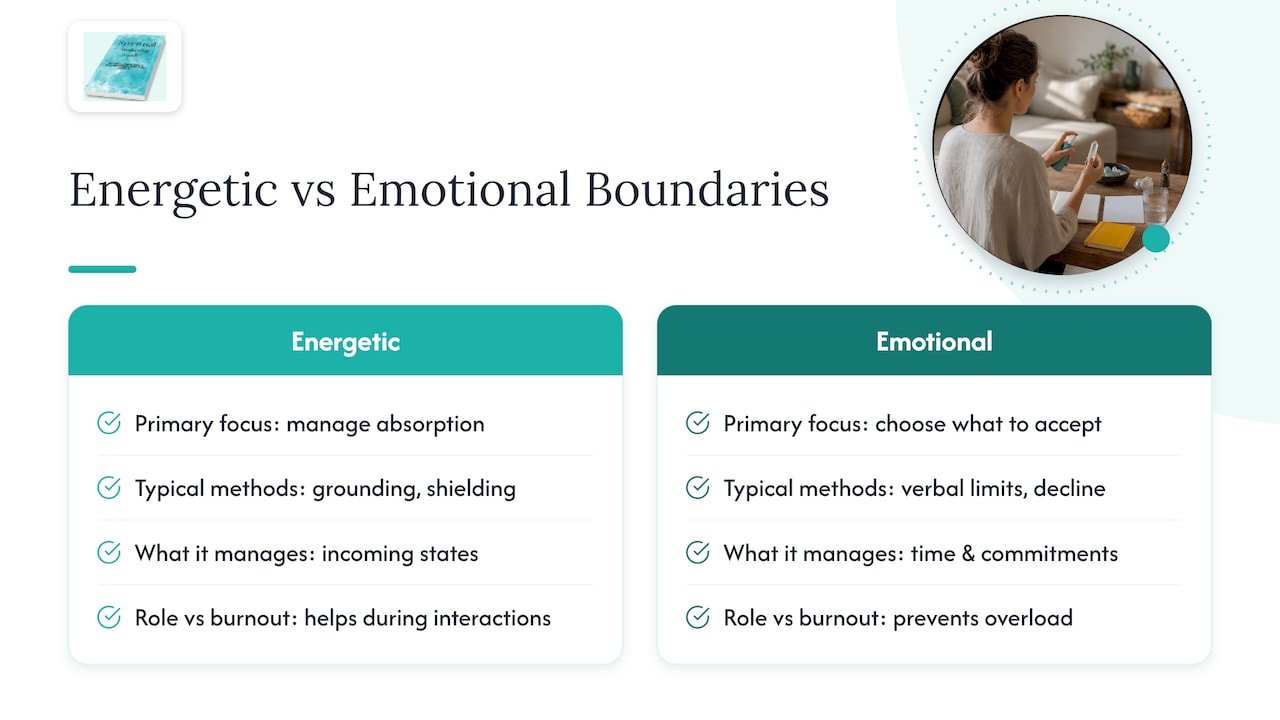
A practitioner can hold a strong energetic shield while still saying yes to draining commitments, which is why protection work alone rarely solves chronic burnout. Conversely, someone with firm boundaries, declining an overloaded schedule, limiting contact with a difficult relative, can still benefit from grounding and shielding during the interactions they do choose to keep.
Summaries of Barbara Ann Brennan’s work frame energetic protection as an act of boundary-setting in itself, with the simple question “is this mine?” serving as a primary defense against absorbing someone else’s state. That question works at the intersection of both skills: it is an energetic check and an emotional boundary in a single breath. Building durable protection generally means practicing both together, the visualization work to manage what you absorb and the direct, verbal boundaries to manage what you agree to in the first place.
Scientific and Skeptical Perspectives on Auric Protection
The aura itself, as a literal field with measurable colors and layers, has not been established through controlled scientific study, and skeptical readers are right to treat that part of the framework as a belief system rather than a verified fact. What research does support is the underlying mechanism many of these practices rely on: breath regulation, body awareness, and attention training measurably affect anxiety and nervous system state.
A review of mindfulness meditation programs found small-to-moderate reductions in anxiety and depression across randomized trials, with effects building over weeks of consistent practice rather than appearing after a single session. Separately, a systematic review of brief respiratory and embodiment interventions found that techniques combining attention to breath, body, and thought outperformed breathing-only approaches for reducing short-term anxiety.
Read generously, auric protection techniques function as a structured container for practices with real, studied effects, even where the metaphysical framing itself remains unproven. Readers who want the practical benefit without the belief system can focus on the grounding, breath, and embodiment steps, which carry the clearest evidence, while treating the visualization and color symbolism as optional supportive ritual rather than claims to verify.
A Practitioner’s Note on Discernment Over Impenetrability
Protection is not about building something impenetrable. It is about discernment, noticing what is yours, what is borrowed, and what you are ready to release. My own cue is a single grounded breath before any difficult conversation. Try your own version for a week and journal what shifts.
— Sean
Build Your Protection Practice With Our Downloadable Guide
Reading about grounding, shielding, and cleansing is a start, but the routines above become second nature only with repeated practice. We built our spiritual awakening guide to turn these exact techniques into a structured daily habit rather than scattered ideas you have to remember on your own.
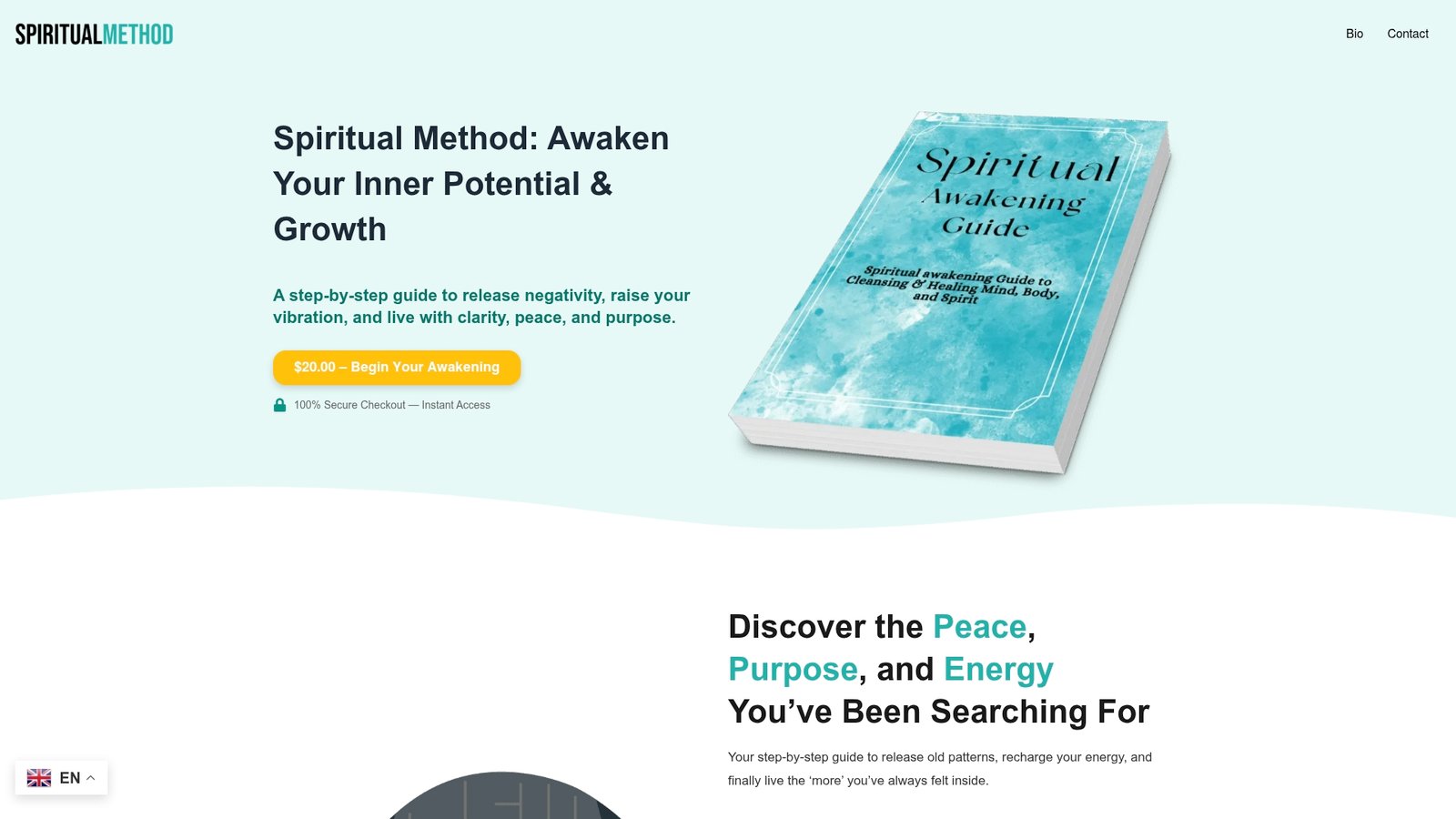
Inside, you will find:
- Step-by-step rituals for grounding, shielding, and cleansing.
- A forgiving habit tracker designed for days when practice slips.
- Templates for journaling what each technique reveals over time.
Readers who want EFT-style tapping as an additional body-based tool can explore Emotional Freedom Technique sessions through our partner’s platform, and those setting up a cleansing space can look at non-toxic candles for safer ritual ambiance. Get the spiritual awakening guide and start building your own protection routine today.
FAQ
How do you keep your aura protected throughout the day?
Protect your field with a short morning grounding exercise, a midday shield visualization, and an evening cleansing rinse or breath pattern. Consistency matters more than intensity, so a one-minute routine repeated daily works better than an elaborate ritual done rarely.
What are the seven layers of the aura?
Many traditions describe seven layers, often named the etheric, emotional, mental, astral, etheric template, celestial, and causal bodies, each linked to a different aspect of physical, emotional, or spiritual experience. Definitions vary across schools of practice, so treat this as one common framework rather than a universally agreed structure.
How can you block someone’s negative energy spiritually?
Start with a grounding exercise, then visualize a mirror shield around your body that reflects unwanted energy outward rather than absorbing it. Pair the visualization with slow breathing, and ask yourself “is this mine?” to separate your own feelings from what you might be picking up from someone else.
How do you block general negative energy spiritually?
A white-light shield combined with grounding is the most common general-purpose technique: picture a bright sphere of light surrounding your body and hold the image for a few slow breaths. Daily cleansing, such as a cold shower rinse or salt bath, helps clear residue that builds up even with regular shielding.
Does science support any part of auric protection practice?
The aura as a literal field has not been established through controlled research, but the breath and body awareness techniques used in protection rituals do have supporting evidence. Research on brief embodiment and breathing interventions found they reduce short-term anxiety, and mindfulness meditation programs show moderate improvement in anxiety after eight weeks of regular practice.
Sources
Auric depletion is generally described as building up gradually rather than happening all at once. Prolonged exposure to high-conflict environments, whether a tense workplace or a strained relationship, is one of the most frequently cited causes, since sustained vigilance keeps the nervous system and, by extension, the energy field in a reactive state.
Caretaking roles without adequate recovery time are another common source, particularly for people who regularly absorb others’ emotional states, such as caregivers, healers, and those in frontline service roles. Crowded or chaotic physical spaces, airports, hospitals, and large events are often named as draining because they expose the field to many overlapping emotional signals at once. Unresolved grief or trauma can also leave a lingering depletion, since energy that would otherwise circulate freely gets held in place around the unprocessed material.
Poor sleep, dehydration, and extended screen exposure are physical contributors that practitioners link to auric fatigue as well, since the body and energy field are treated as interconnected rather than separate systems. Finally, skipping basic daily maintenance, the kind of one-minute grounding and shielding routine outlined earlier, is cited as one of the simplest and most preventable causes of gradual depletion.
- A systematic review of brief respiratory, embodiment, cognitive, and mindfulness interventions to reduce state anxiety (PMC)
- Meditation programs for psychological stress and well‑being (JAMA review / PubMed)