
Types of spiritual journaling prompts are structured questions or themes designed to deepen self-awareness, spiritual growth, and mindfulness through written reflection. Unlike free-form writing, these prompts guide you into specific areas of inner work, from gratitude and shadow exploration to prayer and intuition development. Structured prompts outperform unstructured journaling for spiritual growth across all belief systems and traditions. This guide covers the core categories of spiritual writing prompts, how to use them effectively, and how to customize them for your personal practice.
What are the key types of spiritual journaling prompts?
Five primary categories define the landscape of spiritual journaling: Gratitude, Prayer and Petition, Scripture Reflection, Shadow Work, and Intuition Development. Each category targets a different dimension of inner growth, which is why rotating among them produces more complete self-awareness than staying with one type indefinitely. Knowing the difference between them helps you choose the right prompt for where you are right now.
Gratitude prompts direct attention toward what is already working in your life. They build psychological resilience by training the mind to recognize abundance rather than absence. A strong gratitude prompt sounds like: “What moment from today felt like a quiet gift, and why did it matter to you?” These prompts connect naturally to cultivating spiritual awareness and appreciation as part of a broader awakening practice.

Shadow work prompts address the unconscious patterns, fears, and suppressed emotions that shape behavior without your awareness. Shadow work as part of spiritual journaling uses targeted prompts to surface what the conscious mind typically edits out. An example prompt: “What emotion do I consistently avoid, and what does that avoidance protect me from?”
Prayer and petition prompts create space for honest spiritual dialogue rather than rehearsed language. The goal is raw, unscripted communication with whatever higher power or inner wisdom you recognize. An example: “What do I most need right now that I have not yet asked for?”
Scripture reflection prompts deepen engagement with sacred texts by moving beyond reading into personal application. They work across traditions, whether you draw from the Bible, the Tao Te Ching, or Rumi. An example: “Which passage spoke to me this week, and what does it reveal about my current situation?”
Intuition development prompts build trust in inner knowing by asking you to record and examine gut feelings, dreams, and subtle impressions. Dream journaling and subconscious insights connect directly to this category, helping you track patterns between your inner life and outer experience. An example: “What did I sense about a situation before I had any evidence, and was I right?”
How to use different types of spiritual journaling prompts effectively
Consistent practice produces measurable results. Journaling 15–30 minutes daily or 3–4 times weekly leads to self-awareness shifts within two weeks. That frequency is achievable for most people when the session feels purposeful rather than obligatory.
A practical system for building that consistency:
- Set a fixed time and location. Morning sessions work well for gratitude and intuition prompts because the mind is still close to the dream state. Evening sessions suit shadow work and prayer prompts, when the day’s events are fresh.
- Focus on one prompt category per week. Cycling through all five types in a single week dilutes the depth of each. Spending a full week with shadow work prompts, for example, allows patterns to surface across multiple entries.
- Let daily experience guide your prompt selection. Pairing real-life raw material with specific prompts produces more transformative entries than selecting prompts at random. If a difficult conversation happened today, a shadow work or prayer prompt will yield more insight than a gratitude prompt.
- Reduce activation energy before you begin. Environmental tweaks like meditation, music, or removing distractions shift the mind into reflective mode faster. Even two minutes of slow breathing before writing changes the quality of what comes out.
- Avoid scripting or editing as you write. Honest, unedited reflection leads to breakthroughs that polished writing never reaches. Write the first thought, not the best thought.
- Move from description to examination. The R.E.F.L.E.C.T. framework (Recount, Emotion, Find pattern, Look for meaning, Examine alternatives, Create next step, Take action) turns raw emotion into measurable growth when applied consistently.
- End each session with one concrete next step. Journaling that produces only insight without action reinforces passivity. A single sentence stating what you will do differently closes the loop between reflection and real change.
Pro Tip: If a blank page stops you before you start, treat the prompt as an invitation, not an assignment. Write one sentence in response and stop there. The next sentence usually follows on its own.
Which prompt types suit different spiritual needs?
The table below maps each prompt type to its primary focus, best use case, and the main challenge practitioners encounter.
| Prompt type | Primary focus | Best used when | Main challenge |
|---|---|---|---|
| Gratitude | Appreciation and abundance | Feeling disconnected or depleted | Becoming repetitive over time |
| Shadow work | Unconscious patterns and healing | Processing conflict or recurring emotions | Emotional discomfort during writing |
| Prayer and petition | Honest spiritual dialogue | Feeling spiritually distant or stuck | Slipping into scripted language |
| Scripture reflection | Meaning-making from sacred texts | Studying a specific text or tradition | Staying personal rather than academic |
| Intuition development | Inner guidance and trust | Making decisions or tracking gut feelings | Doubting or dismissing what arises |
Gratitude prompts work best as a daily anchor, especially during periods of stress or transition. Shadow work prompts are most productive when you notice a recurring emotional reaction you cannot explain. Prayer prompts break through spiritual dryness faster than any other type because they require nothing except honesty.
Combining prompt types within a single journaling practice produces results that no single type achieves alone. A session might open with a gratitude prompt to settle the mind, move into a shadow work prompt to examine a specific pattern, and close with a prayer prompt to release what was uncovered. That sequence mirrors the structure of daily spiritual practices that support a centered, grounded life.
Creative ideas for customizing your spiritual journaling practice
Personalization is what separates a journaling practice that lasts from one that fades after two weeks. Standard prompts provide the structure; your creativity provides the depth.
- Pair prompts with visual elements. Draw a simple mandala, paste a collage image, or sketch a symbol before writing. Visual engagement activates a different part of the mind and often surfaces material that words alone miss.
- Use sensory experiences as prompt material. A particular scent, a piece of music, or the texture of an object can serve as the starting point for an intuition or gratitude prompt. Sensory anchors bypass intellectual resistance.
- Integrate dream content. Record a dream fragment first, then apply an intuition development prompt to examine what it might reflect about your current inner state. This practice builds a direct line between the subconscious and conscious reflection.
- Connect prompts to sacred texts or rituals. Read one passage from a text that matters to you, then write in response to a scripture reflection prompt. Pairing the reading with a soul healing journaling practice deepens both the reading and the writing.
- Create seasonal or cyclical prompt sets. Assign specific prompt types to lunar phases, seasons, or personal anniversaries. Shadow work prompts align naturally with the new moon; gratitude prompts suit the full moon or solstice.
- Evolve your prompts over time. A prompt that felt powerful six months ago may feel flat today. Rewrite it from your current vantage point. The act of rewriting a prompt is itself a form of reflection.
Pro Tip: Keep a running list of prompts that produced unexpected or emotional responses. Return to those prompts every few months. The same question at a different life stage will produce a completely different answer, and that contrast is some of the richest material you will ever write.
Key takeaways
Spiritual journaling prompts produce the deepest growth when you match the prompt type to your current need, practice consistently, and write without self-editing.
| Point | Details |
|---|---|
| Five core prompt types | Gratitude, Shadow Work, Prayer, Scripture Reflection, and Intuition Development each target a distinct area of growth. |
| Consistency drives results | Journaling 15–30 minutes, 3–4 times weekly, produces measurable self-awareness shifts within two weeks. |
| Match prompts to experience | Selecting prompts based on current life events produces deeper insight than random cycling. |
| Avoid over-editing | Unscripted, honest writing bypasses the conscious mind and surfaces genuine breakthroughs. |
| Combine types for full growth | Pairing prompt types within a single session creates a more complete inner work experience. |
What consistent practice actually taught me
I spent the first year of my journaling practice using gratitude prompts almost exclusively. They felt safe. They felt productive. And they kept me from looking at anything that actually needed attention.
The shift happened when I spent a full week with shadow work prompts. The discomfort was immediate and real. I wrote things I had never said out loud, about resentment I had dressed up as patience and fear I had labeled as discernment. That week changed more about my self-awareness than the previous twelve months combined.
What I have found is that most people gravitate toward the prompt type that confirms what they already believe about themselves. Gratitude prompts for the optimist. Prayer prompts for the devout. The real growth lives in the category that creates resistance. If a prompt type makes you want to skip the session, that is the one worth sitting with.
The other thing I have learned is that perfection in journaling is a trap. Neat handwriting, complete sentences, and well-organized thoughts are not the goal. The goal is contact with what is actually true for you right now. A messy, honest entry outperforms a polished, careful one every time. Curiosity and non-judgment are the only tools you actually need.
— Sean
Spiritualmethod’s resources for deeper spiritual journaling
Spiritualmethod provides practical guidance for people who want to move beyond surface-level reflection and into genuine inner healing.
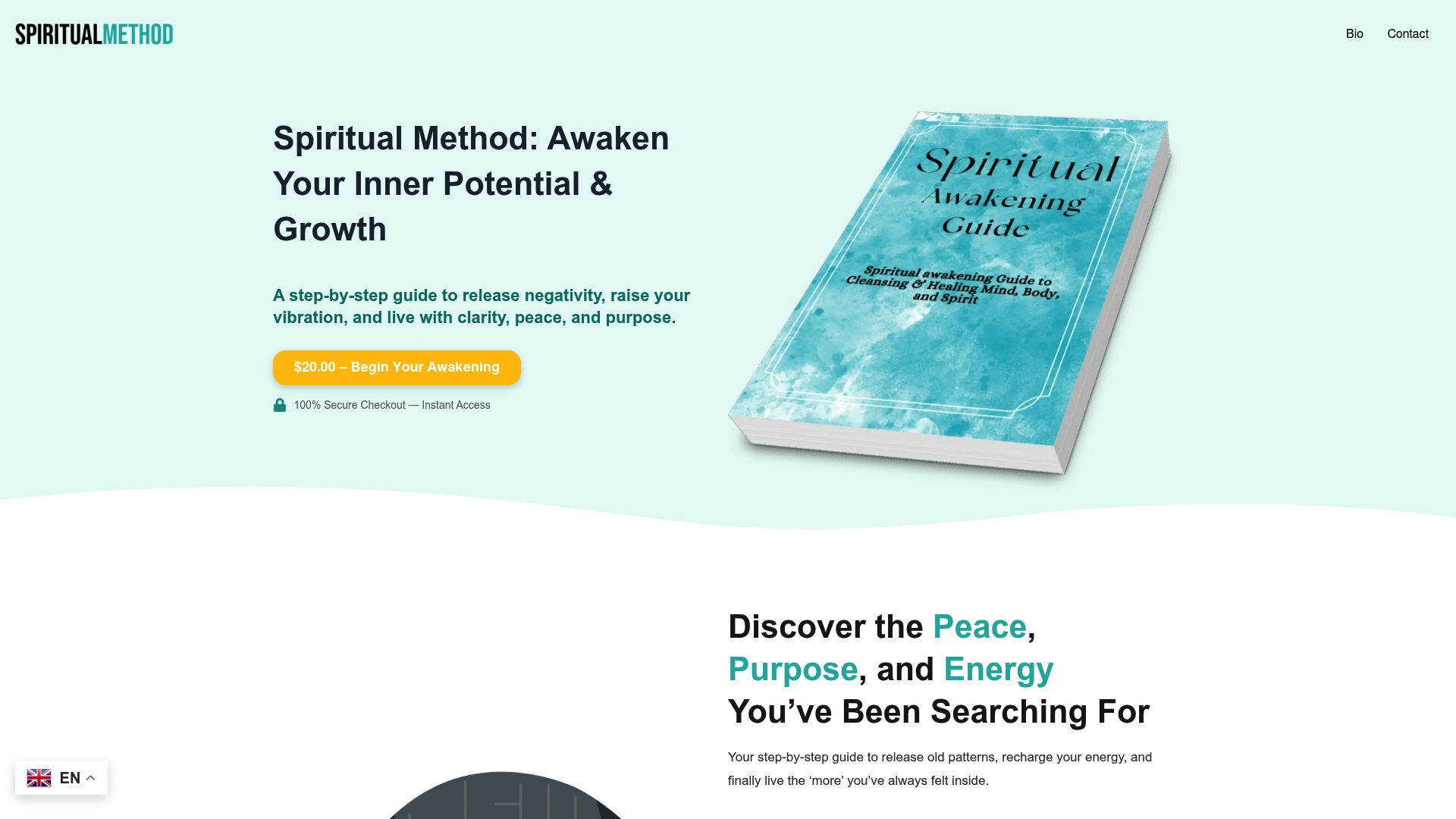
The journaling for soul healing guide at Spiritualmethod walks you through how to use structured prompts as part of a broader healing practice for the mind, body, and soul. For those ready to go deeper, the soul retrieval healing examples show how journaling integrates with more advanced restoration work. Spiritualmethod’s resources are built for practitioners at every stage, from those writing their first prompt to those refining a long-standing practice.
FAQ
What are the main types of spiritual journaling prompts?
The five main types are Gratitude, Shadow Work, Prayer and Petition, Scripture Reflection, and Intuition Development. Each type targets a different dimension of inner growth and works best when matched to your current spiritual focus.
How often should I use spiritual journaling prompts?
Journaling 15–30 minutes per session, three to four times weekly, produces measurable self-awareness shifts within two weeks. Consistency matters more than session length.
Are spiritual journaling prompts only for religious people?
Spiritual journaling is effective across all belief systems when structured prompts guide the practice. The prompts promote curiosity and inner awareness regardless of your religious or philosophical background.
What is the most common reason journaling practices fail?
Journaling failures most often result from a lack of prompt guidance and from treating prompts as assignments rather than invitations. Choosing a prompt that matches your current spiritual question reduces resistance and keeps the practice alive.
Can I combine different prompt types in one session?
Combining prompt types in a single session produces more complete inner work than using one type alone. A common sequence opens with a gratitude prompt, moves into shadow work, and closes with a prayer or intuition prompt.