
A supermoon ritual is a short ceremony that uses the full moon’s closest approach to Earth as a natural amplifier for intention setting, release, or gratitude work. Tonight, we recommend a simple 20-minute practice: write one intention, charge a jar of moon water on a windowsill, and close with three slow breaths. The process is symbolic, safe, and requires no special tools or experience.
TL;DR:
- NASA says about 25% of full moons qualify as supermoons, while the naked eye sees only a modest size difference.
- Choose release or manifestation before writing: name what you are letting go, or pair a specific outcome with one action you can take.
- If you can state your intention clearly, keep the ritual short; if it takes minutes to explain, set aside 45 minutes or more.
- Use a clean, covered jar, store moon water in a cool, dark place, and reserve it for symbolic use rather than drinking.
- Never leave a candle unattended or near paper and curtains; choose a flameless LED candle when open flame is not safe.
Table of Contents
- What Is a Supermoon and Why Practitioners Consider It Useful
- Why People Perform Rituals at a Supermoon
- A Step-by-Step Supermoon Ritual You Can Do Tonight
- How to Write Clear Intentions for Your Supermoon Ritual
- Practical Tips and Safety for Your Ritual
- How Our Guides Help You Build a Repeatable Moon Ritual Practice
- Choosing a Short Ritual or a Long Ceremony Tonight
- Bring Structure to Your Moon Practice With Our Guides
- FAQ
- Sources
What Is a Supermoon and Why Practitioners Consider It Useful
A supermoon happens when a full moon lines up with perigee, the point in the Moon’s orbit when it sits closest to Earth. At perigee the Moon sits roughly 226,000 miles away, compared with about 251,000 miles at apogee, its farthest point, according to JPL Education. That shift in distance can make a supermoon appear larger and brighter than the year’s smallest full moon, though the difference is subtle to the naked eye and far less dramatic than most photos suggest.
NASA Science notes that popular supermoon images are often exaggerated through telephoto lenses or editing, and the real visual change is modest without a side-by-side comparison. About 25% of all full moons qualify as supermoons, which makes the term less a rare cosmic event and more a seasonal marker, according to NASA Science.
For ritual purposes, this framing matters:
- A supermoon does not create new spiritual properties; it amplifies the energy already associated with that month’s full moon phase.
- Practitioners often treat it as a “volume knob” for existing full moon rituals rather than a reason to invent new ones.
- The practical value comes from the occasion itself, a clear calendar marker that encourages consistent reflection.
Why People Perform Rituals at a Supermoon
Most supermoon rituals center on four aims: releasing what no longer serves you, marking completion of a goal or chapter, charging an intention with focused attention, or simply gaining clarity before a new cycle begins. These aims mirror standard full moon practices, just performed with extra intentionality because the night carries a visible marker.
Sleep research offers a partial explanation for why some people feel different around full moons. Field and lab studies have found that human sleep timing and duration can shift slightly around full moon phases, with changes on the order of about 20 minutes, according to Science Advances. That modest shift may explain why some people report feeling more restless, energized, or emotionally alert near a full moon, which in turn shapes how useful a ritual feels to them that night.
Subjective experience plays a real role here. A ritual’s effectiveness depends less on measurable cosmic force and more on the intention and attention a person brings to it, which is why clear preparation and honest reflection consistently matter more than any specific tool.
A Step-by-Step Supermoon Ritual You Can Do Tonight
Before starting, gather a few simple items and decide where you will sit.
- A journal or notebook and pen.
- A candle (or a flameless LED candle if open flame is not an option).
- A clear glass jar for moon water, plus a quiet spot near a window or outdoors.
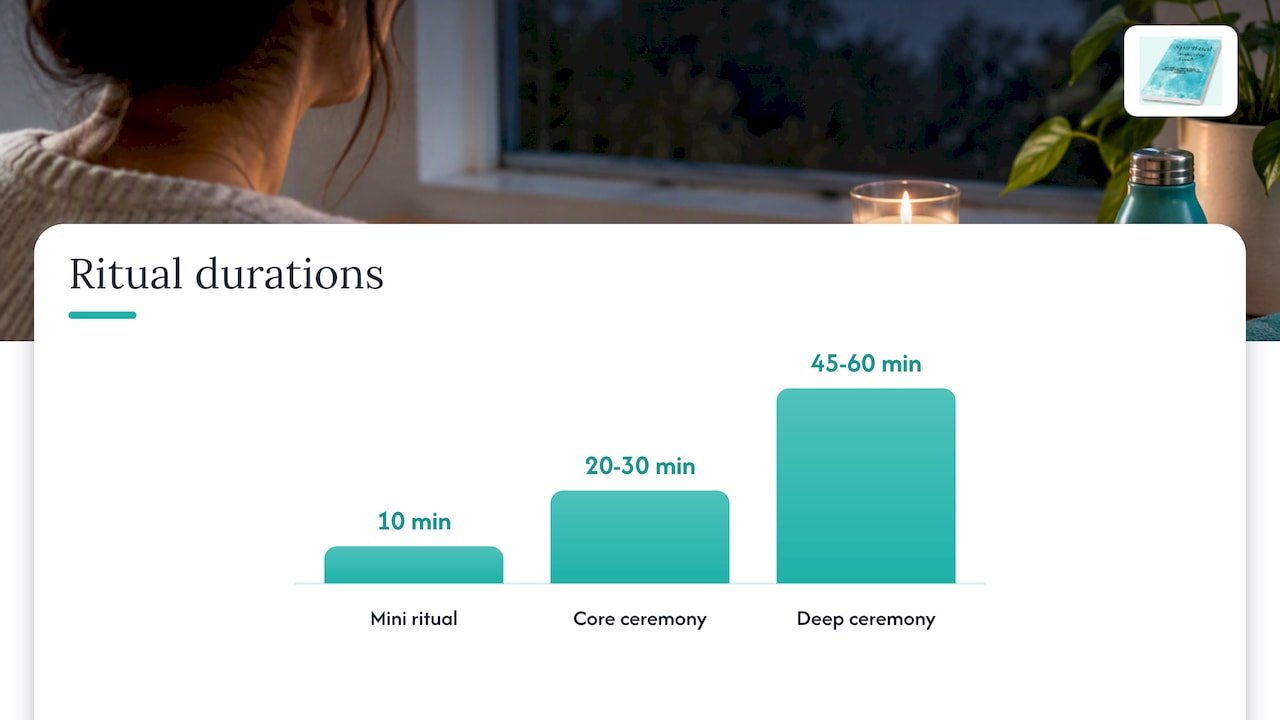
Core ceremony (20 to 30 minutes):
- Set the space. Dim the lights, light your candle or LED alternative, and sit somewhere quiet for a minute of slow breathing.
- Ground yourself. Place both feet flat on the floor, breathe in for four counts and out for six, and repeat five times to settle your nervous system.
- State your purpose. Say aloud or silently whether tonight’s ritual is about release, manifestation, or reflection.
- Write your intention. Use one clear sentence (templates follow in the next section) and read it back once.
- Charge or release. Hold the written intention near your candle for manifestation work, or tear the page and set it aside for release work.
- Place your moon water. Set a covered jar of water on a windowsill or outdoors where moonlight reaches it, and leave it overnight. Our moon water ritual guide covers safe placement and storage in more detail.
- Close with gratitude. Name one thing you are grateful for from the current cycle.
- Extinguish and seal. Blow out the candle, close your journal, and take three final breaths to mark the ritual’s end.
Variants for different schedules:
- 10-minute mini ritual: Skip the grounding breathwork, write a one-line intention, and set your moon water before bed.
- 45 to 60 minute deep ceremony: Add a short meditation, a sacred bath, and a longer journaling session; our 45-minute blue moon ritual walks through a comparable extended format with aftercare steps.
- Group format: Each participant writes and reads one intention aloud, then the group shares a single candle-lighting moment before closing together.
- No-fire, no-crystal option: Replace the candle with a phone flashlight or string lights, and use a written word or drawn symbol in place of a crystal to represent your intention. Our no-fire manifestation guide offers more substitutions for small spaces or shared housing.
Pro Tip: If you tend to feel restless near a full moon, schedule your ritual earlier in the evening and end with a grounding practice so you wind down rather than wind up before bed.
For a broader introduction to the format this ritual borrows from, our full moon ritual for beginners breaks down each phase in more depth.
How to Write Clear Intentions for Your Supermoon Ritual
Release statements and manifestation statements serve different purposes, and mixing them often produces vague results. A release statement names what you are letting go of and why; a manifestation statement names what you are inviting in and what action supports it.
- Release template: “I release [pattern or situation] because it no longer serves my [value or goal].”
- Release example: “I release the habit of overcommitting because it no longer serves my need for rest.”
- Manifestation template: “I welcome [specific outcome] and will support it by [one concrete action].”
- Manifestation example: “I welcome steadier focus at work and will support it by closing my laptop by 9 PM each night.”
Before writing, sit with a few prompts: What feels unfinished from this past month? What would completion look like? What is one action, not a wish, that moves this forward? What am I ready to stop carrying?
| Intention type | Core question | Example statement |
|---|---|---|
| Release | What no longer serves me? | “I release self-doubt about my career change.” |
| Manifestation | What do I want to invite in? | “I welcome clearer boundaries at work.” |
| Reflection | What have I learned this cycle? | “I recognize how far my patience has grown.” |
Anchor the intention with one action step you can complete within a week, such as a single conversation, a journal check-in, or a small routine change. This turns the ritual from a one-night symbol into the start of a measurable habit.
Practical Tips and Safety for Your Ritual
A few precautions keep your practice both safe and respectful.
- Fire safety: Never leave a candle unattended, keep it away from curtains or papers, and use a flameless LED candle or a bowl of water as a safe alternative.
- Moon water hygiene: Use a clean, covered glass jar, label it with the date and intention, store it in a cool dark place, and reserve it for ritual baths, plant watering, or symbolic use rather than drinking.
- Crystal care: Cleanse crystals with moonlight or sound rather than salt water, which can damage softer stones; if you do not own crystals, a smooth stone or a written word on paper works just as well.
- Cultural respect: Many moon practices borrow from specific cultural or indigenous traditions, so avoid presenting a borrowed rite as your own invention, and credit the tradition when you know its origin.
Pro Tip: If you want a tactile, screen-free way to unwind before or after your ritual, a short mindful activity like the mindfulness cross stitch patterns from Simone Balman pairs well with the quiet, repetitive focus a moon ceremony calls for.
How Our Guides Help You Build a Repeatable Moon Ritual Practice
A single ritual can feel meaningful, but lasting inner healing tends to come from repetition and structure. Our downloadable guides are built around that idea, offering:
- Ritual templates for release, manifestation, and gratitude work across different moon phases.
- Journaling prompts designed to track emotional patterns from one cycle to the next.
- Habit trackers that turn a one-night intention into a weekly or monthly practice.
Readers who use structured templates consistently report clearer routines and a stronger sense of follow-through between rituals, which is the gap a single ceremony often cannot close on its own. For a deeper look at how moon work supports healing specifically, our moon ritual for inner healing guide expands on the principles covered here.
Choosing a Short Ritual or a Long Ceremony Tonight
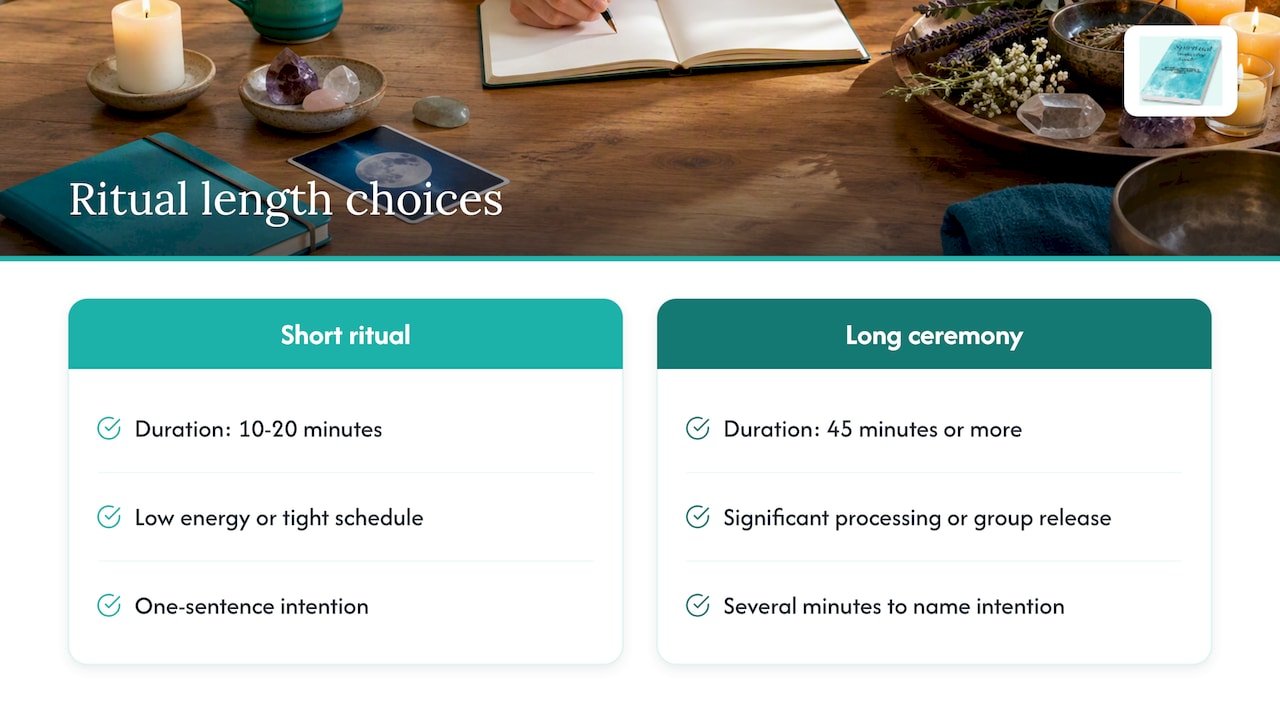
Choose a short, 10 to 20 minute ritual when your energy is low, your schedule is tight, or you simply want a grounding check-in before bed. Choose a longer ceremony, 45 minutes or more, when you are processing something significant, working through release with a group, or want space for meditation and a sacred bath alongside your intention work.
A simple rule: if you can name your intention in one sentence without hesitation, a short ritual will serve you. If it takes several minutes to put into words, give yourself the longer format.
— Sean
Bring Structure to Your Moon Practice With Our Guides

Our guide offers tools to help turn a single night’s ritual into an ongoing practice, blending step-by-step methods with habit-building tools designed for sustainable, compassionate growth. When you choose this guide, you gain:
- Structured ritual templates you can repeat across every full moon and supermoon.
- Guided journaling prompts that build on each other month to month.
- A forgiving habit tracker designed to support progress without pressure.
If tonight’s ritual felt like a good starting point, our Spiritual awakening guide is available for $20 as a one-time download, ready to support your next cycle of reflection and growth.
FAQ
What kind of rituals work well on a full moon?
Common full moon rituals include writing and releasing intentions, making moon water, charging crystals, journaling, and taking a reflective bath. The goal is usually completion or release rather than new beginnings, which fit better with new moon work.
What does a supermoon mean spiritually?
Many practitioners treat a supermoon as an amplifier for whatever energy the current moon phase already carries, rather than a separate spiritual event. Astronomically, it simply marks a full moon that coincides with the Moon’s closest approach to Earth, according to NASA Science.
What is a good full moon ritual to try today?
A simple option is writing one clear intention, reading it aloud near a candle or LED light, and setting a jar of moon water on a windowsill overnight. Closing with a short gratitude statement rounds out the practice in under 20 minutes.
What are some simple new moon rituals I can try?
New moon rituals typically focus on setting fresh intentions rather than releasing old ones, since the new moon marks the start of a cycle. A short journaling session naming one goal, paired with a quiet moment of visualization, works well as a beginner practice; our new moon versus full moon guide breaks down how to approach each phase differently.
Sources
- What’s a Supermoon and Just How Super Is It? – JPL Education
- Moonstruck sleep: Synchronization of human sleep with the moon cycle – Science Advances
- Supermoons – NASA Science