
A complete spiritual hygiene routine typically covers six moves: breathe, ground, clear, set an intention, protect, and tidy, which can be done in a brief session. Each step works alone, so you can do all six or pick just one on a rushed morning.
Here’s the checklist, in order:
- Conscious breathing (30 seconds to 2 minutes): Three slow breaths, hand on chest. No tools needed.
- Grounding (1 to 3 minutes): Feet flat on the floor, notice the contact point. No tools needed.
- Quick clear (2 to 5 minutes): Open a window or mist the room. Optional tools: spray bottle, bell.
- Intention-setting (1 to 3 minutes): One line written or spoken aloud. Paper optional.
- Light protection visualization (1 to 2 minutes): Picture a boundary of light around your body. No tools needed.
- Tidy and air refresh (5 to 10 minutes): Clear one surface, crack a window. No tools needed.
Pro Tip: Stack this routine onto something you already do, like brushing your teeth or making coffee, so it survives busy weeks.
If you’re using smoke for the clearing step, skip it around pets, in shared buildings with strict smoke policies, or if anyone in the room has respiratory sensitivities. A mist or open window does the same job without the fire risk.
Key Takeaways
A daily spiritual hygiene routine of breath, grounding, clearing, intention, protection, and tidying takes under 15 minutes and works best when repeated, not perfected.
| Point | Details |
|---|---|
| Start with six steps | Breathe, ground, clear, set an intention, protect, and tidy, each taking 1 to 10 minutes. |
| Consistency over intensity | A few daily minutes beats one long monthly ritual for maintaining energetic well-being. |
| Match effort to timeframe | Daily micro-routines, weekly deeper cleanses, and monthly inventories each serve a different purpose. |
| Watch for red flags | Persistent fog, irritability, or nightmares signal a need for a deeper clean or professional support. |
| Use a structured guide | Spiritualmethod’s Essential Guide to Spiritual Awakening offers step-by-step sequences and tracking templates for readers who want a built-out routine. |
Table of Contents
- What Spiritual Hygiene Practices Actually Mean
- How Do You Practice Spiritual Hygiene Daily?
- What Are Quick Ways to Clear Energy From a Room?
- How Often Should You Do Spiritual Hygiene Practices?
- What Are the Signs You Need a Deeper Spiritual Cleanse?
- Why Do These Practices Actually Help?
- Starting Small Beats Doing It Perfectly
- Get a Structured Spiritual Hygiene Routine You Don’t Have to Build Yourself
- Frequently Asked Questions
- Sources
What Spiritual Hygiene Practices Actually Mean
Spiritual hygiene practices refer to the habit of actively clearing, grounding, and protecting your personal energy the way you’d wash your hands or brush your teeth. It’s maintenance, not a special event.
That distinguishes it from meditation, which centers attention and builds present-moment awareness rather than releasing anything.
| Spiritual Hygiene | Meditation |
|---|---|
| Clears energy that doesn’t belong to you and reinforces boundaries | Centers attention and builds awareness |
| Active, task-based (breathe, clear, protect) | Often still and observational |
Three technique categories cover most of it: clearing (removing residual tension after a hard conversation), grounding (reconnecting to your body and the present), and protection (setting a boundary before you walk into a draining environment). A five-minute grounding walk before a family dinner is spiritual hygiene. Sitting in silence afterward to observe your thoughts is meditation.
How Do You Practice Spiritual Hygiene Daily?
Consistency beats intensity here. A few minutes a day does more for your energetic well-being than one long ritual you attempt once a month and then abandon.
1. Breathwork: the three-breath reset. Inhale for four counts, hold for four, exhale for six. Repeat three times. Takes under a minute, costs nothing, and works standing in a hallway or sitting in traffic.

2. Grounding through the feet. Stand or sit with feet flat on the floor and imagine roots extending downward. Two to three minutes. No tools required, though some people like holding a grounding stone such as hematite or black tourmaline for the tactile cue.

3. The energetic shower visualization. Picture warm light or water washing from your scalp down through your body and into the ground, taking anything heavy with it. Three to five minutes in the actual shower or standing anywhere quiet.
4. Intention-setting or micro-journaling. Write one to three lines about how you want the day or evening to feel. Free if you use any notebook, or use a structured journaling guide if you want prompts instead of a blank page.
5. Movement. A ten-minute walk, some stretching, or shaking out your arms and legs discharges physical tension that often carries emotional residue with it.
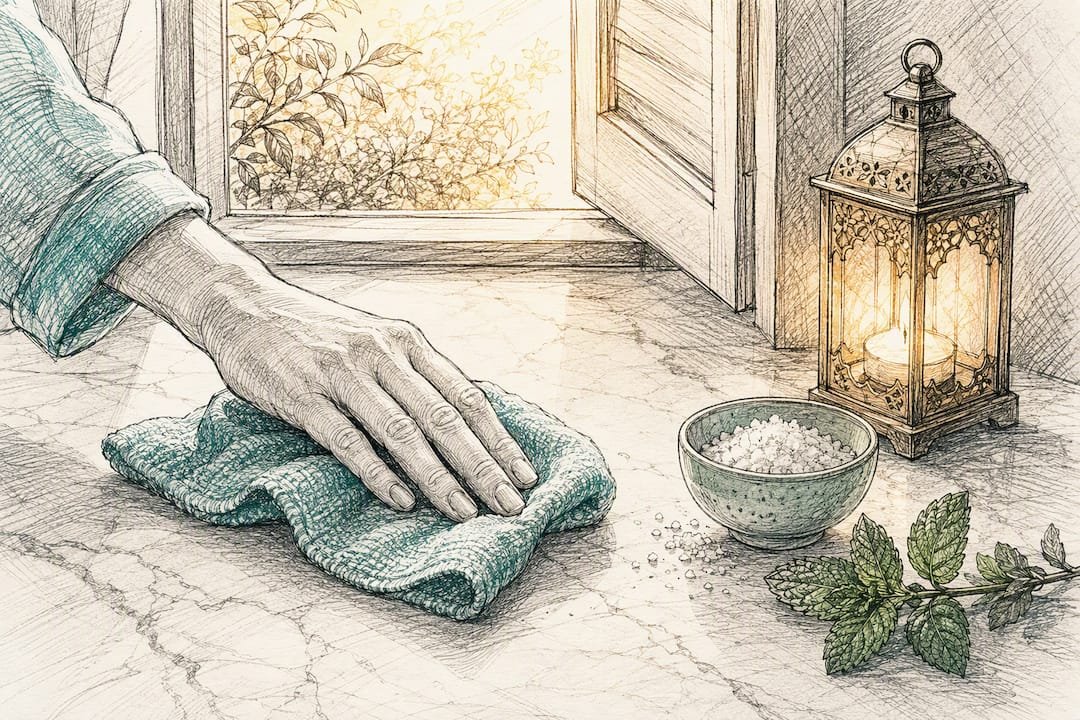
6. Tidying as ritual. Clear one surface with intention rather than autopilot. Wipe it down, say (even silently) that you’re clearing the space, and stop there. This one costs nothing and takes five minutes.
7. Boundary-setting visualization. Before a draining meeting or social event, picture a boundary of light or a simple bubble around your body. This matters especially for empaths, who absorb other people’s emotional states more readily and benefit from scheduled buffer time between interactions.
Pro Tip: Anchor your clearing practice to an existing habit, like washing your hands, so you don’t have to remember it as a separate task.
One caution: none of this replaces practical care. For those looking to enhance their routine, Daily Mayan Wisdom offers a short daily spiritual prompt that can be a meaningful addition. If you’re exhausted, see a doctor first. If a relationship is genuinely toxic, no visualization fixes that. Spiritual hygiene supports your baseline. It isn’t a substitute for sleep, therapy, or setting a real boundary with an actual person.
What Are Quick Ways to Clear Energy From a Room?
You don’t need an hour or a bundle of sage to shift how a room feels. Start with smoke-free options: open a window for two minutes to let air actually move, ring a bell or clap in the corners to break up stagnant sound, mist the room with water and a few drops of essential oil, or run a diffuser for ten minutes before guests arrive.
If you use smoke, such as palo santo or a smudge stick, light it briefly, walk the perimeter of the room, and extinguish it in a fireproof dish. Buy from sources that credit the plant’s origin and avoid treating a sacred tool as a trendy prop. Some traditions consider certain smudging practices culturally specific, so a little research before you buy respects that.
Keep pets, ventilation, and building fire rules in mind before lighting anything indoors. For a sixty-second refresh: open one window, mist once, and clear one visible surface.
Pro Tip: Keep a small spray bottle with water and lavender oil by the door for a ten-second clear every time you walk in.
How Often Should You Do Spiritual Hygiene Practices?
Match the intensity to the timeframe. A morning micro-routine (breath and grounding, under five minutes) starts the day. A midday reset (one minute of breathing at your desk) resets a rough afternoon. An evening release ritual (the energetic shower plus one line of journaling, five to ten minutes) closes the day out.
- Daily: Morning micro-routine, midday reset, evening release. Combine the first two if mornings are tight.
- Weekly: One deeper cleanse, like a salt bath or a full room clearing with mist and tidying, twenty to thirty minutes.
- Monthly: An inventory of your space and tools, an altar refresh if you keep one, and a longer journaling session reviewing what’s working.
| Frequency | Practice | Time |
|---|---|---|
| Daily | Breath, grounding, evening release | 5 to 15 minutes total |
| Weekly | Salt bath or deep room clearing | 20 to 30 minutes |
| Monthly | Space inventory, altar refresh, review journaling | 30 to 45 minutes |
Busy people can compress the weekly session into the evening shower. People with more time might add a Sunday morning walk plus a full journaling session.
What Are the Signs You Need a Deeper Spiritual Cleanse?
Persistent mental fog, irritability that lingers long after a conversation ends, and fatigue that shows up specifically after social events are common signals. So are repeated nightmares or a room that feels heavy every time certain guests leave.
When these signs stack up or persist for more than a week or two, extend your evening ritual into a full salt bath, or consider a deeper energy session. If fatigue or low mood persists regardless of what you try, talk to a mental-health professional first. Ordinary stress is not automatically energetic contamination, and the fastest fix is often sleep, hydration, or a real conversation, not another ritual.
Pro Tip: Track your energy on a 1 to 10 scale each evening for two weeks. Patterns tied to specific people or places tell you more than any single bad day.
Why Do These Practices Actually Help?
Breath and grounding work on the nervous system, not just the imagination. The National Center for Complementary and Integrative Health notes that mindfulness and meditation practices show evidence of benefit for several outcomes and are generally safe when practiced sensibly. A systematic review found mindfulness-based interventions reduced anxiety and depression symptoms across a range of trials, and breath-focused techniques have been linked to measurable drops in physiological stress markers.
Repetition is what turns a ritual into a nervous-system reset instead of a nice idea. The habit loop, not the specific words or tools, is what regulates you over time.
- Short daily practices train your body to recognize the cue and downshift faster with each repeat.
- Anchoring a clearing ritual to something automatic, like a shower or a doorway, boosts consistency more than willpower does.
Starting Small Beats Doing It Perfectly
My own version of this routine is a three-minute evening reset: three breaths, a hand on the wall to ground, and one line in a notebook about what I’m releasing before bed. It’s not elaborate, and that’s the point. Spiritual hygiene practices don’t require a fully decorated altar or an hour of free time.
Adapt the sequence to your own beliefs and schedule. Someone raised Catholic might fold in a familiar prayer instead of a visualization; someone with no religious background at all can keep it purely somatic. Tools like crystals or smudge sticks can add meaning, but they’re optional, and they work better alongside good sleep and real medical care than instead of it. If you borrow a tool from a specific cultural or spiritual tradition, learn where it came from and use it with that in mind rather than treating it as decoration.
Get a Structured Spiritual Hygiene Routine You Don’t Have to Build Yourself
Everything in this article works as a standalone habit, but if you’d rather follow a sequence someone already mapped out, Spiritualmethod’s Essential Guide to Spiritual Awakening and grounding rituals gives you the full 50-plus-page version: step-by-step sequences for clearing, grounding, and protection, a printable daily checklist, and templates for tracking your energy over weeks instead of guessing whether something is working.

Three things you get with the guide that this article can’t hand you directly: a sequence order that removes the guesswork of what to do first, a checklist you can print and keep by your bed or desk, and a tracking template that turns your daily notes into an actual pattern you can review monthly. If you’re also working through deeper emotional material, the inner child healing guide pairs well with the grounding work here.
Pick up the guide and run the six-step routine from your own checklist tonight.
Frequently Asked Questions
What is the fastest spiritual hygiene practice I can do right now?
Three slow breaths with a hand on your chest takes under a minute and needs no tools at all.
Do I need special tools like sage or crystals to practice spiritual hygiene?
No. Breathing, grounding, and visualization require nothing beyond your own body, though tools like crystals can add ritual meaning if you want them.
How is spiritual hygiene different from self-care?
Self-care covers general well-being like rest and nutrition, while spiritual hygiene specifically targets energetic clearing, grounding, and boundary maintenance.
Can spiritual hygiene practices replace therapy or medical care?
No. These practices support your baseline energy and nervous system, but persistent fatigue, anxiety, or mood changes warrant a conversation with a qualified professional.
How do I personalize a spiritual hygiene routine to my own beliefs?
Swap the specific language or symbols (a prayer instead of a visualization, a walk instead of a bath) while keeping the underlying structure of breathe, ground, clear, and protect.
Sources
- NCCIH: Meditation and mindfulness — effectiveness and safety
- PMC6137615: Systematic review on mindfulness interventions
- PsychAlive: Empaths — practical protection and self-care