
Some people find the secret of the ages book after a hard season, when journaling isn't enough but they still feel there's something inside them trying to wake up. They open a worn copy, read a few pages, and realize this isn't just about getting things. It's about learning how thought, feeling, and spiritual attention shape a life.
Table of Contents
- Unlocking a Timeless Spiritual Text
- Who Was Robert Collier and Why Did He Write This Book
- The Core Secret Unveiled Your Subconscious Power
- Key Principles for Spiritual Awakening
- Practical Daily Practices from the Book
- Integrating Collier's Wisdom with The Spiritual Method
- Common Questions and Further Exploration
Unlocking a Timeless Spiritual Text
The secret of the ages book can feel strange at first. Its language comes from another era, yet the longing beneath it feels current. People still want the same things Collier wrote about: peace, direction, confidence, and a deeper sense that life can open.
One reader might come to it after burnout. Another might find it while exploring meditation, prayer, or manifestation. In both cases, the appeal is similar. The book speaks to the hope that your inner world isn't separate from your outer life.

What makes this text last isn't just its age. It's the way it tries to translate spiritual law into everyday practice. Collier wasn't writing only for mystics. He wrote for people who wanted to understand why belief matters, why desire matters, and why some thoughts seem to drain us while others strengthen us.
The book works best when you read it slowly, almost like a devotional text rather than a manual to race through.
For modern readers, the biggest challenge is usually vocabulary. Phrases like subconscious mind, universal supply, and faith can sound abstract. But in plain language, Collier is asking a very practical question: what happens when a person stops feeding fear and starts building an inner image of a different life?
That question still matters.
Why this old book still lands today
A lot of spiritual writing today is quick, polished, and simplified. The secret of the ages book isn't. It asks you to think, reflect, and test its ideas in your own life.
That makes it useful for people who want more than surface-level inspiration.
- If you're anxious: it offers a way to redirect mental energy instead of spiraling.
- If you're spiritually curious: it gives language for the connection between thought and creation.
- If you're exhausted: it reminds you that renewal often begins internally before it becomes visible externally.
Who Was Robert Collier and Why Did He Write This Book
Robert Collier wasn't only a spiritual writer. He was also a businessman, and that matters when you read him. He understood persuasion, desire, and human motivation long before he became known for self-help and spiritual teaching.
His path helps explain why the secret of the ages book feels both mystical and practical. He wrote as someone who had watched how people respond to ideas, images, and suggestion. Then he turned that understanding toward inner transformation.
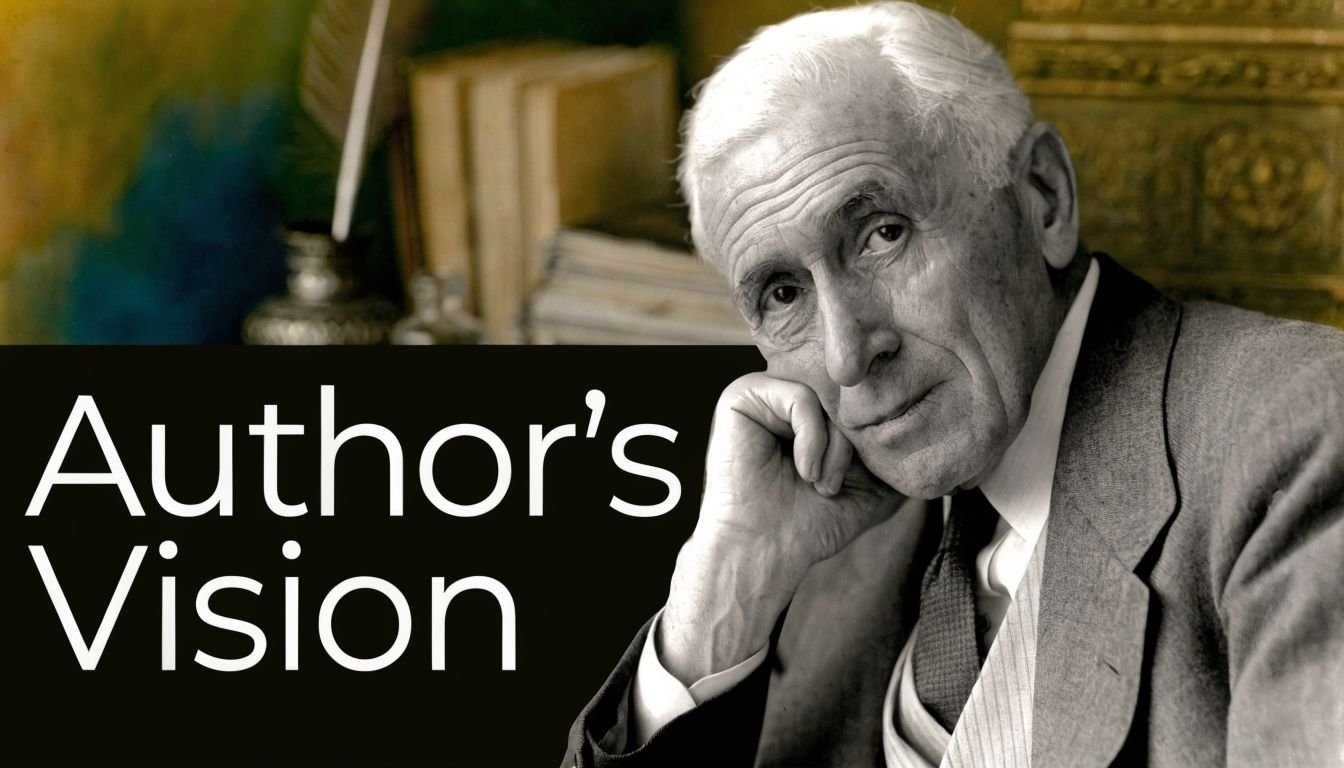
According to this Goodreads listing for The Secret of the Ages, Robert Collier's The Secret of the Ages sold over 300,000 copies during his lifetime. It was first published in 1925 as The Book of Life and then reissued as a 7-volume edition in 1926. That success made him an early force in self-help publishing.
A writer shaped by business and persuasion
Before he wrote spiritual books, Collier worked in mail order sales. That background may sound unrelated, but it likely influenced everything. Sales writing depends on understanding what people hope for, what they fear, and what kind of language moves them into belief.
Collier brought that same instinct into spiritual writing. He didn't present ideas as cold philosophy. He framed them as something a reader could use.
A few features of his style stand out:
- He speaks directly to desire: not as something shameful, but as a force that can be guided.
- He blends scripture, myth, and psychology: that mix gives the book both devotional and practical energy.
- He writes toward action: even when the language is lofty, he's usually trying to get the reader to apply something.
Why the timing mattered
The book emerged during a period when interest in personal potential and mind power was growing. Collier's work sits within that wider New Thought stream, but it has its own tone. It feels more structured than vague inspiration and more spiritually charged than ordinary success advice.
Collier wrote for readers who wanted prosperity, but he also wrote for readers who wanted meaning.
That combination is one reason the book still circulates. It doesn't split material life from spiritual life as sharply as many people do. Instead, it suggests that your beliefs, images, and expectations shape how you meet both.
For a reader today, that's helpful context. The secret of the ages book wasn't written as a trendy manifestation title. It was written as a foundational attempt to explain how the unseen parts of the mind affect lived experience.
The Core Secret Unveiled Your Subconscious Power
At the center of the secret of the ages book is one big idea. Your subconscious mind takes in the impressions you repeatedly give it, then works with those impressions in ways that shape behavior, attention, and results.
Collier describes this inner power as a sleeping giant. That's a vivid image because it helps explain why many people feel divided. Consciously, they want peace or abundance. Subconsciously, they keep rehearsing fear, lack, or self-doubt. The giant is moving, but it is being given mixed instructions.
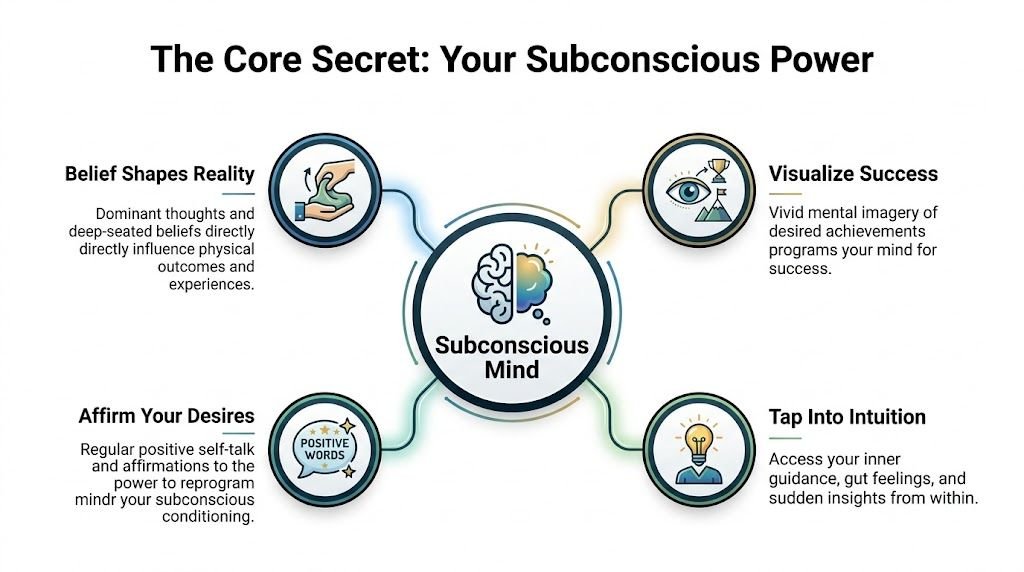
The sleeping giant idea
A simple way to understand Collier's teaching is to think of the subconscious as fertile soil. The soil doesn't argue with the seed. It receives what is planted often and emotionally enough.
If a person keeps planting images of defeat, the inner life organizes around defeat. If that same person plants a clear image of healing, steadiness, or purposeful action, the inner life begins to organize around that instead. This is why Collier cared so much about repetition, imagination, and belief.
Later interpretations sometimes make this sound magical in a shallow sense. Collier's original framework is more disciplined than that. He isn't saying every passing thought creates instant results. He's saying sustained inner impressions matter.
A modern reader may find it useful to compare this with guided visualization or affirmation work. If you've ever noticed that your body responds differently when you picture failure than when you picture a calm, successful outcome, you've already touched the edge of what Collier meant. For a related look at the power of spoken intention, Your Word Is Your Wand explores a closely connected spiritual principle.
A video overview can also help if the language in older texts feels dense.
The four-part method
A verified summary of Collier's teaching describes a four-step protocol. It includes sincere desire, vivid visualization, unwavering faith, and gratitude, and that same source notes that visualization has been shown to improve athletic performance by up to 23% while belief can influence motivation through dopamine-related processes, as described in this video-based source discussing Collier's framework.
Here is that method in plain language:
Sincere desire
Collier doesn't mean casual wishing. He means a clear inner aim. Not ten scattered wants at once, but one honest direction that matters to you.Visualization
He asks you to mentally see the condition you want. This isn't daydreaming for escape. It's rehearsal for alignment. You are teaching your mind what to recognize and support.Faith
This part confuses many readers. Faith here doesn't have to mean forced certainty. It means refusing to feed the opposite image all day long.Gratitude
Gratitude helps stabilize the emotional tone of the practice. It shifts you from grasping into receptive trust.
Practical rule: If your mind can't yet believe the full outcome, let it believe the next faithful step.
That detail matters because people often quit too soon. They think visualization failed, when really they were trying to leap into total certainty instead of building inner agreement gradually.
Key Principles for Spiritual Awakening
The secret of the ages book isn't only about getting a desired result. Its deeper value is philosophical. Collier treats thought as spiritually consequential. He sees the mind not as a private chatterbox, but as a creative instrument.
That is one reason the book became an early precursor to later manifestation teachings. As this overview of Collier's work notes, The Secret of the Ages synthesizes ancient wisdom traditions with modern psychology and proposes that people can wield creative power through mental images.
Mental images as spiritual seeds
Collier returns again and again to the idea that an image held with feeling becomes formative. Not every random thought has this force. Repeated inner pictures do.
This principle can be hard for beginners because they assume they must control every thought. That isn't realistic. The invitation is gentler. Notice which inner pictures you keep energizing.
A repeated image becomes a direction. A direction becomes a habit of being.
Many readers also connect Collier to Hermetic or metaphysical traditions. If you're curious about those broader roots, this introduction to the Kybalion helps place his ideas in a wider spiritual context.
Abundance, faith, and inner agreement
Collier writes as though life contains supply, possibility, and order beyond appearances. Some readers love that language. Others resist it because they've lived through grief, scarcity, or disappointment.
Both responses are understandable.
A balanced way to read him is this:
| Principle | What Collier points toward | Modern plain-language reading |
|---|---|---|
| Abundance | Supply exists beyond visible lack | Don't let current conditions become your only mental reality |
| Desire | Real longing has creative force | What you deeply want reveals energy that can be directed |
| Faith | Inner certainty supports outer movement | Practice trust, even before you have full evidence |
The key is inner agreement. If one part of you says "I am open" while another rehearses "nothing works for me," your practice loses coherence. Collier asks the reader to become less divided.
That doesn't mean pretending pain isn't real. It means not giving pain the final word.
- When you feel scattered: return to one chosen intention.
- When you feel cynical: shorten the practice until it feels honest again.
- When abundance language feels triggering: focus on sufficiency, support, or steadiness instead.
Practical Daily Practices from the Book
Old spiritual books can stay abstract unless you turn them into rhythm. The secret of the ages book becomes much clearer when you practice it in small, repeatable ways.
The aim isn't to create a perfect ritual. It's to give your inner life consistent signals.

A simple morning blueprint
Start with ten quiet minutes before your phone or inbox pulls you outward. Sit upright, breathe slowly, and choose one condition you want to strengthen. Peace. Confidence. Clarity. Financial steadiness. Better relationships. Keep it singular.
Then write a short mental blueprint in your journal.
- Name the condition: “Today I move through my work with calm focus.”
- Add a living image: picture yourself acting from that state in one real scene.
- Include feeling: ask what that version of you feels like in the body. Softer shoulders, slower breath, a steadier voice.
This works best when it feels embodied, not theatrical. If the image is too grand, scale it down.
For readers who want support around emotional energy and consistency, this guide on how to raise your vibration pairs well with Collier's emphasis on repeated inner tone.
A nightly gratitude reset
Many people use gratitude like a performance. Collier's approach is quieter. Gratitude trains attention toward evidence of support, progress, and unseen movement.
Try this before sleep:
- Write down three moments from the day that felt aligned, comforting, or unexpectedly helpful.
- Name one fear that kept repeating.
- Replace that fear with one sentence of direction.
Example:
“I noticed how tense I became before that call. I choose to train my mind toward steadiness, not collapse.”
A second daily practice is spoken affirmation, but keep it believable. Instead of forcing a line you don't accept, use language that opens rather than pressures.
- Too forced: “Everything is perfect and effortless.”
- More grounded: “I am learning to hold a clearer inner image.”
- Even gentler: “I can practice trust today without knowing everything.”
These exercises sound small. That's the point. Spiritual change often begins through repetition that seems almost ordinary.
Integrating Collier's Wisdom with The Spiritual Method
One limitation modern readers sometimes feel in Collier's work is that it leans heavily on mind. For some people, that's enough. For others, mental practice without bodily support feels dry or disconnected.
That's where contemporary ritual can help. It gives the body something to participate in.
Why modern seekers add ritual
A verified claim associated with current coverage of the book states that a 2025 wellness survey of 5,000 individuals found 62% of people on a spiritual path combine Law of Attraction ideas with physical tools like crystals and herbs, and those respondents reported a 25% greater reduction in anxiety than mind-only approaches, according to this referenced source page. Since that claim is presented in the provided verified data, it shows why many seekers now want both intention and embodiment.
That combination makes intuitive sense. Thought directs. Ritual anchors.
A crystal held during prayer doesn't replace inner work. A moon bath doesn't manifest on its own. But physical practice can help a distracted nervous system settle enough to receive the mental impression Collier considered essential.
How to combine mental focus with embodied practice
You don't need an elaborate altar. You need coherence.
Try pairings like these:
- Visualization with a sacred bath: while soaking, hold one clear image rather than mentally scrolling through every problem.
- Affirmation with crystal work: choose a stone that helps you remember the quality you're cultivating, then speak a short phrase while holding it.
- Gratitude with smoke cleansing or sound: use the sensory act as a closing signal that the day is complete.
Mind work becomes easier when the body feels safe enough to participate.
This is the bridge many modern practitioners were missing. Collier gives the inner architecture. Ritual-based practice gives texture, memory, and emotional grounding. Together, they can feel less like abstract manifestation and more like lived spiritual hygiene.
Common Questions and Further Exploration
Is this the same as The Secret
Not exactly. People often connect them because both deal with thought, belief, and attraction. But the secret of the ages book came much earlier and has a denser, more devotional tone. It feels closer to a foundational metaphysical text than a modern pop-spiritual presentation.
What if visualization feels hard or forced
That's common. You don't need cinematic mental pictures. Use simple sensory cues. A relaxed jaw. A cleaner desk. A conversation handled with calm. Start with what you can imagine.
Skepticism is common too. The most balanced way to approach that question is to treat the book as a spiritual practice text, not a lab guarantee. The verified data notes that skepticism about scientific validity is understandable, and that a 2023 meta-analysis of 184 studies on similar practices such as visualization found modest effects on goal achievement (d=0.34), mostly in specific areas like athletic performance, as summarized in this cited PDF reference.
That doesn't make the book useless. It means you can read it wisely.
- Test the practices personally: notice whether they change your focus, steadiness, and action.
- Don't use it to blame yourself: spiritual tools should support you, not shame you.
- Read slowly: older New Thought writing often reveals itself over time.
If you want to go further, explore adjacent traditions, journaling methods, and grounded ritual work that help translate inner intention into daily life.
If you're ready to turn these ideas into a grounded daily practice, Spiritual Method offers a gentle path for releasing negativity, restoring clarity, and working with tools like sacred baths, crystal support, energy cleansing, reflection prompts, and intention-setting rituals. It's a practical companion for anyone who wants the inner focus Collier taught, but in a form that feels supportive for modern life.