
Mind body connection exercises are purposeful practices that integrate controlled movement, breath awareness, and focused attention to build harmony between your mental and physical states. The recognized clinical term for this field is mind-body medicine, which encompasses frameworks like Mindfulness-Based Stress Reduction (MBSR), somatic therapy, and mindfulness movement practices. Body scanning sessions of 10–15 minutes, performed three times weekly, build measurable interoceptive awareness. That means your brain gets better at reading your body’s internal signals, which directly supports stress reduction and emotional regulation. Spiritualmethod provides structured methods in this space, grounding each practice in evidence and accessibility.
What are the most effective mind body connection exercises?
Five core exercises form the foundation of any body awareness practice. Each one engages your nervous system differently, and understanding those differences helps you choose the right tool for the right moment.
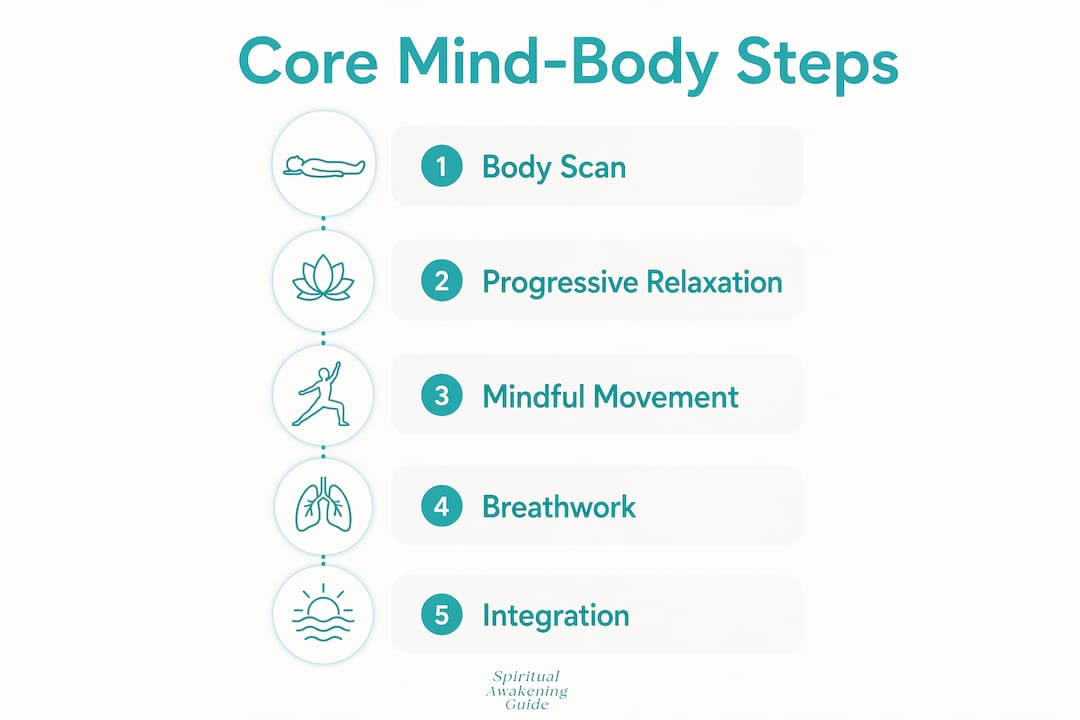
Body scan meditation trains your attention to move systematically through the body, noticing sensations without judgment. Body scanning increases activity in the insula and somatosensory cortex while lowering amygdala reactivity. That neurological shift is why regular practitioners report reduced anxiety and better emotional control.
Progressive muscle relaxation (PMR) works by deliberately creating tension before releasing it. Muscle contraction for 10–20 seconds triggers the relaxation response, which reduces chronic pain perception. The contrast between tension and release teaches your nervous system what genuine physical calm feels like.
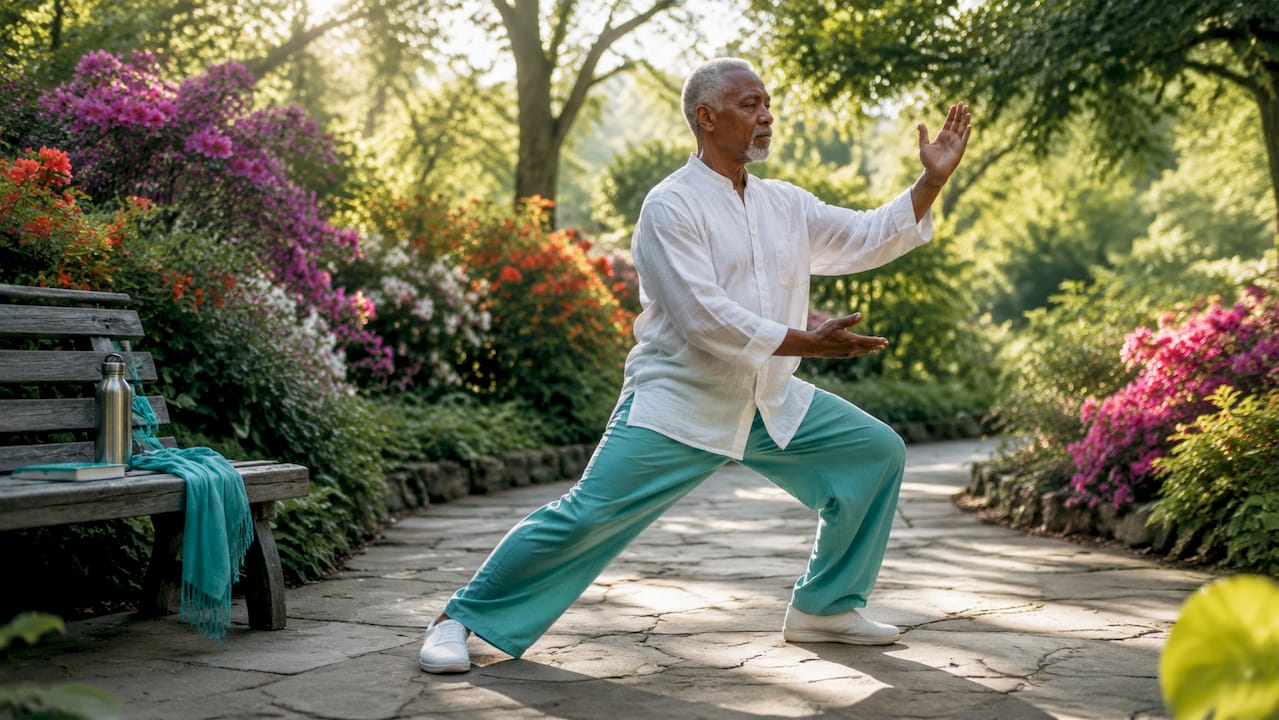
Mindful movement covers yoga for body and mind, tai chi, and Qigong. All three share one defining feature: internal attention over external performance. Mindful movement activates the parasympathetic nervous system, improving emotional awareness and coping abilities, particularly for people with treatment-resistant trauma.
Breathwork uses deliberate breathing patterns, such as box breathing or diaphragmatic breathing, to regulate the autonomic nervous system in real time. Guided imagery pairs relaxed breathing with vivid mental visualization to reduce physiological stress markers.
| Exercise | Primary focus | Key benefit |
|---|---|---|
| Body scan meditation | Interoceptive attention | Reduces anxiety and amygdala reactivity |
| Progressive muscle relaxation | Tension and release | Lowers chronic pain perception |
| Mindful movement (yoga, tai chi, Qigong) | Breath-synchronized movement | Parasympathetic activation |
| Breathwork | Breath regulation | Real-time nervous system control |
| Guided imagery | Visualization | Stress marker reduction |
Each exercise builds on the others. Practitioners who combine breathwork with body scanning, for example, report faster progress in emotional regulation than those who use either method alone.
How to perform mind body connection exercises step by step
Correct execution separates a practice that produces results from one that simply passes time. The steps below cover the three most foundational exercises.
Body scan meditation
- Lie flat on your back or sit upright with your spine supported.
- Close your eyes and take three slow, deep breaths to settle your attention.
- Begin at the crown of your head. Notice any sensation, warmth, pressure, or tingling.
- Move attention slowly downward: forehead, jaw, neck, shoulders, chest, abdomen, hips, legs, and feet.
- Spend 20–30 seconds on each region. Notice absence of sensation as useful feedback, not failure.
- If your mind wanders, return attention to the last body region without self-criticism.
- After completing the scan, rest in stillness for 1–2 minutes before moving.
Pro Tip: Beginners often expect dramatic sensations. Subtle feedback, like a faint warmth in your hands or a slight heaviness in your legs, is exactly the signal your brain needs to build interoceptive skill.
Progressive muscle relaxation
- Sit or lie in a comfortable position with your eyes closed.
- Start with your feet. Curl your toes tightly and hold for 10–20 seconds.
- Release completely and notice the contrast for 20–30 seconds.
- Move upward: calves, thighs, abdomen, hands, arms, shoulders, and face.
- Breathe slowly throughout. Never hold your breath during contraction.
- Complete the full sequence in 15–20 minutes for a full session.
Mindful movement
- Choose a simple movement sequence: a slow sun salutation, a tai chi form, or a Qigong standing exercise.
- Set a timer for 6–7 minutes of active movement followed by 1–2 minutes of stillness.
- Keep your attention on internal sensations, not on how the movement looks.
- Synchronize each movement with your breath. Inhale to expand, exhale to contract or release.
- After the stillness period, journal one observation about what you noticed internally.
The post-exercise stillness period is not optional. 1–2 minutes of stillness after movement allows the nervous system to process and stabilize the shift toward coherence. Skipping it is like closing a book mid-sentence.
What common mistakes should you avoid in your practice?
Most people who struggle with meditative exercises for wellbeing make the same small set of errors. Recognizing them early saves weeks of frustration.
Common mistakes to watch for:
- Chasing intense sensations instead of attending to subtle ones
- Rushing through exercises to finish faster
- Ignoring emotional responses that arise during practice
- Skipping the post-exercise integration period
- Practicing inconsistently and expecting rapid results
The most misunderstood mistake is chasing intensity. Quality of attention during movement depends on noticing internal sensations, not on achieving dramatic physical or emotional experiences. Practitioners who push for strong feelings often miss the quieter signals that carry the most information.
Emotional responses during somatic exercises are normal and often indicate that the practice is working. Sadness, irritability, or a sudden urge to stop are common. The appropriate response is to slow down, breathe, and observe without forcing the feeling to resolve. If emotional responses feel unmanageable, that is a clear signal to pause.
People with trauma histories may experience strong emotional triggers during somatic exercises. Seeking trained support rather than pushing through alone is the responsible and effective choice.
When attention wanders during a body scan or mindful movement session, the solution is simple: return to the last body region or breath without judgment. Wandering attention is not a sign of failure. It is the raw material of the practice. Each return builds the neural pathways that make sustained attention easier over time. For additional support with stress and anxiety relief, grounding techniques work well alongside these exercises.
How to incorporate these practices into your daily routine
Consistency produces results that intensity cannot. A 10–15 minute session three times per week outperforms a single 90-minute session done occasionally. The key is building a structure that removes the decision of whether to practice.
Schedule your sessions at fixed times tied to existing habits. A body scan after waking, PMR before sleep, and a mindful movement sequence at midday creates a natural rhythm without requiring extra motivation. Treat these slots the same way you treat meals: non-negotiable, not optional.
Pro Tip: Set a recurring phone reminder with a specific label like “Body scan, 7 minutes” rather than a generic “Meditate.” Specificity reduces the mental friction of starting.
Small mindful moments throughout the day reinforce the nervous system changes built during formal sessions. Mindful walking between meetings, three conscious breaths before a phone call, or a 60-second body check before eating all count. These micro-practices are not substitutes for structured sessions, but they extend the benefits across the full day.
Your environment shapes your practice more than most people realize. A consistent physical space, a specific chair, a quiet corner, or even a particular playlist signals to your nervous system that a shift in attention is coming. That signal reduces the startup time of each session and deepens the quality of attention faster. Explore grounding techniques for anxiety to complement your daily routine with additional body-based support.
Gradual progression matters. Add one new exercise or extend session length by two minutes every two weeks. Rapid changes in practice intensity often trigger the same resistance as any other abrupt lifestyle change. Slow, steady progression builds a practice that lasts.
Key takeaways
Consistent, short sessions of mind body connection exercises produce measurable neurological and emotional benefits when performed with precise, nonjudgmental attention.
| Point | Details |
|---|---|
| Start with short sessions | 10–15 minute sessions three times weekly build interoceptive awareness effectively. |
| Attention quality matters most | Focusing on subtle internal sensations drives nervous system integration, not intensity. |
| Integration periods are required | 1–2 minutes of stillness after movement allows the nervous system to stabilize. |
| Avoid chasing strong sensations | Subtle feedback is as informative as intense feeling during body scanning. |
| Seek support for trauma responses | Strong emotional triggers during somatic practice warrant professional guidance. |
What I have learned from years of working with these practices
The most counterintuitive lesson I have encountered is this: the people who make the fastest progress are rarely the ones who practice the longest. They are the ones who practice with the most precise attention during shorter sessions. A seven-minute body scan done with genuine curiosity about subtle sensations produces more neurological change than a 45-minute session spent waiting for something dramatic to happen.
Stillness after movement is where the real work happens. I used to skip it. Most beginners do. The movement feels productive; the stillness feels passive. That instinct is exactly backward. The nervous system needs that quiet window to consolidate what just occurred. Treating it as optional is like skipping the final chapter of a book.
Somatic awareness also opens emotional territory that pure cognitive work cannot reach. People often report that a body scan surfaces grief, relief, or clarity that talking about a problem never produced. That is not a side effect. That is the mechanism. The body holds patterns that the thinking mind cannot access directly. Approaching that territory with patience and self-kindness, rather than urgency, is what makes the practice safe and sustainable.
If you are building this practice from scratch, the mind-body medicine framework gives you a solid conceptual foundation before you begin.
— Sean
Spiritualmethod resources for deeper mind-body-soul healing
Spiritualmethod offers structured guides that extend the work begun with these exercises into the deeper dimensions of inner healing.
The Mind Body Soul Connection guide provides a comprehensive framework for understanding how physical, mental, and spiritual health interact. For those ready to go further, the soul retrieval healing examples and the journaling for soul healing guide offer practical next steps that complement body awareness work. Each resource is designed to support gradual, grounded progress toward inner healing across mind, body, and soul.
FAQ
What are mind body connection exercises?
Mind body connection exercises are structured practices, including body scan meditation, progressive muscle relaxation, and mindful movement, that link focused attention, breath, and physical sensation to improve mental and physical well-being.
How often should I practice these exercises?
10–15 minute sessions performed three times per week build significant interoceptive awareness. Consistency across weeks matters more than session length.
Can beginners do body scan meditation effectively?
Yes. Beginners should focus on subtle sensations rather than expecting intense feelings. Noticing absence of sensation is as informative as noticing strong physical signals.
What is the role of breathwork in mindfulness movement practices?
Breathwork synchronizes movement with the autonomic nervous system, supporting parasympathetic activation. This reduces stress responses and improves emotional regulation during and after practice.
Is it safe to practice somatic exercises if I have a trauma history?
Somatic exercises can surface strong emotional responses in people with trauma histories. Professional support is recommended if emotional triggers feel unmanageable during practice.
Recommended
- Mind Body Soul Connection Explained: A 2026 Guide
- Explore mind-body medicine and holistic wellness with guides on meditation, yoga, spiritual detox, and transformative healing. Read practical insights now. – Spiritual Awakening Guide: Clarity, Peace, Growth
- What Is Mind Body Medicine and How It Works
- Holistic Grief Healing Practices: A 2026 Guide
Pingback: Body-Mind Integration Examples for Holistic Health in 2026