
Shamanic healing is defined as a spiritual practice that uses altered states of consciousness to diagnose and remove energetic blockages, restore lost soul energy, and rebalance the body, mind, and spirit. The practitioner, known as a shaman, enters a trance state through rhythmic drumming, breathing, or meditation to access non-ordinary reality. From that state, the shaman identifies the root cause of illness or suffering, whether physical, emotional, or spiritual. Core methods include extraction, soul retrieval, and ritual refill. EEG research now confirms that theta-frequency drumming produces measurable changes in brain activity that align with these trance states, giving ancient practice a modern scientific foundation.
How shamanic healing works: the core process explained
Shamanic healing works by moving the practitioner into an altered state of consciousness where ordinary perception gives way to direct spiritual perception. This shift is the foundation of every healing method used in shamanism. Without it, the diagnostic and restorative work cannot occur. The shaman acts as a mediator between the client and the spiritual forces involved in the healing.
Three core methods define the practice. Soul retrieval addresses trauma by recovering fragmented parts of the soul lost through shock, grief, or prolonged stress. Extraction removes foreign energetic intrusions that cause illness or emotional disturbance. The ritual refill restores vitality after removal, preventing an energetic void. Each method serves a distinct purpose and follows a structured sequence.
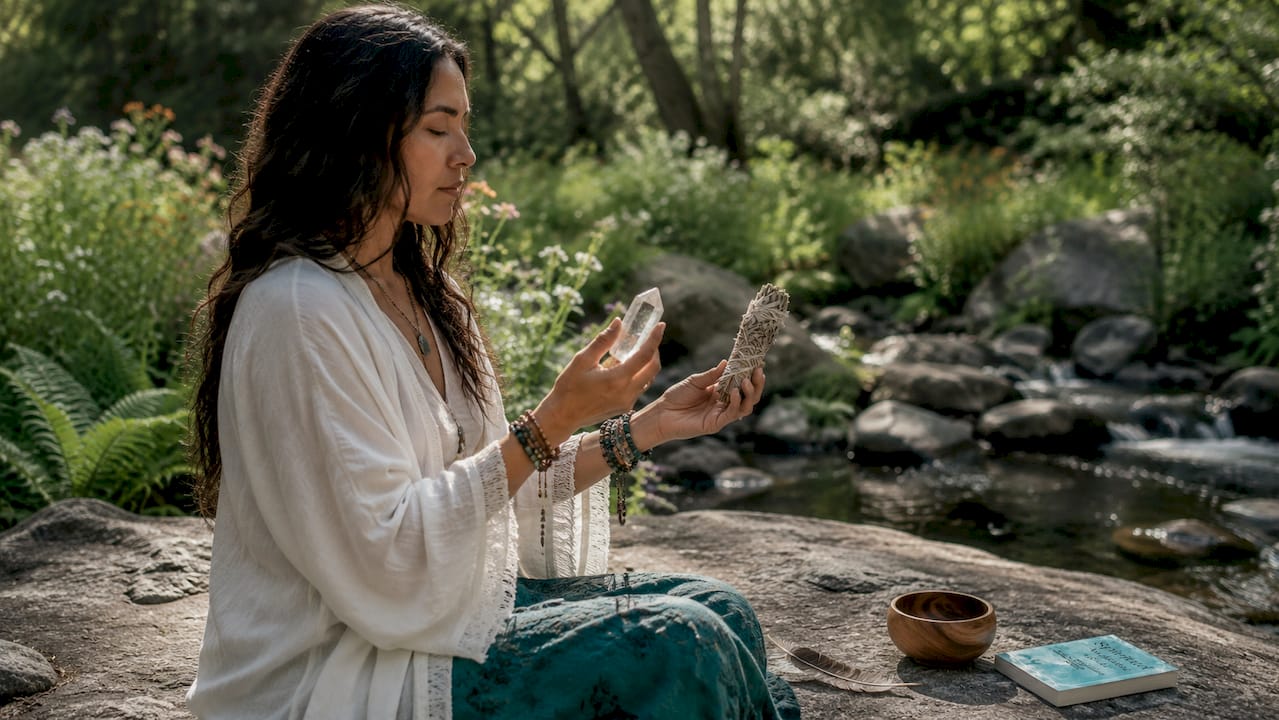
The shaman does not work alone. In many traditions, including Siberian, Mongolian, and neoshamanic lineages, spiritual helpers such as power animals assist in locating and removing intrusions. The practitioner acts as the mediator, directing that assistance toward the client’s healing. This cooperative structure distinguishes shamanic healing from purely mental or psychological approaches.
What happens during a shamanic healing session?
A shamanic healing session follows a clear sequence. Understanding each step helps you know what to expect and why each phase matters.
Entering the trance state. The shaman uses rhythmic drumming, breathwork, or meditation to shift into an altered state of consciousness. This is not sleep or hypnosis. It is a focused, intentional state in which the shaman perceives the client’s energetic condition directly.
Diagnosing the condition. The shaman scans the client’s energy field to detect soul loss, intrusive energies, or spiritual possession. Each condition requires a different response. Soul loss presents as emotional numbness or chronic fatigue. Intrusion often appears as localized pain or persistent negative thought patterns.
Performing extraction. The shaman locates the intrusion, loosens it from the client’s energy field, and removes it. The intrusion is then released into a receiving vessel, such as water, earth, or fire, for safe disposal. This step requires precision and consent from the client.
Performing soul retrieval. When soul loss is identified, the shaman journeys outside linear time to locate and return the missing soul part. The return is accompanied by ceremony and clear intention to support integration.
The refill phase. After extraction or soul retrieval, the shaman restores the cleared space with healing energy. Methods include smudging with sacred herbs, singing healing songs, or working with medicinal plants.
Pro Tip: Never skip the refill phase. Removing an intrusion without restoring the energetic space leaves a void that can attract new disturbances. The refill is what makes the healing complete and lasting.
The session typically ends with grounding practices to help the client return to ordinary awareness. Integration support, such as journaling for soul healing, is often recommended in the days following a session.
What does neuroscience say about shamanic trance states?
The science behind shamanic healing centers on how rhythmic sound alters brain activity. A 2026 study published in Scientific Reports measured EEG activity in 40 participants during theta-frequency drumming at approximately 4 beats per second. Theta-band neural tracking predicted altered experience scores, meaning the brain’s response to the drumbeat directly correlated with how deeply participants entered a non-ordinary state. This is not anecdotal. It is measurable brain dynamics.
“Rhythmic drumming acts as a measurable neural bridge connecting traditional shamanic healing with modern science, corroborating altered states as a real phenomenon that facilitates healing.” — Scientific Reports, 2026
Theta brain waves operate in the 4–8 Hz range and are associated with deep relaxation, vivid imagery, and heightened receptivity. Shamanic drumming entrains the brain to this frequency, producing the same state that practitioners have described for thousands of years. The science does not explain the spiritual dimension, but it confirms that the altered state is real and reproducible.
A common misconception is that shamanic trance requires plant medicines or psychedelic substances. Modern practitioners consistently use drumming, breathwork, and meditation to induce trance without any chemical assistance. This makes shamanic healing accessible to a much wider range of people. It also means the practice can be integrated into everyday wellness routines without the risks associated with plant medicines.
How do the core shamanic healing techniques compare?
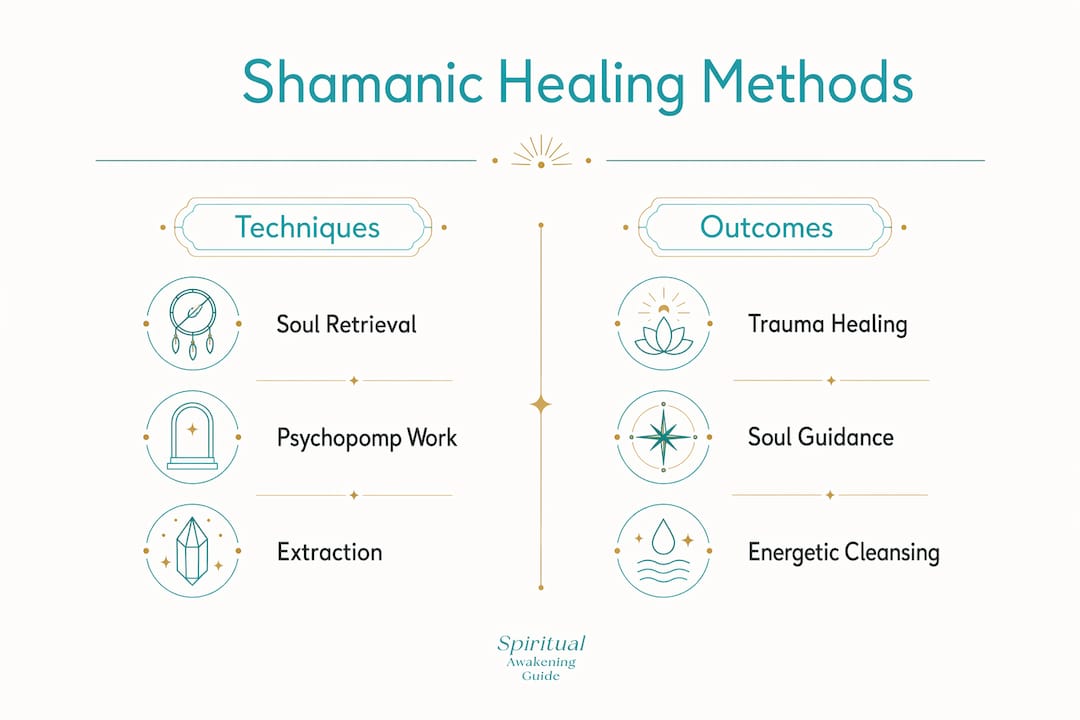
Shamanic healing encompasses several distinct techniques. Each addresses a different root cause and follows its own procedure. The table below summarizes the four most widely practiced methods.
| Technique | Root cause addressed | Core procedure | Primary outcome |
|---|---|---|---|
| Soul retrieval | Trauma, soul loss, vital force depletion | Journey outside linear time to locate and return lost soul parts | Emotional integration, restored vitality |
| Extraction | Intrusive foreign energies | Locate, loosen, remove, and safely dispose of intrusion | Relief from pain, emotional disturbance, or illness |
| Power animal retrieval | Loss of spiritual protection or guidance | Journey to locate and return the client’s power animal | Restored sense of direction, confidence, and protection |
| Psychopomp work | Unresolved death, earthbound spirits | Guide souls of the deceased to their proper place | Release of grief, resolution of ancestral disturbances |
Soul retrieval is the most widely recognized technique in Western shamanic practice. It addresses the fragmentation that occurs when a person experiences shock, abuse, or prolonged loss. The shaman journeys to recover the missing part and returns it with ceremony and intention. Integration of the returned soul part often requires ongoing reflective practice, including meditation and journaling.
Psychopomp work is less commonly discussed but equally structured. It involves guiding the souls of the deceased who have not completed their transition. Core Shamanism training programs offered through organizations such as the Society for Shamanic Practice include formal instruction in all four techniques, along with ethical guidelines for safe and responsible practice.
What are the benefits of shamanic healing for personal growth?
Shamanic healing addresses not only physical illness but also emotional wounds and spiritual challenges, making it one of the most complete frameworks for personal development available. The benefits operate across multiple levels simultaneously.
- Clearing energetic blockages. Extraction removes stagnant or foreign energies that contribute to chronic pain, fatigue, and emotional reactivity. Clients often report feeling lighter and more present after a single session.
- Restoring life force. Soul retrieval returns the vital energy lost through trauma. This restoration supports clearer thinking, stronger boundaries, and renewed motivation.
- Gaining spiritual insight. The healing journey itself often delivers direct guidance. Clients receive images, symbols, or messages that clarify life direction and purpose.
- Supporting emotional integration. The structured ceremony of shamanic healing creates a container for processing grief, fear, and unresolved loss in a way that talk therapy alone cannot always reach.
- Complementing other practices. Shamanic healing pairs well with transpersonal healing, ancestral healing meditation, and mind-body medicine. Each approach reinforces the others, creating a layered path toward lasting wellbeing.
The benefits are cumulative. A single session can produce noticeable shifts, but sustained growth comes from regular practice and integration. Spiritualmethod emphasizes this principle across its resources, recognizing that healing the mind, body, and soul requires consistent, structured engagement over time.
Key Takeaways
Shamanic healing works through a structured sequence of altered-state diagnosis, energetic extraction, soul retrieval, and ritual refill, each step supported by measurable changes in brain activity and centuries of cross-cultural practice.
| Point | Details |
|---|---|
| Altered states are the foundation | Theta-frequency drumming induces measurable brain changes that enable shamanic diagnosis and healing. |
| Extraction requires a refill | Removing intrusive energy without restoring the space leaves a void; the refill phase completes the healing. |
| Soul retrieval addresses trauma | Recovering lost soul parts restores vital force and supports deep emotional integration. |
| Trance does not require drugs | Drumming, breathwork, and meditation reliably induce trance states without chemical assistance. |
| Benefits span multiple levels | Shamanic healing addresses physical, emotional, and spiritual conditions in a single structured session. |
Why ritual and intention matter more than most people realize
My experience with shamanic healing has taught me one thing that most introductory articles miss entirely. The technique is not the most important variable. The container is.
Ritual and intention create the conditions in which healing becomes possible. Without a clear, held intention, extraction is just a procedure. Without ceremony, soul retrieval is just a story. The structure of the ritual signals to every level of the person’s being that something real is happening. That signal is what allows the healing to take root.
I have also noticed that people approach shamanic healing with one of two unhelpful attitudes. The first is pure skepticism, which closes the altered state before it can form. The second is uncritical belief, which skips the discernment needed to work with a qualified, ethically trained practitioner. The most productive approach sits between those two positions. You bring genuine openness and a clear question, and you choose a practitioner with formal training, such as someone certified through the Society for Shamanic Practice or a comparable lineage-based program.
The neuroscience matters, but not because it validates shamanism. It matters because it gives you a concrete model for what is happening in your brain during a session. That model reduces fear and increases your capacity to enter the altered state fully. Understanding the mechanism is part of the preparation.
Shamanic healing is not a passive experience. The client’s willingness to integrate what surfaces, through practices like sacred ritual work and reflective journaling, determines how much of the healing holds over time. The shaman opens the door. You walk through it.
— Sean
Shamanic healing resources at Spiritualmethod
Spiritualmethod offers structured guides for those ready to apply shamanic healing principles to their own growth.
The soul retrieval healing examples page walks through eight real-world applications of this core technique, showing how it addresses trauma, grief, and chronic emotional patterns. For those building a consistent practice, Spiritualmethod’s guides on ancestral healing meditation and sacred rituals provide practical frameworks for deepening the work between sessions. Each resource is designed to support personal and spiritual growth through clear, accessible methods grounded in both traditional practice and modern understanding.
FAQ
What is shamanic healing in simple terms?
Shamanic healing is a spiritual practice in which a trained practitioner enters an altered state of consciousness to diagnose and address the root causes of illness, trauma, or energetic imbalance. Core methods include soul retrieval, extraction, and ritual restoration of energy.
Does shamanic healing require plant medicines or drugs?
No. Modern shamanic practitioners use rhythmic drumming, breathwork, and meditation to induce trance states without any chemical substances, making the practice widely accessible.
How long does a shamanic healing session take?
Session length varies by practitioner and method, but most structured sessions run between 60 and 90 minutes, including time for grounding and initial integration.
What is soul retrieval and who needs it?
Soul retrieval is a shamanic technique that recovers fragmented soul parts lost through trauma, shock, or prolonged stress. People experiencing chronic emotional numbness, persistent fatigue, or a sense of disconnection from themselves are often good candidates.
Is there scientific evidence that shamanic healing works?
A 2026 study in Scientific Reports found that theta-frequency drumming produces measurable EEG changes that correlate with altered experience scores, confirming that the trance states central to shamanic healing are real, reproducible neurological phenomena.