
Holistic trauma healing integrates mind, body, and spirit practices to stabilize the nervous system and support long-term recovery. As a starting point: begin one daily grounding exercise (described below), add a brief journaling session, and contact a trauma-informed provider to coordinate care. Urgent help: if you are experiencing suicidal thoughts, severe dissociation, self-harm urges, or inability to function, call 988 (Suicide and Crisis Lifeline) or 911 immediately.
When to seek emergency care: suicidal ideation, active self-harm, inability to care for yourself, or a mental health crisis that feels unmanageable. These signs require professional or emergency intervention before any self-directed practice.
A significant portion of people who try standard first-line therapies such as CBT or SSRIs do not reach full remission, which has accelerated clinical interest in somatic bodywork, mindfulness-based interventions, and other integrative methods for trauma recovery.
Table of Contents
- What does holistic trauma healing actually mean?
- Which holistic trauma healing approaches have the strongest evidence?
- How do you choose a trauma-informed approach and practitioner?
- Safe at-home practices you can start this week
- A 4-week starter plan for daily mind-body-spirit practice
- How to integrate modalities and coordinate with clinical care
- When should you seek professional or emergency care?
- What does the current research actually support?
- Key Takeaways
- Why personalized, practice-based healing matters more than any single method
- The Spiritualmethod inner-healing guide bundle
- Useful sources and further reading
What does holistic trauma healing actually mean?
Holistic trauma healing is whole-person care that addresses the mind, body, and spirit together rather than treating symptoms in isolation. Where conventional therapy often focuses on cognition and verbal processing, an integrative healing approach layers body-based regulation, emotional processing, and spiritual meaning-making into a coordinated plan.
Core principles:
- Nervous system first. Stabilize the body’s stress response before attempting deep memory processing.
- Personalized practice. No single modality fits every trauma type, severity, or cultural background.
- Titration and harm reduction. Increase intensity gradually; stop or reduce if symptoms worsen.
- Cultural sensitivity. Practices should align with the individual’s values, community, and lived experience.
The standard phased model moves through three stages: Stabilize (weeks 1–8, building safety and daily regulation), Process (months 2–6, working through traumatic material with support), and Integrate (months 6 onward, embedding new patterns and meaning). Timelines vary significantly based on trauma type and severity.
Pro Tip: Do not move from stabilization to processing until you can consistently return to a calm baseline after a mild stressor. That capacity is the signal, not a calendar date.
Which holistic trauma healing approaches have the strongest evidence?
| Approach | Evidence Level | Safety Note |
|---|---|---|
| EMDR | Strong | Use only with a trained clinician; not suitable for active psychosis |
| Trauma-focused CBT (TF-CBT) | Strong | Clinician-led; avoid self-directed exposure without guidance |
| Mindfulness-based interventions | Promising | Start with short sessions; discontinue if dissociation increases |
| Trauma-sensitive yoga | Promising | Choose a trauma-informed instructor; agency and choice are central |
| Somatic Experiencing / bodywork | Promising | Titrate carefully; somatic methods engage subcortical systems where trauma is stored |
| Breathwork | Emerging | Extended exhale is generally safe; hyperventilation-based techniques require clinical oversight |
| Expressive arts therapy | Emerging | Low risk for most; use with a facilitator for complex trauma |
| Energy and spiritual practices | Limited formal evidence | Reiki, chakra work, and ritual practices are low-risk as adjuncts; see energy healing modalities |
| Neurofeedback / float therapy | Limited / experimental | Promising for treatment-resistant cases; access varies widely |
EMDR and TF-CBT are the most clinically validated trauma therapies, with multiple randomized controlled trials supporting their use. Mindfulness and trauma-sensitive yoga show consistent reductions in PTSD symptoms such as hyperarousal and avoidance. Complementary approaches like meditation and yoga are increasingly offered within U.S. health systems alongside conventional care.
How do you choose a trauma-informed approach and practitioner?
Selecting the right modality depends on trauma type, severity, and your current capacity for self-regulation. Complex or developmental trauma generally requires more clinical support before self-directed practices are appropriate.
Questions to ask any practitioner:
- What trauma-informed training have you completed, and is it recognized by a professional body?
- How do you handle retraumatization or a session that becomes too intense?
- What is your scope of practice, and when do you refer out?
- Do you use informed consent and a safety plan from the start?
Red flags to watch for:
- Pressure to achieve fast breakthroughs or “release everything” in one session
- No informed consent process or written safety plan
- Boundary violations or dual relationships
- Claims that their method alone can fully resolve trauma without any clinical coordination
Timeline expectations are worth setting clearly. Stabilization work typically spans 4–8 weeks of consistent practice. Deeper processing of traumatic material usually begins in months 2–6, and long-term integration can extend well beyond that. Trauma type and severity shape these ranges considerably.
Pro Tip: Verify practitioner credentials through the EMDR International Association (EMDRIA), the United States Association for Body Psychotherapy (USABP), or your state’s professional licensing board before booking a session.
Safe at-home practices you can start this week
These exercises are designed for low-intensity, self-directed use. Stop any exercise if you feel more anxious, dissociated, or overwhelmed.
1-minute grounding (5-4-3-2-1 sensory anchor). Name 5 things you see, 4 you can touch, 3 you hear, 2 you smell, and 1 you taste. Repeat slowly. This interrupts a stress response by redirecting attention to present-moment sensory input.
Paced breathing with extended exhale. Inhale for 4 counts, exhale for 6–8 counts. Repeat for 2 minutes. Lengthening the exhale signals safety to the brainstem and supports vagal tone.
Somatic micro-movement. Stand or sit, and gently shake your hands and arms for 30–60 seconds, then pause and notice any shift in sensation. This draws on the body’s natural discharge mechanism for stored tension.
Ritualized sacred bathing or energetic clearing. Draw a warm bath, set a clear intention (e.g., “I am releasing what no longer serves me”), and spend 10–15 minutes in mindful stillness. Sacred ritual practices can reinforce a sense of safety and self-care as part of a daily structure.
Titration guidance: start with one exercise per day, lasting no more than 5 minutes. If intensity rises above a 6 out of 10 on your personal distress scale, use the grounding exercise as an exit cue and stop.
Journaling prompts for inner-healing reflection (use after any exercise above):
- What physical sensations did I notice, and where in my body did I feel them?
- What emotion, if any, came up, and what does it need from me right now?
- What felt safe in this practice, and what felt uncomfortable?
- What is one thing I am grateful my body did to protect me?
- What would I like to feel more of tomorrow?
For a structured journaling framework, Spiritualmethod’s journaling for soul healing guide provides templates and prompts organized by healing phase.
A 4-week starter plan for daily mind-body-spirit practice
| Week | Focus | Daily Micro-Practice | Duration |
|---|---|---|---|
| 1 | Stabilization and grounding | 5-4-3-2-1 grounding + paced breathing | 5–10 min |
| 2 | Body awareness | Somatic micro-movement + body-scan journaling | 10–15 min |
| 3 | Spiritual and ritual practice | Sacred bathing or energetic clearing + intention-setting | 15–20 min |
| 4 | Integration and reflection | Full sequence (grounding + movement + journaling) | 20 min |
Week 1 day-by-day example: Monday: grounding only (5 min). Tuesday: grounding + 2-minute paced breathing. Wednesday: repeat Tuesday, add one journaling prompt. Thursday: rest or gentle walk. Friday: full Week 1 sequence. Saturday: journaling reflection only. Sunday: rest.
Progress-tracking fields (copy into your planner or use a downloadable template):
| Field | Purpose |
|---|---|
| Date | Record the session date |
| Practice | Name the exercise or modality used |
| Duration | Time spent in minutes |
| Intensity | Distress level before and after (scale) |
| Notes | Physical sensations, emotions, or observations |
| Safety flag | Yes/No — did you need to stop or use a grounding exit? |
How to integrate modalities and coordinate with clinical care
Holistic practices work best as daily self-regulation tools that support, rather than replace, clinical sessions. Combining them safely requires coordination and honest communication with your providers.
Integration principles:
- Document your home practices and any reactions in your progress tracker before each clinical session.
- Prioritize stabilization. Do not increase practice intensity during a period of high life stress or clinical instability.
- If you are on medication, discuss any new somatic or breathwork practices with your prescriber, as physiological arousal can interact with dosing effects.
- Treat your home practice as preparation for therapy, not a substitute for it.
Clinician communication script: “I have been practicing [grounding/breathwork/journaling] at home for [X weeks]. I am noticing [specific sensation or pattern]. Can we discuss how to coordinate this with our sessions?”
Titration checklist — reduce intensity or pause if you notice:
- Dissociation or feeling “checked out” during or after a practice
- Intrusive memories increasing in frequency
- Sleep disruption worsening after a session
- Emotional flooding that does not resolve within 20–30 minutes
Pro Tip: Bring your progress-tracking log to every clinical session. Concrete data about your home practice gives your therapist far more to work with than a general “I’ve been doing some breathing exercises.”
When should you seek professional or emergency care?
Some signs require immediate action, not self-directed practice.
Seek emergency care (call 911 or go to an ER) if you experience:
- Suicidal ideation with a plan or intent
- Active self-harm or urges that feel uncontrollable
- Severe dissociation where you cannot identify where you are or who you are
- Inability to care for yourself (eating, sleeping, basic safety)
- A mental health crisis involving psychosis or extreme agitation
Call or text 988 (Suicide and Crisis Lifeline, available 24/7 across the U.S.) for crisis support that does not require an emergency room visit. When contacting emergency services, briefly state: “I am experiencing a mental health crisis related to trauma. I am [location]. I need support.”
For non-emergency professional care, telehealth platforms now offer access to trauma-informed therapists across most U.S. states. Verify credentials through your state’s licensing board or the SAMHSA National Helpline (1-800-662-4357) for referrals to local trauma-informed providers.
This article is general information, not professional medical or mental health advice. Confirm current guidelines and treatment options with a qualified clinician for your specific situation.
What does the current research actually support?
The evidence base for trauma recovery has expanded considerably. Integrative medicine frameworks now position healing as a coordinated blend of conventional and complementary care, with daily structured practices increasing the effectiveness of clinical sessions.
- Strong evidence: EMDR and TF-CBT have the most robust clinical support, backed by multiple randomized controlled trials and meta-analyses.
- Promising evidence: Mindfulness-based interventions and trauma-sensitive yoga show consistent, clinically meaningful reductions in PTSD symptoms including hyperarousal and avoidance.
- Emerging evidence: Somatic Experiencing, neurofeedback, and expressive arts therapy show meaningful results in practitioner studies and smaller trials, but larger controlled research is still developing.
- Limited / experimental: MDMA-assisted psychotherapy and float therapy show promise for treatment-resistant cases, but remain experimental or restricted to specific clinical settings.
Evidence level legend: Strong = multiple RCTs or meta-analyses. Promising = consistent results across program reviews and smaller trials. Emerging = early positive findings, larger studies needed. Limited = case reports or highly controlled settings only.
Research note: Cleveland Clinic’s integrative medicine overview lists yoga, acupuncture, mindfulness, and massage as common complementary therapies with measurable wellness benefits, and many U.S. health systems now offer them alongside conventional treatment.
Key Takeaways
Sustainable trauma recovery combines nervous-system stabilization, evidence-informed modalities, and daily structured practice coordinated with clinical care.
| Point | Details |
|---|---|
| Start with stabilization | Begin grounding and paced breathing before attempting deeper processing work. |
| Match modality to severity | Complex trauma requires clinical support; EMDR and TF-CBT have the strongest evidence base. |
| Coordinate with your provider | Document home practices and share your progress log at every clinical session. |
| Use the 4-week template | Track date, practice, duration, intensity, and safety flags to monitor your progress. |
| Spiritualmethod guides | The downloadable bundle provides a structured ebook, planner, ritual guides, and journaling templates to support daily practice. |
Why personalized, practice-based healing matters more than any single method
The most common mistake in trauma recovery is treating a single modality as the complete solution. EMDR is clinically powerful, but it works best when the nervous system is already capable of tolerating some degree of activation. Mindfulness is genuinely helpful, yet for someone in a state of chronic hyperarousal, sitting in silence can initially intensify distress rather than reduce it. The sequence and pacing matter as much as the method itself.
What actually moves the needle is a structured daily practice that builds nervous-system capacity over time, combined with professional support for the deeper processing work. Spiritualmethod’s downloadable guides, including the 50+ page ebook, spirituality planner and journal, moon manifesting ritual guide, and journaling templates, are designed to provide exactly that kind of structured framework. They cover grounding, energy clearing, sacred bathing rituals, intention-setting, and progress tracking, all organized to support self-directed healing alongside clinical care, not instead of it.
The Spiritualmethod inner-healing guide bundle
If you are ready to move from reading about mind-body trauma recovery to building a consistent daily practice, the Spiritualmethod downloadable bundle gives you a complete, structured starting point.
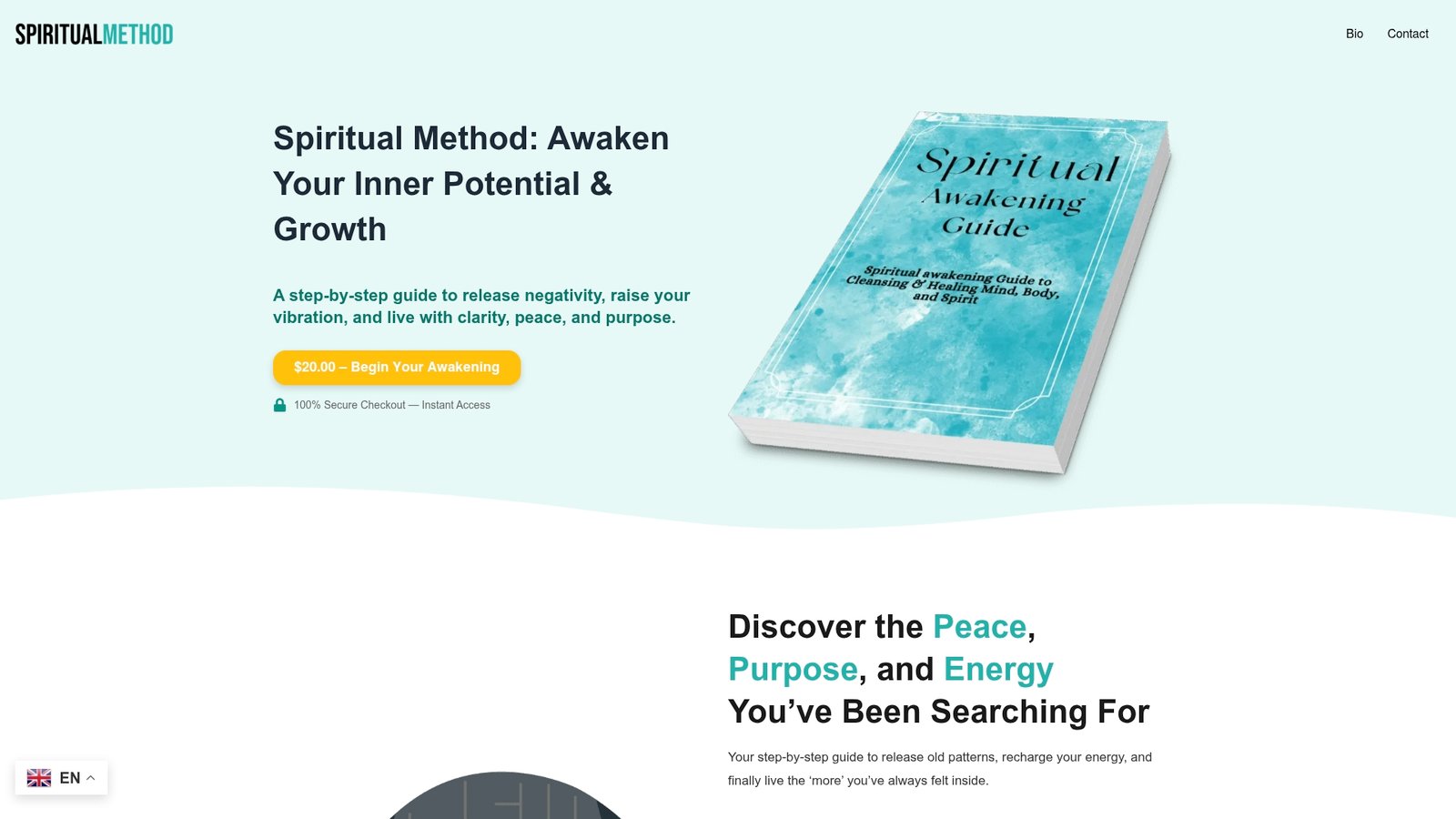
The bundle includes a 50+ page inner-healing ebook, a spirituality planner and journal, a moon manifesting ritual guide, and progress-tracking templates. Every resource is designed for spiritual seekers who want a clear, organized framework rather than scattered advice. The practices cover grounding, energy clearing, intention-setting, and reflective journaling, all formatted for immediate use.
This bundle works as a supportive structure alongside therapy or clinical care. It is not a replacement for professional treatment, but it gives your daily practice the organization and depth that makes clinical sessions more productive. Readers working through grief-related trauma may also find the holistic grief healing guide a useful companion resource.
Start your structured healing practice with the Spiritualmethod inner-healing bundle today.
Useful sources and further reading
- Trauma-Informed Therapy — NCBI/StatPearls: Clinical definitions, core principles, and evidence-based psychotherapies for trauma; the most authoritative U.S. clinical reference in this list.
- NCCIH — Complementary, Alternative, or Integrative Health: U.S. government overview of complementary approaches, usage trends, and evidence summaries for meditation, yoga, and related practices.
- Cleveland Clinic — Integrative Medicine: Accessible summary of common integrative modalities and their wellness applications; useful for evaluating mainstream clinical availability.
- NeuroLaunch — Alternative Treatments for PTSD: Evidence-tier mapping of alternative and emerging PTSD treatments, including the remission gap with first-line therapies.
- GWU Health Sciences — Integrative Medicine Overview: Academic framing of integrative medicine as a patient-practitioner partnership; helpful for understanding coordinated care models.
Prefer resources that are trauma-informed and culturally responsive. When searching for local providers, check the SAMHSA treatment locator and your state’s professional licensing board to verify credentials before beginning any new modality.
Recommended
- Holistic Grief Healing Practices: A 2026 Guide
- What Is Transpersonal Healing: A Practical Guide
- Explore mind-body medicine and holistic wellness with guides on meditation, yoga, spiritual detox, and transformative healing. Read practical insights now. – Spiritual Awakening Guide: Clarity, Peace, Growth
- What Is Holistic Healing and How It Benefits You