
Grounding visualization is a mental practice that uses imagined sensory detail, such as tree roots, a safe place, or a slow body scan, to pull attention out of anxious thoughts and back into the present moment. A rapid reset works best for acute anxiety in under three minutes, a tree or forest script suits a daily five to ten minute reset, and a full body scan offers deeper nervous system settling in eight to fifteen minutes. Each method, including the approach we use in our own Spiritual Method resources, relies on the same principle: the mind calms down when the senses have somewhere specific to land.
TL;DR:
- For sudden anxiety, press your feet into the floor, name three to five sensory details, then focus on one steady sensation for 30 to 90 seconds.
- Choose a tree visualization for five to ten minutes; when time is tight, use the root image and one sensory anchor.
- A scan lasting eight minutes and covering the feet, legs, torso, and head offers most of the benefit; full sessions often last 20 to 45 minutes.
- Build safe place imagery while calm, and stop if a detail feels triggering; open your eyes, orient to the room, and consider clinician support.
- Anchor practice to waking, lunch, or bedtime, and track anxiety before and after on a one to ten scale to identify which scripts help.
Table of Contents
- Quick 1 to 3 minute grounding visualization for rapid reset
- Tree or forest grounding visualization for a 5 to 10 minute reset
- Grounding body scan for an 8 to 15 minute embodied visualization
- Safe place visualization: building a reliable mental refuge
- How to practice grounding visualizations consistently
- Sean and Spiritual Method: supporting a sustainable grounding practice
- How to identify your own grounding triggers
- Keeping a grounding practice going and tracking progress
- Pairing grounding visualization with affirmations and mantras
- Why grounding visualization belongs in a daily self-care routine
- Deepen your practice with our downloadable grounding guides
- FAQ
- Sources
Quick 1 to 3 minute grounding visualization for rapid reset
When anxiety spikes and there is no time for a long practice, a short sensory anchor script can interrupt the spiral within a minute or two. This version works standing, sitting, or even mid-conversation.
- Feel your feet press into the floor and notice the actual contact points, heel, arch, and toes.
- Name three to five sensory details around you right now: a color, a sound, a texture, a smell, a temperature.
- Choose one steady physical sensation, your breath, the chair under you, or your hands resting together, and hold attention there for 30 to 90 seconds.
Pick this script when panic is rising fast or when you need to return to a meeting or conversation without obvious disruption. Sensory anchoring works because specific, concrete input gives the brain something immediate to process, which crowds out racing thoughts. For a complementary option, our breathwork for grounding resets pair naturally with this script when you have an extra minute to spare.
Tree or forest grounding visualization for a 5 to 10 minute reset
Nature imagery gives the mind more sensory material to work with than a generic calming scene, which is part of why forest and tree scripts show up so often in clinical relaxation resources, including the forest visualization transcript used in PTSD coaching materials.
- Settle into a seated or lying position and let your shoulders drop on an exhale.
- Picture yourself standing in a forest clearing, feet bare on packed earth or moss.
- Imagine roots growing from the soles of your feet down into the soil, anchoring you in place.
- Add sensory anchors one at a time: the smell of damp earth, the rough texture of nearby bark, the sound of leaves moving overhead.
- Stay with the image for five to ten minutes, returning to any anchor whenever your mind drifts.
Lying down works well for sleep preparation, while sitting upright suits a midday reset. When time is short, a three minute version using only the root image and one sensory anchor still delivers a noticeable shift.
Pro Tip: Record yourself reading the script slowly, or simply name each sensory anchor out loud as you imagine it, since speaking the detail tends to deepen the image.
Grounding body scan for an 8 to 15 minute embodied visualization
A body scan is a structured mindfulness practice that moves attention slowly through the body, and it is one of the better-studied grounding tools available. According to a body scan meditation guide, the practice improves interoception, the ability to notice internal body signals, and research on embodiment techniques consistently shows moderate to large reductions in state anxiety.
- Lie down or sit with support, close your eyes, and take two slow breaths.
- Bring attention to your feet, noticing weight, temperature, and contact with the floor or bed.
- Move attention upward through ankles, calves, knees, and thighs, pausing on any sensation without trying to change it.
- Continue through the torso, arms, and hands, noticing where you feel tension or ease.
- Finish at the crown of the head, then take one full breath before opening your eyes.
A full session often runs 20 to 45 minutes, but a body scan guide notes that shorter 5 to 12 minute versions work well for regular, everyday practice. For a grounding-specific body scan, an 8 minute version covering feet, legs, torso, and head hits most of the benefit without requiring a long block of time.
Safe place visualization: building a reliable mental refuge
A safe place visualization gives you a specific, vivid scene to return to whenever you need to settle down, and it works best when you build it before you actually need it. Choose a real or imagined place that feels calm and private, then add detail while you are already relaxed rather than mid-crisis.
- Sight: notice the light, colors, and shapes in the space.
- Sound: identify what you would hear, whether silence, water, or wind.
- Smell: pick one or two scents that belong to the scene.
- Touch: imagine a texture you could reach out and feel.
- Temperature: decide whether the air feels warm, cool, or still.
According to guided imagery research on safe-place exercises, vividly imagined multisensory scenes trigger a calming response similar to being in a real safe environment, and adding more sensory channels strengthens that effect. This practice is meant for stabilization rather than working through difficult memories, so if any detail feels uncomfortable, shift attention back to the physical room around you.
How to practice grounding visualizations consistently
Matching the practice to the moment makes grounding visualization far more useful than treating every script the same way. Use the rapid reset for sudden spikes of anxiety, the tree or forest script for a daily settling ritual, and the body scan or safe place for deeper, scheduled practice.
- A simple weekly pattern: three short resets whenever anxiety spikes, plus two longer sessions, body scan or safe place, on set days.
- If you fall asleep during a lying-down practice, that is a sign your body needed rest, not a failure of the technique.
- If your mind wanders, gently return to the last sensory anchor rather than restarting the whole script.
- If a scene feels unexpectedly triggering, stop, open your eyes, and name three things in the room; a different script may suit you better.
- In a noisy environment, swap visual imagery for a sound-based anchor, like counting breaths, instead.
Pro Tip: Keep one short script memorized by heart so you always have a grounding option available even without a phone or printed guide. For readers managing trauma history, vivid imagery can occasionally surface difficult material, and pausing the practice to consult a clinician is a reasonable next step rather than a setback. Our guide on grounding techniques for anxiety relief covers additional troubleshooting for specific situations.
Sean and Spiritual Method: supporting a sustainable grounding practice
We built our grounding resources around the same principle behind these scripts: small, repeatable practices compound into real change over time. We publish structured, step-by-step grounding rituals and downloadable guides designed to extend a short script into a full daily or weekly routine. A reader who wants to turn these exercises into a seven day habit can use a downloadable guide as a simple framework for pacing the practice and noticing what shifts along the way.
How to identify your own grounding triggers
Not every anxious moment looks the same, so a script that works during work stress may not fit a moment of grief or sensory overload. Start by noticing the physical signals that show up before you feel fully overwhelmed, a tight chest, shallow breathing, or racing thoughts, since these early cues are your personal triggers for when to start a visualization.
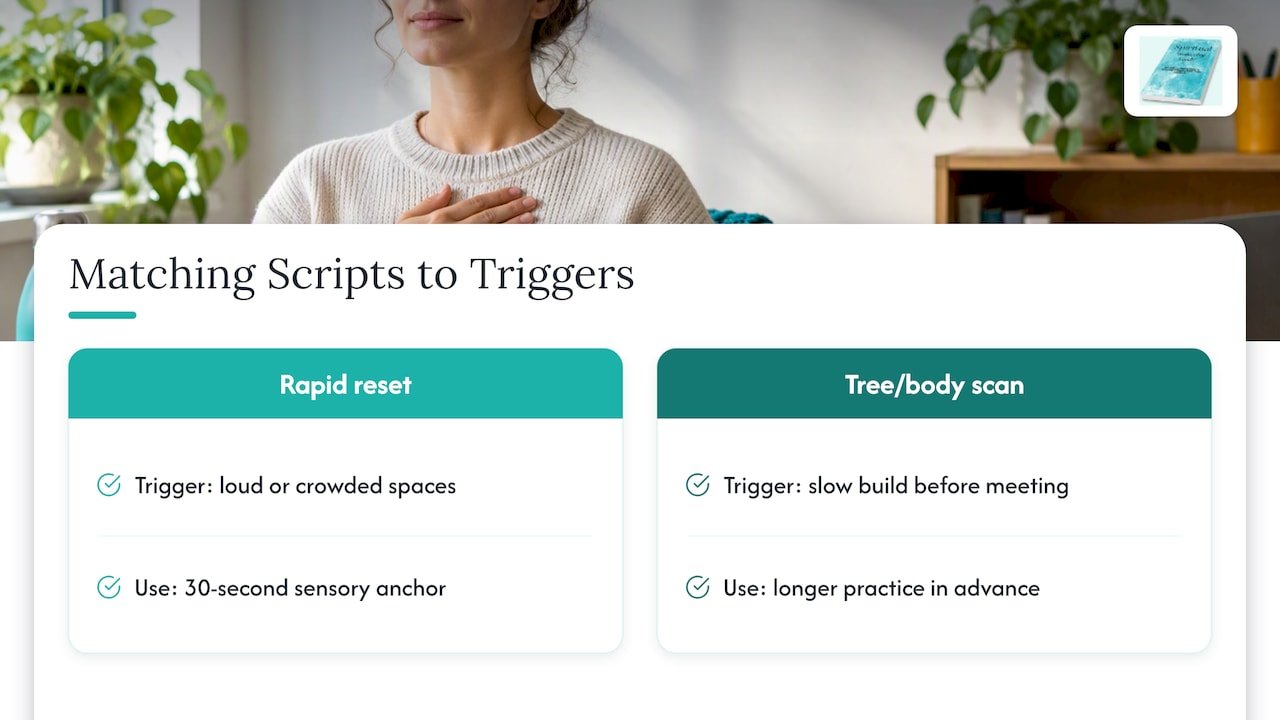
Keep a short mental or written note of the situations that tend to precede these signals: certain environments, specific conversations, or times of day. Over a week or two, patterns usually surface, and those patterns tell you which script to reach for. Someone whose anxiety spikes in loud or crowded spaces may lean on the rapid reset with its 30 second sensory anchor, while someone whose anxiety builds slowly before a difficult meeting might benefit more from a longer tree or body scan practice done in advance.
Customizing further means noticing which sensory channel calms you fastest. Some people settle quickly with sound-based anchors, like imagined rustling leaves, while others respond more to touch or temperature cues, like imagined warm earth underfoot. Testing a script a few times and paying attention to which details actually shift your state, rather than assuming one script fits everyone, turns a generic exercise into a genuinely personal tool. Our guide to grounding versus centering can help clarify which type of practice matches a given trigger.
Keeping a grounding practice going and tracking progress
Consistency matters more than intensity when it comes to grounding visualization, and a short daily habit tends to outperform occasional long sessions. Anchoring the practice to an existing routine, right after waking, during a lunch break, or before bed, removes the need to remember it as a separate task.
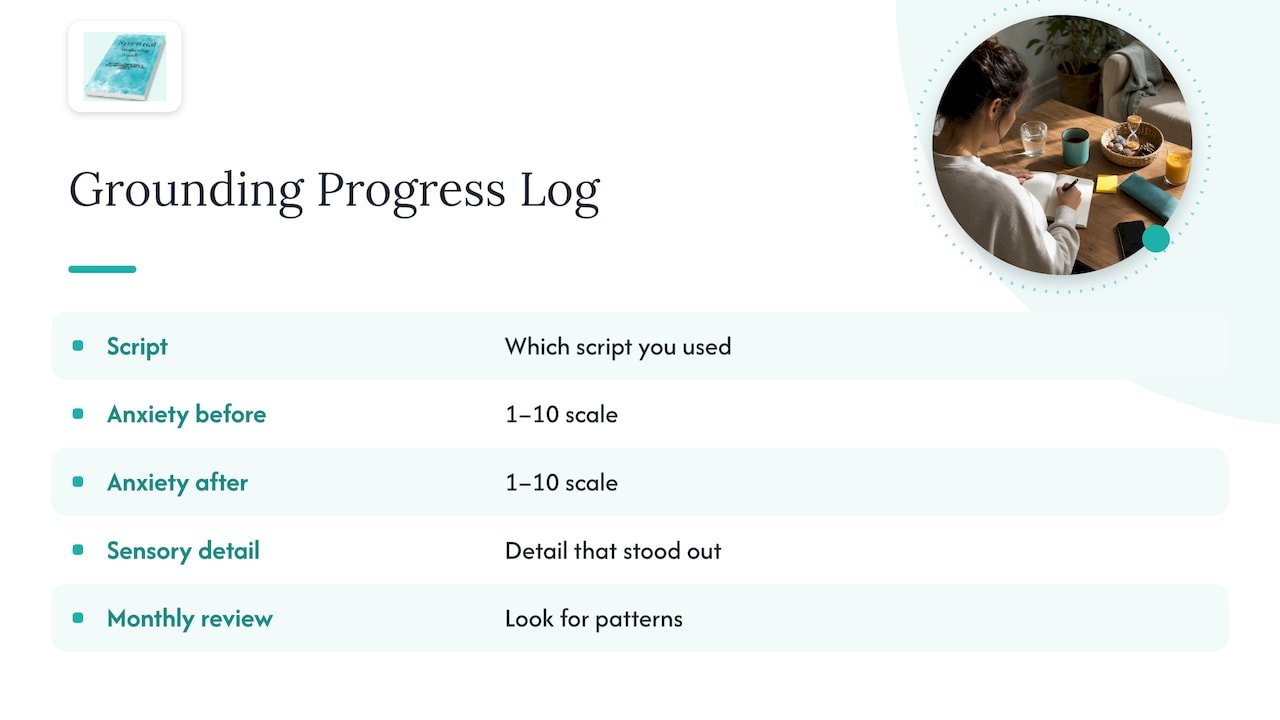
Tracking progress does not require anything elaborate. A simple log of which script you used, how anxious you felt before and after on a one to ten scale, and any sensory detail that stood out can reveal which practices actually work for you over several weeks. Reviewing that log monthly often shows a pattern, such as the tree visualization working better on high stress days while the rapid reset handles everyday friction.
Expect some inconsistency. A missed week does not undo the benefit of previous practice, and returning to the habit matters more than maintaining an unbroken streak. For a more structured approach to habit building and reflection, our grounding exercises for healing guide walks through longer routines for readers who want a fuller framework rather than standalone scripts.
Pairing grounding visualization with affirmations and mantras
Adding a short affirmation or mantra to a grounding visualization gives the mind a verbal anchor alongside the sensory one, which can deepen the sense of stability during the practice. A simple phrase repeated silently, such as “I am here, I am steady,” works well paired with the root imagery in the tree script or the contact points noticed during a body scan.
Timing matters more than the specific words chosen. Introducing the phrase after the sensory imagery is already established, rather than at the very start, lets the visualization do its grounding work first and the mantra reinforce it rather than compete with it for attention. Keeping the phrase short, three to six words, makes it easier to repeat without breaking the visual focus of the exercise.
This pairing is not about replacing one practice with another but about layering tools that support the same goal: returning attention to the present and to a sense of safety in the body. Readers building a longer self-care routine often find that a consistent mantra becomes a quick trigger on its own, eventually calling up the calm of the full visualization in just a few words.
Why grounding visualization belongs in a daily self-care routine
Grounding visualization earns its place in a daily routine not because it fixes every difficult feeling, but because it offers a reliable, repeatable way to come back to the present when attention has drifted into worry. The scripts that work best are rarely the most elaborate ones. A thirty second sensory check often does more real-time good than an ambitious session attempted only when things feel unmanageable.
— Sean
Deepen your practice with our downloadable grounding guides
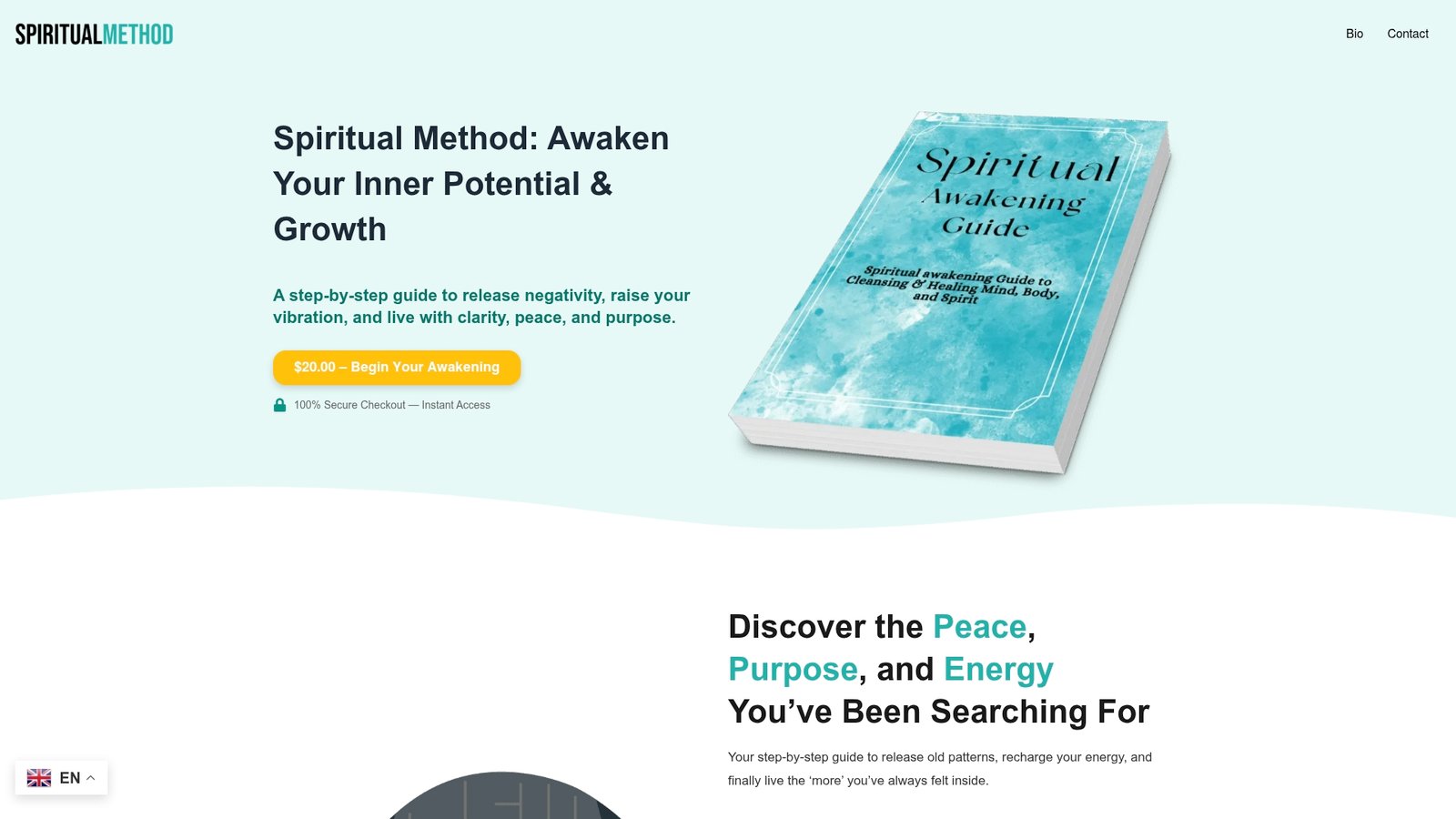
If these scripts feel useful, we built our downloadable guides to take grounding practice further, with structured scripts, habit trackers, and ritual templates designed for daily use rather than one-off sessions. These are tools for deepening a personal practice, not a substitute for professional care when that is what a situation calls for.
| Download includes | What it offers |
|---|---|
| Spiritual awakening guide | ebook with grounding, energy clearing, and intention-setting practices, $20 one-off, available here |
| Spirituality planner and journal | Structured journaling and progress tracking templates |
| Moon manifesting ritual guide | Ritual-based practices for intention-setting routines |
Visit our Spiritual Method downloads page to find the guide that fits where you are in your own grounding routine.
FAQ
What is grounding visualization used for?
Grounding visualization is used to calm acute anxiety, interrupt racing thoughts, and bring attention back to the present moment through imagined sensory detail. It works for both sudden stress and as a regular daily practice for building a calmer baseline.
How long should a grounding visualization take?
A rapid reset can take as little as 30 seconds to 3 minutes, while a tree or forest script usually runs 5 to 10 minutes. A full body scan often takes 8 to 15 minutes, though a body scan guide notes shorter 5 to 12 minute versions also support regular practice.
What makes a safe place visualization effective?
A safe place visualization works because a vividly imagined multisensory scene can trigger a calming response similar to being in a real relaxing environment. According to guided imagery research, adding more sensory detail, sight, sound, smell, touch, and temperature, strengthens that calming effect.
Can grounding visualization help with trauma-related anxiety?
Audio-delivered stabilizing and guided imagery techniques, including the safe place method, have shown symptom relief in studies with traumatized individuals. That said, if imagery feels triggering rather than calming, pausing the practice and speaking with a clinician is a reasonable step.
How often should I practice grounding visualization?
A simple pattern of several short resets through the week plus one or two longer sessions tends to build a steady habit without feeling like a chore. Consistency over time matters more than the length of any single session.
Sources
- Body scan meditation guide — SimplyPsychology
- Psychology
- Audio-delivered stabilizing and guided imagery techniques — PMC
- Visualization: The forest transcript — PTSD VA