
Ancestral healing rituals are ceremonial practices that connect individuals to their lineage through intentional acts such as lighting candles, placing photographs on altars, offering sacred foods, and singing healing songs. These examples of ancestral healing rituals span cultures from the Philippines to West Africa to the Amazon, each sharing a common purpose: to honor those who came before and invite transformation in the present. Spiritualmethod explores these practices as structured frameworks for inner healing of the mind, body, and soul. Whether you are new to this work or deepening an existing practice, the rituals described here offer concrete, respectful starting points.
1. What are common examples of ancestral healing rituals?
Ancestral healing rituals fall into several recognizable categories that appear across indigenous healing rituals worldwide. Understanding these categories helps you identify which practices align with your personal growth goals.
The most widely practiced forms include:
- Altar and offering rituals: Placing photographs, candles, flowers, and food on a dedicated surface to honor ancestors and invite their guidance
- Healing songs and chants: Using rhythmic sound to shift energy, dissolve illness, and create spiritual communication
- Energy and somatic practices: Structured movement and breathwork, such as Qigong, that ground healing in the physical body
- Prayer and affirmation ceremonies: Spoken or silent communication directed toward ancestral spirits for guidance, forgiveness, or blessing
- Ritual food preparation and sharing: Cooking and presenting specific foods as sacred offerings within a ceremonial context
- Divination and ancestral consultation: Using tools or trained practitioners to receive guidance from ancestral realms
Each category serves a distinct function, yet all share the aim of restoring balance between the living and those who came before. Sacred ritual practices across cultures consistently return to this theme of relational repair and spiritual alignment.
Pro Tip: Start with one category that feels natural to you rather than attempting multiple ritual forms at once. Depth in a single practice builds more lasting connection than breadth across many.
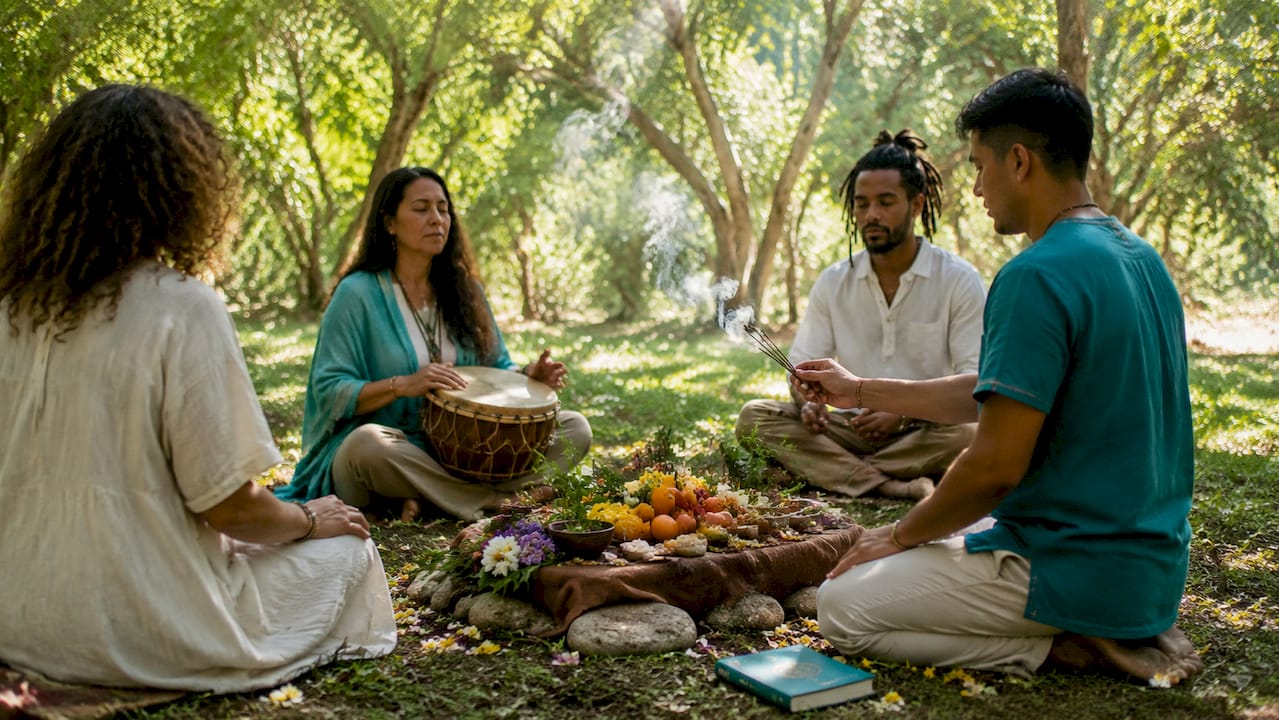
2. The Kiyaw-kiyaw peace offering ritual from the Philippines
The Kiyaw-kiyaw ritual from Libacao, Aklan in the Philippines is one of the most detailed examples of a structured ancestral peace offering in Southeast Asian cultural healing traditions. Sacred food offerings in this ritual include native chicken, pinais, tikod-tikod, and tuba, all arranged on a woven tray called a nigo. Participation is restricted to family members and designated spiritual practitioners, which preserves the energetic and relational boundaries that make the ritual effective.
This ritual has been orally transmitted since the 1920s, demonstrating how ancestral wellness techniques survive through community memory rather than written record. That longevity reflects the ritual’s continued relevance to the communities that practice it. The Kiyaw-kiyaw is not performed casually. Its restricted participation and specific food requirements signal that the ritual operates within a precise relational framework between the living and the ancestral realm.
3. Shipibo-Conibo icaros: healing songs from the Amazon
Icaros are healing songs used by the Shipibo-Conibo people of the Peruvian Amazon and represent one of the most studied examples of healing ceremonies from ancestors in indigenous South American traditions. These songs are taught by plant spirits rather than human teachers, which places their origin outside ordinary human knowledge systems. Icaros work by reasoning with illness-energy rather than commanding it away, facilitating energetic dissolution through rhythmic sound patterns.
This approach is fundamentally different from Western medical models. The illness is not fought or suppressed. It is engaged, addressed, and gradually released through sustained sonic dialogue. Practitioners who work with icaros describe the process as a form of negotiation between the healer, the patient, and the energy causing harm. For anyone exploring spiritual healing examples rooted in sound, the icaro tradition offers a sophisticated model of how music functions as medicine.
4. African Traditional Medicine and ancestral consultation
African Traditional Medicine integrates ancestral consultation with spiritual healing, treating illness as a disruption of communal and spiritual balance rather than a purely physical event. Healers, often called sangomas or traditional doctors depending on the region, use divination to identify which ancestral relationships have been disrupted and what restorative action is required. The ritual process typically involves the community, not just the individual patient.
This communal dimension is a defining feature of African cultural healing traditions. Healing is understood as a collective restoration, not a private transaction. When an individual falls ill, the entire relational web surrounding that person is examined for imbalance. This framework positions ancestral healing as an ongoing practice of communal attunement rather than a one-time intervention.
5. Wisdom Healing Qigong as an ancestral wellness technique
Wisdom Healing Qigong is a structured somatic practice with documented outcomes that place it among the most evidence-supported ancestral wellness techniques available today. Participants in an 8-week intensive protocol reported up to 83% improvement in wellbeing and global distress. That figure reflects the measurable impact of combining intentional movement, breathwork, and energetic awareness within a consistent ritual framework.
Qigong connects practitioners to lineage through the concept of ancestral energy, or yuan qi, which is understood as the foundational life force inherited from one’s ancestors. The practice does not merely exercise the body. It works to restore the quality of inherited energy through deliberate somatic engagement. For individuals who find purely symbolic rituals difficult to sustain, Qigong offers a physically grounded entry point into ancestral healing work.
6. Altar building as a daily healing ceremony
Building and maintaining an ancestral altar is one of the most accessible and widely practiced examples of healing ceremonies from ancestors across cultures. The altar serves as a physical focal point for ongoing communication with lineage. Common elements include photographs of deceased relatives, candles in specific colors, flowers, water, and food offerings chosen for their personal or cultural significance.
The altar is not a static decoration. It is tended regularly, with offerings refreshed and prayers spoken aloud or silently. This daily practice builds a consistent relational structure between the practitioner and their ancestors. Cultures as geographically distant as the Yoruba of West Africa, the Nahua of Mexico, and the Vietnamese all maintain altar traditions with striking structural similarities, which suggests that this form of ancestral connection meets a deep and universal human need.
7. How ancestral rituals support mental and emotional wellbeing
Traditional healing ceremonies attune all aspects of a person’s medicine wheel, with emphasis on prevention and balance for long-term health. The medicine wheel framework, used across many indigenous North American traditions, addresses nutrition, fasting, physical activity, and ceremony as equally weighted components of wellness. Ritual is not supplementary to health in this model. It is foundational.
Somatic grounding practices transform intellectual awareness into embodied healing, which is critical for ancestral and energetic work to take root. Understanding your lineage intellectually does not produce the same result as feeling that connection in your body through breath, movement, or sustained ceremony. This distinction explains why many people who research ancestral healing extensively still feel disconnected until they begin a physical practice. The body must participate for healing to become real.
Pro Tip: After any ritual, spend five minutes in stillness with your hands on your chest. This simple somatic anchor helps the nervous system register the experience as real rather than purely symbolic.
8. How to create your own ancestral healing ritual
Designing a personal ancestral healing ritual requires clarity of intention before any physical elements are assembled. Begin by identifying which ancestor or ancestral pattern you wish to address. This focus prevents the ritual from becoming a general gesture and gives it relational specificity.
A practical framework for building your own ritual includes:
- Set your intention: Write one clear sentence stating what you are honoring or healing
- Choose symbolic elements: Select photographs, candles, a specific food, or a piece of fabric connected to your lineage
- Prepare a dedicated space: Clear a shelf, table, or corner of a room and treat it as sacred for the duration of your practice
- Incorporate somatic engagement: Add mindful breathing, gentle movement, or a hand gesture that signals to your body that the ritual has begun
- Speak or write your prayer: Use language that feels authentic, whether formal or conversational
- Close with gratitude: End each session with a spoken acknowledgment of the ancestors you have addressed
- Reflect in writing: Use a journaling practice after each ritual to track patterns, insights, and emotional shifts over time
Involving family members deepens the ritual’s relational dimension, though solo practice is equally valid. The key variable is consistency. A simple ritual performed weekly produces more lasting results than an elaborate ceremony performed once.
Pro Tip: Use the same time of day for your ritual whenever possible. Consistent timing trains your nervous system to enter a receptive state more quickly, which deepens the quality of each session.
Key takeaways
Ancestral healing rituals work because they combine intentional symbolic action with somatic engagement, creating conditions for both emotional release and spiritual realignment across diverse cultural frameworks.
| Point | Details |
|---|---|
| Rituals are culturally diverse | Examples range from Philippine food offerings to Amazonian healing songs to African divination ceremonies. |
| Somatic grounding is required | Healing must root in the body through breath, movement, or posture, not only in thought or symbol. |
| Consistency drives results | A simple ritual practiced weekly produces deeper results than a complex ceremony performed once. |
| Community amplifies healing | Many traditions treat ancestral healing as a communal act, not a private one. |
| Personal adaptation is valid | You can build a meaningful ritual using elements from your own lineage without replicating another culture’s ceremony exactly. |
Why I think most people start ancestral healing backwards
Most people who come to ancestral healing start by researching it. They read about altars, watch videos about icaros, and collect information about traditions from cultures they admire. Then they wonder why nothing shifts. The problem is not the information. The problem is that healing of this kind does not live in the mind.
Every tradition covered in this article, from Wisdom Healing Qigong to the Kiyaw-kiyaw ritual to African ancestral consultation, places the body at the center of the process. The Shipibo-Conibo icaro works through sound felt in the chest, not concepts understood in the head. The Kiyaw-kiyaw ritual works through the act of preparing and presenting specific foods, not through knowing what those foods represent. The body must be involved, or the ritual remains a performance.
The second mistake I see consistently is cultural borrowing without relational grounding. Lighting a candle from a tradition you have no connection to is not inherently harmful, but it is also not the same as working within a lineage you actually belong to. Your own ancestors, however complicated that history may be, are the most direct access point you have. Start there. The ancestral healing meditation work that produces the most lasting results is almost always the work people do with their own family lines, not borrowed ceremonies.
Respect for cultural origins matters deeply. Learn the context of any practice you adopt. But do not let the search for the perfect ritual prevent you from beginning with what is already yours.
— Sean
Deepen your practice with Spiritualmethod
Spiritualmethod provides structured guides for individuals ready to move from understanding ancestral healing to practicing it with consistency and depth.
If the examples in this article resonated with you, the next natural step is exploring soul retrieval healing examples, which extend the ancestral healing framework into one of its most transformative applications. Spiritualmethod also offers a dedicated ancestral healing meditation guide for practitioners who want a step-by-step approach to building a sustainable inner practice. Each resource is designed to support real progress in healing the mind, body, and soul through methods grounded in both tradition and practical application.
FAQ
What are the most common examples of ancestral healing rituals?
The most common examples include altar building with photographs and candles, sacred food offerings, healing songs or chants, prayer ceremonies, and somatic practices like Qigong. These forms appear across African, Asian, Indigenous American, and South American cultural traditions.
How do ancestral healing rituals support emotional wellbeing?
Traditional healing practices address emotional wellbeing by balancing the medicine wheel through ceremony, nutrition, and physical activity together. Ritual creates structured space for emotional release and spiritual realignment that purely cognitive approaches cannot replicate.
Can I practice ancestral healing rituals without belonging to a specific tradition?
You can build a personal ritual using elements connected to your own family lineage, such as photographs, foods, or music meaningful to your ancestors. Respectful study of established traditions informs your practice, but your own lineage is always a valid and direct starting point.
What is the role of somatic practice in ancestral healing?
Somatic grounding transforms intellectual understanding into embodied healing by engaging the body through breath, movement, and posture during ritual. Without physical engagement, healing tends to remain conceptual rather than taking root in the nervous system.
How long does it take to see results from ancestral healing rituals?
Results depend on consistency and depth of engagement rather than the complexity of the ritual. Structured programs like Wisdom Healing Qigong show measurable wellbeing improvements within eight weeks of regular practice, which suggests that committed weekly ritual work produces observable shifts within a similar timeframe.