
The fastest, safest way to begin chakra balancing is a short root to crown meditation paired with simple grounding breathwork and one or two accessible yoga poses. No tools are required, though crystals, sound, or aromatherapy can help you focus if you enjoy them. Start gently and stop if you feel dizzy or emotionally overwhelmed.
TL;DR:
- Consistent daily practice of short meditation, breathwork, or yoga poses yields noticeable emotional and mood shifts within a few weeks.
- Breathing techniques like alternate nostril and diaphragmatic breath can effectively support chakra focus without additional tools or complex routines.
- Chakra practices are based on self-awareness, and there is no scientific proof that the chakra system is anatomically verified, but associated techniques do reduce stress.
- Tools such as crystals or sound baths are optional and mainly enhance focus, while the core techniques remain effective without them.
- Safety precautions include avoiding forceful breath retention, skipping advanced inversions without instruction, and stopping practice if feeling dizzy or overwhelmed.
Table of Contents
- A quick map of the seven chakras and what they govern
- A step-by-step chakra meditation from root to crown
- Simple yoga poses that support each chakra
- Breathwork methods that steady the mind before chakra work
- Using crystals, sound, and other sensory tools with intention
- Three ready-to-use routines for morning, evening, and stress
- What safety guidance and research actually support
- Why practical, consistent practice matters more than perfect technique
- Turning these routines into a lasting practice with Spiritual Method
- Sources
- FAQ
A quick map of the seven chakras and what they govern
Chakras are a traditional framework describing seven energy centers along the body, from the base of the spine to the crown of the head. Cleveland Clinic frames them as a useful metaphor for self-awareness rather than a verified anatomical system, and notes that practices like yoga, breathwork, and meditation may help people feel more emotionally balanced. Used this way, the map becomes a practical tool for noticing patterns in your body and mood rather than a medical diagnosis.
- Root (base of spine): safety, stability, survival concerns.
- Sacral (lower abdomen): creativity, pleasure, emotional flow.
- Solar plexus (upper abdomen): confidence, willpower, personal control.
- Heart (center of chest): love, compassion, connection to others.
- Throat (base of neck): communication, honesty, self-expression.
- Third eye (between eyebrows): intuition, focus, clarity of thought.
- Crown (top of head): purpose, spiritual connection, big-picture perspective.
You can often sense which chakra needs attention through recurring physical sensations, such as chronic jaw tension near the throat area, or repeated emotional patterns, like persistent anxiety linked to the root or a struggle to speak up linked to the throat. Behavior patterns count too: avoiding conflict, feeling creatively blocked, or losing sight of long-term goals all point toward a specific center worth exploring in your practice.
A step-by-step chakra meditation from root to crown
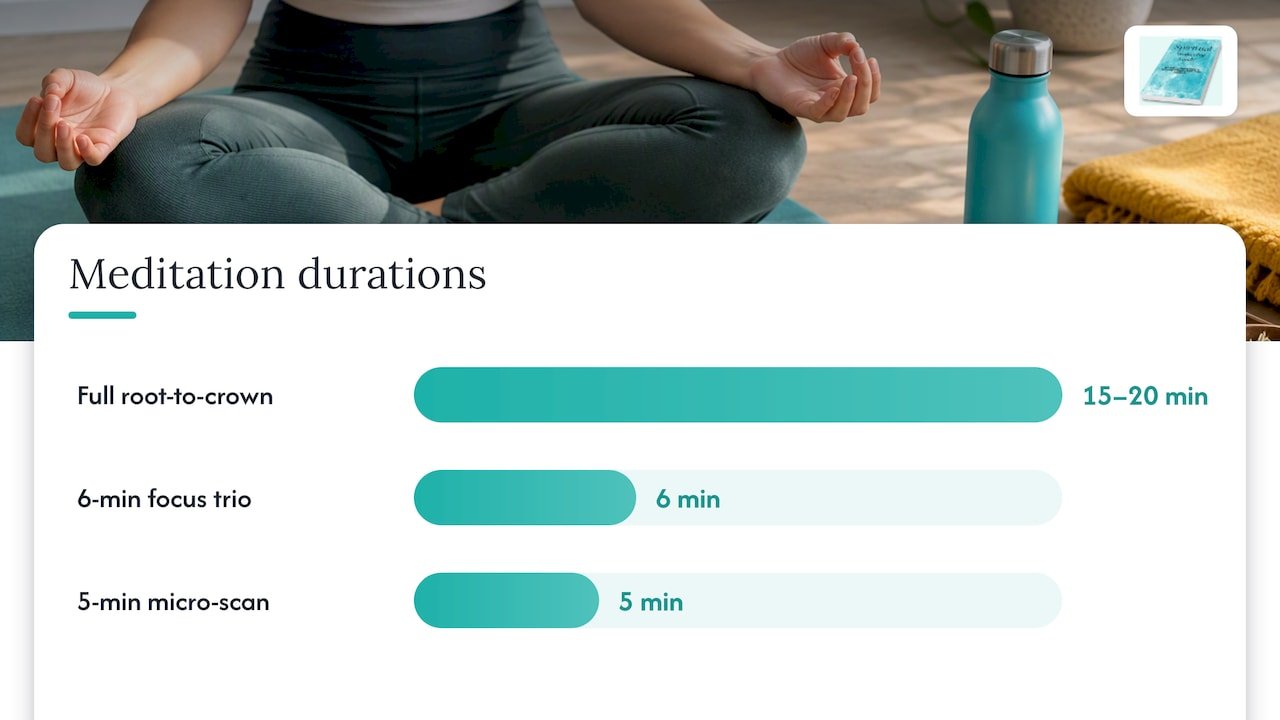
A full root to crown meditation takes about 15 to 20 minutes and works well seated or lying down.
- Settle your breath for one minute, letting your exhale grow slightly longer than your inhale.
- Bring attention to the root, at the base of your spine, for about two minutes. Picture a deep red glow and silently repeat “I am safe.”
- Move to the sacral, in the lower belly, for two minutes. Visualize warm orange light and let the affirmation be “I allow myself to feel.”
- Rest at the solar plexus, above the navel, for two minutes with a yellow glow and the cue “I am capable.”
- Settle at the heart, center of the chest, for two minutes with green or soft pink light and the phrase “I give and receive love freely.”
- Move to the throat for two minutes, picturing blue light and affirming “I speak my truth.”
- Rest between the eyebrows at the third eye for two minutes with indigo light and the cue “I trust my inner guidance.”
- Finish at the crown for two minutes, imagining violet or white light and the thought “I am connected to something larger.”
Seed sounds such as “lam” or “vam” are optional anchors, not required steps. If your mind wanders, simply return to the breath. That return, not a perfect visualization, is the actual practice.
For less time, try a six-minute focus trio on the root, heart, and crown, or a five-minute micro-scan spending roughly 30 to 60 seconds noticing each center without deep visualization.
Pro Tip: Set a gentle timer for each chakra so you can stay present instead of checking the clock.
Simple yoga poses that support each chakra
Gentle movement helps the body settle before or after meditation, and the NCCIH notes that yoga has beneficial effects on perceived stress when practiced at an appropriate level.
- Root: Mountain Pose or a supported squat, feet grounded, knees soft.
- Sacral: Gentle hip circles or Bound Angle Pose, knees low and relaxed.
- Solar plexus: Boat Pose held briefly, or a simple core-engaging plank.
- Heart: Cobra Pose or a supported backbend with a rolled blanket under the chest.
- Throat: Fish Pose or a gentle neck stretch, chin lifted slightly.
- Third eye: Child’s Pose, forehead resting on the mat or a block.
- Crown: Easy seated pose with a long spine, or a supported headstand only if you already have inversion training.
A short 10 to 15 minute flow can move through each pose for 30 to 60 seconds, breathing slowly and evenly throughout. Use blocks or a folded blanket for support, skip any inversion you have not practiced under guidance, and modify backbends and deep twists during pregnancy or with an existing injury, following the NCCIH’s guidance on starting slowly and adjusting for health conditions.
Breathwork methods that steady the mind before chakra work
Breath is often the quickest way to shift from a scattered state into a focused one before meditation.
- Nadi Shodhana (alternate nostril breathing): close the right nostril, inhale through the left for four counts, close the left, exhale through the right for four counts, inhale right, then exhale left. Repeat for five to eight rounds before meditation to settle the nervous system.
- Diaphragmatic breathing: place a hand on your belly, inhale so the hand rises, and exhale slowly through pursed lips, useful for grounding root and heart work.
- Extended exhale: inhale for four counts and exhale for six to eight, which supports a calmer state during solar plexus or throat practice.
Research suggests alternate nostril and slow diaphragmatic breathing can shift markers linked to stress, though the NCCIH cautions against forceful pranayama or breath retention without proper training. Stop immediately if you feel lightheaded, anxious, or short of breath, and never push a hold past comfort.
Using crystals, sound, and other sensory tools with intention
Crystals, sound bowls, color visualization, and essential oils are optional additions that can deepen focus without acting as treatment for any condition. A rose quartz or amethyst placed nearby during meditation, a few minutes with a singing bowl or recorded sound bath, or a drop of lavender oil on a cloth can all give your senses something to anchor to.
- Clean crystals occasionally with water or moonlight and store them away from direct sun to prevent fading.
- Dilute essential oils properly and patch test before applying near skin.
- Use binaural beats or soft instrumental tracks at a low volume rather than as a substitute for the visualization itself.
- Try a simple color-breathing exercise: inhale the color linked to your target chakra, exhale gray tension.
For readers who want a deeper dive into stones, a guide to crystals for emotional healing covers safe handling in more detail. One independent roundup of sound bath studies found modest reported benefits alongside practitioner tips worth reviewing if the format interests you. These tools support attention and ritual, they are never a requirement for a meaningful practice.
Three ready-to-use routines for morning, evening, and stress
Pick whichever fits your day rather than trying to do all three at once.
- 5-minute morning micro-scan: minute one, settle your breath and set an intention. Minutes two through five, spend roughly 30 to 45 seconds noticing each chakra from root to crown without deep visualization, just brief attention and a slow exhale at each stop.
- 20 to 25 minute full routine: five minutes of gentle yoga moving through two or three poses, eight rounds of Nadi Shodhana breathing, then a 12 to 15 minute root to crown meditation with color visualization and affirmations at each center.
- 1 to 2 minute stress reset: three slow diaphragmatic breaths, hand on your belly, followed by a single grounding affirmation such as “I am steady right now.” This works well before a difficult conversation or after a stressful message.
A related 30 second grounding breath practice offers another option for moments when even two minutes feels like too much. Consistency across short sessions tends to matter more than the length of any single practice.
What safety guidance and research actually support
The NCCIH’s review of yoga effectiveness and safety reports beneficial effects on perceived stress alongside common injuries like sprains and strains, and it recommends starting slowly with beginner-level poses. A peer-reviewed review of mindfulness practices found that meditation can reduce stress and affect some health-related outcomes, though study quality varies across the research. Separate clinical research on yoga as a therapeutic intervention links consistent practice to improved stress markers for some groups, while noting that stronger trials are still needed.
- Avoid forceful breathing or breath retention if you are new to pranayama.
- Skip advanced inversions without prior instruction from a qualified teacher.
- Pause and seek medical or mental health support if you experience panic, dizziness, or a worsening mood during practice.
Why practical, consistent practice matters more than perfect technique
Chakra work often gets treated as something mystical or complicated, when the more useful lens is habit formation. The biggest gap I see is not a lack of information, it is inconsistency: people try an elaborate hour-long ritual once, feel discouraged when life gets busy, and quit. A two-minute reset done daily will shape your nervous system more reliably than an occasional long session, and the research on short, repeatable practices backs that pattern. Progress here looks like steadiness, not a dramatic breakthrough.
— Sean
Turning these routines into a lasting practice with Spiritual Method
There are practical, step-by-step methods available for readers who want structure beyond a single article, blending grounding techniques, journaling, and routine-based healing into downloadable guides. Contributing author Sean approaches chakra work the same way this article does: short, repeatable practices overcomplicated rituals.
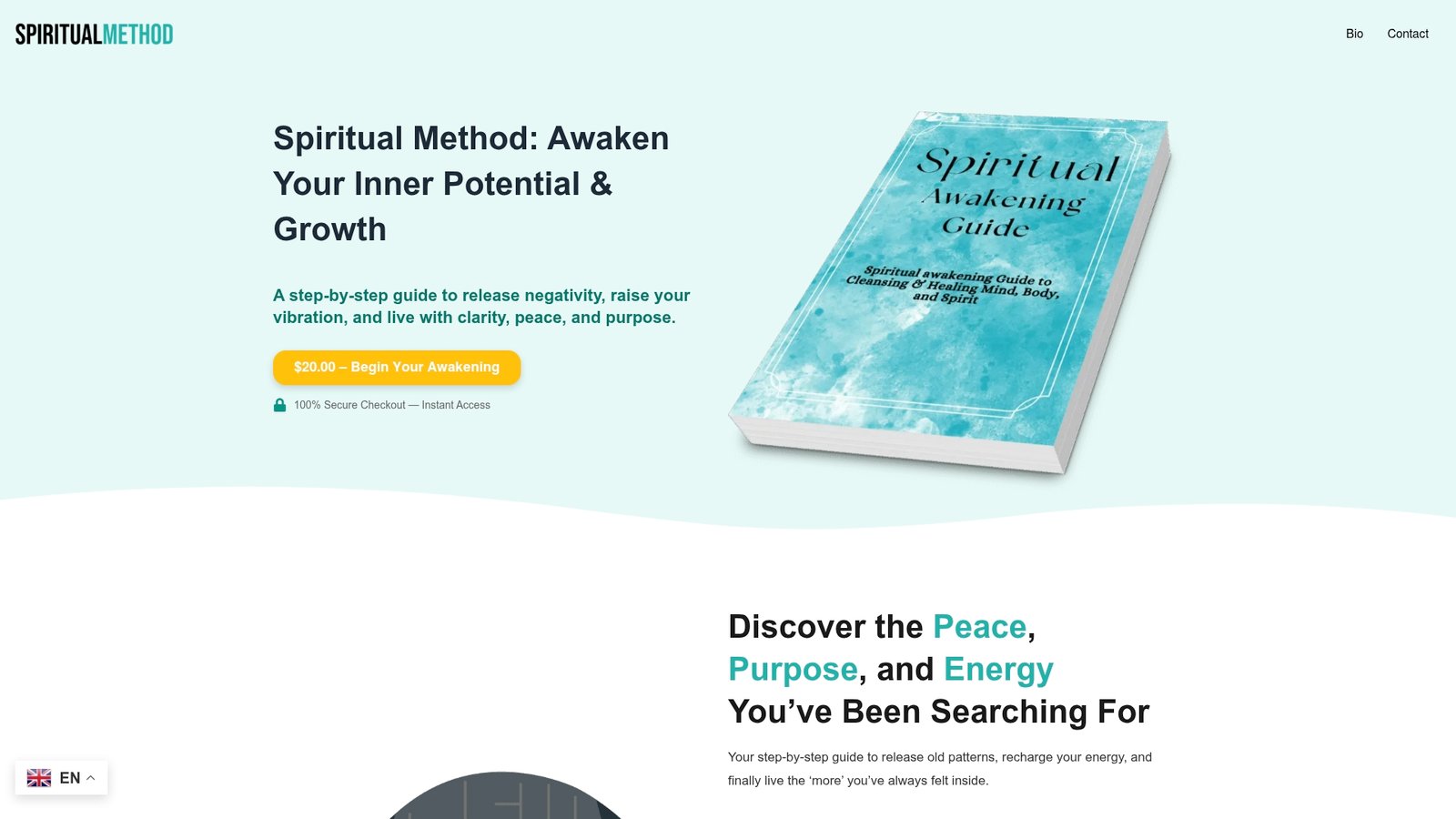
The Spiritual Method downloadable guide extends what you just learned into a structured format, with guided routines, a habit tracker, and journaling prompts designed to help the meditation, breathwork, and yoga practices above become a lasting habit rather than a one-time try. If today’s five-minute micro-scan felt worthwhile, there are resources providing a framework to keep building on it at your own pace. Visit the downloads page to see the full guide and start building your routine.
Sources
- Yoga: In Depth — National Center for Complementary and Integrative Health (NCCIH)
- The 7 Chakras: What They Mean and How To Use Them for Health and Wellness — Cleveland Clinic
- Mindfulness meditation and health outcomes — PMC
- Yoga as a therapeutic intervention: a systematic review of randomized controlled trials — PubMed
FAQ
What are the best chakra balancing techniques for beginners?
A short root to crown meditation, slow diaphragmatic or alternate nostril breathing, and one or two gentle yoga poses are the most accessible starting techniques. None of these require special tools, and each can be practiced in five minutes or less when time is limited.
How long does it take to balance a chakra?
There is no fixed timeline, and results depend on consistency rather than a single session. A daily five-minute micro-scan or a 20 to 25 minute full routine practiced regularly tends to produce noticeable shifts in mood and focus within a few weeks, in line with research on short, repeatable mindfulness practices.
Is chakra balancing scientifically proven?
Chakras themselves are not an anatomically verified system, and Cleveland Clinic frames them as a traditional metaphor rather than a medical model. The practices associated with chakra work, including yoga and meditation, do have research support for reducing stress, even though the chakra framework itself remains a self-awareness tool.
Can breathwork alone help balance chakras?
Yes, breathwork such as alternate nostril breathing or slow diaphragmatic breathing can shift your state enough to support focus during chakra practice on its own. The NCCIH advises against forceful breathing or retention for beginners, so keep the pace gentle and stop if you feel lightheaded.
Do I need crystals or other tools to balance my chakras?
No, tools like crystals, sound bowls, or essential oils are optional and mainly support focus and ritual rather than acting as treatment. A meditation, breath practice, or yoga pose done with attention works without any additional tools at all.