
The fastest way to feel grounded is diaphragmatic breathing with a longer exhale than inhale: breathe in through the nose for four counts, then out through the mouth for six, for 30 to 60 seconds. This extended exhale signals safety to the vagus nerve, calming physical arousal almost immediately. It’s the single most reliable grounding breathing technique for sudden anxiety, and it works as a foundation for the NHS breathing guide’s longer recommended sessions. Several more techniques below build on this same principle for different situations.
TL;DR:
- The most reliable grounding technique involves diaphragmatic breathing with a longer exhale, such as inhaling for four counts and exhaling for six, to activate the vagus nerve.
- Different situations call for tailored breathwork: box breathing for racing thoughts, 4-7-8 for winding down, humming or ocean sounds for sensory grounding, and counting combined with sensory checks for panic or dissociation.
- Practicing these techniques regularly in short sessions or routine moments builds lasting calm and resilience, rather than relying on single, intense breaths during crises.
- Safety precautions include reducing counts if dizziness or tingling occurs and consulting a healthcare professional if chest pain or persistent panic happens.
- Consistency and pairing breath with sensory anchors or journaling enhance effectiveness, and these techniques work best when integrated into daily habits, not just moments of immediate stress.
Table of Contents
- Five Grounding Breath Techniques and When to Use Them
- How to Practice Each Technique, Step by Step
- Why Breathing Actually Calms Your Nervous System
- Building a Grounding Routine You’ll Actually Use
- Safety Notes and When to Talk to a Doctor
- Who’s Behind This Guide
- What Most Grounding Advice Gets Wrong
- Deepen Your Practice With Spiritualmethod’s Guides
- Sources
- FAQ
Five Grounding Breath Techniques and When to Use Them
Breathwork for grounding isn’t one technique. It’s a small toolkit, and each tool fits a different moment. Here’s the shortlist worth memorizing.
- Diaphragmatic (belly) breathing. Best for general anxiety and daily practice. Slow belly breaths lower overall tension and work almost anywhere, standing, sitting, or lying down.
- Box breathing (4x4x4x4). Best for racing thoughts or scattered focus. Equal counts on the inhale, hold, exhale, and hold give the mind a rhythm to latch onto.
- 4-7-8 or extended-exhale breathing. Best for pre-sleep anxiety or winding down after a stressful day. The long exhale phase does most of the calming work.
- Humming, bee breath, or ocean breath. Best for sensory grounding when thoughts feel too abstract to catch. The vibration in the throat and chest gives the nervous system something physical to focus on.
- Counting or breath awareness. Best for panic spikes or dissociation. Counting each breath (or pairing it with the 5-4-3-2-1 senses check) pulls attention out of a spiraling thought loop.
None of these require special equipment or training. That’s part of the point. Grounding breathing techniques work because they’re always available, in a meeting, a grocery line, or a parked car.
How to Practice Each Technique, Step by Step
Here’s exactly how to run each script, including quick variations for when the standard count feels too intense.
- Diaphragmatic breathing, 60-second reset. Sit or stand with one hand on your belly. Inhale through your nose slowly, feeling your belly rise, not your chest. Exhale through your mouth slowly for a longer duration than the inhale. Repeat several times. For a longer session, extend this to five minutes, matching the NHS’s recommended practice length.
- Box breathing. Inhale for four counts, hold for four, exhale for four, hold for four. Run through four to six cycles. If holding your breath makes you dizzy, drop the holds and just alternate a four-count inhale with a four-count exhale.
- 4-7-8 or extended exhale. Inhale for four counts, hold for seven, exhale slowly for eight. If seven feels too long, shorten it, the ratio matters more than the exact numbers. This one is worth avoiding right before driving or anything that needs sharp alertness, since it can make you drowsy.
- Humming or ocean breath. Inhale normally, then exhale while humming a low, steady tone, or constricting the back of your throat slightly to make a soft “ocean” sound. Feel the vibration in your chest and throat. Five to ten rounds is usually enough to notice a shift.
- Counting or breath awareness, with sensory pairing. Count each inhale and exhale up to ten, then restart. For added grounding, combine this with the 5-4-3-2-1 method, naming five things you see, four you can touch, three you hear, two you smell, and one you taste, between breath cycles.
Pro Tip: Keep one hand on your chest and one on your belly during any of these scripts. If the top hand moves more than the bottom one, you’re breathing too shallow, slow down and let the belly hand do the work.
Why Breathing Actually Calms Your Nervous System
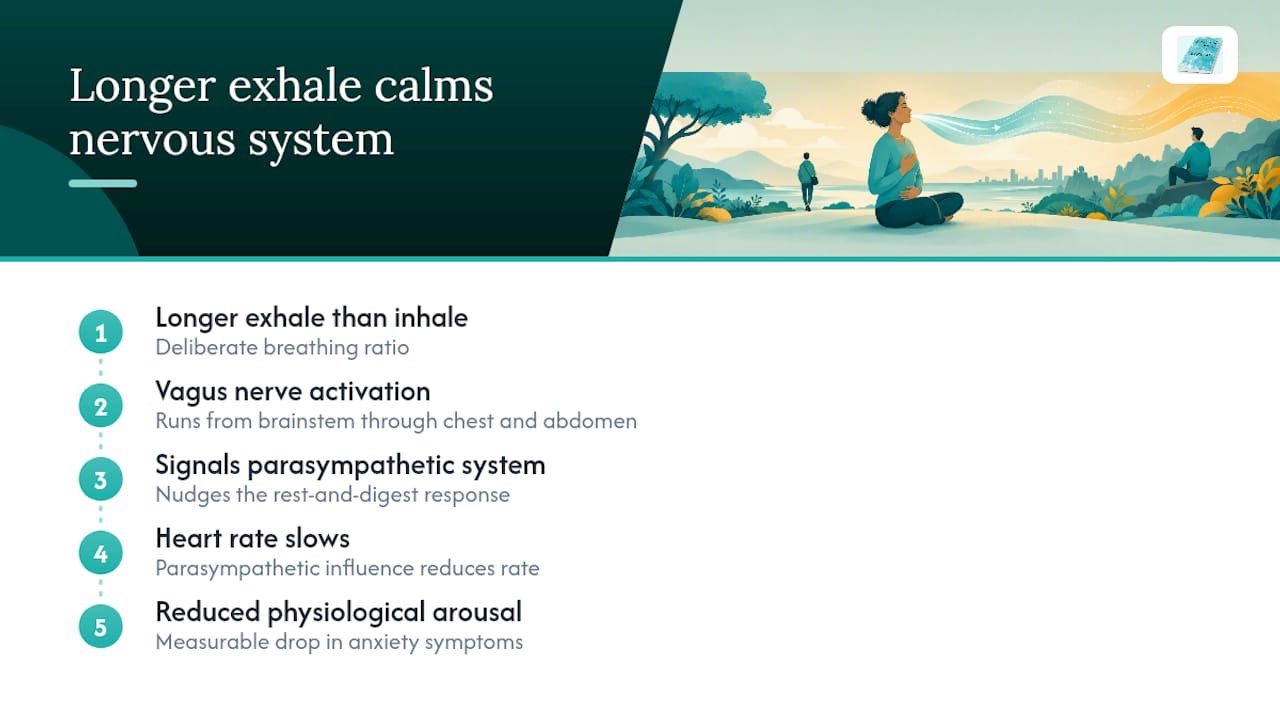
Your body runs on two competing settings: the fight-or-flight response and the rest-and-digest response. Deliberate breathing is one of the few voluntary ways to nudge that switch, largely through the vagus nerve, a long nerve that runs from the brainstem through the chest and abdomen and helps regulate heart rate.
A longer exhale than inhale tells your body it’s safe to downshift, which slows heart rate and reduces physiological arousal. This is not a vague wellness claim. Systematic reviews on breathing interventions describe measurable effects on autonomic regulation and anxiety symptoms, which is why breathwork shows up in clinical settings, not just yoga studios.
None of this requires perfect form. A shaky, imperfect 4-7-8 breath still activates the same mechanism as a textbook one. What matters is the ratio: exhale longer than you inhale, and the parasympathetic system tends to follow.
Building a Grounding Routine You’ll Actually Use
A grounding breathwork routine works best when it scales to how much time you actually have. Three time windows cover almost every situation:
- Immediate (30 to 60 seconds): four-count inhale, six-count exhale, repeated six to eight times. Use this at your desk, in line, or right before a hard conversation.
- Short reset (3 minutes): combine diaphragmatic breathing with one sensory anchor, feet flat on the floor, noticing the texture of a chair or table as explained in how fragrance promotes introspection to strengthen the grounding effect beyond breath alone. This pairing strengthens the grounding effect beyond breath alone.
- Daily practice (5 to 10 minutes): a longer diaphragmatic or box breathing session, ideally cued to something you already do, like right after your morning coffee or before checking email.
Consistency matters more than duration. Pairing your practice with journaling or a short body scan can help you notice patterns in what triggers your anxiety in the first place.
Safety Notes and When to Talk to a Doctor
Lightheadedness or tingling in the fingers is common when starting out, especially with box breathing or long holds. If that happens, shorten the counts or pause and breathe normally for a moment. Stop and check in with a clinician if you experience chest pain, breathlessness that doesn’t ease, or panic that persists despite these techniques. Breathwork is a supportive tool, not a treatment for underlying cardiopulmonary or psychiatric conditions, and it works best alongside, not instead of, appropriate care.
Who’s Behind This Guide
This guide is written by Sean, drawing on practical breathwork frameworks and clinical sources like the NHS and Yale Medicine. Spiritualmethod’s guides build on this same foundation with structured practice scripts, journaling prompts, and ritual support for readers who want a deeper, step-by-step grounding program.
What Most Grounding Advice Gets Wrong
Most grounding advice treats breathwork like a magic switch: do the technique, feel instantly better, move on. That’s not how it works for most people. The research on breathing interventions supports steady, repeatable use, not a single dramatic breath that fixes a bad day.
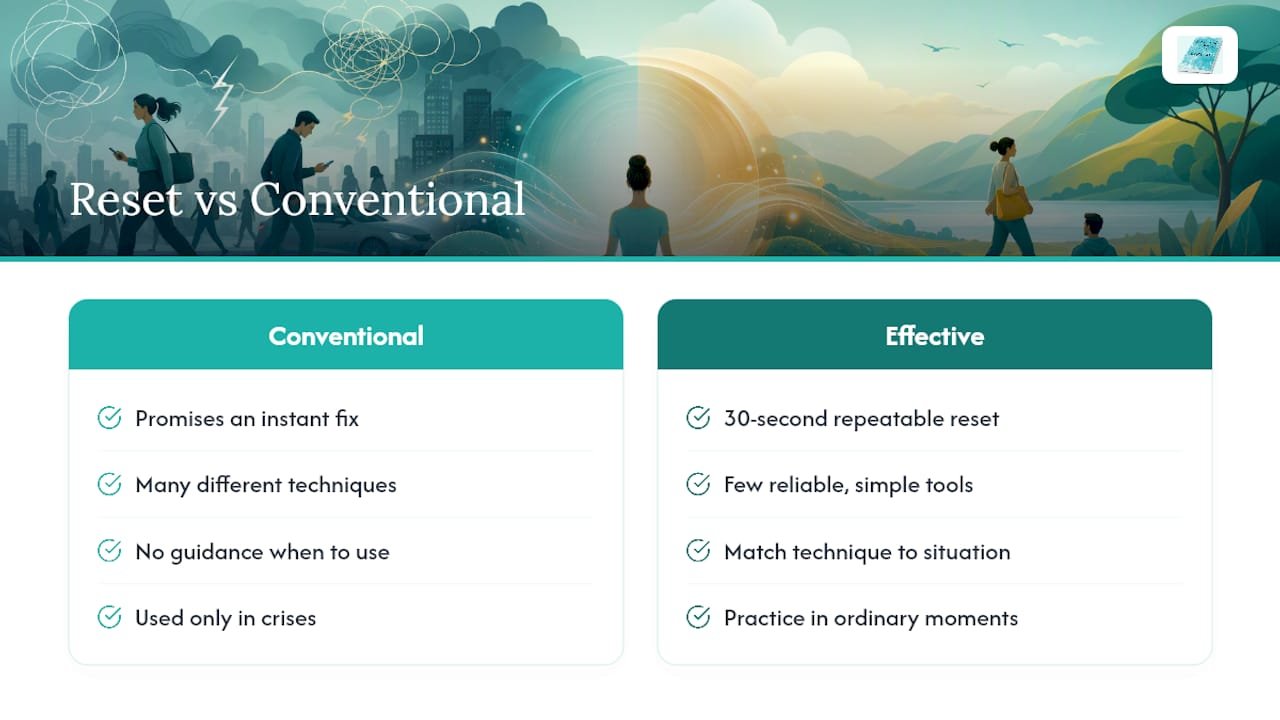
The bigger problem with conventional advice is that it hands people a dozen techniques with no guidance on when to use which one. A racing mind before a presentation needs box breathing’s structure. A 2 a.m. anxiety spiral needs the long exhale of 4-7-8. Treating them as interchangeable is why so many people try breathwork once, feel underwhelmed, and quit.
What actually works is smaller and less exciting than most guides admit: a 30 second reset you actually remember to use, paired with a sensory anchor like feet on the floor or a hand on your chest. Grounding techniques with breath succeed less because of any single perfect script and more because they get practiced, repeatedly, in ordinary moments, not just crisis ones. Build the habit before you need it in a panic.
— Sean
Deepen Your Practice With Spiritualmethod’s Guides
Breathwork for grounding gives you an immediate reset, but lasting calm usually comes from pairing breath with structured reflection. Spiritualmethod’s Inner Child Healing Practices guide is built around exactly that combination: grounding routines, journaling prompts, and step-by-step rituals designed to work alongside the breathing scripts in this article, not replace them.
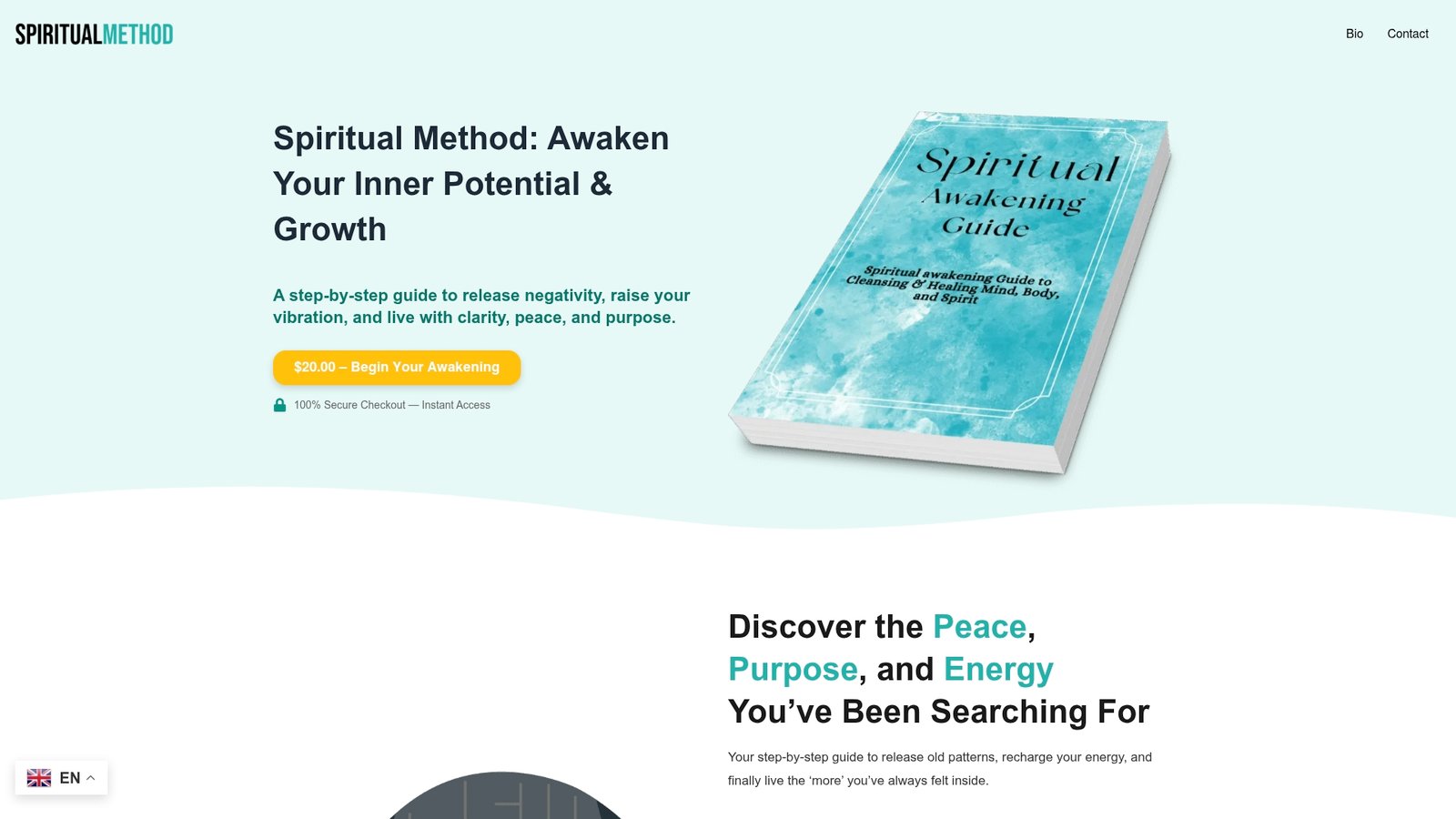
The guide walks you through structured practices for grounding, energy clearing, and intention-setting, so a 60-second breath reset can become part of a bigger, repeatable framework rather than a one-off trick. If you’ve felt the immediate relief of a longer exhale and want a way to build on it consistently, downloading the guide is the next practical step.
Sources
- Breathing exercises for stress – NHS
- Breathing interventions review – NCBI / National Institutes
- The power of the breath – Yale Medicine
This article is general information, not a substitute for advice from a qualified doctor. Consult a qualified healthcare professional about your own circumstances before acting on anything here.
FAQ
What breathing technique is best for grounding?
Diaphragmatic breathing with a longer exhale than inhale, such as a four-count in and six-count out, is the most reliable grounding breathing technique for immediate calm.
What is the 3-3-3 rule for grounding?
It’s a quick sensory check: name three things you see, three sounds you hear, and move three parts of your body, often paired with slow breathing to anchor attention in the present moment.
How do you immediately ground yourself?
Plant your feet flat on the floor, place a hand on your belly, and breathe in for four counts and out for six for about 30 to 60 seconds, which is enough to activate the calming response tied to the vagus nerve.
What is the 5-4-3-2-1 grounding rule?
It’s a sensory grounding exercise where you name five things you see, four you can touch, three you hear, two you smell, and one you taste, often combined with slow breathing for a stronger effect.
How is breathwork for grounding different from energizing breathwork?
Grounding breathwork relies on longer exhales to calm the nervous system, while energizing techniques like fast-paced breathing emphasize quicker, sharper inhales to increase alertness rather than settle it.