
Moonlight, selenite or clear quartz contact, smoke, sound, and short bursts of intention are the most reliable crystal charging methods, while brief sunlight works for a narrow set of stones and running water should be used with caution. The main safety note is straightforward: some minerals fade in light, some dissolve or corrode in water, and a few release harmful particles when handled carelessly. The steps below walk through timing, technique, and the precautions each method calls for.
TL;DR:
- Moonlight is suitable for nearly all stones and can be left overnight, but avoid extreme weather to prevent damaging fragile specimens.
- Bright sunlight should be limited to 20-30 minutes for durable stones and avoided altogether for light-sensitive minerals like amethyst and fluorite.
- Selenite or clear quartz can recharge delicate stones safely within 6 to 24 hours through direct contact, without exposure to light or water.
- Water and salt methods are only safe for water-resistant, dense stones; porous or soft minerals like halite and turquoise can dissolve or discolor.
- Subjective sensations and visual checks guide whether a crystal feels charged, but these are influenced by belief and expectation rather than measurable energy.
Table of Contents
- 1. A quick-reference guide to charging methods
- 2. Step-by-step instructions and timing for every method
- 3. Mineral sensitivity and toxic-material warnings
- 4. How long each method takes and how often to recharge
- 5. How to tell if a crystal is charged
- 6. Spiritual Method’s approach to ritual structure
- 7. Choosing a method: a practical take
- 8. A structured next step for your practice
- FAQ
- Sources
1. A quick-reference guide to charging methods
Choosing a charging method depends on the stone you own, how fragile it is, and how much time you have. Some crystals tolerate almost anything; others need gentler handling.
Moonlight charging works for nearly every stone and asks the least from you: set the crystal where moonlight reaches it, ideally overnight, as explained in detail in How Moon Circles Strengthen Spiritual Community Life. Full moons are the traditional choice, though a waxing or waning moon carries its own intention in many practices, something we expand on in our moon ritual guide.
Sunlight charging works quickly, often within 20 to 30 minutes, but it carries the biggest caveat on this list. Light-sensitive stones like amethyst, fluorite, and certain dyed quartz varieties can fade or discolor under direct sun, a risk documented in mineral-conservation research on light-induced changes. Reserve sunlight for durable stones like citrine or clear quartz, and keep sessions brief.
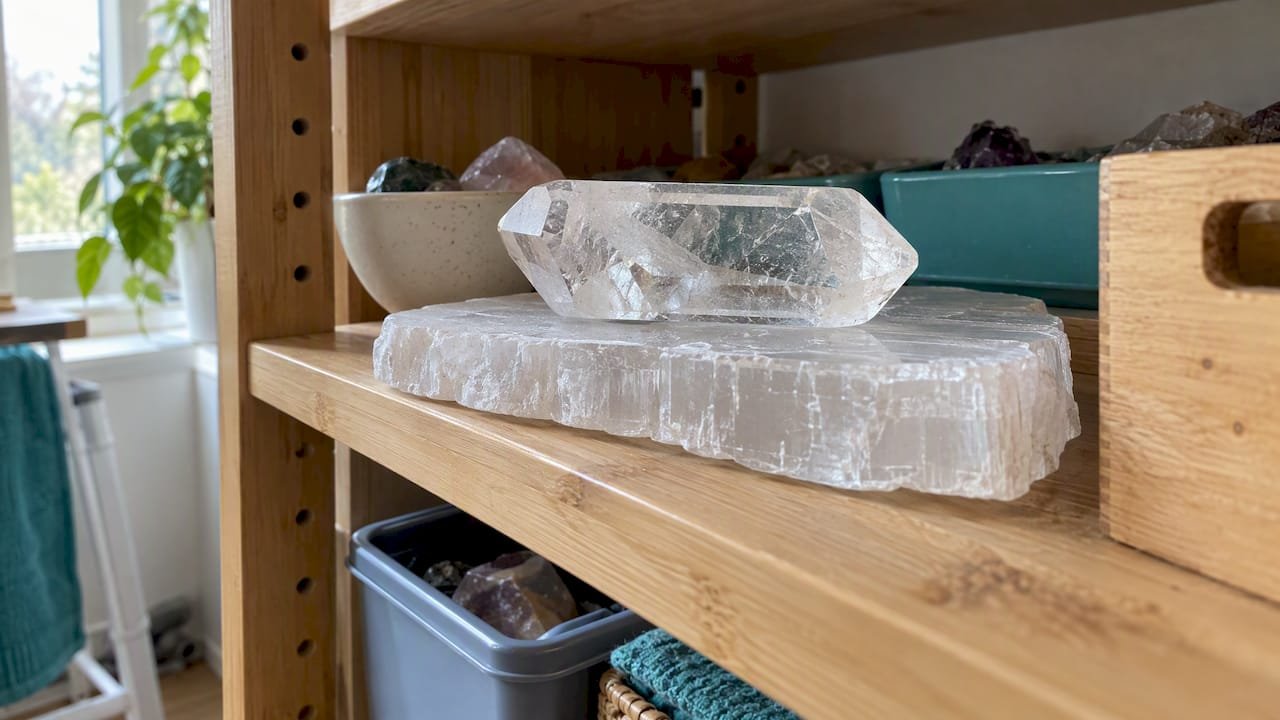
Selenite and clear quartz recharging is the gentlest option for delicate or water-sensitive stones. Placing a crystal on or near a selenite slab or quartz cluster for 6 to 24 hours is considered a low-risk way to refresh its energy without exposing it to light or moisture.
Smoke or smudging clears energy fast, usually in under a minute per stone, by passing the crystal through the smoke of sage, palo santo, or incense. It works on almost any material since there’s no direct contact with flame or liquid.
Running water suits water-safe stones like clear quartz, citrine, and tumbled agate, but it’s one of the riskier methods for soft or porous minerals. Selenite, halite, and some raw or unpolished specimens can dissolve, flake, or degrade when wet, a concern echoed in National Park Service guidance on handling geological specimens.
Salt baths or salt beds draw on the mineral’s absorbent reputation, but salt is abrasive and corrosive to softer stones, so this method should be reserved for hardy, non-porous crystals and avoided entirely for anything layered, fibrous, or already scratched.
Burying in earth is a slower method, often left for 24 hours to several days, and suits grounding-focused practices. It’s low-risk for most stones but requires a clean, marked spot so you don’t lose track of what you buried.
Sound charging using singing bowls, bells, or tuning forks takes just a few minutes and works well for jewelry or stones you handle daily, since the vibration doesn’t require removing the piece from its setting.
Hands-on intention rituals, where you simply hold the stone and focus, take two to five minutes and work anywhere, making this the most practical default when other methods aren’t convenient.
Here’s a snapshot of what fits which situation:
- Jewelry and daily-wear pieces: sound charging or brief hands-on intention, since there’s no need to remove the setting.
- Raw or unpolished specimens: selenite contact or earth burying, both gentle on uneven surfaces.
- Tumbled stones and durable crystals: sunlight (if light-stable), running water, or salt beds.
- Delicate, dyed, or soft minerals: moonlight or smoke only, avoiding water, salt, and direct sun.
2. Step-by-step instructions and timing for every method
Each method has its own rhythm, and getting the timing right matters almost as much as the method itself.
Moonlight charging. Place your crystal on a windowsill, outdoor table, or any surface that catches moonlight overnight. Full moons offer the strongest traditional association with charging, while waxing moons are often used for growth-focused intentions and waning moons for release work, a distinction explored further in our guide to new moon versus full moon rituals. Leave the stone out for 6 to 12 hours, or the full night, and bring it in before direct morning sun hits it if it’s a light-sensitive variety. Cloud cover doesn’t ruin the process. Many practitioners treat an overcast night as fine for charging since the method is more about ritual intention than measurable light exposure.
Sunlight charging. Limit sunlight exposure to 20 to 30 minutes for durable stones like citrine, clear quartz, or tiger’s eye. Skip this method entirely for amethyst, fluorite, rose quartz, and any dyed or treated stone, since these are among the minerals most prone to rapid fading under light, according to mineral specimen research. If you want a compromise, place the stone behind a window. Glass filters out a meaningful share of the damaging light while still letting some sun through.
Selenite or clear quartz recharging. Lay your crystal directly on a selenite slab or nestle it inside a clear quartz cluster. Direct contact works best, though placing a stone within an inch or two still has some effect. Leave it for 6 to 24 hours. This method is particularly useful for jewelry, since you can rest a ring or pendant on a small selenite dish overnight without removing any settings.
Smoke or smudging. Light a sage bundle, palo santo stick, or incense cone and let it smolder rather than flame. Hold your crystal 6 to 12 inches above the smoke and pass it through for 15 to 30 seconds, rotating it so all sides are exposed. Always do this in a ventilated room or near an open window.
Running water and salt. Reserve water for stones you’ve confirmed are water-safe, like clear quartz, citrine, or polished agate. Hold the stone under cool running water for 30 to 60 seconds, then dry it immediately with a soft cloth. Never soak selenite, halite, turquoise, or any raw, unsealed specimen, since these can dissolve, flake, or lose structural integrity. If you use a salt bath, keep the exposure under an hour and rinse the stone afterward to remove residue, which can otherwise dull the surface over time.
Earth burying. Wrap the crystal in a natural-fiber cloth and bury it 4 to 6 inches deep in soil, marking the spot clearly. Leave it for 24 hours up to a few days depending on your intention. Retrieve it carefully, brush off loose soil, and rinse only if the stone is water-safe.
Sound charging. Place the crystal near a singing bowl, bell, or tuning fork and strike or play the instrument for 2 to 5 minutes, letting the vibration reach the stone directly. This works well for pieces you don’t want to move, including jewelry still on your body.
Hands-on intention rituals. Hold the crystal in both hands, close your eyes, and take five slow breaths. On each exhale, visualize the intention you want the stone to carry, whether that’s calm, focus, or protection. Spend 2 to 3 minutes on this, then jot a line in a journal about what you noticed. A simple prompt: “What did I feel in my hands, and what intention did I set?”
- Identify the stone’s material and sensitivity before picking a method.
- Choose a method that matches both the stone’s durability and your available time.
- Set a clear intention before starting, even for passive methods like moonlight or burying.
- Time the exposure according to the ranges above, erring on the shorter side for light or water.
- Dry, clean, or brush off the stone immediately after water, salt, or earth contact.
- Record the date and method in a journal or log so you can track patterns over time.
Pro Tip: When in doubt about a stone’s water tolerance, default to selenite contact or smoke. Both are safe for nearly every mineral type and require no identification guesswork.
3. Mineral sensitivity and toxic-material warnings
Protecting your crystals, and yourself, starts with knowing which stones react badly to light, water, or handling.
Light damage is well documented in mineral conservation. Fluorite and some amethyst specimens are prone to rapid color fading under prolonged or intense light exposure, a pattern recorded across decades of museum and collector observation. The fix is simple: limit display time in direct sun, rotate specimens so no single piece takes continuous exposure, and photograph your collection periodically to catch fading early.
Window glass filters out a meaningful portion of damaging light, and specialized UV filters can reduce it further, which is why conservators recommend filtered display over direct sun exposure for anything light-sensitive.
Water and salt sensitivity follow a different logic. Several common minerals are too soft or too reactive for moisture:
- Selenite dissolves gradually when wet and should never be soaked or rinsed.
- Halite (rock salt crystal) breaks down almost immediately in water.
- Raw or unpolished specimens with visible layering or fibrous texture often flake or crumble when exposed to moisture.
- Turquoise and other porous stones can absorb water and change color permanently.
For any stone you can’t confidently identify, National Park Service conservation guidance on handling geological specimens recommends defaulting to a dry method rather than guessing.
A smaller but more serious category involves minerals that pose direct health risks. Cinnabar can release mercury vapor under certain conditions, and some sulfide minerals release sulfur-based gases, especially in humid storage. Museum guidance recommends wearing gloves when handling raw specimens of unknown origin, washing your hands afterward, and keeping storage areas ventilated. If you own any mineral you suspect might be in this category, store it separately and avoid direct skin contact until you’ve confirmed what it is.
4. How long each method takes and how often to recharge
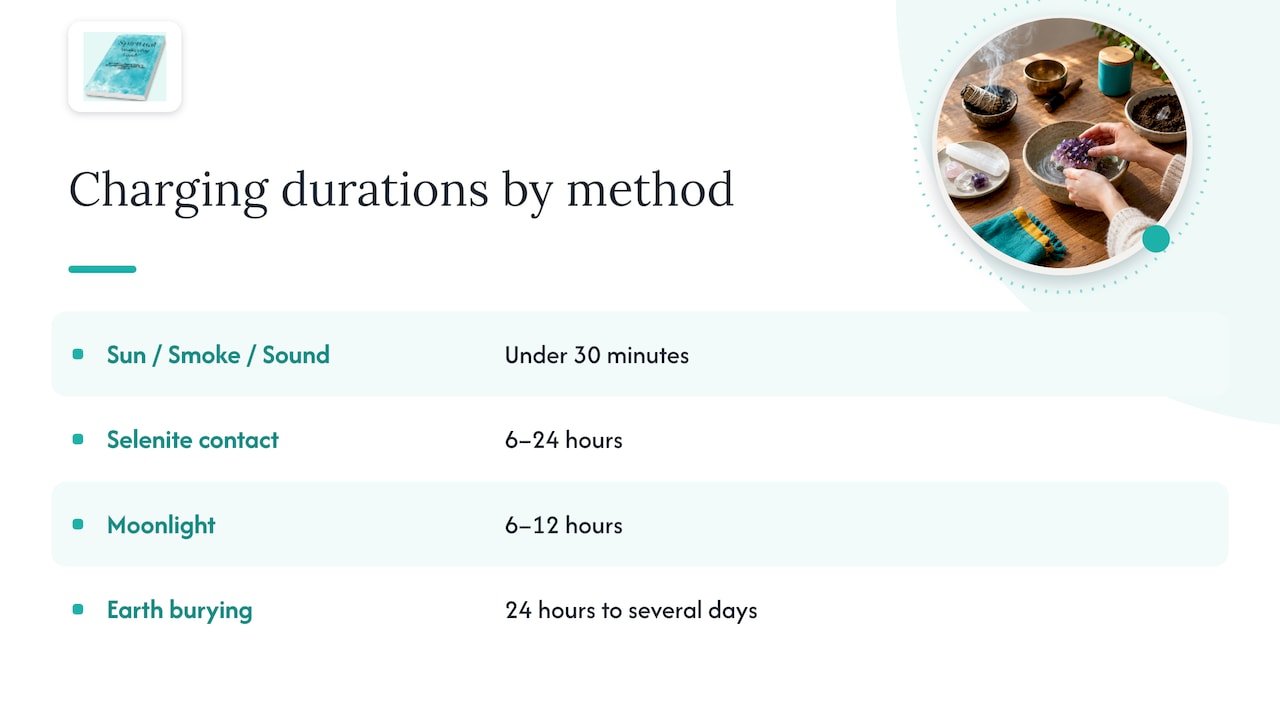
Timing varies by method because each relies on a different kind of exposure. Moonlight and earth burying ask for patience, 6 to 12 hours or several days, because the effect is cumulative and traditionally tied to overnight or multi-day cycles. Sunlight, smoke, and sound work faster, often in under 30 minutes, since the exposure itself is more intense or direct. Selenite contact sits in the middle, typically 6 to 24 hours, because it relies on passive proximity rather than active energy like smoke or sound.
As for frequency, a simple rule works for most beginners: recharge after heavy use, such as carrying a stone daily for a few weeks, and before any ritual where you want a stone at its clearest. Many practitioners settle into a weekly or monthly rhythm for stones kept on an altar or nightstand, adjusting based on how often they’re handled. If a crystal feels dull, heavier than usual, or simply unremarkable during a session, that’s generally the cue to recharge rather than waiting for a fixed calendar date.
5. How to tell if a crystal is charged
There’s no instrument that measures a crystal’s energetic state, so most people rely on subjective impressions: a sense of lightness, clarity, warmth, or a shift in how the stone feels in hand. These sensations are real experiences, though controlled research on crystal use for anxiety found that reported benefits tracked closely with a person’s existing belief in crystal efficacy rather than any measurable property of the stone itself. That doesn’t make the practice meaningless. It means the ritual and your expectations are doing real psychological work, which is worth naming honestly rather than dressing up as something else.
A few ways to check in with a stone after charging:
- Hold it for a minute and note any sensation, then compare that note to how it felt before charging.
- Look at the stone’s surface and clarity under good light. Dust or film can make a stone look dull regardless of its charge.
- Keep a short journal entry after each session: method used, duration, and one word describing how the stone felt.
- Take a photo every few months to track physical changes like fading, which tells you more about handling habits than energy.
Storage matters as much as charging. Keep light-sensitive stones out of direct sun, store water-sensitive pieces away from humidity, and wipe down jewelry-set crystals regularly to avoid buildup that can be mistaken for energetic dullness.
6. Spiritual Method’s approach to ritual structure
A contributor has spent time refining charging rituals that are simple enough to repeat weekly without turning into a chore. The structure below reflects that practical lens rather than any single tradition.
A compact ritual template we recommend:
- Set intention. Name what you want the stone to hold or support.
- Cleanse first. Use smoke or a quick rinse (if water-safe) to clear prior energy.
- Charge. Choose moonlight, selenite, or sound based on the stone and your timeline.
- Record. Note the date, method, and any sensation in a journal.
- Integrate. Carry, wear, or place the stone somewhere it supports your daily intention.
Research on ritual and expectation suggests that structure itself, the act of following consistent steps, tends to strengthen how much benefit a person reports from a practice, regardless of the specific method chosen. That’s a reason to keep your ritual simple and repeatable rather than elaborate.
7. Choosing a method: a practical take
We lean toward moonlight paired with a short intention practice for most stones, since it asks little of you and carries almost no risk of damage. Selenite resets earn a place for anything delicate or for days when an overnight wait isn’t practical. What matters more than the method is tracking your own experience honestly: note what you felt, what you expected going in, and whether the two lined up. That habit tells you more about what works for you than any single ritual ever will.
— Sean
8. A structured next step for your practice
If you’d like a more guided framework for building these rituals into a routine, our downloadable guide includes moon ritual templates, habit trackers, and structured journaling prompts designed to take the guesswork out of consistency. It’s built for anyone who wants the practical steps above translated into a repeatable weekly or monthly rhythm, without having to design the templates yourself.

- Explore the Spiritual awakening guide if you want ready-made templates for moon rituals, intention tracking, and habit-building rather than assembling your own from scratch.
FAQ
Which crystals should be avoided when charging in the moon?
Moonlight is gentle enough for nearly all stones, so there’s no strict avoid list the way there is with sunlight or water. The bigger concern is leaving stones outdoors overnight in freezing or wet weather, which can stress fragile or porous specimens regardless of moon phase.
What are the 7 power crystals?
Definitions of a “7 power crystals” set vary across sources and traditions, and there’s no single agreed-upon list. Common stones that frequently appear in such groupings include clear quartz, amethyst, citrine, rose quartz, black tourmaline, selenite, and tiger’s eye, though practitioners differ on the exact lineup.
How do you know if your crystals are charged?
Most people rely on subjective signs like a sense of clarity, warmth, or lightness when holding the stone. Research on crystal use and anxiety found these impressions are closely tied to personal belief and expectation rather than a measurable property of the stone.
Is charging crystals a real thing?
Charging is a real ritual practice with a long history, but it isn’t a scientifically measured process. Coverage of recent crystal research notes that while quartz has genuine physical properties like piezoelectricity, there’s no evidence of a detectable “healing energy” beyond the psychological effects of belief and ritual.
Sources
- Light induced changes to mineral specimens (Virgil W. Lueth, New Mexico Bureau of Geology & Mineral Resources)
- Conserve O Gram Volume 11 Issue 11: Health and Safety Issues with Geological Specimens (NPS)
- Healing crystals may trigger a real psychological effect (Popular Mechanics)