
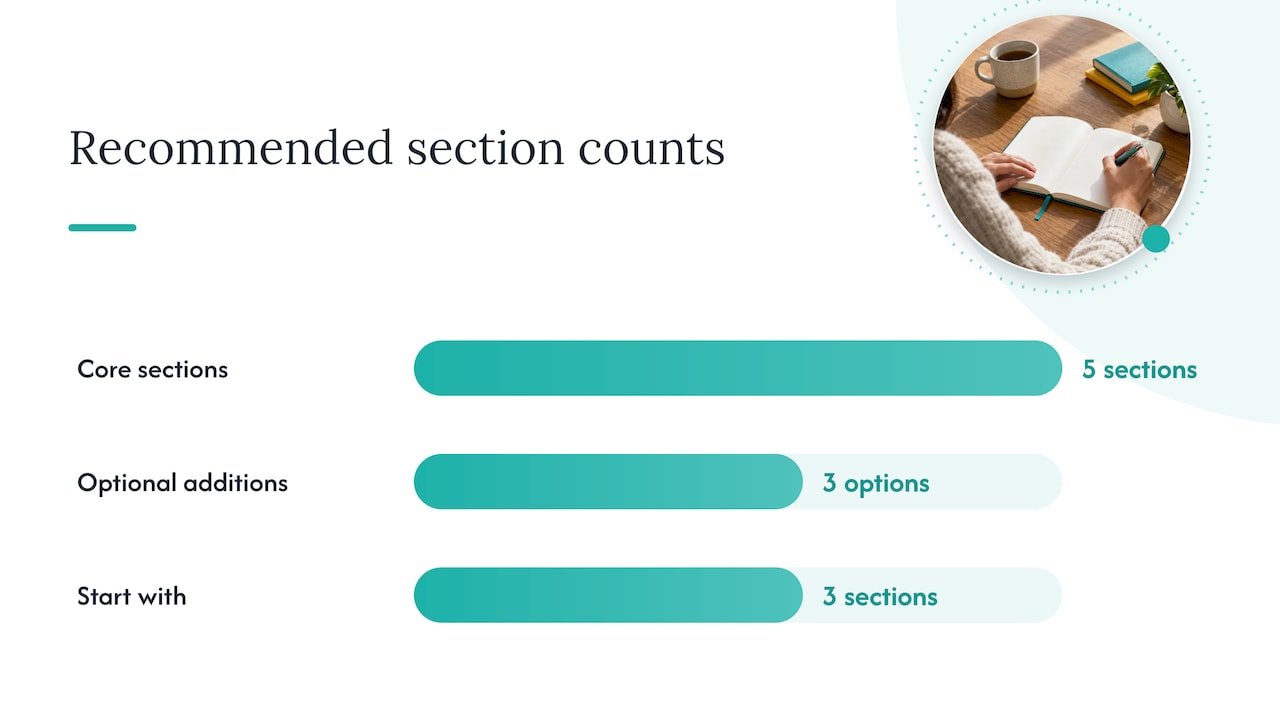
A workable prayer journal needs only three to five sections: daily prayer, requests, gratitude, answered prayers, and an optional scripture reflection. Paired with a 5 to 15 minute daily routine at the same time and place, this structure gives a reader enough framework to stay consistent without turning a spiritual practice into a chore. The sections below walk through how to build and use each part.
TL;DR:
- Tracking answered prayers and recording their dates reinforce faith and motivation over time, making it easier to notice spiritual progress.
- Keeping a maximum of three gratitude entries, one request, and a brief reflection ensures consistent daily practice without feeling burdensome.
- Using ready-made templates for daily, weekly, and monthly entries helps establish and maintain the journaling habit while reducing setup time.
- Starting with three core sections and gradually adding more aligns with natural habit formation, especially when paired with existing routines like morning or bedtime.
- Recording prayer responses in a visible space can reignite motivation and deepen the sense of a personal spiritual journey.
Table of Contents
- Essential sections to create in your prayer journal
- How to set up your journal and follow a daily flow
- Ready-to-use templates and prompts for daily and weekly entries
- Tips to keep your journaling habit sustainable
- Why this structure works: research and practitioner guidance
- One week of trying this structure myself
- Start your structure today with a guided template
- FAQ
- Sources
Essential sections to create in your prayer journal
Each section in a prayer journal serves a distinct purpose, and understanding what each one does helps you decide which to keep and which to skip.
A daily prayer entry records the date, a short line of text, and sometimes the time of day. This becomes the backbone of the journal, the place where a quick thought or a longer prayer gets written down before it is forgotten.
A requests and intercessions section tracks what you are asking for, along with a status field such as open, answered, or follow-up. This single addition turns a journal from a diary into a working record, since you can glance back and see what still needs attention.
Answered prayers, sometimes called stones of remembrance, hold a brief note and a date for each prayer that has been resolved. The Navigators’ guide to organizing a prayer journal lists this as one of five practical steps, describing it as a way to store spiritual treasures you can return to later.
A gratitude and praise section works best with three short items per entry, a format that keeps the habit light while still building a steady record of positive moments supported by simple gratitude practices to keep the habit going.
A scripture or verse reflection section pairs a verse with a short response and a line on how it applies to your day. Optional additions worth considering include:
- Confession entries for honest self-examination
- Family or community prayer notes for people outside your immediate concerns
- Sermon or teaching notes tied to a specific date
Start with three sections if the list feels long. You can always add more once the habit holds.
How to set up your journal and follow a daily flow
Setting up a prayer journal takes less time than most people expect, and the format you choose matters less than whether you actually open it each day.
- Choose your format. A plain notebook is the simplest option and asks nothing of you beyond a pen. A binder with tabs lets you reorder or swap sections as your needs shift. A digital app offers search and backup but can blur into the same screen you use for everything else, which some people find distracting during prayer.
- Divide your pages or tabs. A notebook with a moderate number of pages usually lasts a few months with daily use. Label tabs or sections clearly: Daily, Requests, Gratitude, Answered, Scripture.
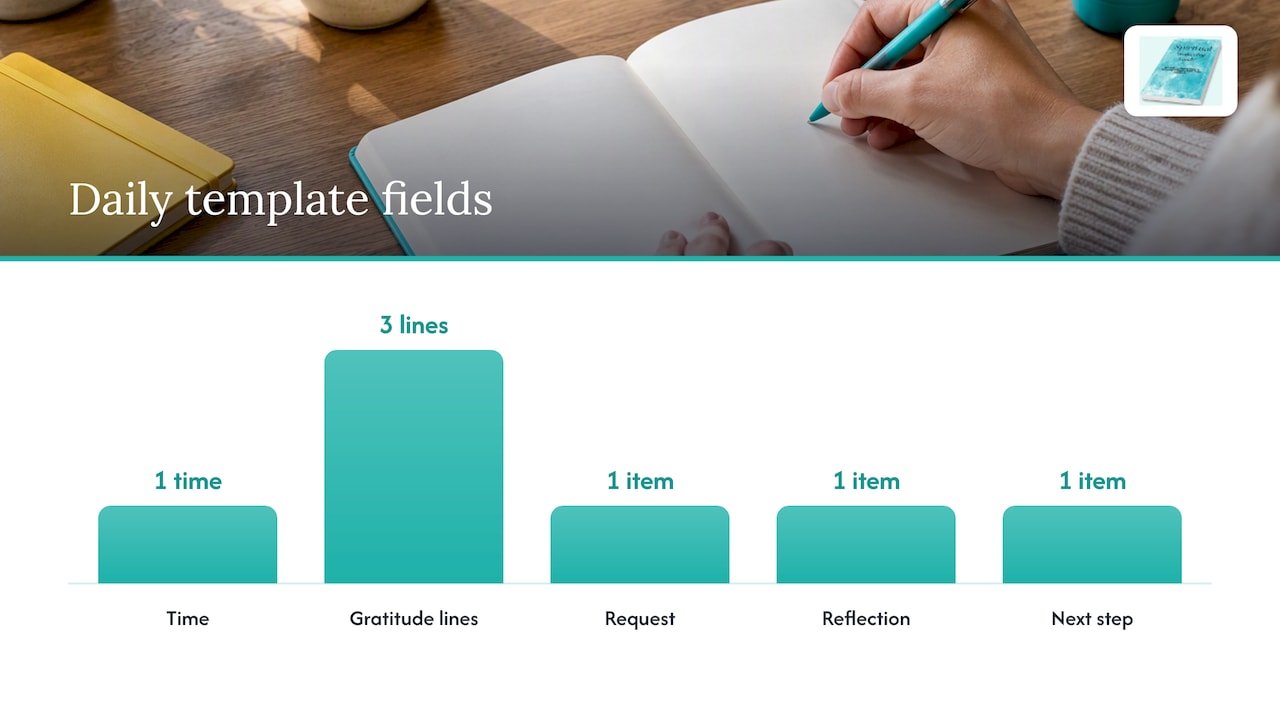
- Follow a short daily flow. Write three gratitude items in 30 to 60 seconds, note one request in a single line, add a one or two sentence reflection or scripture response, then write one next step or action.
- Apply a few rules of thumb. Cap entries at three items per section, keep each note to two sentences, and always record the date.
This flow takes 5 to 15 minutes and fits before coffee, during a lunch break, or right before bed. The Baylor wellbeing program on prayer practice outlines a similar daily rhythm of gratitude, lament, and petition, built specifically to be sustainable rather than exhaustive.
Ready-to-use templates and prompts for daily and weekly entries
A template removes the blank-page problem that stops most journaling habits before they start. Below are formats you can copy directly into a notebook, binder, or app.
A daily template includes labeled fields: time, three gratitude lines, one request, a short reflection, and one next step. A weekly review template asks three questions: what changed this week, what evidence of answered prayer appeared, and what are next week’s priorities. A monthly stones of remembrance layout gathers several answered prayers into a short narrative page, turning scattered entries into a story of faithfulness you can revisit.
Prompt categories to rotate through include:
- Gratitude: three specific moments from the past 24 hours
- Intercession: one person or situation needing attention this week
- Confession: one honest admission without self-judgment
- Scripture response: one verse and what it means for today
- Personal growth: one area where you want to change
For additional prompt ideas organized by mood and season, our gratitude journal prompts and spirituality journal ideas offer ready-made lists you can lift directly into your own layout.
Pro Tip: Keep one template taped inside your journal’s front cover so you never have to remember the format from memory.
Tips to keep your journaling habit sustainable
Structure should support a relationship with prayer, not replace it, and the easiest way to protect that balance is to keep the system small enough to actually use.
- Start with three to five sections and add more only once the habit feels automatic.
- Pair journaling with an existing routine, such as right after morning coffee or just before turning off the light.
- Keep the journal somewhere visible, like a nightstand or kitchen counter, so it becomes a natural trigger.
- Allow the structure to flex with the season of life you’re in, and redesign sections every three months if something feels forced.
- Return to your stones of remembrance page when motivation dips. Seeing answered prayers recorded in your own handwriting tends to renew perseverance more than any new template can.
Why this structure works: research and practitioner guidance
A study on prayerful gratitude found that framing journaling as prayer produced greater decreases in negative affect than secular journaling among the undergraduates studied, a meaningful signal that the spiritual framing itself adds value beyond writing alone.
Practitioner sources echo this from a different angle. The Navigators note that writing forces linear, concrete expression, which helps a distracted mind stay on task during prayer.
Recording answered prayers builds faith and perseverance over time, turning a private practice into a visible record of change.
This is the same logic behind the stones of remembrance section: the practice of writing itself sharpens focus, and the record of answers sustains the habit.
One week of trying this structure myself
I kept to three sections for a week: daily prayer, one request, and three gratitude lines. Some days the entry took ninety seconds. By Thursday, I noticed I was watching for small answers I would have otherwise missed. The honest caution: once I added a fourth section too quickly, it started to feel like a checklist rather than a conversation. Adjust the structure to your week, not the other way around.
— Sean
Start your structure today with a guided template
Setting up sections from scratch takes trial and error, and a ready-made framework can save that effort. Our Spiritual awakening guide includes a full spirituality planner and journal built around daily, weekly, and monthly layouts, priced at $20 as a one-time download.

The guide maps directly onto the structure covered here:
- A daily template with labeled fields for gratitude, requests, and reflection
- A weekly review page for tracking priorities and answered prayers
- A monthly stone of remembrance layout for recording long-term patterns
If you would rather read a longer walkthrough first, our guide to journaling for soul healing covers the deeper reasoning behind structured reflection. When you’re ready to start, the downloads page has the full planner available instantly.
FAQ
What are the 7 P’s of prayer?
Different teachers describe various ‘P’ frameworks differently, so there is no single agreed-upon list. Most versions touch on elements like praise, pardon, petition, and purpose, so it’s worth treating any specific list as one teacher’s framework rather than a fixed standard.
What are the 5 parts of prayer in order?
A common structure moves through praise, confession, thanksgiving, intercession, and petition, though the exact order and naming vary by tradition. This sequence pairs naturally with the sections described above, where gratitude and requests cover the thanksgiving and petition portions.
How does prayer journaling work?
Prayer journaling works by giving written form to a daily spiritual habit, using short, labeled sections such as gratitude, requests, and reflections to keep entries quick and consistent. Research on prayerful gratitude found that writing prayers framed this way produced larger decreases in negative affect compared with other journaling forms.
What are some good topics to include in a prayer journal?
Good topics include daily gratitude, specific prayer requests, scripture reflections, and a record of answered prayers for future reference. Confession, family or community concerns, and personal growth notes are also common additions once the core habit is established.
Sources
The research and practitioner guidance referenced throughout this article come from the sources below, each offering further reading on structured prayer practice, journaling benefits, and daily rhythm design.
- Study on prayerful gratitude and affect (Tandfonline)
- Organizing a prayer journal (The Navigators)
- The Prayer Practice (Baylor wellbeing resource)