
Crystal healing is defined as the practice of placing or holding gemstones to influence personal energy and well-being through focused intention and ritual. Understanding how crystal healing works requires separating two distinct layers: the spiritual framework practitioners use and the psychological mechanisms science has identified. Both layers are real and worth examining. Spiritualmethod approaches this topic with the same structured framework it applies to all mind-body practices: grounded in evidence, open to experience, and respectful of the person seeking support.
How crystal healing works: science and spirituality explained
Scientific consensus confirms that crystals emit no measurable energy fields affecting human physiology. That finding does not make crystal healing meaningless. It shifts the explanation from mineral physics to human psychology, which is where the real effects live.
The placebo effect is the most documented mechanism behind crystal healing benefits. Placebos can reduce pain by up to 50% and activate neural pathways associated with stress reduction. That is not a dismissal. It is a confirmation that the mind produces real, measurable physiological changes when a person expects healing.
“The placebo effect is not ‘just in your head.’ Harvard research confirms it activates genuine biological pathways, including pain relief and emotional regulation.”
Experimental studies reinforce this point. When researchers gave participants real crystals and fake crystals without telling them which was which, outcomes were identical when belief and expectancy were held constant. The crystal’s mineral composition did not determine the result. The participant’s mental state did.
Quartz crystals emit roughly 0.001 volts under mechanical pressure through a process called piezoelectricity. That voltage is approximately 1/15,000th of the power in a standard AA battery. It is far too weak to interact with human bioelectric signals in any meaningful way. Claims that quartz “charges” the body’s energy field through piezoelectricity do not hold up to measurement.
What this means practically: crystal healing works best when understood as a mindfulness and intention-setting tool, not a physiological intervention. That framing does not reduce its value. It clarifies where to direct attention for the best results.
How do crystals support mindfulness and emotional well-being?
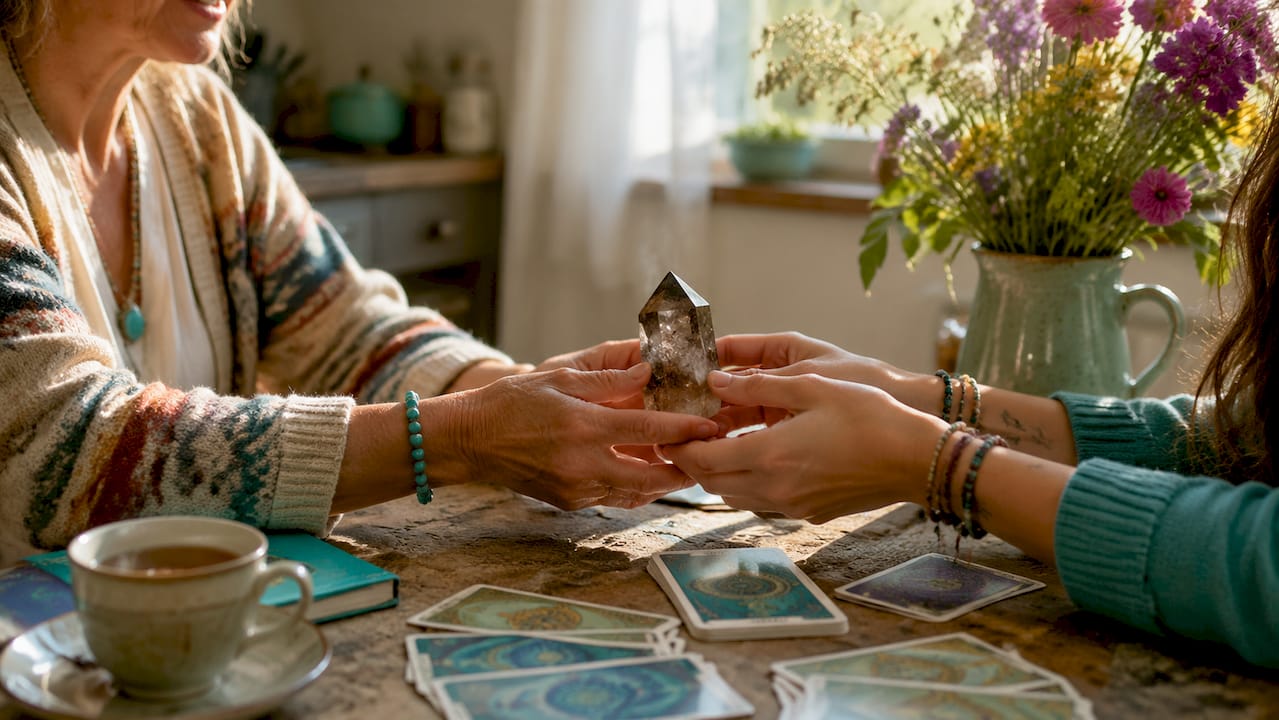
Crystals function as tactile anchors. A tactile anchor is a physical object that cues a specific mental or emotional state. Holding a smooth piece of rose quartz while practicing deep breathing creates a conditioned association. Over time, the object itself triggers the calm state, much like a familiar scent can shift mood instantly.
A 2024 study on crystal healing effects found that participants using rose quartz for self-love experienced benefits tied to cognitive-behavioral supports rather than the mineral’s properties. The crystal served as a physical implementation intention, a concrete reminder of a personal goal. Implementation intentions are one of the most well-supported behavior change tools in psychology.
Mindfulness experts note that crystals activate the parasympathetic nervous system through their physical properties: weight, temperature, and texture. Holding a cool, smooth stone draws attention to the present moment. That shift in attention is the mechanism behind stress reduction, not any energy emission from the stone itself.
Entrainment theory offers another framework. Crystals act as intentional energy references that help scattered personal energies realign toward coherence during a session. Whether interpreted spiritually or as a metaphor for focused attention, the practical outcome is the same: the person becomes more centered.
Common crystal healing techniques that support this process include:
- Holding and breathing: Grip a crystal in both hands, close your eyes, and take five slow breaths. The physical contact anchors attention.
- Placement on the body: Lay flat and place stones on specific areas to direct focused awareness to those regions.
- Intention-setting rituals: State a clear personal intention before a session. Write it down. The crystal becomes a physical symbol of that commitment.
- Carrying a stone: Keep a crystal in your pocket as a tactile reminder of a daily intention, similar to a worry stone or prayer bead.
- Meditation with crystals: Place a stone at eye level or hold it during seated meditation to provide a focal point.
Pro Tip: Before any crystal session, spend two minutes on slow diaphragmatic breathing. Grounding your nervous system first makes the session more focused and prevents the “floaty” sensation some people report after energy work.
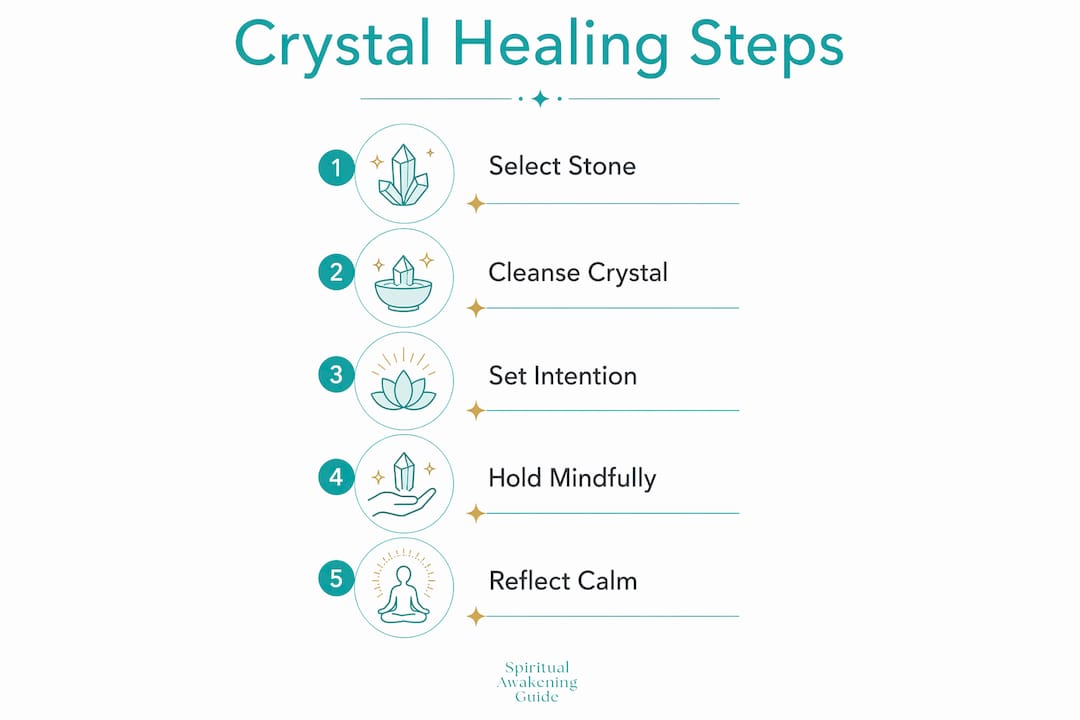
The ritual of selecting and cleansing crystals, combined with mindfulness, is central to their perceived effectiveness. The act of choosing a stone, cleaning it, and setting an intention is itself a structured mindfulness practice. The crystal is the prop. The practice is the point.
What does a crystal healing session actually look like?
A standard practitioner session lasts 30 to 60 minutes and includes time for reflection before and after the active work. That structure mirrors evidence-based relaxation protocols used in integrative medicine settings.
A typical session follows this sequence:
- Grounding: The practitioner guides the person through slow breathing and a brief body scan. Grounding before a session prevents disorientation and establishes a stable mental baseline.
- Intention-setting: The person identifies a specific focus, such as releasing anxiety, building confidence, or supporting physical recovery.
- Crystal placement: Stones are placed starting at the root chakra (base of the spine) and moving upward toward the crown. This root-to-crown sequence creates a coherent energy circuit and supports emotional balance more effectively than random arrangements.
- Rest period: The person lies still for 15 to 30 minutes. Soft music, dim lighting, and controlled breathing deepen the relaxation response.
- Closing reflection: Stones are removed in reverse order. The person takes a few minutes to journal or verbally reflect on the experience.
Crystal cleansing is a standard part of session preparation. Different stones require different methods:
| Crystal | Safe cleansing method | Avoid |
|---|---|---|
| Clear quartz | Sunlight, moonlight, sound | None |
| Selenite | Moonlight, sound | Water (dissolves) |
| Malachite | Sound, dry cloth | Water, direct skin contact (toxic dust) |
| Amethyst | Moonlight, brief sunlight | Prolonged sunlight (fades color) |
| Black tourmaline | Soil, sound, moonlight | None |
Selenite and halite dissolve in water, and malachite carries toxicity risks if mishandled. Sound cleansing with a singing bowl and moonlight exposure are safe methods for nearly all stones.
Pro Tip: If you are new to crystal placement, start with just one stone placed at the center of your chest during a 10-minute breathing exercise. Simple, single-stone sessions build familiarity before you work with full body layouts.
Crystal healing is a complementary practice. It supports, but does not replace, medical treatment. Practitioners who present it otherwise misrepresent both its value and its limits. Used within that boundary, it fits naturally alongside practices like meditation, breathwork, and sacred healing rituals.
Common misconceptions about crystal healing
The most persistent misconception is that crystals emit a mystical healing energy that physically repairs the body. No peer-reviewed study has measured such an emission. Accepting this does not require abandoning crystal practice. It requires redirecting expectations toward what crystals actually do well: support focus, ritual, and mindful presence.
A second misconception is that the placebo effect is a failure of real medicine. Placebo effects produce genuine neurobiological responses including pain relief and emotional regulation. A person who feels calmer after a crystal session experienced a real change in their nervous system. The origin of that change does not diminish it.
Key safety and accuracy points for anyone starting out:
- Crystals are not medical devices. Do not use them to delay or replace diagnosis or treatment for any health condition.
- Cleansing methods matter for safety, not just ritual. Malachite dust is toxic. Never grind or sand malachite without proper protection.
- Selenite is water-soluble. Submerging it to cleanse it will damage the stone.
- Attribution matters. If you feel better after a session, the benefit is real. Crediting the crystal’s mineral properties rather than your own mindfulness practice can create unrealistic expectations.
- Crystal healing works best as part of a broader wellness routine that includes sleep, nutrition, movement, and social connection.
Understanding the effects of crystal healing through an accurate lens builds a more sustainable practice. Practitioners who combine spiritual openness with factual grounding report greater long-term satisfaction and fewer disappointments.
Key Takeaways
Crystal healing works primarily through psychological mechanisms, including the placebo effect and mindfulness, not through measurable energy emissions from the stones themselves.
| Point | Details |
|---|---|
| Scientific basis | Crystals emit no measurable healing energy; benefits arise from placebo and psychological effects. |
| Placebo is real | Placebo effects activate genuine neurobiological pathways, producing real pain relief and emotional regulation. |
| Crystals as anchors | Stones function as tactile anchors that cue focused attention, calm, and intention-setting. |
| Session structure matters | Root-to-crown placement and grounding exercises produce more stable, effective sessions than random arrangements. |
| Safety first | Selenite dissolves in water; malachite carries toxicity risks; always match cleansing method to the specific stone. |
Why I think the science vs. spirituality debate misses the point
People spend a lot of energy arguing about whether crystals “really work.” That debate usually produces more heat than light. After years of working with mind-body practices at Spiritualmethod, my view is that the debate itself is the wrong frame.
The question worth asking is not “does this crystal emit healing energy?” The question is “does this practice help me become more present, more intentional, and more connected to my own well-being?” For a significant number of people, the answer is yes. The mechanism behind that yes is well-documented: ritual, focused attention, and the expectation of positive change all produce real neurological effects.
What I find most interesting is that the ritual elements of crystal healing, selecting a stone, cleansing it, setting an intention, lying still in a quiet room, are nearly identical to the structure of evidence-based relaxation therapies. The crystals give the ritual a physical form. That physical form makes the practice more concrete and easier to sustain.
My honest recommendation: approach crystal healing the way you would any reflective practice. Be consistent. Be intentional. Do not outsource your healing to the stone. Use the stone as a tool that supports your own inner work. That framing keeps the practice grounded and makes the benefits more predictable.
Crystal healing complements, rather than competes with, practices like breathwork, journaling, and energy-based modalities. The mind-body-soul connection is the real subject. Crystals are one entry point into that conversation.
— Sean
Deepen your practice with Spiritualmethod
Spiritualmethod offers structured guides for readers who want to move beyond curiosity and build a consistent inner healing practice.
If crystal healing resonates with you, the next step is understanding how it connects to broader energy-based healing methods. Spiritualmethod’s guide on soul retrieval healing explores how energy recovery practices work alongside tools like crystals to support emotional restoration. The mind-body-soul connection guide provides the wider framework that makes individual practices like crystal work more meaningful. Both resources are practical, evidence-informed, and designed for readers at every stage of their wellness path.
FAQ
What is crystal healing, exactly?
Crystal healing is a wellness practice that uses gemstones as tactile anchors and ritual tools to support mindfulness, intention-setting, and emotional regulation. Its effects are best explained by psychological mechanisms, including the placebo effect, rather than physical energy emissions.
Do crystals really work, or is it just placebo?
Placebo effects are real neurobiological phenomena that produce genuine pain relief and emotional regulation. Calling crystal healing “just placebo” understates the mechanism. The benefit is real; the source is the mind, not the mineral.
How do you use crystals for the first time?
Start with a single stone, hold it during a 10-minute breathing exercise, and set one clear intention before you begin. Simple, grounded sessions build familiarity before progressing to full body layouts.
Which crystals are unsafe to put in water?
Selenite and halite dissolve in water and should never be cleansed by submerging. Malachite carries toxicity risks if mishandled and requires dry cleansing methods such as sound or moonlight.
How long does a crystal healing session last?
A standard session lasts 30 to 60 minutes and includes grounding, intention-setting, crystal placement from root to crown, a rest period, and a closing reflection. Shorter 10 to 15 minute sessions work well for daily self-practice.