
Yes, you can begin safe third eye activation today. The entry point is simpler than most guides suggest: a short daily practice focused on the Ajna chakra, paired with consistent grounding and basic sleep hygiene. The pineal gland, which regulates melatonin and your circadian rhythm, responds directly to light habits and sleep consistency, making those lifestyle factors as important as any meditation technique. Spiritualmethod’s structured approach treats this as a skill-building process, not as a mystical switch to flip.
Start with these three actions:
- A short period of brow-focused breath meditation each morning: sit comfortably, close your eyes, and direct gentle attention to the space between your eyebrows while breathing slowly and evenly.
- A brief grounding exercise after each session: stand barefoot on the floor or grass for two to three minutes, or take five slow, deep breaths while pressing your feet firmly into the ground.
- Make a sleep hygiene adjustment tonight: dim overhead lights before bed and avoid screens during that window to support natural melatonin production.
One safety note before you begin: if you are currently managing acute anxiety, severe insomnia, or a psychiatric condition, consult a mental health professional before starting any intensive meditation practice, as meditation can intensify emotional states in some individuals.
Table of Contents
- What is the third eye, and what does science say about it?
- How should you prepare before starting activation work?
- What are the most effective methods for activating the third eye?
- What does a four-week practice plan look like?
- What signs and side effects should you expect, and when is it time to stop?
- How do you integrate third eye experiences into daily life?
- Key Takeaways
- The part most guides get wrong about third eye work
- Spiritualmethod’s guided resources for structured Ajna practice
- Useful sources and further reading
What is the third eye, and what does science say about it?
The Ajna chakra, located at the center of the forehead just above the eyebrows, is described across Hindu, Buddhist, and Taoist traditions as the seat of inner vision, intuition, and metacognitive awareness. The Sanskrit word Ajna translates roughly to “command” or “perceive,” and the chakra is symbolically associated with clarity, discernment, and access to insight beyond ordinary sensory input.
Biologically, the closest anatomical correlate is the pineal gland, a small endocrine structure deep in the brain that produces melatonin and governs circadian rhythm. Ancient thinkers, including Descartes, called it the “seat of the soul,” though modern physiology is more specific: the pineal gland regulates sleep-wake cycles and responds to light exposure through the retinohypothalamic tract. What traditions call Ajna activation maps more precisely onto the prefrontal cortex and thalamic attention networks, which meditation measurably strengthens through consistent practice.
The practical implication is this: third eye activation is not a mystical organ switching on. It is a cultivated capacity, developed through repeated attention training, that produces real, measurable changes in how you process information, regulate emotion, and access intuitive judgment.
Common symbolic associations with Ajna include:
- The color indigo or deep violet
- The seed mantra OM (or AUM)
- The faculty of inner vision and pattern recognition
- Heightened sensitivity to subtle environmental and interpersonal cues
Pro Tip: When you notice pressure between your eyebrows, vivid dreams, or a sense of heightened perception during practice, treat these as attention and interoceptive signals, not proof of supernatural change. They reflect your nervous system becoming more sensitive to internal states, which is exactly what focused meditation produces.
How should you prepare before starting activation work?
Preparation determines whether your practice feels grounding or destabilizing. Rushing into upper-chakra techniques without a stable foundation is one of the most common reasons people report anxiety or disorientation during third eye work. Grounding techniques and gradual practice consistently reduce negative side effects, and the preparation phase is where that stability is built.
Work through this checklist before your first session:
- Ground your body first. A short grounding exercise before meditation, such as barefoot contact with the earth, a root-focused breath sequence, or brief physical movement, anchors your nervous system before you direct attention upward.
What are the most effective methods for activating the third eye?
The techniques below are sequenced from foundational to more advanced. Work through them in order rather than jumping to the most dramatic-sounding option.
1. Brow-focused breath meditation
- Sit upright in a chair or cross-legged on the floor with your spine straight.
- Close your eyes and take three slow, full breaths to settle your body.
- Direct your attention gently to the point between your eyebrows. Do not strain or furrow your brow.
- Breathe slowly and evenly, returning attention to that focal point each time it drifts.
- Maintain this for 5–10 minutes. End by taking three grounding breaths and pressing your feet into the floor.
2. Trataka (candle gazing)
Trataka is a classical yogic attention practice with documented benefits for selective attention and visual working memory. Set a candle flame at eye level, roughly two feet away, in a darkened room. Gaze steadily at the flame without blinking for 30–60 seconds, then close your eyes and hold the after-image in your mind’s eye. Repeat three to five times. Begin with one round per session and build gradually. Avoid this practice if you have photosensitive epilepsy or significant eye strain.

3. Shambhavi-style inner gaze
The Shambhavi mudra involves gently turning the eyes upward and inward toward the point between the eyebrows while keeping the lids closed or half-closed. A simplified beginner protocol: inhale slowly, hold the breath gently for three to five seconds while directing the inner gaze upward, then exhale and release. Repeat five times. Do not force the eye position; mild discomfort is normal, but pain is a signal to stop. People with glaucoma or retinal conditions should avoid this technique.
4. Pranayama for Ajna support
Diaphragmatic breathing and box breath (inhale four counts, hold four, exhale four, hold four) both calm the nervous system and improve prefrontal regulation, supporting Ajna-focused work. Avoid forceful breath techniques such as rapid Kapalabhati or extended Kumbhaka breath retention until you have at least four weeks of foundational practice. Forceful techniques can produce hyperventilation, dizziness, or emotional flooding in beginners.

5. Indigo visualization
Mental imagery activates the visual cortex and related attention networks even without external stimuli, which is why visualization produces genuine sensory impressions during practice. After settling into breath meditation, picture a sphere of deep indigo or violet light at the center of your forehead. Hold the image for 60–90 seconds, letting it pulse gently with each breath. Release the image and return to neutral breath awareness. This technique works best after at least one week of foundational breath meditation.
6. OM chanting
Chanting OM aloud or silently creates a subtle vibration that practitioners associate with Ajna stimulation. A simple protocol: inhale fully, then exhale slowly while sounding OM, letting the “mmm” hum resonate in the skull. Repeat five to seven times. This pairs naturally with the inner gaze and visualization techniques above.
7. Dreamwork and journaling
Keep a small notebook beside your bed. Within five minutes of waking, write down any dream fragments, images, or emotional tones you recall. Over weeks, patterns emerge that reflect shifts in intuitive processing. This practice also builds the reflective habit that makes integration easier.
8. Supportive tools
Crystals such as lapis lazuli and amethyst are commonly used during Ajna practices as focal objects or tactile anchors. Sound frequencies, including meditation music at 432Hz or guided tones, can support a relaxed, focused state. Use these as environmental supports rather than as primary techniques. No peer-reviewed evidence establishes that crystals or specific frequencies directly alter brain function; their value lies in supporting a consistent, intentional practice environment.
Pro Tip: Always complete a grounding exercise after upper-chakra work. As your practice extends from 5 minutes in Week 1 to 20–25 minutes in Week 4, the grounding step becomes more important, not less. Think of it as closing the session properly rather than leaving a door open.
What does a four-week practice plan look like?
The schedule below is designed for beginners with no prior meditation experience. Each week builds on the last. Functional attention improvements commonly appear within 4–8 weeks of consistent practice; structural brain changes require longer, sustained effort.
| Day | Week 1 | Week 2 | Week 3 | Week 4 |
|---|---|---|---|---|
| Monday | 5–10 min breath meditation + sleep hygiene | Breath meditation + 5 min trataka | Breath meditation + OM chanting (5 min) | 20–25 min combined session |
| Tuesday | Sleep hygiene + grounding | Dream journal review | Box breath + inner gaze | Integration journaling |
| Wednesday | 5–10 min breath meditation | Breath meditation + trataka | Pranayama + visualization | 20–25 min combined session |
| Thursday | Grounding walk or earthing | Dream journal + grounding | Dream journal + grounding | Progress check-in |
| Friday | 5–10 min breath meditation | Breath meditation + inner gaze | Breath meditation + OM chanting | 20–25 min combined session |
| Saturday | Rest or gentle movement | Grounding + reflection | Visualization + journaling | Grounding + reflection |
| Sunday | Intention-setting for the week | Intention-setting + dream log | Intention-setting + full review | Intention-setting + plan Week 5 |
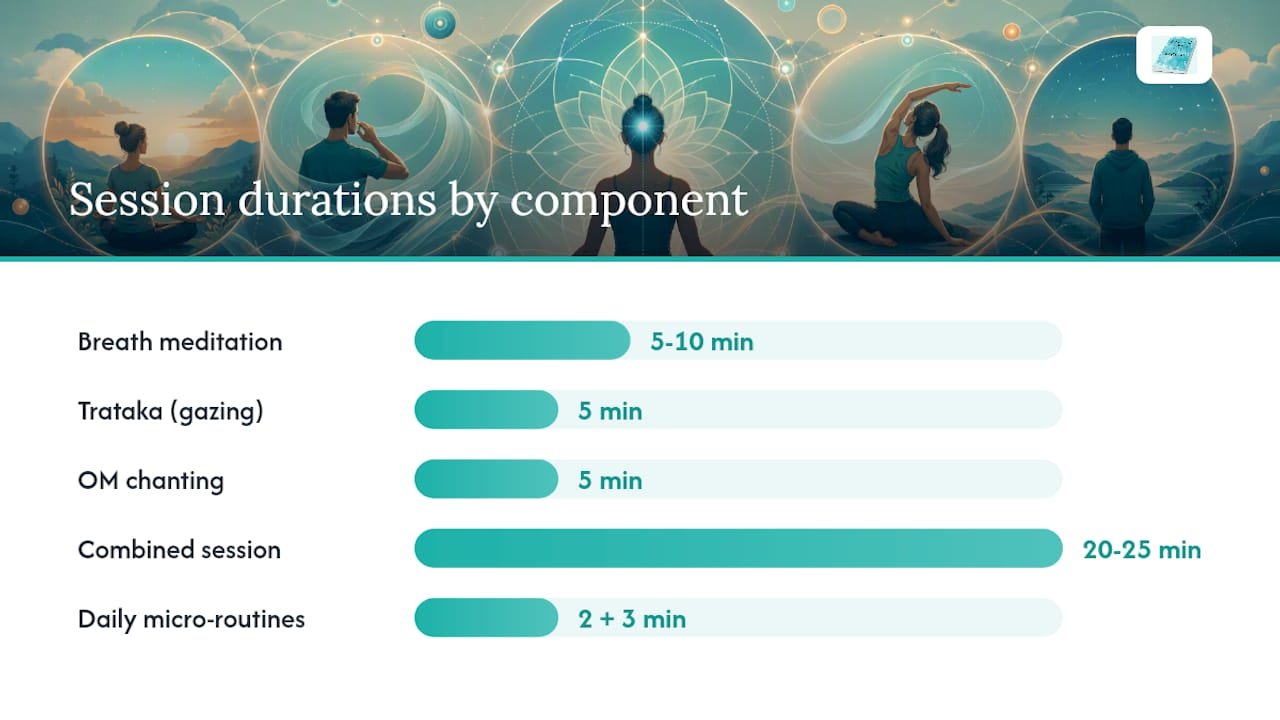
Daily micro-routines: Each morning, spend two minutes setting a clear intention for the day. Each evening, take three minutes to write one observation about your attention, mood, or intuition. These brief bookends build the reflective practice that makes the weekly sessions more productive.
For a 10-minute schedule, use breath meditation only. For 20 minutes, add trataka or visualization. For 30 minutes, run the full combined sequence with grounding at both ends.
What signs and side effects should you expect, and when is it time to stop?
Common signs of progress
The most frequently reported signs of Ajna development are subtle rather than dramatic. Practitioners typically notice a mild pressure or tingling between the eyebrows during or after meditation, more vivid and memorable dreams, a sense of sharper intuition in everyday decisions, and occasional synchronicities that feel meaningful. These experiences reflect real neurological shifts: regular meditation is associated with measurable increases in prefrontal cortical thickness, which supports attention, metacognition, and emotional regulation.
Realistic timeline expectations:
- Early weeks: Improved ability to sustain attention; mild sensory sensitivity during practice
- Several weeks in: More consistent dream recall; subtle intuition shifts in daily decisions
- Over longer periods: Deeper attention stability; some practitioners report clearer pattern recognition and reduced reactivity
Short-term side effects and how to manage them
- Heightened anxiety or emotional sensitivity: Slow down. Return to foundational breath meditation and grounding only. Grounding and gradual practice are the primary tools for managing this response.
Red flags that require you to stop and seek support
To stop a session that feels overwhelming: open your eyes, press both feet firmly into the floor, take five slow breaths, drink water, and go outside or touch a solid surface. Do not resume practice that day.
How do you integrate third eye experiences into daily life?
Integration is where the real value of Ajna practice accumulates. Without it, insights from meditation remain interesting but disconnected from how you actually make decisions, relate to others, or navigate uncertainty.
A practical integration checklist:
- Journal within 10 minutes of waking to capture dream images, emotional tones, and any intuitive impressions before the analytical mind overrides them. Spiritualmethod’s journaling for soul healing guide offers structured prompts for exactly this purpose.
Progress markers worth tracking over four weeks: dream recall frequency, sustained attention span during work or conversation, decision clarity under mild stress, and reduced emotional reactivity in familiar trigger situations.
When these markers show consistent improvement, you are ready to extend session lengths or add supervised practices. If progress plateaus or side effects recur, return to Week 1 of the sample plan and rebuild the foundation.
Pro Tip: Use a five-question daily log to monitor subtle changes without over-interpreting them: (1) How long did I sustain attention today? (2) Did I notice an intuitive impression? (3) What did I dream last night? (4) How reactive was I to stress? (5) Did I ground after practice? Reviewing these weekly reveals genuine trends and keeps confirmation bias in check.
Key Takeaways
Consistent, grounded Ajna practice produces measurable attention and intuition improvements within 4–8 weeks when paired with sleep hygiene and daily grounding.
| Point | Details |
|---|---|
| Start small and ground first | Begin with short sessions and always complete a grounding exercise before and after upper-chakra work. |
| Sleep hygiene supports the pineal gland | Reducing blue light and maintaining a consistent sleep schedule directly supports the melatonin cycle that underlies receptive practice. |
| Expect subtle signs, not dramatic visions | Sharper intuition, vivid dreams, and improved attention are the typical early markers; dramatic visions are uncommon and not the goal. |
| Know your red flags | Persistent disorientation, severe anxiety, or depersonalization are signals to stop practice and seek professional support immediately. |
| Spiritualmethod offers structured support | Spiritualmethod’s downloadable guides, planner, and journaling tools provide a ready-to-use framework for the 4-week plan and beyond. |
The part most guides get wrong about third eye work
Most articles on this topic frame third eye activation as an event, something that happens to you after enough candle gazing or frequency exposure. That framing sets people up for frustration or, worse, for chasing increasingly intense techniques in search of a dramatic experience that may never come.
What actually develops through consistent Ajna practice is a capacity, specifically the capacity to notice what you are noticing. That sounds modest, but it is genuinely rare. Most people move through their days reacting to stimuli without any gap between stimulus and response. Meditation, and Ajna-focused meditation in particular, builds that gap. The pressure between the eyebrows, the vivid dream, the moment of clear intuition before a decision, these are not supernatural events. They are evidence that your prefrontal networks are becoming more integrated, more responsive to subtle internal signals that were always present but previously below the threshold of conscious attention.
The practical consequence is that patience is not just a virtue in this work; it is the mechanism. Rushing upper-chakra techniques without a grounded foundation does not accelerate development. It produces anxiety, sensory overwhelm, and the kind of disorientation that sends people away from practice entirely. The four-week plan in this article is conservative by design. A spiritual awakening guide that emphasizes grounding and staged progression is not being timid; it is being accurate about how attention training actually works.
Spiritualmethod’s guided resources for structured Ajna practice
For readers who want a clear, trackable path rather than assembling techniques from multiple sources, Spiritualmethod’s downloadable bundle offers exactly that structure in one place.

The bundle includes a 50+ page spiritual awakening ebook with grounding, energy clearing, and intention-setting practices that map directly onto the four-week plan above, a spirituality planner and journal with daily and weekly tracking prompts, and a moon manifesting ritual guide for readers who want to align practice with natural cycles. Each component is designed for self-guided use, with no subscription or ongoing commitment required.
The self-help guide collection is the most direct starting point for readers who want a structured program. For those whose primary need is integration support after intense sessions, the inner child healing practices guide offers grounding and emotional stabilization tools that complement Ajna work. Both are available as instant digital downloads.
Useful sources and further reading
- Opening Your Third Eye: What It Is and How to Do It | Verywell Mind
- Meditation and structural brain changes (PMC9641984) | PubMed Central
- Meditation and mindfulness: What you need to know | NCCIH
- Pineal gland: Function, definition, and disorders | Cleveland Clinic
- Meditation-related neuroplasticity (PMC7696928) | NCBI
- How to Open Your Third Eye: What Science Actually Found | PinealCode
- How to Open Third Eye Safely: Activation Guide (Thalira)
- Neural basis of mental imagery and perception (PubMed 29095071)
- Meditation-induced attention and structural changes (PubMed 32518507)
This article provides general educational information about meditation and spiritual practices. It is not a substitute for professional medical or mental health advice. Consult a qualified healthcare provider before beginning any new practice, particularly if you have a pre-existing physical or psychological condition.