
Spiritual stagnation is when your outward routines continue while inward attentiveness, obedience, and expectancy toward God have quietly declined. It mirrors the condition described in Hebrews 5:12-14, where believers who should have matured are still living on spiritual milk. The first step out is small: name one area you have been avoiding with God, and take one honest, specific act of obedience in it today.
TL;DR:
- Spiritual stagnation often manifests as routine prayer, unchanged Scripture application, increased temptation, and withdrawal from community, despite outward consistency.
- Biblical passages emphasize that maturity depends on trained discernment through deliberate practice, not feelings or passive routine.
- Causes include prideful self-sufficiency, passive faith, burnout, grief, hidden sin, and unresolved trauma, requiring both pastoral and clinical attention.
- Small, consistent steps like specific confession, one act of obedience, and regular accountability support lasting spiritual renewal.
- Building durable rhythms of prayer, Scripture, community, and varied practices helps prevent long-term stagnation and sustains growth over seasons.
Table of Contents
- Signs of Spiritual Stagnation You Can Actually Observe
- What the Bible Says About Spiritual Plateaus
- Why People Get Stuck: Common Causes Worth Naming
- A Week-by-Week Plan to Get Unstuck Spiritually
- When Pastoral Care Isn’t Enough
- Building Rhythms That Prevent Stagnation Long-Term
- How to Tell If You’re Actually Growing
- Fasting, Solitude, and Service: Disciplines Beyond Prayer
- How Stress and Relationships Shape Your Spiritual Life
- Recovery Looks Ordinary, Not Dramatic
- A Pastoral Take on Getting Unstuck
- A Structured Guide for the Steps Above
- Sources
- FAQ
Signs of Spiritual Stagnation You Can Actually Observe
Spiritual stagnation rarely announces itself. It hides behind habits that look fine from the outside while something underneath has gone quiet. Pastoral resources point to a consistent set of markers worth checking against your own life.
- Prayer has become perfunctory, more recitation than conversation.
- Scripture reading happens, but nothing you read changes what you do afterward.
- Worship feels routine rather than weighty, even in a good service.
- Temptations that once felt easy to resist now land more often.
- You have quietly pulled back from community, avoiding people rather than seeking them.
- Fruitfulness, the visible evidence of a life connected to God, has thinned out.
These signs come from pastoral checklists built to help Christians self-assess rather than diagnose. The difference between faithful routine and real stagnation is quality, not quantity. You can attend church every week and still be stagnant if nothing you hear moves you toward obedience. Pastoral observers describe this pattern often: outward consistency masking inward stillness. If two or more of these signs describe your last few months, the steps later in this article are worth working through in order.
What the Bible Says About Spiritual Plateaus
Hebrews 5:12-14 is the clearest biblical picture of stagnation. The writer tells believers who should be teaching others that they still need milk, not solid food, because they haven’t trained their discernment through practice. That word “trained” matters. Maturity in this passage isn’t a feeling you wait for. It’s a skill built through repeated, deliberate use of what you already know.
Two other passages get cited often, and both deserve careful reading rather than alarm. Zephaniah 1:12 describes people who assume God is indifferent because nothing dramatic happens in their lives, a warning against spiritual complacency. Revelation 3:15-16 uses lukewarm water as an image for half-hearted faith. Neither passage is meant to produce panic. Both call for honest self-examination.
John 15 offers the more hopeful counterpart. Jesus describes himself as the vine and believers as branches, and fruit as the natural result of staying connected to him. That gives you a positive measure for spiritual health: not how you feel, but what is actually growing.
Why People Get Stuck: Common Causes Worth Naming
Spiritual stagnation usually has an identifiable cause, even when it doesn’t feel that way. Pastoral teaching tends to group causes into two poles that pull in opposite directions but end at the same place.
- Prideful self-sufficiency looks like confidence that you don’t need much prayer or accountability because you’re managing fine on your own.
- Passive spirituality looks like waiting for feeling or motivation before you act, rather than choosing obedience regardless of how you feel.
Both are corrected by what one pastoral resource calls dependent discipline, pairing consistent effort with genuine trust rather than either alone, following the pattern of Nehemiah’s rebuilding work.
Life circumstances contribute just as often as spiritual causes do. Burnout, grief, unresolved trauma, church hurt, loneliness, overwork, and hidden sin can all produce the same symptoms as stagnation, even when the root is different. A grieving person and a proud person can look identical on a Sunday morning. This distinction matters for what you do next: hidden sin usually points toward confession and pastoral conversation, while grief, trauma, or burnout may point toward a licensed clinician alongside pastoral support, not instead of it.
A Week-by-Week Plan to Get Unstuck Spiritually
Recovery from stagnation rarely happens through a dramatic reset. It happens through small, repeatable choices that add up. Here’s a plan built around one week at a time, drawn from pastoral practice that ties directly back to Hebrews 5:14 and its emphasis on discernment trained by constant use.
- Start with honest confession. Name one specific area you’ve been avoiding with God, not a vague sense of guilt but an actual conversation, habit, or decision. Vague guilt produces shame; specific confession produces movement, according to pastoral diagnostic questions built for exactly this purpose.
- Pick one manageable Scripture practice. A single Psalm each morning or a short book like Philippians works better than an ambitious reading plan you’ll abandon by Thursday.
- Build a 10-minute daily prayer structure. Adore, confess, thank, ask. Ten minutes done daily beats an hour attempted once.
- Do one specific act of obedience this week. Repair a strained relationship, serve someone without mentioning it, apologize to someone you’ve wronged. Pick something concrete enough that you’ll know whether you actually did it.
- Invite one trusted person into weekly check-ins. A pastor, a mentor, or a mature friend who will ask direct questions and expect honest answers.
- Track small behavioral fruits, not feelings. Truthfulness, generosity, restraint under pressure. These are more reliable evidence of progress than whether you felt close to God on a given day.
Pro Tip: Resist the urge to pile on more programs when you feel stuck. Pastoral wisdom warns that adding religious volume on top of exhaustion or grief usually deepens shame rather than relieving it. A smaller, honest rhythm you can actually sustain beats an ambitious restart you’ll quit in ten days.
A daily spiritual hygiene routine can help you keep this plan simple rather than sprawling, and a short daily practice guide works well if you want a ready-made structure for the prayer rhythm above.
When Pastoral Care Isn’t Enough
Spiritual stagnation and clinical depression or anxiety can look similar, and it’s worth knowing where one ends and the other begins. The National Institute of Mental Health distinguishes normal sadness or spiritual dryness from a clinical condition using three criteria: duration, severity, and functional impairment.
Watch for red flags that go beyond spiritual dryness: persistent low mood lasting weeks, thoughts of suicide, major disruption to sleep or appetite, or an inability to work or care for your family. If any of these apply, contact both a pastor and a licensed clinician. They address different things and work best together, not as substitutes for each other. If you or someone you know is in crisis, call or text 988 for immediate support in the United States.
Building Rhythms That Prevent Stagnation Long-Term
Preventing stagnation is less about intensity and more about rhythm. Believers who avoid long plateaus tend to build a few durable habits rather than chasing spiritual highs.
The first is a fixed rhythm that survives busy seasons: a set time and place for prayer and Scripture, even a shortened version, rather than an ambitious routine you drop the moment life gets hard. The second is regular self-examination, a weekly or monthly pause to ask honestly whether Scripture is shaping your decisions or just filling your calendar.
Community is the third, and it’s the one people skip most often. Isolation is both a symptom and a cause of stagnation, so staying inside a small group or accountability relationship, even an imperfect one, does real preventive work. The fourth is variety in how you engage your faith. Relying only on Sunday services or only on solo devotional time creates blind spots; mixing corporate worship, personal study, service, and quiet solitude keeps different muscles active.
Finally, expect seasons. Spiritual life has winters. The goal isn’t constant emotional intensity, it’s continued obedience and honest engagement even when feelings lag behind. Believers who weather dry seasons well usually aren’t the ones who feel the most, they’re the ones who kept showing up anyway.
How to Tell If You’re Actually Growing
Growth is hard to measure by feeling, so it helps to have concrete markers instead. The most reliable ones are behavioral: are you more truthful under pressure than you were six months ago? Do you forgive faster? Are you more generous with time or money than you used to be? Is your temper more restrained?
These small, observable shifts are more trustworthy short-term evidence of growth than emotional highs, which come and go regardless of your spiritual condition. A useful practice is a quarterly review rather than a daily one, since spiritual growth is usually too slow to detect day to day but fairly obvious over a season. Ask what decisions you made differently because of your faith, who you served, and what temptation you resisted that you wouldn’t have resisted a year ago.
It also helps to separate output from input. Output is service, generosity, and visible fruit. Input is prayer, Scripture, and worship. Growth in one without the other usually signals imbalance, either activity without depth or depth without action. John 15’s fruit-bearing image works as a check here: fruit is the natural result of staying connected to the vine, not a project you manufacture through sheer effort.
Fasting, Solitude, and Service: Disciplines Beyond Prayer
Prayer and Scripture get most of the attention, but they aren’t the only disciplines that move someone out of stagnation. Fasting interrupts autopilot. Skipping a meal or a habit for a defined period forces attentiveness that a comfortable routine rarely produces, and it has functioned this way in Christian practice for centuries.
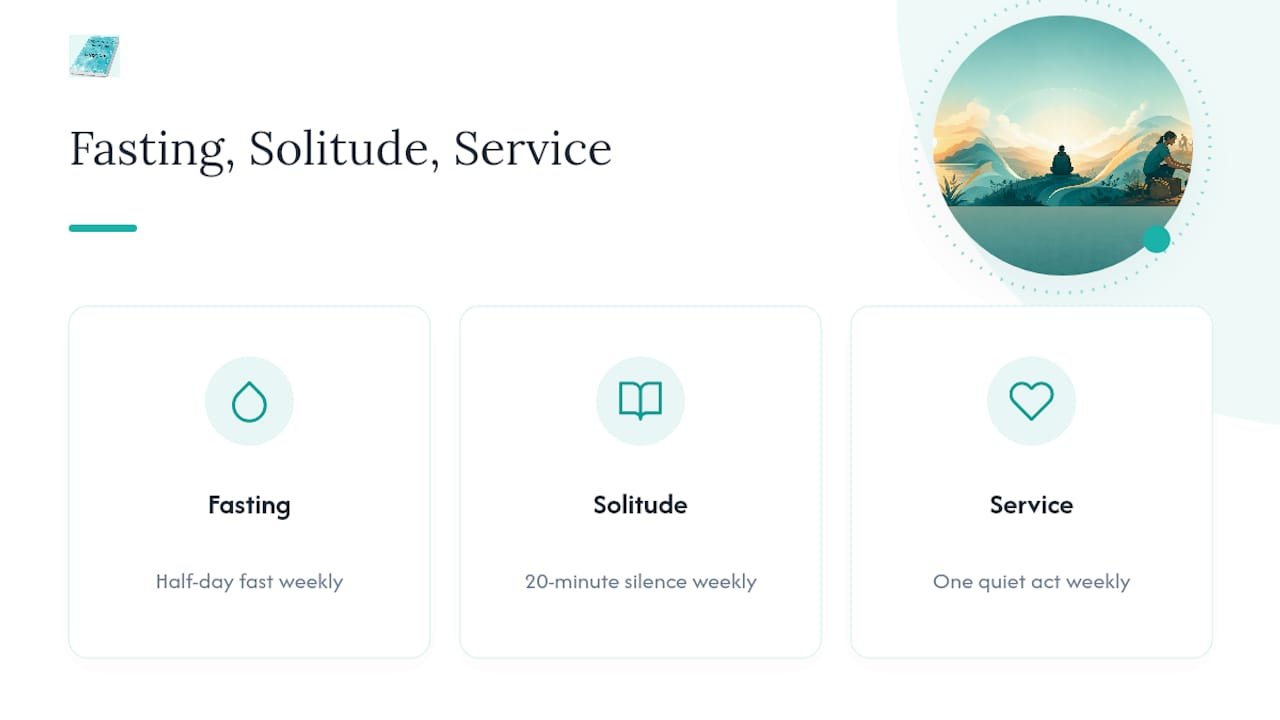
Solitude works differently. Deliberately removing noise, silencing notifications, sitting without a podcast or a screen, creates space for the kind of self-examination that stagnation typically prevents. Most people who feel spiritually stuck are also chronically distracted, and solitude addresses that directly rather than adding another input to process.

Service does something neither of the others can: it moves faith outward. Stagnation often turns inward, focused on how you feel or whether you’re “getting anything” out of your devotional time. Serving someone else, especially quietly and without recognition, breaks that inward loop. It’s also one of the behavioral fruits worth tracking from the plan above, generosity and service show up as evidence, not just as spiritual exercises.
None of these disciplines needs to be dramatic. A half-day fast, twenty minutes of silence, or one act of quiet service each week accomplishes more than an ambitious version of any of them attempted once and abandoned.
How Stress and Relationships Shape Your Spiritual Life
Spiritual stagnation doesn’t happen in a vacuum. External pressure changes how much capacity you have for prayer, worship, and honest reflection, even when your beliefs haven’t changed at all. Research tracking spiritual well-being during sustained periods of stress found meaningful declines for a significant share of people, though those with stronger social support and better coping strategies tended to hold steadier over time, according to findings on spiritual well-being trajectories.
That finding cuts against a common assumption that spiritual maturity should make you immune to circumstance. It doesn’t. What it does is give you tools to metabolize hard seasons rather than being flattened by them. Relationships matter enormously here. Isolation compounds stress; community buffers it. If you’re walking through a hard season alone, you’re carrying a double weight, the stress itself and the absence of anyone to help you carry it.
This is part of why the weekly plan above includes accountability rather than treating spiritual recovery as a solo project. A pastor or trusted friend who checks in weekly isn’t just encouragement, it’s a practical response to what the research on coping and support actually shows works.
Recovery Looks Ordinary, Not Dramatic
Recovery from spiritual stagnation rarely looks like the testimonies that get told on stage, the sudden breakthrough after a single prayer. More often it looks like someone who named one avoided conversation, had it, and then kept showing up to a small group for six months even when they didn’t feel like it. It looks like a person who picked one Psalm a day instead of an ambitious reading plan and actually finished the month.
The pattern that shows up again and again in pastoral accounts is unremarkable on purpose: confession of something specific, one concrete act of obedience, and a person willing to ask hard questions weekly. None of that makes a dramatic story. It makes a durable one. The believers who move out of long plateaus tend to describe the process as slow and occasionally boring, not as a lightning strike, which is consistent with Hebrews’ own language about discernment being trained rather than granted instantly.
A Pastoral Take on Getting Unstuck
Most advice on spiritual stagnation overcorrects in one of two directions: either it spiritualizes everything and ignores burnout and grief entirely, or it psychologizes everything and treats every dry season as a clinical issue. Neither serves you well. The Hebrews 5 framework holds because it treats maturity as a trained skill, not a mood, which means the fix is practice, not intensity.
If you want a structured place to start, a short weekly reflection ritual, twenty minutes, one lesson, three priorities, gives you a repeatable rhythm without demanding a total life overhaul. Consistency in small things, done alongside other people rather than alone, moves people further than any single dramatic gesture ever does.
— Sean
A Structured Guide for the Steps Above
Working through confession, a manageable Scripture practice, one act of obedience, and weekly accountability is straightforward to describe and harder to sustain without some structure. That’s exactly the gap Spiritualmethod’s downloadable spiritual awakening guide is built to close, for $20 as a one-time purchase, no subscription, no recurring charge.

Inside, you’ll find structured grounding practices, journaling prompts built for honest self-examination, and habit trackers designed to record the small behavioral fruits this article recommends tracking, truthfulness, restraint, generosity, rather than fleeting feelings. The guide’s templates map directly onto the weekly plan above: a prayer structure you can adapt for your daily time, tracking pages for your one act of obedience each week, and space to note what you’re avoiding before you talk yourself out of naming it. If you’d rather ease in first, the 7-step spiritual awakening guide offers a lighter entry point built around the same small-rhythm philosophy. Either way, the next step is simple: pick the guide that fits where you are, download it, and start with just one page this week.
Sources
- Hebrews 5:12-14 ESV – For though by this time you ought to be – Bible Gateway
- How to Recognize and Respond to Spiritual Stagnation – Elkleaf Publishing
- Causes of Spiritual Stagnation – Faith Community Church
- Depression — National Institute of Mental Health (NIMH)
- Trajectories of spiritual well-being during COVID-19 (2026) – APA PsycNet
FAQ
What Are the Signs of Spiritual Stagnation?
The clearest signs are perfunctory prayer, Scripture reading that doesn’t change your decisions, worship that feels routine, increased vulnerability to temptation, withdrawal from community, and a noticeable drop in visible fruitfulness. If two or more have described your recent months, it’s worth working through a deliberate recovery plan rather than waiting for the feeling to pass on its own.
What Does the Bible Say About Spiritual Stagnation?
Hebrews 5:12-14 is the central passage, describing believers who should have matured but still need spiritual milk because they haven’t trained their discernment through practice. Zephaniah 1:12 and Revelation 3:15-16 add warnings against complacency and half-hearted faith, while John 15 offers fruit-bearing as the positive measure of a healthy connection to God.
What Causes Spiritual Stagnation?
Common causes split between prideful self-sufficiency and passive spirituality, both correctable through what pastors call dependent discipline, consistent effort paired with genuine trust. Life circumstances, including burnout, grief, church hurt, loneliness, and hidden sin, contribute just as often and sometimes need pastoral and clinical attention together.
When Should I See a Professional Instead of Just Praying Through It?
Persistent low mood lasting weeks, suicidal thoughts, major sleep or appetite disruption, or an inability to function at work or home are signs that go beyond spiritual dryness, according to NIMH guidance on distinguishing normal distress from clinical conditions. In those cases, contact both a pastor and a licensed clinician, and call or text 988 immediately if you’re in the United States and in crisis.
How Much Does the Spiritualmethod Guide Cost?
The downloadable spiritual awakening guide is a one-time purchase for $20, giving you lasting access to the structured practices, trackers, and journaling prompts without a subscription.