
A consistent spiritual morning routine, even one as short as three minutes, reliably increases mental clarity, emotional calm, and daily intention when practiced regularly. The key is not duration. It is protecting those first quiet moments from reactive stimulation and using them deliberately. Below is one complete routine you can try tomorrow, scaled to whatever time you actually have.
Your do-this-now morning routine:
- Wake up and stay off your phone. Give yourself at least the first 20 minutes before checking any device.
- Take three slow breaths (1 minute). Inhale for four counts, hold for four, exhale for six.
- Set one intention (1 minute). Speak or write one sentence: “Today I choose to…”
- Express one gratitude (30 seconds). Name something specific, not generic.
- Drink a full glass of water mindfully before coffee or tea (30 seconds).
Time-budget callouts:
- 3 minutes: Breathwork only, plus one spoken intention.
- 10 minutes: Add a short journaling entry (three lines) and two minutes of gentle stretching.
- 30 minutes: Full sequence: breathwork, five-minute meditation, journaling, movement, and grounding outside or near a window.
Practiced consistently, this kind of mindful morning ritual tends to reduce reactive stress, sharpen focus, and create a felt sense of direction before the day’s demands arrive.
Key Takeaways
A consistent spiritual morning routine, practiced at even the three-minute level, builds the neurological and behavioral foundation for calmer, more intentional days.
| Point | Details |
|---|---|
| Start with three minutes | A three-minute ritual is enough to build consistency; extend only after it feels automatic. |
| Protect the first 20 minutes | Avoid screens for at least 20 minutes after waking to preserve the contemplative state. |
| Habit formation takes ~66 days | Expect inconsistency early; the “never miss twice” rule keeps the habit alive through difficult stretches. |
| Mix and match core practices | Breathwork, gratitude, and mindful hydration fit any time budget; journaling and movement suit 10- and 30-minute windows. |
| Spiritualmethod bundle | The downloadable guide bundle provides structured ritual templates, a planner, and a journal for practitioners who want a guided framework. |
Table of Contents
- Why does a spiritual morning routine actually work?
- Core morning spiritual practices: what to do and how long each takes
- Ready-made routines you can follow starting tomorrow
- How to design a routine you will actually keep
- The three-minute “Morning Minutes” micro-ritual
- What most morning routine advice gets wrong
- Spiritualmethod’s downloadable guide bundle gives you a structured starting point
- Sources
Why does a spiritual morning routine actually work?
The first 30–45 minutes after waking are neurologically distinct. Cortisol, the body’s primary alertness hormone, peaks naturally in the early morning in what researchers call the cortisol awakening response. That spike is not a problem. It is an opportunity. Chronobiology and habit-formation research shows that executive function, the brain’s capacity for focused attention and self-regulation, is also at its highest in this window. A deliberate morning practice channels that alertness toward reflection and intention rather than toward reactive media consumption.
Brief mindful practices in the morning reduce stress reactivity and help regulate the nervous system. UMM Health notes that a screen-free start preserves calm and protects the early cortisol spike from becoming low-grade anxiety. The mechanism is straightforward: when the first stimulus of the day is a notification or news feed, the nervous system shifts into a reactive mode that can persist for hours. When the first stimulus is breath, silence, or a written intention, the nervous system stays regulated.
Habit formation research cited by Thalira places the average timeline for a new behavior to become automatic at around 66 days. That figure matters because it reframes early inconsistency as normal rather than as failure. The practical outcome of a sustained morning spiritual practice tends to be measurable: calmer mood by mid-morning, greater clarity in decision-making, and a stronger sense of personal agency throughout the day.
Core morning spiritual practices: what to do and how long each takes
These eight practices form the building blocks of any morning spiritual routine. Mix and match them to fit your time budget and personal preference. None require religious belief; all can be adapted for secular or faith-based contexts.
Breathwork (1–3 minutes, fits all three time budgets)
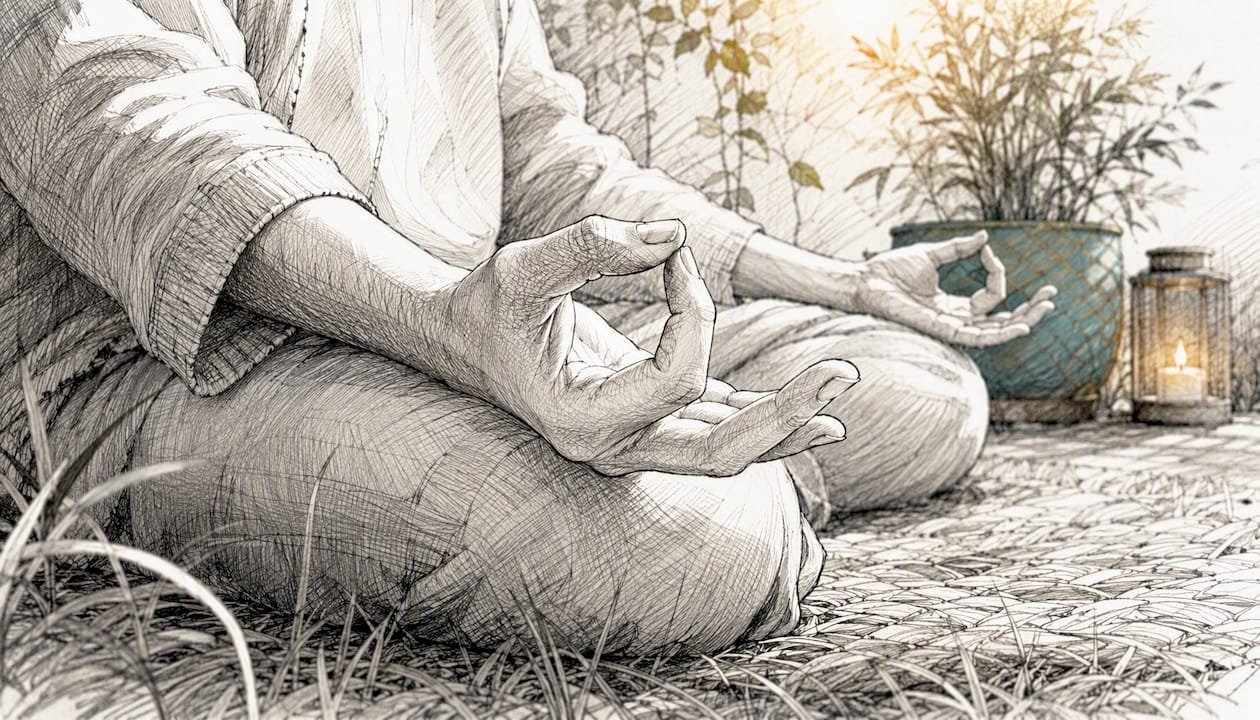
Sit upright, close your eyes, and breathe in a 4-4-6 pattern: four counts in, four counts hold, six counts out. Three to five rounds is enough to shift the nervous system from a light-sleep state into calm alertness. Mindful’s five-minute breathing meditation is a reliable starting point for anyone who wants audio guidance. For low-energy mornings, simply take three deep breaths before getting out of bed.
Pro Tip: If counting feels effortful, try “box breathing” instead: four counts in, four counts hold, four counts out, four counts hold. It is slightly easier to track when you are still half-asleep.
Focused meditation (2–10 minutes, fits 10- and 30-minute routines)
Sit comfortably, set a timer, and focus on the sensation of breath at the nostrils or the rise and fall of the chest. When the mind wanders, return without judgment. Two minutes is a legitimate session. Apps like Insight Timer offer free guided sessions in the 3–10-minute range for those who prefer a guided format. For non-religious practitioners, this is simply a daily meditation technique for attention training, with no spiritual framing required.
Journaling and intention-setting (2–5 minutes, fits 10- and 30-minute routines)
Three lines is enough. Write one thing you are releasing, one thing you are calling in, and one concrete intention for the day. Paper journaling in small doses is more sustainable long-term than lengthy sessions, and habit stacking it onto an existing cue like the kettle boiling increases adherence significantly. For a more structured approach to setting daily intentions, a guided template removes the friction of staring at a blank page.
Gentle movement or yoga stretching (3–10 minutes, fits 10- and 30-minute routines)
Five minutes of slow spinal movement, cat-cow, forward folds, or a simple sun salutation wakes the body without demanding athletic effort. Traditional Ayurvedic practice recommends gentle movement and sunlight exposure in the morning, adapted to modern schedules rather than strict ancient timetables. For readers who want somatic practices that complement morning rituals, mind-body connection exercises offer a practical starting point.
Gratitude practice (1–2 minutes, fits all three time budgets)
Name three specific things, not “my family” but “the conversation I had with my sister yesterday.” Specificity activates genuine appreciation rather than rote recitation. This practice fits inside any time budget and pairs naturally with journaling when time allows.

Grounding, nature, and sun exposure (2–5 minutes, fits 10- and 30-minute routines)
Step outside barefoot for two minutes, stand near an open window, or simply look at the sky. Morning sunlight exposure supports circadian rhythm regulation. For readers who want a structured approach to grounding exercises, a dedicated guide covers earthing, breath-based grounding, and sensory anchoring techniques.

Mindful hydration: tea or coffee ritual (1–2 minutes, fits all three time budgets)
Hold the cup with both hands. Notice the warmth, the smell, the first sip. Small sensory anchors like this bring presence without adding time and can be embedded into existing habits. This is one of the most accessible mindful morning practices for people who feel they have no time for ritual.
Chanting, prayer, or silent reflection (2–5 minutes, optional, fits 10- and 30-minute routines)
For faith-based practitioners, a short prayer, mantra, or devotional reading fits naturally here. For secular practitioners, a few minutes of silent sitting or reading a single page of an inspiring text serves the same function: a deliberate transition from sleep to purposeful wakefulness.
Ready-made routines you can follow starting tomorrow
The 3-minute routine (for compressed mornings, shift workers, parents)
- Stay off your phone until the routine is complete.
- Take five slow breaths using the 4-4-6 pattern (1 minute).
- Speak one intention aloud: “Today I choose to…” (30 seconds).
- Name one specific gratitude silently or aloud (30 seconds).
- Drink a full glass of water mindfully (1 minute).
The 10-minute routine (for most mornings)
- No phone for the first 20 minutes after waking.
- Breathwork: 4-4-6 pattern, five rounds (2 minutes).
- Journaling: three lines, one intention, one gratitude (3 minutes).
- Gentle movement: cat-cow, forward fold, seated twist (3 minutes).
- Mindful tea or coffee ritual (2 minutes).
The 30-minute routine (for slower mornings or weekends)
- No phone until the routine is complete.
- Breathwork: 4-4-6 pattern, eight rounds (3 minutes).
- Focused meditation with a timer or guided audio (10 minutes).
- Journaling: full intention-setting entry (5 minutes).
- Gentle yoga or stretching (7 minutes).
- Step outside or stand near a window for grounding and sunlight (3 minutes).
- Mindful tea or coffee ritual (2 minutes).
7-day starter plan
The goal of the first week is not perfection. It is repetition.
- Days 1–2: 3-minute routine only. No additions.
- Days 3–4: Add two minutes of journaling to the 3-minute base.
- Days 5–6: Add three minutes of gentle movement.
- Day 7: Try the full 10-minute routine and note how it feels.
After the first week, most practitioners find the 10-minute version feels natural and the 3-minute version becomes a reliable fallback for difficult mornings.
How to design a routine you will actually keep
A short, consistent morning routine outperforms sporadic long sessions. AstroSure’s habit-design guidance makes the principle concrete: start with a tiny entry ritual and scale slowly to avoid burnout. The single most important design decision is choosing one practice to protect, not five.
The core habit-design checklist:
- Pick one anchor cue. Attach your micro-ritual to something you already do: the alarm going off, the kettle boiling, the first trip to the bathroom.
- Prepare the night before. Set your journal on the nightstand. Fill a glass of water. Place your yoga mat. Removing friction at night means the morning routine starts before you wake up.
- Set a flexible minimum. Decide in advance what counts as “done” on a hard morning. Three breaths and one intention is a legitimate minimum.
- Apply the “never miss twice” rule. Missing one morning is normal. Missing two in a row is the start of a broken habit. One missed morning is an event; two is a pattern.
- Track tiny wins. A simple checkmark on a paper calendar is more motivating than a complex app for most people in the first 30 days.
Red flags that predict early dropout:
- Starting with a 30-minute routine before the 3-minute version feels automatic.
- Checking the phone before the practice is complete.
- Building a routine that requires a specific location or equipment you do not always have access to.
- Treating a missed day as evidence the practice “doesn’t work.”
Pro Tip: Habit stacking is one of the most reliable adherence strategies available. Attach your morning ritual to a habitual action like boiling water, and the existing habit becomes the trigger. You stop relying on motivation and start relying on the cue.
For readers who want a structured framework for making spiritual habits sustainable, a dedicated guide covers personality-based adaptations and long-term progression.
- Choose your anchor cue tonight.
- Set out one physical object that represents the practice (a journal, a candle, a mat).
- Decide your flexible minimum (the shortest version that still counts).
- Commit to the “never miss twice” rule before the first morning.
- Review after seven days and adjust one element only.
The three-minute “Morning Minutes” micro-ritual
The most consistent finding across morning ritual research is that the barrier to starting is almost always psychological, not logistical. Three minutes is the answer to that barrier. Mindful’s Morning Minutes framework describes a practice built around protecting the first minutes after waking for any calm, pleasurable activity, with no performance standard attached. The minimum is intentionally tiny: once started, many practitioners naturally extend the practice without any external prompt.
Step-by-step Morning Minutes ritual:
- Before your feet touch the floor: Take three conscious breaths. Notice the transition from sleep to waking.
- Sit upright at the edge of the bed: Set a timer for three minutes.
- Choose one of the following for those three minutes: slow breathing, a spoken or written intention, silent gratitude, or a few lines in a journal.
- Avoid all screens until the timer ends. Mindful recommends protecting at least the first 20–60 minutes from digital distraction to preserve the contemplative state.
- Close with one sentence: “I am ready for this day.”
The chronobiology rationale is direct. Morning executive function peaks during the cortisol awakening response, and using that window for a deliberate micro-practice channels alertness toward self-regulation rather than reactive consumption. A MyMayan Sign calendar tool can add a ritual countdown or themed daily prompt for readers who find calendar-based cues motivating.
To expand the practice, add one element at a time: a second breath cycle, a longer journaling entry, or two minutes of movement. The three-minute version remains the fallback on any morning when time or energy is limited.
Pro Tip: Place a physical object on your nightstand, a journal, a small stone, a candle, that you touch before anything else. The tactile cue bypasses the decision-making step entirely and starts the ritual automatically.
What most morning routine advice gets wrong
Most guides treat a spiritual morning routine as a performance: the longer and more elaborate, the better. That framing is counterproductive for the majority of practitioners, particularly those with variable schedules, young children, or demanding jobs. The research points in the opposite direction. Consistency at a small scale produces more durable change than occasional long sessions, and the three-minute threshold exists precisely because it removes the resistance that kills most new habits.
There is also a tendency in popular wellness content to conflate “spiritual” with “religious,” which excludes a large portion of people who would benefit from structured morning reflection. A gratitude practice, a breathing exercise, and a written intention are not inherently religious acts. They are attention-training tools with measurable effects on mood and self-regulation, accessible to anyone regardless of belief system. The mind-body-soul connection that underlies these practices is supported by both contemplative traditions and contemporary behavioral science.
The other underappreciated variable is seasonality. A 30-minute outdoor grounding practice is realistic in May and unrealistic in January for most people in northern climates. A well-designed routine has a summer version and a winter version, a weekday version and a weekend version. Rigidity is not discipline. Adaptability is what keeps a practice alive across years rather than weeks.
Spiritualmethod’s downloadable guide bundle gives you a structured starting point
Knowing what to do and having a guided framework to follow are two different things. Spiritualmethod’s downloadable guide bundle is built for practitioners who want structure without guesswork: a 50+ page spiritual awakening and inner healing ebook, a dedicated spirituality planner and journal, and a moon manifesting ritual guide, all available as instant-download PDFs.

The bundle covers grounding practices, energy clearing, sacred bathing rituals, intention-setting templates, and progress tracking, organized so that a reader can open it on day one and know exactly what to do. For those whose morning practice centers on journaling and reflection, the journaling for soul healing guide provides structured prompts that pair directly with the morning intention-setting steps covered in this article. Readers who want a broader framework connecting morning rituals to ongoing inner work will find the mind-body-soul connection guide a natural companion resource. The bundle is a one-time purchase with instant delivery, no subscription required.
Sources
- Spiritual Morning Routine: 12 Practices | Thalira
- Mindful morning routines: Begin your day with presence, not pressure – UMM Health
- How to Create a Morning Spiritual Routine That You Will Actually Stick To – AstroSure
- A five-minute breathing meditation – Mindful