
A self-compassion ritual is a short, repeatable practice that pairs kind awareness with a concrete supportive action, rather than relying on repeated affirmations alone. The fastest version is a self-compassion break: one to five minutes of noticing distress, remembering it is part of being human, then offering yourself a small act of care. Effective versions of this practice tend to include what Kristin Neff calls the three pillars: mindfulness, common humanity, and self-kindness, usually within a 5 to 15 minute window.
TL;DR:
- Self-compassion rituals should be simple and repeatable, with practices like a one-minute stress pause or a five-minute letter to oneself to build consistency.
- The most effective techniques incorporate the three pillars—mindfulness, common humanity, and self-kindness—within a short time frame of five to fifteen minutes.
- Starting with the easiest ritual, such as a supportive touch or grounding breath, increases the likelihood of forming a daily habit without feeling overwhelming.
- Repeating these practices in connection with daily routines, like brushing teeth or making coffee, helps establish lasting self-compassion habits.
- For most users, expect small to moderate improvements in mood and stress, with caution advised when emotions intensify or self-harm thoughts occur.
Table of Contents
- Quick, repeatable self-compassion rituals you can do today
- Step-by-step mini-ritual scripts you can use right now
- Turning the ritual into a daily habit without forcing it
- Safety, limits, and when to get professional support
- Practical ritual templates from SpiritualMethod you can adapt
- A practical, forgiving approach to ritual practice
- A downloadable next step from SpiritualMethod
- Sources
- FAQ
Quick, repeatable self-compassion rituals you can do today
Most self-compassion rituals fall into a few dependable categories, each covering one or more of Neff’s three pillars. You do not need all of them. Pick one that matches your energy level today and treat the rest as options for later.
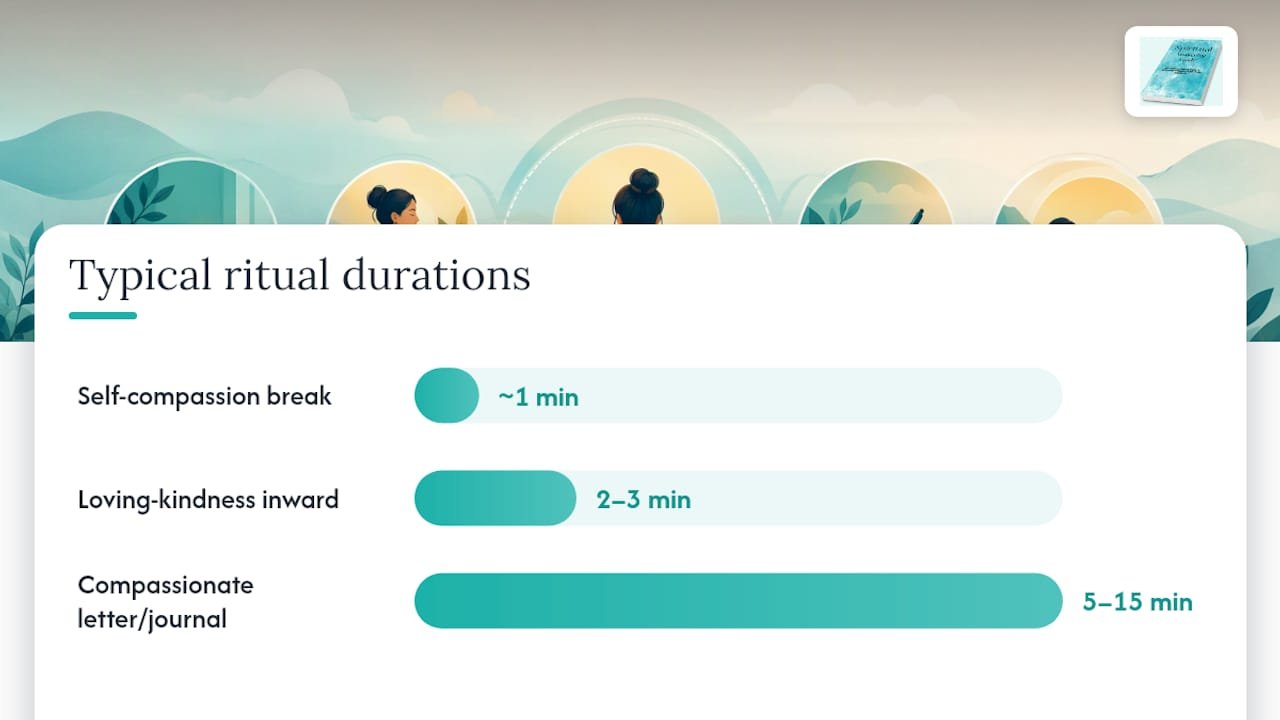
- Self-compassion break: A 1 to 5 minute pause where you name the difficulty, remind yourself others struggle too, and offer a kind phrase; use it during acute stress at work or home.
- Compassionate letter or journaling: A 5 to 15 minute written practice addressing yourself as you would a friend; best for processing a specific setback or recurring self-criticism, as detailed in Greater Good in Action’s self-compassionate letter exercise.
- Loving-kindness inward: A short seated practice repeating phrases like “May I be safe, may I be peaceful, may I be healthy,” useful before sleep or after conflict.
- Supportive touch: Placing a hand on your heart or your own arm while breathing slowly, a technique Cleveland Clinic lists among practical self-compassion techniques; helps when words feel forced.
- Grounding breath: Four slow breaths paired with the phrase “This is hard, and I can meet it,” useful in the first thirty seconds of overwhelm.
- Short walk: Five to ten minutes outside, framed as an act of care rather than exercise; useful when sitting still increases rumination.
- Boundary action: Saying no to one request or ending a draining conversation, which covers self-kindness through behavior instead of language.
- Restorative rest: A ten-minute lie-down or early bedtime, treated as a deliberate act of self-kindness rather than laziness.
Cleveland Clinic also recommends a practical pivot question, asking yourself “what do I need right now,” to move from noticing pain into choosing one of the actions above.
Step-by-step mini-ritual scripts you can use right now
These three scripts cover the range from mild stress to deeper shame, so start with whichever matches how you feel today.
- Self-compassion break. Pause and name the feeling out loud or silently: “This is stress.” Remind yourself: “Other people feel this too, this is part of being human.” Place a hand on your chest or arm. Offer a phrase: “May I be kind to myself right now.” Choose one small action, such as a glass of water or three slow breaths.
- Compassionate letter or journal. Set a timer for 5 to 15 minutes. Write about a recent struggle as if writing to a close friend going through the same thing. Include what you feel, why it makes sense given the circumstances, and one thing you need. Greater Good in Action suggests practicing this daily for one week, then tapering to weekly or monthly use.
- Loving-kindness inward. Sit for two to three minutes with eyes closed. Repeat slowly: “May I be safe. May I be peaceful. May I be healthy. May I live with ease.” Let the words be quiet rather than performed.
The self-compassion break fits mild, situational stress: a hard meeting, a mistake, a tense phone call. The letter or journal fits deeper shame or a recurring pattern that a one-minute pause cannot touch. For structured journal prompts that extend this further, see this practical guide to journaling for soul healing.
Pro Tip: If a spoken phrase feels fake, skip it and go straight to the action: water, rest, or a short walk still counts as self-compassion.
Turning the ritual into a daily habit without forcing it
A ritual only works if you repeat it, and repetition depends on making the first version almost too easy to skip.
- Attach the practice to something you already do, like brushing your teeth or making coffee, and cap the first version at one to two minutes.
- Use a simple habit tracker, a phone reminder, or a sticky note on your mirror as the environmental cue.
- Follow a short daily practice for a week, then shift to a weekly reflection on what worked, similar in structure to this weekly reflection ritual template.
- Choose believable language over generic affirmations: “I can handle five minutes of this” works better than “I am worthy” for most people starting out.
A 2023 meta-analysis of 56 randomized controlled trials found small-to-medium immediate reductions in depressive symptoms, anxiety, and stress from self-compassion interventions, though the overall risk of bias across studies was high. That means real but modest results are the honest expectation, not a full turnaround.
Safety, limits, and when to get professional support
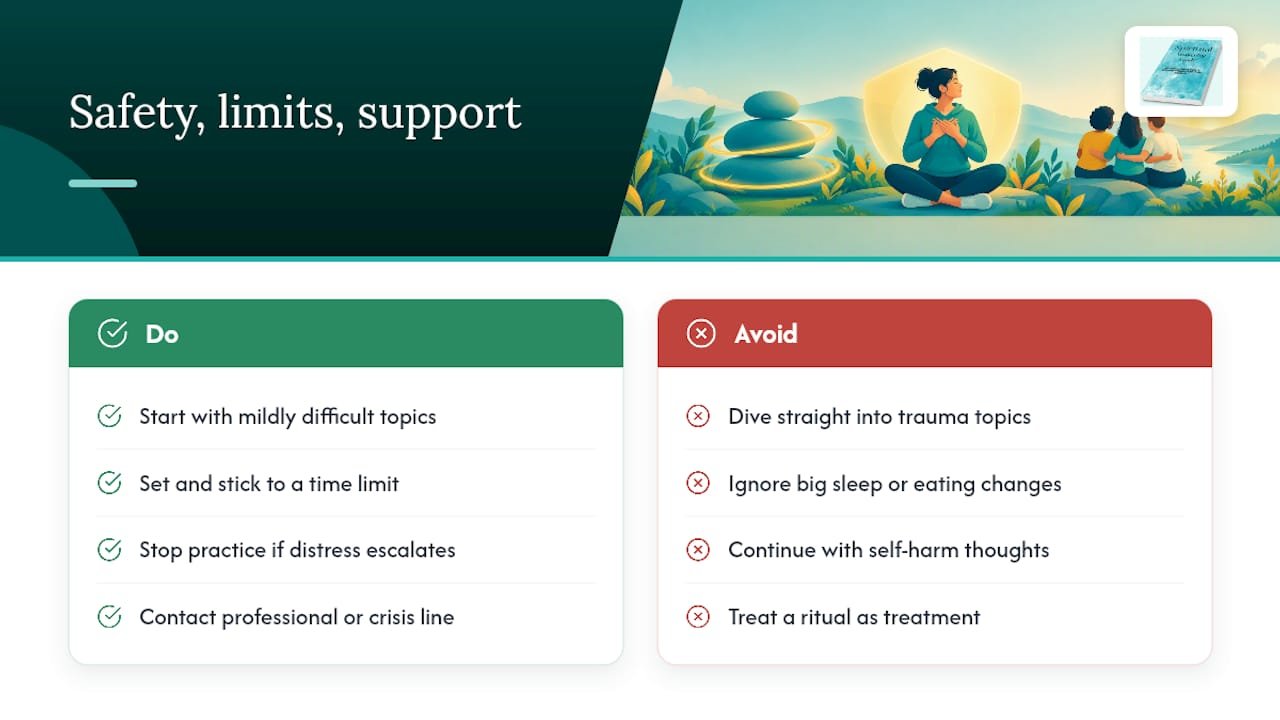
Journaling about painful topics can intensify emotion before it settles, so the same 2023 meta-analysis recommends starting with mildly difficult topics and a bounded time limit rather than diving into trauma. If distress escalates, if sleep or eating changes sharply, or if thoughts of self-harm appear, stop the practice and contact a mental health professional or crisis line right away. A ritual is a support tool, not a substitute for treatment.
Practical ritual templates from SpiritualMethod you can adapt
Several of SpiritualMethod’s existing ritual formats translate directly into self-compassion practice with small language changes. The fast emotional reset grounding script becomes a self-compassion break when you add a kind phrase to the final step. The weekly reflection ritual becomes a compassion check-in when you ask what you needed, not just what you accomplished. The forgiveness ritual pairs naturally with the letter-writing script above.
- Swap performance language (“did I succeed”) for care language (“what did I need”).
- Shorten timing to 1 to 2 minutes for a first attempt, then extend once the habit sticks.
- Add one line from each of Neff’s three pillars to any existing script you already use.
A practical, forgiving approach to ritual practice
Most people abandon self-compassion practices because they expect language to feel natural before it does. Start with one minute, not fifteen. Expect mixed results: some days the phrase lands, some days only the action does, and both count. Come back to the practice without treating a skipped week as proof it failed.
— Sean
A downloadable next step from SpiritualMethod
The rituals above work as a starting point, and SpiritualMethod’s spiritual awakening guide offers a structured next step for readers who want more than a single script.
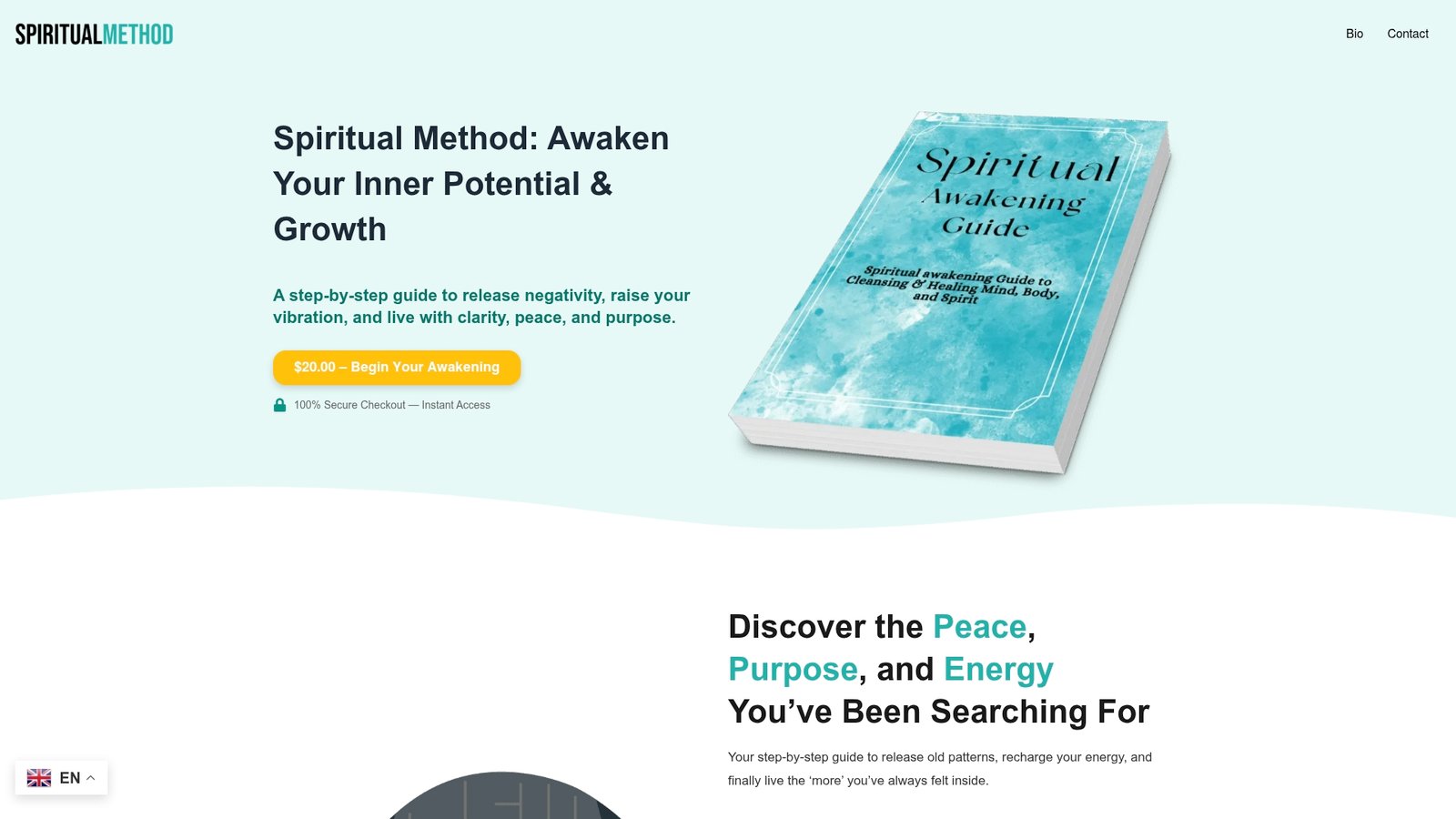
- Includes journaling templates and habit trackers designed to support routine-based healing practices.
- Covers grounding, energy clearing, and intention-setting practices that nurture self-kindness and mindfulness beyond a single ritual.
- Available for purchase and instant download at Spiritualmethod.
If you have already tried the self-compassion break or letter script above and want a fuller framework to build on, the guide is ready to download today.
Sources
For further reading: Greater Good in Action’s self-compassion practices, Kristin Neff’s self-compassion exercises, Cleveland Clinic’s self-compassion techniques, and the 2023 meta-analysis on self-compassion interventions for the research behind these practices. For readers exploring how rest supports emotional regulation, this guide on sleep and anxiety management is a useful companion.
- Self-Compassionate Letter | Greater Good in Action
- Self-compassion
- Self-compassion techniques — Cleveland Clinic
- Effects of Self-Compassion Interventions: A Meta-Analysis (2023)
FAQ
What are some self-compassion practices?
Common practices include the self-compassion break, compassionate letter writing, loving-kindness phrases, and supportive touch like a hand on the heart. Cleveland Clinic lists these along with asking yourself what you need right now as a practical way to choose an action.
What are examples of personal rituals?
Personal rituals include a short morning grounding breath, a five-minute evening journal entry, or a weekly reflection on the week’s challenges and needs. They tend to work best when repeated at a consistent time and kept short enough to sustain, often 1 to 15 minutes depending on the practice.
What are Kristin Neff’s three pillars of self-compassion?
Kristin Neff’s three pillars are self-kindness, common humanity, and mindfulness, and a well-built ritual deliberately includes all three rather than relying on one. You can review the original framework on Neff’s self-compassion practices page.
What is the mantra for self-compassion?
There is no single official mantra, but a common version used in loving-kindness practice is “May I be safe, may I be peaceful, may I be healthy, may I live with ease.” Some people prefer plainer language, such as “This is hard, and I can meet it,” which follows the same structure without feeling forced.