
Moon water is drinking or purified water charged under moonlight and used with a clear intention. Its most common uses are ritual baths, room or aura mists, watering houseplants, and cleansing crystals or altar tools. Some people drink it, provided the water was potable to begin with. The moon phase you choose (full, new, waxing, or waning) simply shapes the intention behind the practice, not a guaranteed outcome.
TL;DR:
- Moon water’s primary value lies in intentional focus, with no chemical change occurring during lunar exposure.
- Using distilled or filtered water reduces risks when drinking or applying moon water to the skin.
- Any moon phase can be used effectively, but each one aligns with specific intentions like beginnings, growth, release, or banishing.
- Simplicity matters; adding multiple herbs or crystals does not increase power and can dilute the ritual’s symbolic meaning.
- Regularly label and refresh your moon water within a month to maintain freshness and clarity in your practice.
Table of Contents
- What Is Moon Water, and What Can It Actually Do?
- How to Make Moon Water, Step by Step
- Which Moon Phase Should You Use, and Why It Matters
- Practical Moon Water Uses for Home, Body, and Garden
- Safety, Storage, and When Not to Drink Your Moon Water
- Beginner Routines That Actually Fit Into a Busy Week
- Four Quick Moon Water Recipes to Try This Week
- Where Moon Water Rituals Actually Came From
- Does Your Zodiac Sign Change How You Should Use Moon Water?
- How to Make Your Moon Water Ritual Feel More Intentional
- The Mistakes That Undercut an Otherwise Good Ritual
- Why I Recommend Starting Here
- A Structured Next Step If You Want More Than a Jar and a Windowsill
- Sources
- FAQ
What Is Moon Water, and What Can It Actually Do?
Moon water is water left under moonlight, usually overnight, so it absorbs the symbolic energy of that lunar phase before being used in a ritual or daily practice. The idea traces back centuries across multiple folk traditions that treated the moon as a marker for timing, growth, and release, and it has seen a steady revival among modern practitioners drawn to low-cost, low-barrier rituals.
Here is the part worth being honest about: moon water does not undergo any measurable chemical change. Practitioners and researchers alike describe its value as symbolic rather than molecular, meaning the water’s effect comes from the intention and attention you bring to the process, not from anything detectable in a lab. That does not make the practice pointless. Ritual attention has real, documented value for focus and calm, which is exactly why so many people build a repeatable habit around it.
Common additions serve the same symbolic role:
- Herbs (lavender, rosemary, rose petals) added for their traditional associations with calm, clarity, or love.
- Crystals placed near or beside the jar, chosen for a specific intention like grounding or protection.
- Salt, occasionally used in small amounts for cleansing water meant for space or tool work, never for plants.
Treat these as symbolic layers on top of a simple base. The water itself is the constant; everything else is intention dressed in physical form.
How to Make Moon Water, Step by Step
The basic method takes five minutes of hands-on time and one night of patience. Start with a clean glass jar or bowl. Glass is preferred because it will not leach plastic residue into water you plan to touch, mist, or drink, and it holds up over repeated moon cycles.
- Choose your water. If you plan to drink the moon water or use it on your skin, start with distilled or filtered water rather than tap water straight from the faucet, which reduces the risk of microbial contamination in anything you ingest or apply topically.
- Set your container outside or on a windowsill. Outdoor placement is traditional, but a covered jar on an indoor windowsill works just as well and avoids insects, pollen, or debris landing in the water, which makes it a genuinely practical option for apartment dwellers.
- Time it around moonrise. Set the jar out as the moon rises and let it sit overnight, ideally through to sunrise before direct sun hits the water. You do not need to babysit it. This is a “set it and check it in the morning” ritual.
- Add intention, not just objects. Speak or silently state what you want this batch of water to support, whether that is calm, clarity, or a fresh start. This is the step that actually matters most, according to practitioners who treat the ritual itself as the active ingredient.
- Seal, label, and store. Once morning comes, cap the jar and label it with the date and moon phase, so you know exactly what you are working with weeks later.
If you want to add crystals, keep them beside the jar rather than dropping them into the water unless you are certain the specific stone is water-safe. Some popular crystals contain minerals that can leach when submerged, and there is no upside to guessing wrong on something you might later put on your skin.
Pro Tip: Keep a small dedicated shelf or windowsill spot for moon water jars. Ritual habits stick better when they have a fixed physical home instead of getting shuffled between counters and cabinets.
Which Moon Phase Should You Use, and Why It Matters
Moon phase is where most people overthink the process, so here is the short version: any phase works, but each one traditionally colors the intention behind your water.
- New moon water is tied to fresh starts, intention-setting, and quiet planning. It suits drinking rituals meant to mark a beginning, like the start of a new habit or project.
- Waxing moon water is associated with building and growth. This is the phase to reach for if you’re watering plants you want to thrive, or supporting a project that’s already in motion.
- Full moon water is the most popular choice for charging tools, cleansing spaces, and ritual baths, since full moon energy is traditionally tied to release and culmination.
- Waning moon water fits banishing work: clearing a room of stagnant energy, letting go of a habit, or closing out a chapter you’re ready to leave behind.
Rare events like blue moons, eclipses, and supermoons get outsized attention online, but any lunar phase can be used effectively if your intention is clear. Eclipses in particular carry a reputation in some traditions for unpredictable or intense energy, so many practitioners simply wait a day or two rather than skipping the moon water practice altogether. If you want a structured approach to a rare-event ritual, a 45-minute blue moon ritual built for beginners removes the guesswork. For a side-by-side look at how new and full moon approaches differ in daily practice, see how new moon rituals compare to full moon rituals.
Practical Moon Water Uses for Home, Body, and Garden
Once you have a jar of finished moon water, the real question is what to do with it. The uses split cleanly into five categories.
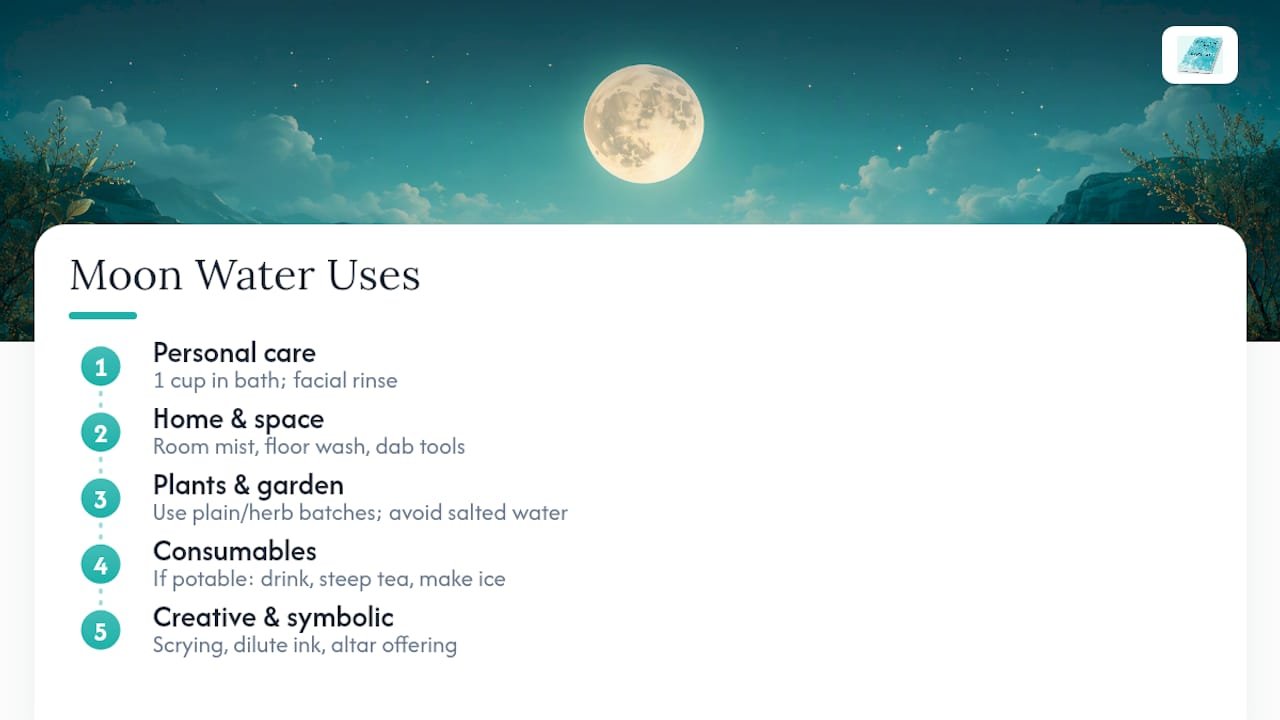
Personal care. Add a cup of moon water to a warm bath for a ritual soak, or use it as a facial rinse after cleansing. Keep concentrations light. A cup in a full tub is plenty; there is no benefit to overloading the water with herbs or salt when you’re applying it to skin.
Home and space. Pour moon water into a spray bottle for a room mist, use it as a floor wash near an entryway, or dab a small amount on ritual tools and candles before lighting them. This is one of the most popular creative applications precisely because it requires no special skill.
Plants and garden. Seedlings tolerate moon water well in small amounts, but skip any batch that included a salt cleanse; salted water will stress or kill root systems in both seedlings and mature plants. Stick to plain or herb-infused batches for anything living.
Consumables. If your moon water was made with potable water from the start, you can drink it plain, steep it into tea, freeze it into ice cubes for a mocktail, or add a splash to a morning glass of water as a small daily ritual.
Creative and symbolic uses. Some practitioners pour moon water into a dark bowl for scrying, use it to dilute ink for art, or leave a small dish of it as an offering on an altar. These uses ask nothing of the water beyond its symbolic presence.
Safety, Storage, and When Not to Drink Your Moon Water
The rules here are simple, but skipping them is where most people run into trouble.
- Never fill your jar from a natural source like a pond, stream, or standing puddle if you intend to drink the water. Use tap, filtered, or distilled water instead.
- Keep crystals outside the jar unless you have specific, reliable confirmation that stone is safe when submerged; several common crystals can leach minerals into water over time.
- Do not water plants with any batch of moon water that contains salt. Rinse salt-cleansed jars thoroughly before reusing them for a plant-safe batch.
- Store finished moon water sealed, in a cool, dark spot like a cabinet or pantry shelf, away from direct sunlight.
Most storage guides recommend refreshing your supply within about a month rather than keeping one batch indefinitely, both for freshness and because a new moon cycle gives you a natural reason to set a new intention. Label each jar with the phase and date it was made. It sounds unnecessary until you have three unlabeled jars on a shelf and no memory of which one was for release work and which was for new beginnings.
Beginner Routines That Actually Fit Into a Busy Week
Ritual does not need to be elaborate to be meaningful. Two short sequences cover most of what a beginner needs.
The 10-minute new-moon intention ritual: Pour a small glass of moon water made the night before. Sit somewhere quiet, name one intention out loud or in a journal, and drink the water slowly while holding that thought. Close by writing one sentence about how you want the coming weeks to feel.
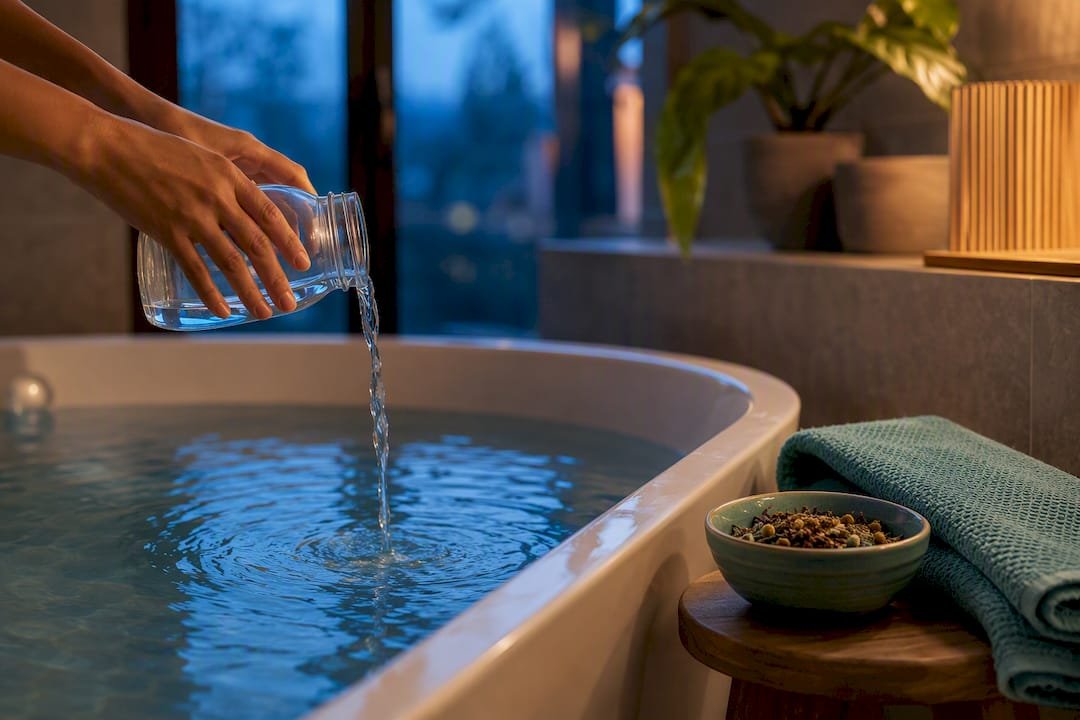
The 20-minute full-moon release bath: Add a cup of full-moon water to a warm bath along with any herbs you find calming. Soak for 15 to 20 minutes, using the time to mentally list what you are ready to release. No candles or incense are required. A no-fire full-moon ritual for beginners works just as well for anyone in a dorm, apartment, or shared space where open flame isn’t practical.
Aftercare matters more than most guides admit. Dry off, drink a glass of plain water, and jot down one line about how the ritual felt. That single habit, tracking what you did and how it landed, is what turns a one-off experiment into a practice you can actually evaluate over time. For a longer-form release sequence with no-fire options built in, see the 10-minute waning moon ritual.
Pro Tip: Keep your ritual log in the same notebook or app you already use daily. A separate “spiritual journal” that lives in a drawer tends to get forgotten within two weeks.
Four Quick Moon Water Recipes to Try This Week
- Room mist: Combine one part moon water to one part witch hazel (or vodka as an alcohol alternative) in a spray bottle, plus 5 to 10 drops of a food-safe essential oil. Shake before each use.
- Ritual bath blend: Mix one cup of moon water with two tablespoons of dried lavender or rose petals steeped for 10 minutes, then strain into a warm bath. Soak for 15 to 20 minutes.
- Plant-watering routine: Use plain, unsalted moon water diluted with regular water at a one-to-three ratio for seedlings, or use it undiluted for mature, established plants.
- Morning intention drink: Add two tablespoons of moon water made with potable water to a glass of drinking water and sip slowly while stating one intention for the day.
Where Moon Water Rituals Actually Came From
Water rituals tied to lunar timing show up across a wide range of folk and cultural traditions, long before the phrase “moon water” became a wellness buzzword. Ayurvedic practice in India has long paired lunar observation with water and fasting rituals. European folk magic used moonlit water for everything from beauty rinses to protective charms left on windowsills. Wiccan and neopagan traditions built entire ritual calendars around the eight major moon phases, treating water charged under a full moon as a staple tool for cleansing altars and ritual objects.
What changed in the last decade is not the practice itself but its visibility. Social media turned a once-niche folk custom into a mainstream self-care habit, stripped of specific religious framework and repackaged as an accessible, low-cost ritual anyone can try with a jar and a windowsill. That shift is worth naming honestly: much of what circulates online today borrows loosely from older traditions without crediting a specific lineage, which is part of why grounding the practice in plain, practical steps, rather than borrowed mysticism, matters. The version of moon water most people encounter now is a hybrid: folk root, wellness-era packaging, and a personal intention layered on top by whoever is holding the jar.
Does Your Zodiac Sign Change How You Should Use Moon Water?
Astrology adds an optional layer to moon water practice, not a required one. The moon moves through a different zodiac sign roughly every two and a half days, and some practitioners time their water-making to match a sign whose traits mirror their intention. Water made during a moon in Cancer, a sign tied to home and emotional care, might get used for comfort-focused rituals like a bath after a hard week. Moon in Leo, associated with confidence and visibility, might get paired with intentions around public speaking or creative projects.
None of this is necessary for the practice to work. Astrological timing simply colors the intention you were already planning to set, giving it a slightly more specific flavor rather than unlocking a different result. If you don’t track zodiac placements and don’t want to start, a plain full or new moon batch works exactly as well as one timed to a specific sign. Treat astrology here the way you’d treat a scent choice in a candle: it can make the ritual feel more personal, but skipping it changes nothing about whether the practice is meaningful.
How to Make Your Moon Water Ritual Feel More Intentional
The energy people describe in moon water comes from focus, not the water itself, so the most effective way to “boost” it is to sharpen your own attention during the process. A few adjustments make a real difference in how the ritual lands.
Say your intention out loud rather than thinking it silently. Speaking a goal engages a different kind of focus than simply holding a thought, and many practitioners find it makes the moment feel less passive. Choose one clear intention per batch instead of a vague wish list; a jar meant for “everything good” tends to produce a ritual with no real center. Match your phase to your goal deliberately, using new moon batches for starts and full moon batches for release, so the timing itself reinforces what you’re trying to do.
Keep the process consistent. Using the same jar, the same windowsill spot, and roughly the same time of night across cycles builds a habit your mind associates with focus, the same way a consistent bedtime routine signals sleep. And track it. A short ritual log noting the date, phase, intention, and how you felt afterward gives you something real to look back on, which is far more useful than trying to judge a single ritual in isolation. Over several cycles, that log usually reveals which types of intentions and phases actually resonate with you personally, which is the closest thing to evidence a personal ritual practice can offer.
The Mistakes That Undercut an Otherwise Good Ritual
The most common misconception is treating moon water as a product with guaranteed effects, the same way someone might expect a supplement to work. It is a ritual object. Its value comes from the attention you bring to it, and expecting it to “do” something independent of that attention sets up disappointment that has nothing to do with the practice itself.
The second mistake is skipping the potable-water rule for anything you plan to drink or apply to skin. Standing water from a pond or puddle looks charming in photos and is genuinely risky to ingest.
A third mistake is oversaturating a single batch with everything at once, herbs, salt, multiple crystals, and calling it more powerful. More additions do not deepen intention; they usually just muddy the water, literally and symbolically. Simplicity tends to serve the ritual better than complexity.
Finally, many beginners skip storage and labeling entirely, then wonder months later why a jar in the back of the cabinet feels stale or unused. A ritual without a clear endpoint or refresh point tends to fade into background clutter rather than staying an active practice.
Why I Recommend Starting Here
Moon water works as an entry point into inner healing precisely because it asks so little of you: a jar, a window, one clear intention. What actually moves the needle isn’t the water, it’s the repeated act of naming what you want and paying attention to how you feel afterward. Journaling that response, even in one line, does more for self-awareness than any crystal placement. If you want that same structure applied to a fuller practice, a guided ritual framework is the natural next step.
— Sean
A Structured Next Step If You Want More Than a Jar and a Windowsill
Moon water gives you a starting point, but a single ritual only goes so far without a system behind it. Spiritualmethod built its guides around exactly that gap: step-by-step rituals, habit trackers, and templates designed to turn one-off moon nights into a routine you actually keep.

The Spiritual Awakening Guide runs over 50 pages and covers grounding, energy clearing, sacred bathing rituals, intention-setting, and journaling practices, available as a one-time downloadable guide. If you’ve tried a moon water ritual once or twice and liked how it felt but keep forgetting to repeat it, a structured guide solves the exact problem ad-hoc rituals run into: no system for tracking what worked. Pair it with a practical resource like MindShift Wellness Center’s guidance on ritual attention if you want to understand the psychological mechanics behind why routine-based rituals help with focus and calm. For readers who specifically want a moon-focused deep dive, the Moon Ritual for Inner Healing guide builds directly on everything covered here.
Download the guide, pick one ritual from it, and try it on the next moon phase that matches your intention.
Sources
- Almanac
- Moon water: How and when to make it | Women’s Health
- How to Make Moon Water Safely, Step by Step – Hearth & Hedge
- Full moon water: What it is and how to use it | Cosmopolitan
- Moon water guide | Lunar Haus
FAQ
Can You Drink Moon Water Safely?
Yes, as long as it was made with distilled, filtered, or otherwise potable water from the start. Never drink moon water made from a natural source like a pond or puddle, since untreated standing water carries contamination risk.
Does the Moon Phase Actually Matter for Moon Water?
The phase shapes the intention behind your ritual rather than the water’s physical properties. Full moon water is traditionally used for charging and release, while new moon water suits fresh starts, but any phase works with clear intention.
How Long Does Moon Water Last Once Made?
Stored sealed in a cool, dark place, most guides recommend refreshing your supply within about a month rather than keeping one batch indefinitely. Label each jar with the date and phase so you always know what you’re using.
Is It Safe to Put Crystals Directly in Moon Water?
Only if you’re certain that specific crystal is water-safe. Several popular stones can leach minerals when submerged, so placing crystals beside the jar rather than inside it is the safer default.
What Does the Spiritual Awakening Guide From Spiritualmethod Include?
The guide is a one-time $20 download covering grounding, energy clearing, sacred bathing rituals, intention-setting, and journaling, available at Spiritualmethod. It’s built for readers who want a repeatable structure rather than isolated rituals.