
Intention journal prompts are short, focused questions you copy into a daily or weekly ritual to set clear, actionable intentions instead of vague resolutions. This guide gives you categorized prompts you can use today: an 8-question morning set, an 11-question weekly set, and a 30-plus prompt bank organized by theme, along with two plug-and-play templates for building the habit.
TL;DR:
- Prompts should be matched to your available time, using shorter questions on busy mornings and deeper reflection on slower days like Sundays.
- Rephrasing intentions as specific, present-tense statements tied to concrete actions increases their practical usefulness and likelihood of guiding behavior.
- Keeping intention journaling simple, consistent, and in one dedicated journal or template reduces friction and fosters longer-term habit formation.
- Structured templates and categorizing prompts by theme help prevent stagnation and ensure balanced reflection over weeks or months.
- Focusing on intention, not goal setting, promotes a forgiving process that encourages re-commitment without penalty for occasional drift.
Table of Contents
- Intention Journal Prompt Categories and When to Use Them
- Copy-Ready Intention Journal Prompts: Morning, Weekly, and 30-Plus Bank
- How to Turn Intention Prompts Into a Daily Ritual
- Two Templates You Can Copy Today
- Why These Prompts Are Grounded in Real Practice
- What a Filled-Out Intention Entry Actually Looks Like
- Common Roadblocks When You Start Intention Journaling
- Customizing Prompts to Fit Your Own Goals
- What “Intention” Actually Means in This Context
- A Short Routine Worth Borrowing
- Take Your Intention Practice Further With a Guided Framework
- Sources
- FAQ
Intention Journal Prompt Categories and When to Use Them
Different moments call for different prompts. A rushed weekday morning needs something short and grounding, while a Sunday review benefits from a question that forces you to look at the whole week. Sorting prompts by category keeps you from staring at a blank page trying to guess what to write.
Here are the core categories worth building a rotation around:
- Morning or moment-setting: Grounds you before the day starts. Example: “What tone do I want to set for the next few hours?”
- Weekly focus: Zooms out to patterns across seven days. Example: “What is the one outcome that would make this week feel worthwhile?”
- Values and purpose: Connects daily choices to what actually matters to you. Example: “Which of my actions today reflected what I care about most?”
- Habits and micro-steps: Breaks big goals into something doable in minutes. Example: “What is the smallest version of this habit I can do today?”
- Obstacle identification: Names the friction before it derails you. Example: “What usually gets in the way of this intention, and how will I respond this time?”
- Gratitude and embodiment: Roots intention in the body and present moment, not just the mind. Example: “Where in my body do I feel calm right now, and why?”
- Boundaries: Clarifies what you will and won’t allow into your day. Example: “What do I need to say no to in order to protect this intention?”
Use morning and gratitude prompts daily, weekly and habit prompts on a set day like Sunday, and obstacle or boundary prompts whenever you feel resistance building. For a broader look at how these categories work together, this practical guide to spiritual journaling prompt types breaks down the mechanics further.
Copy-Ready Intention Journal Prompts: Morning, Weekly, and 30-Plus Bank
You don’t need to write your own prompts from scratch. Below are three ready-made sets: a fast morning list, a weekly reflection list, and an extended bank for when you want variety over months of practice.
Morning intention prompts (8)
- What is my intention for today, stated as if it’s already happening?
- What would make today feel calm even if it gets busy?
- What is one thing I can control today, regardless of what happens around me?
- Who do I want to be in my hardest conversation today?
- What small action moves me closer to what I actually want?
- What am I looking forward to today, even something tiny?
- What negative thought pattern am I willing to set down for today?
- What does “enough” look like for me today?
Weekly intention prompts (11)
- What is the single focus that would make this week matter?
- What did last week teach me that I want to carry forward?
- Where did I drift from my values, and why?
- What are my three priorities this week, in order?
- What obstacle am I most likely to run into, and what’s my plan for it?
- What relationship needs more of my attention this week?
- What boundary do I need to hold more firmly?
- What habit, if repeated all week, would compound into real change?
- What am I avoiding that I need to name out loud?
- What ritual will I use to reinforce this week’s intention?
- What does success look like by Sunday night?
Extended prompt bank (30+, organized by category)
Self-discovery: What pattern keeps showing up in my life that I haven’t fully named? What would I do differently if I trusted myself completely? What part of my identity have I outgrown?
Values and purpose: What matters to me that I haven’t said out loud? If my week reflected my values perfectly, what would change? What legacy do I want my daily actions to build?
Habits and micro-steps: What is the two-minute version of the habit I keep putting off? What environment change would make my intention easier to follow? What habit is quietly working against my goals?
Obstacles: What excuse do I reach for most often? Who or what drains the energy I need for this intention? What would it look like to plan for the setback instead of being surprised by it?
Gratitude and embodiment: What sensation in my body tells me I’m on the right track? What am I grateful for that I usually take for granted? How does my body feel when I’m living in alignment with my intention?
Boundaries: What request do I need to decline this week? Where am I overextending myself out of guilt rather than choice? What does protecting my energy actually look like in practice?
A 30-prompt bank organized by theme works the same way, and rotating through categories rather than repeating the same five questions keeps the practice from going stale.
How to Turn Intention Prompts Into a Daily Ritual
The prompts only work if the ritual around them is simple enough to repeat. The short version: state your intention, write one to three prompt answers, then choose one micro-step tied to that intention before you close the journal.
- Pick your window. Morning sessions work best for setting tone; evening sessions work better for review. Either way, three to fifteen minutes is enough. Longer sessions tend to get skipped.
- Match frequency to prompt type. Daily prompts should be short and immediate. Weekly prompts can go deeper since you’re reviewing patterns, not reacting to one morning.
- Track something simple. A checkbox for “journaled today,” a five-minute weekly review, or a 30-day experiment where you commit to one intention and track it daily all work. Structured planners often frame this as a 30- or 90-day experiment so you have a defined end point to evaluate whether the practice is sticking.
- Reinforce when calm. Reviewing your intention when you’re relaxed, not rushed, makes it more likely to actually stick throughout the day.
A compassion-first habit tracker can carry the tracking piece for you if checkboxes alone feel too dry.
Pro Tip: Prepare your templates the night before, and keep them in one dedicated journal instead of scattered sticky notes or a rotating cast of apps. Removing the “what do I even write” decision is often what separates a habit that lasts thirty days from one that fizzles after three.
Two Templates You Can Copy Today
Templates remove the blank-page problem. Pre-filled structure means you’re answering questions, not designing a system every time you sit down.
Daily intention template:
- Date
- Today’s intention (present tense: “I am…” not “I will try to…”)
- One micro-step that supports it
- End-of-day check-in: did I follow through, and why or why not?
Weekly intention template:
- This week’s focus
- Three priorities, ranked
- Likely obstacles and my plan for each
- Ritual I’ll use to reinforce the intention (a phrase, a breath, a note on my mirror)
- One metric I’ll track by Sunday
Run either template as a 7-day trial first. If it holds, extend to 30 days before deciding whether it’s a permanent habit. Keep phrasing present tense and specific. “I am organized” tracks better than “I want to be less scattered,” and “I will file my invoices by 10am” beats “I will be more responsible.” A weekly reflection ritual built around three priorities pairs directly with the weekly template above.
Why These Prompts Are Grounded in Real Practice
The prompt bank is built around a simple standard: every prompt has to earn its place by being usable in under fifteen minutes. That standard shapes the mix of quick daily sets and a longer bank for variety, since readers tend to want both immediate action and a deeper resource to return to over months.
For related practice, Spiritualmethod also publishes:
- Short ritual ideas for 5 to 10 minute journaling sessions
- Real examples of how intentions translate into daily actions
- Habit-tracking templates built around compassion rather than streak pressure
The method stays practical because it leans on structure (templates), repetition (ritual), and feedback (tracking) rather than motivation alone.
What a Filled-Out Intention Entry Actually Looks Like
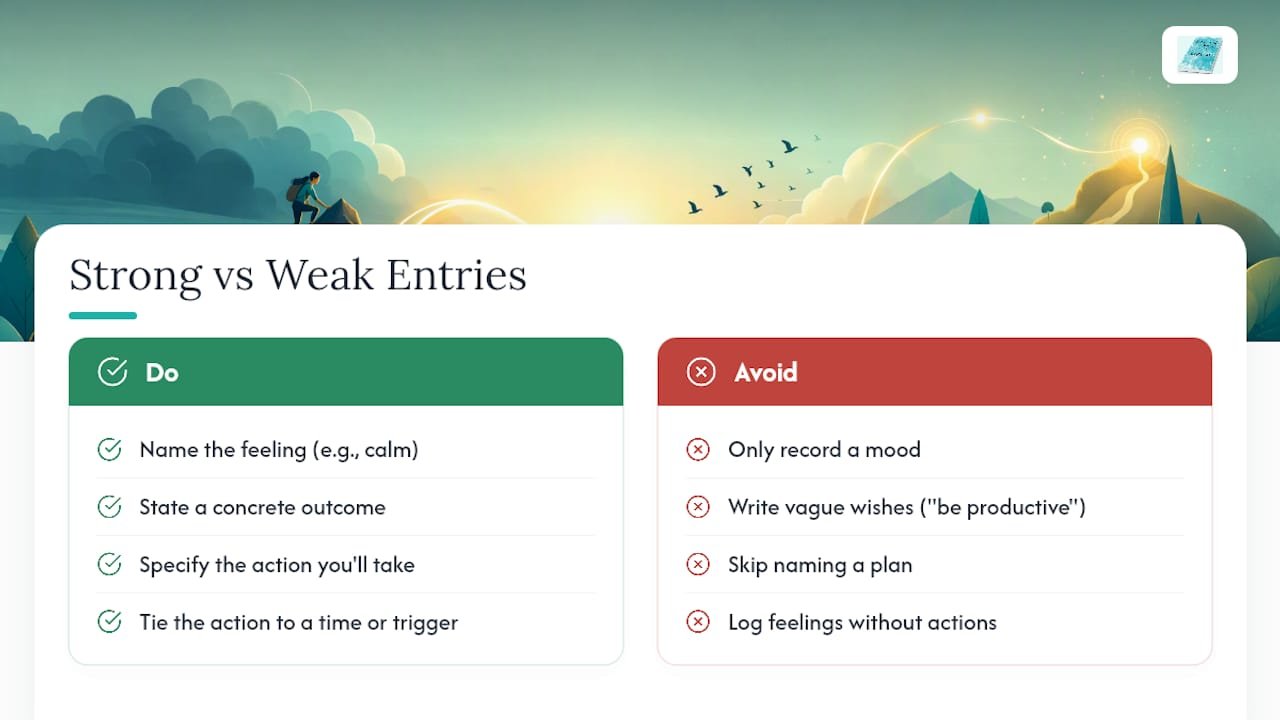
Reading a prompt is one thing. Seeing how someone actually answers it removes the guesswork. Take the morning prompt “What is my intention for today, stated as if it’s already happening?” A vague answer sounds like “I want to be productive.” A grounded answer reads more like: “I am moving through today calmly, finishing my project outline before lunch, and leaving my phone in another room during focused work blocks.”
Notice the difference. The second version names a feeling (calm), a concrete outcome (finished outline), and a specific action (phone in another room). That specificity is what makes the intention usable instead of aspirational.
A weekly example follows the same logic. For the prompt “What obstacle am I most likely to run into, and what’s my plan for it?” a thin answer says “procrastination.” A useful answer says: “I tend to avoid hard conversations by staying busy with small tasks. This week, if I catch myself organizing my desk instead of calling my landlord, I’ll pause and make the call first.”
The pattern across strong entries: they name the feeling, the action, and the trigger, all in one or two sentences. Weak entries stop at the feeling and skip the action. If your own entries read more like a mood log than a plan, add one line naming exactly what you’ll do differently, tied to a time or trigger you can actually spot in the moment.
Common Roadblocks When You Start Intention Journaling
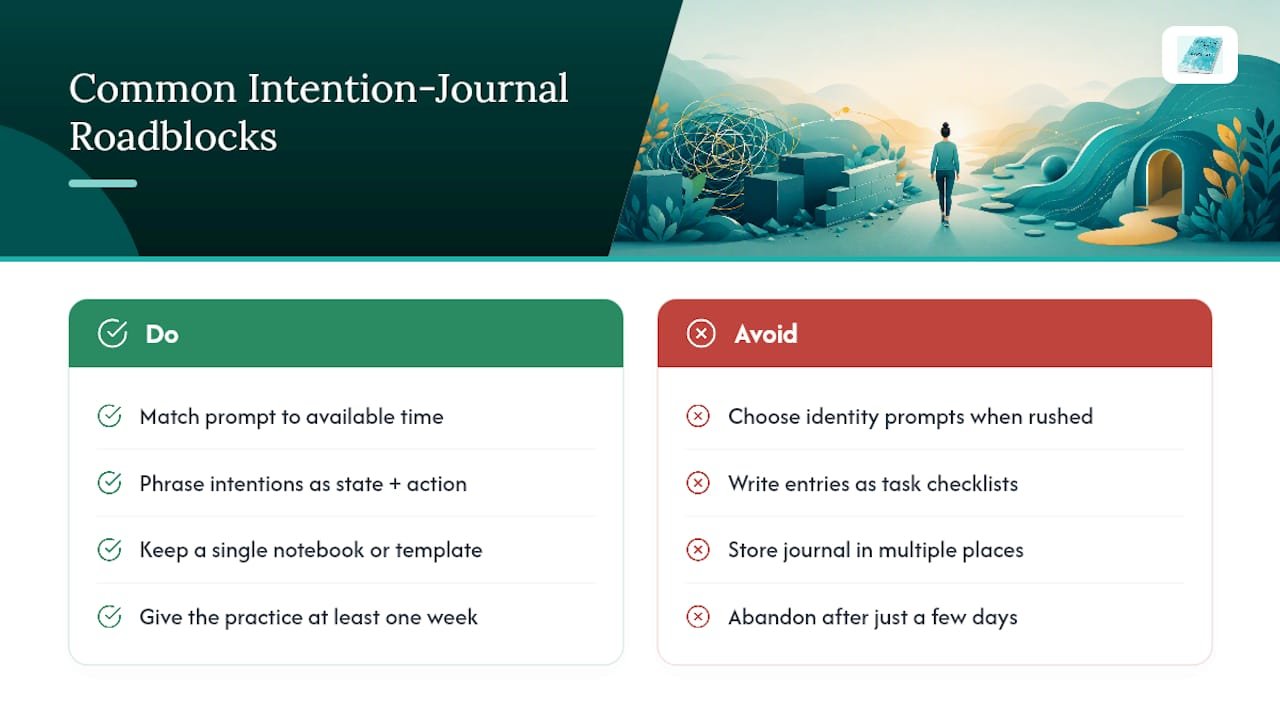
The most common failure point isn’t lack of motivation. It’s picking a prompt that’s too big for the time you have. Someone sits down for five minutes, hits a prompt like “What is my life’s purpose?”, and closes the journal without writing anything because the question feels too heavy for a Tuesday morning.
The fix is matching prompt weight to time available. Save the identity-level questions for a slower Sunday session and keep weekday mornings to something answerable in two sentences.
A second common pitfall: treating the journal as a to-do list in disguise. Intentions phrased as tasks (“finish the report”) don’t carry the same pull as intentions phrased as a state of being paired with an action (“I am focused and finish the report by 2pm”). If your entries read like a checklist, you’ve drifted from intention setting back into task management.
Inconsistency is the third roadblock, and it’s usually a friction problem, not a willpower problem. If your journal lives in a drawer or your template requires opening three apps, you’ll skip it on busy days. Keeping one dedicated notebook or a single saved template file cuts that friction significantly.
Finally, some people abandon the practice after a few days because they don’t see results yet. Structured intention frameworks tend to frame progress in 30- or 90-day windows rather than expecting a shift after one entry. Give the ritual at least a week before judging whether it’s working.
Customizing Prompts to Fit Your Own Goals
Generic prompts get you started, but the ones that stick are the ones you edit to match your actual life. If a prompt asks “What is my intention for today?” and you’re working through a health goal, sharpen it: “What is my intention for how I move my body today?” The more specific the prompt, the more specific the answer, and specific answers are what actually change behavior.
Context matters too. A prompt written for a career transition (“What skill am I building today that supports where I want to be in a year?”) won’t fit someone focused on a relationship or a health habit. Swap the noun, not the structure. Keep the sentence shape that works for you and change what it’s pointing at.
If you’re managing anxiety or a mental health goal alongside intention setting, pairing prompts with evidence-based mental health journaling practices can add a layer of structure that pure manifestation-style prompts don’t cover on their own.
Don’t be afraid to drop a category that doesn’t resonate. If boundary prompts never land for you but obstacle prompts always produce a real insight, weight your rotation toward what’s actually generating honest answers. The goal is a practice you’ll repeat, not a checklist you feel obligated to complete in full every week.
What “Intention” Actually Means in This Context
An intention is a clear, present-focused statement of how you want to show up or what you want to create, distinct from a goal (which points at a future outcome) or a resolution (which is usually a rule about behavior). “I will lose ten pounds” is a goal. “I am eating in a way that respects my body” is an intention. The goal measures an endpoint; the intention shapes the process that gets you there.
That distinction matters for journaling because intentions are written in present tense, as though the state already exists. Positive, present-tense phrasing is a consistent recommendation across printable intention journal guides, and it works because it directs your attention toward alignment right now rather than a deficit you’re trying to close later.
Intentions also tend to be more forgiving than goals. Missing a goal can feel like failure. Drifting from an intention just means you re-read it and recommit, which is part of why the daily and weekly re-statement built into these templates matters more than getting the wording perfect on the first try.
A Short Routine Worth Borrowing
Sean’s own morning rotation is nothing elaborate: three minutes, one intention written in present tense, and one micro-step tied to it before opening email. The one adjustment that made it stick was moving the journal from a drawer to the kitchen counter, next to the coffee maker, so the habit had zero extra steps to trigger it.
Borrow the structure, not the specifics. Your version might live on a nightstand or a desk. What matters is removing the friction between waking up and writing.
— Sean
Take Your Intention Practice Further With a Guided Framework
Free prompts get you moving, but a structured framework goes deeper. Spiritualmethod’s downloadable spiritual awakening guide includes over 50 pages of grounding practices, energy clearing rituals, sacred bathing rituals, and printable intention-setting templates, priced as a one-time $20 download rather than a recurring subscription.
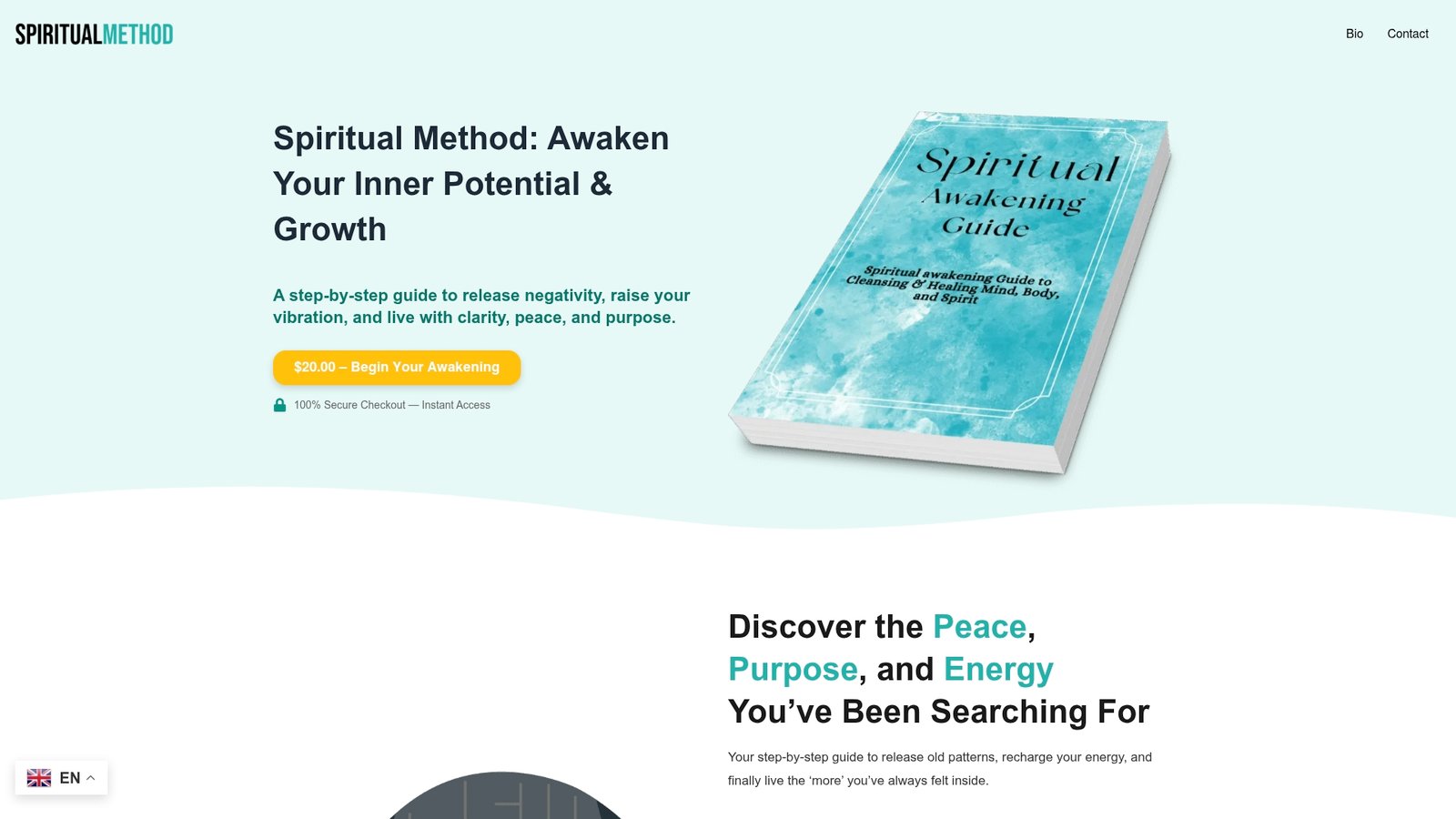
If you’ve been using loose prompts and want them organized into a full program with habit trackers built in, the guide bundles that structure into one PDF instead of leaving you to piece it together from scattered lists. It suits readers who’ve tried the templates above and want a ready-made system blending grounding rituals with journaling rather than building one from separate resources. Visit the downloads page to see what’s included and get instant access after purchase.
Sources
- FREE Intention Journal | How to Set Intensions?
- 30 Journal Prompts for Intention Setting – Journaling Ace
- PDF The Intention Journal: The powerful, research-backed planner
FAQ
What is the 3-3-3 journaling method?
It’s a structured entry format where you write three things you’re grateful for, three things you want to accomplish, and three things you’re focused on for the day, giving your journal a consistent shape without needing a new prompt every time.
What is the 3/2-1 method of journaling?
Definitions vary across sources, but it’s generally used as a reflection format built around three observations, two feelings, and one intention or action for moving forward.
What are some powerful journal prompts for setting intentions?
Strong prompts combine a feeling, an action, and a trigger, such as “What is my intention for today, stated as if it’s already happening?” or “What obstacle am I most likely to run into, and what’s my plan for it?”
How do you journal your intentions?
Write your intention in present tense as though it’s already true, add one micro-step that supports it, and reinforce it daily or weekly when you’re calm rather than rushed, which research-backed planners consistently recommend.
How much does Spiritualmethod’s guide cost?
The downloadable spiritual awakening guide is a one-time $20 purchase available on Spiritualmethod’s downloads page.