
Inner peace is a cultivated state of equanimity — a stable, low-arousal calm you maintain despite life’s difficulties, not because they have disappeared. Psychology Today describes it as a positive emotional state linked to acceptance, presence, and stable self-awareness, which makes it fundamentally different from happiness, which rises and falls with circumstances. You can build it right now: inhale for four counts, hold for two, exhale for six. Notice one physical sensation and one sound without labeling either as good or bad. That 60-second anchor is the seed of the practice.
- Inner peace = equanimity under pressure, not the absence of problems
- Micro-practice: 4-2-6 breath + sensory noticing (60–90 seconds)
- Consistency matters more than session length, according to Johns Hopkins Medicine
- Structured downloadable guides give you the curriculum to build this skill systematically
Pro Tip: Attach the 4-2-6 breath to an existing cue, such as the moment before your first sip of morning coffee, so it becomes automatic within a week rather than something you have to remember.
For a structured, step-by-step program, Spiritualmethod’s 7-step inner peace guide gives you a reproducible framework you can start today.
Table of Contents
- What does inner peace actually mean, and what gets it wrong?
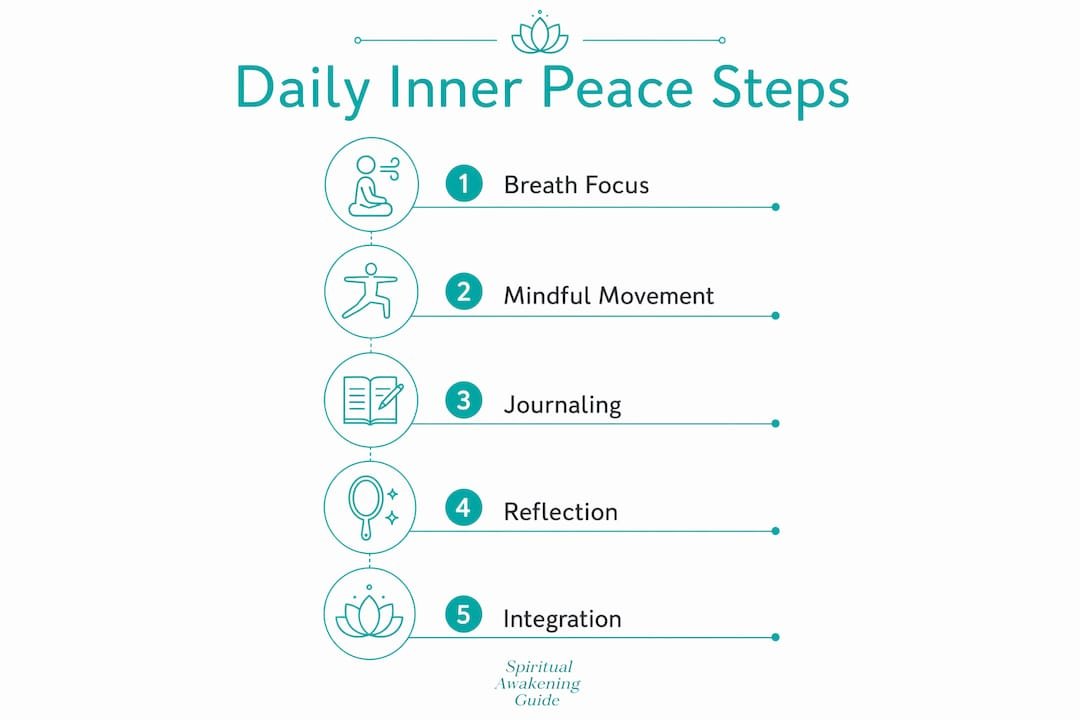
- Core daily practices that reliably build equanimity
- When will you notice results, and what should you expect?
- How do you choose a downloadable guide that actually works?
- What does Spiritualmethod’s downloadable bundle include?
- Key Takeaways
- Why consistency and integration matter more than intensity
- Spiritualmethod’s guides for spiritual seekers
- Useful sources and further reading
What does inner peace actually mean, and what gets it wrong?
Calm defines inner peace as a dynamic state of equanimity maintained through mindful living, not a permanent destination you reach once and keep forever. That distinction matters practically: if you expect a fixed state of bliss, you will abandon any program the first time a difficult emotion surfaces.
Three misconceptions consistently derail beginners:
- It means eliminating problems. Equanimity is the skill of staying grounded while problems exist, not after they are gone.
- It is the same as happiness. Berkeley Wellbeing notes that inner peace is more durable than happiness because it depends on cultivated skills rather than external events.
- It arrives quickly. Calm’s editorial perspective is direct: beginners must sit through early discomfort before the practice becomes stabilizing.
The Stoic tradition offers a useful cognitive frame here. Philosopher Jon Brooks, writing on the Stoic concept of ataraxia, puts it plainly:
“Many of our disturbances are not externally required — they are internally produced by the stories we tell about events. The practice is to pause and ask: is this disturbance actually demanded by reality, or am I generating it myself?”
— Jon Brooks, A Practice for Ataraxia
That pause-and-inquire question is one of the most practical tools available for finding calmness in daily life. When you evaluate a downloadable guide, look for programs that teach this kind of skill-building rather than promising instant transformation.
Core daily practices that reliably build equanimity
Short, consistent anchors embedded in existing routines build durable emotional regulation more reliably than occasional long sessions, according to Johns Hopkins Medicine. The following toolkit is organized by time commitment.
Daily micro-practices (2–5 minutes)
- Breath anchor: 4-2-6 breathing for 60–90 seconds at a fixed daily cue
- Body scan: Starting at the crown of the head, move attention slowly downward for 90 seconds, noticing sensation without judgment (Mayo Clinic recommends this as a foundational exercise)
- Pause-and-inquire: Before reacting to a stressor, ask: “Is this disturbance externally required, or am I generating it?”
- Mindful transition: At each room or task change, take three conscious breaths before beginning the next activity
Foundational practices (10–30 minutes)
Seated mindfulness, journaling with structured prompts, and gentle movement such as yoga or slow walking each address a different layer of the practice. Journaling for soul healing is particularly effective for surfacing the internal narratives that generate unnecessary disturbance.

Weekly ritual (30–60 minutes)
A weekly reflective review, time in nature, and an energy-clearing or sacred bath ritual consolidate the gains from daily practice. These longer sessions are where daily spiritual practices shift from habit to genuine integration.
Sample 5-minute morning routine:
- Sit upright before checking your phone
- Complete one round of 4-2-6 breathing (three cycles)
- Write one sentence: “One thing I am accepting today is ___”
- Set a single intention for the morning
| Practice type | Time | Primary benefit |
|---|---|---|
| Breath anchor | 2 min | Nervous system regulation |
| Body scan | 3–5 min | Body awareness, tension release |
| Journaling prompt | 5–10 min | Narrative clarity, emotional processing |
| Weekly sacred ritual | 30–60 min | Deep integration, energy clearing |
Pro Tip: Embedding tiny mindfulness anchors into mundane tasks, such as mindful dishwashing or a conscious walk to your car, builds the practice with far greater adherence than scheduling a separate meditation block you may skip.
When will you notice results, and what should you expect?
Progress is non-linear, and setting accurate expectations is the single most effective way to prevent early dropout.
Weeks 1–2: Small windows of calmer reactivity, slightly better sleep, and brief moments of mental clarity. These are early signals, not the destination. Many people feel more aware of their stress before they feel less of it, which is a normal part of the process.
Weeks 6–12: Longer periods of equanimity, improved stress management at work and in relationships, and clearer personal boundaries. Structured mindfulness practices show measurable reductions in stress and anxiety symptoms within this window.
Months 3–12: A stable low-arousal baseline begins to feel natural. Integration into relationships and professional life deepens. Spiritual resilience at this stage means the practice holds even during significant life disruptions.
Milestone checklist:
- Week 1: Completed daily micro-practice at least five of seven days
- Week 6: Noticed at least three instances of pausing before reacting
- Week 12: Can identify and name a recurring internal narrative that previously generated disturbance
How do you choose a downloadable guide that actually works?
The market for spiritual and mindfulness guides is large, and quality varies considerably. Use this checklist before purchasing.
Must-have features:
- Structured curriculum of 50 or more pages, or a clear multi-module layout
- Reproducible practice templates, not just explanatory prose
- Sample pages or a preview so you can assess the format before buying
- A stated timeline with realistic milestones
- A clear refund policy
Questions to ask before buying:
- Who is the author, and what is their background in spiritual healing or clinical mindfulness?
- Does the guide cite psychological or editorial sources, or does it rely solely on assertion?
- Does it include multiple formats, such as PDF, planner templates, or journaling prompts?
- Are there mindfulness activities embedded in the guide, or is it purely theoretical?
Red flags to avoid:
- Promises of permanent bliss or instant transformation
- No practice templates or reproducible exercises
- No author credentials or cited sources
- Aggressive upsell structure with no standalone value in the core product
Match the format to your lifestyle: audio-first learners benefit from guided meditation tracks, while structured thinkers tend to get more from workbook-style PDFs with fill-in prompts. Ritual-oriented seekers often find the most traction with planner-and-journal bundles that include weekly ceremony templates.
What does Spiritualmethod’s downloadable bundle include?
Spiritualmethod, created by Sean, offers a downloadable bundle designed specifically for spiritual seekers who want structured, evidence-informed guidance rather than generic wellness content.
The bundle includes three core guides:
- Inner Child Healing Practices: A Practical 2026 Guide — addresses the root-level emotional patterns that block equanimity
- Journaling for Soul Healing: A Practical Guide — provides structured prompts for narrative clarity and emotional processing
- 7 Steps to Achieve Inner Peace: A Spiritual Awakening Guide — a step-by-step program with grounding exercises, energy-clearing rituals, and intention-setting templates
Each component maps directly to the practices covered in this article. The 50-plus page ebook provides the structured curriculum; the planner templates support daily consistency; the ritual guides anchor the weekly integration practice.
| Module | Format | Core practice |
|---|---|---|
| Inner Child Healing | PDF ebook | Emotional root-work, self-compassion exercises |
| Journaling for Soul Healing | PDF with prompts | Narrative processing, reflective journaling |
| 7 Steps to Inner Peace | PDF program | Grounding, energy clearing, intention-setting |
| Spirituality Planner | Printable templates | Daily habit tracking, milestone review |
| Moon Manifesting Ritual | PDF ritual guide | Weekly sacred ritual, intention amplification |
The bundle is delivered instantly as a digital download upon purchase. Readers can begin the inner child healing program immediately after checkout.
Key Takeaways
Consistent, structured daily practice is the most reliable path to lasting inner peace, and a well-designed downloadable guide gives you the curriculum, templates, and milestones to make that consistency achievable.
| Point | Details |
|---|---|
| Inner peace is a skill | It is cultivated equanimity, not the absence of problems or a permanent state of bliss. |
| Consistency beats intensity | Short daily anchors embedded in existing routines build more durable results than occasional long sessions. |
| Milestones guide progress | Expect early signs in weeks 1–2, meaningful shifts by weeks 6–12, and stable integration by months 3–12. |
| Evaluate guides carefully | Look for 50-plus pages, reproducible templates, author credentials, and a clear refund policy before purchasing. |
| Spiritualmethod’s bundle | Sean’s three-guide downloadable bundle provides structured curriculum, planner templates, and weekly ritual guides for immediate use. |
Why consistency and integration matter more than intensity
Most people who pursue inner peace stall not because the practices are ineffective, but because they treat the work as an event rather than a skill. A weekend retreat or a single journaling session can open a door, but it cannot build the neural pathways that make equanimity a default response. That requires repetition at low intensity, woven into ordinary days.
What the research actually shows is that short, embedded practices, the kind Johns Hopkins Medicine describes as integrating mindfulness into existing habits, produce more durable emotional regulation than sporadic deep dives. The Stoic pause-and-inquire technique is a perfect example: it takes five seconds, requires no equipment, and when practiced reliably, it interrupts the self-generated disturbance cycle that accounts for a significant portion of daily agitation.
The other underappreciated point is that early discomfort is not a sign of failure. Sitting with silence, noticing restlessness, feeling the gap between where you are and where you want to be — these are the practice, not obstacles to it. A guide that prepares you for that phase, rather than promising to skip it, is the one worth buying.
Spiritualmethod’s guides for spiritual seekers
Spiritualmethod offers spiritual seekers a direct path from intention to practice: a downloadable bundle that replaces scattered free content with a structured, self-guided program you can work through at your own pace.
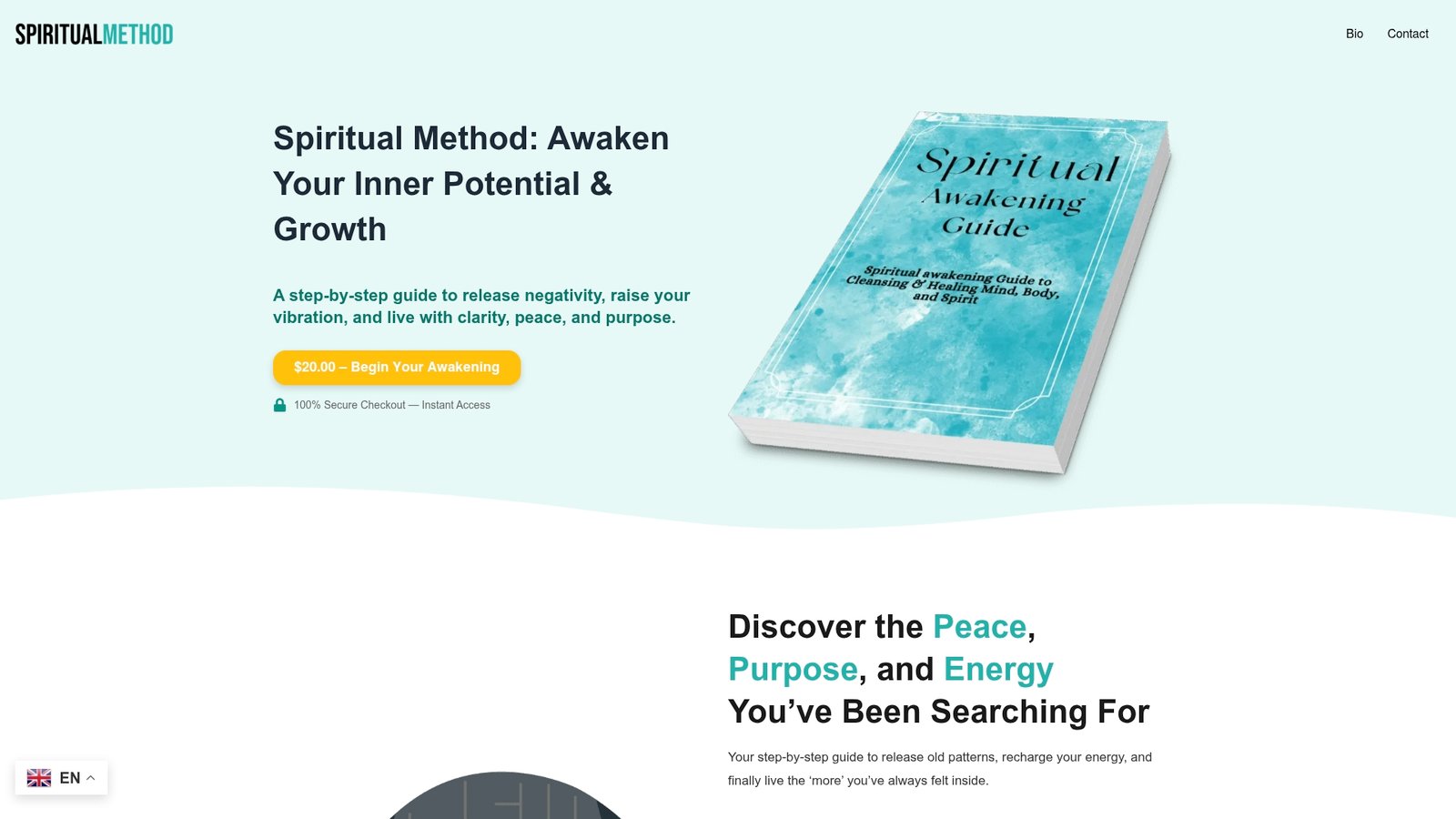
The bundle’s three-guide format, covering inner child healing, soul-focused journaling, and a seven-step inner peace program, gives you everything needed to move from daily micro-practices to weekly ritual integration without requiring a coach, a subscription, or a retreat. Sean designed each guide around the principle that real progress comes from reproducible structure, not inspiration alone. The planner templates and ritual guides are formatted for immediate use, so you can begin the same day you purchase.
Readers ready to start can access the full self-help guide for spiritual seekers or go directly to the inner child healing program to begin today.
Useful sources and further reading
The following sources were used to support the claims and practices in this article.
- Johns Hopkins Medicine — Mindfulness Meditation: Clinical evidence for mindfulness reducing stress, anxiety, and sleep disturbance; supports the consistency-over-intensity argument.
- Calm — What Is Inner Peace?: Editorial definition of inner peace as dynamic equanimity; source for misconceptions and beginner expectations.
- Psychology Today — How to Find Inner Peace: Research summary linking inner peace to acceptance, social connection, and spirituality.
- Berkeley Wellbeing — Inner Peace: Psychological commentary distinguishing inner peace from happiness as a more durable, skill-based state.
- Jon Brooks — A Practice for Ataraxia (Stoicism Substack): Stoic pause-and-inquire technique for separating externally required disturbances from self-generated ones.
- Mayo Clinic — Mindfulness Exercises: Practical guidance on body scans, breath focus, and daily mindfulness integration.
- Mind — Mindfulness Exercises and Tips: Accessible guidance on noticing mind-wandering and returning to the present.
For readers ready to purchase a structured program, Spiritualmethod’s complete inner peace guide and the 7 Steps to Achieve Inner Peace program are the recommended starting points. For deeper philosophical study, Epicurean ethics on ataraxia and the clinical mindfulness literature from researchers such as Amishi Jha offer rigorous further reading.
This article provides general educational information on mindfulness and spiritual practices. It is not a substitute for professional mental health advice. Readers dealing with clinical anxiety, depression, or trauma should consult a qualified mental health professional for guidance specific to their situation.