
A daily home routine of 10 to 20 minutes supports nervous system regulation and a genuine sense of balance, and you can start with a reset that takes only one to two minutes. Try this right now: three slow breaths, both feet flat on the floor, then a hand resting over your heart for thirty seconds. That is a complete micro session.
Energy healing complements medical care. It does not replace it. If you feel dizzy, panicked, or experience severe pain during any exercise below, stop and check in with a healthcare provider.
- Sit or stand comfortably.
- Breathe in for four counts, out for six.
- Place one or both hands over your heart and notice warmth or pressure.
Pro Tip: Keep a glass of water nearby. Rehydrating after a session is a small ritual that signals to your body the practice is complete.
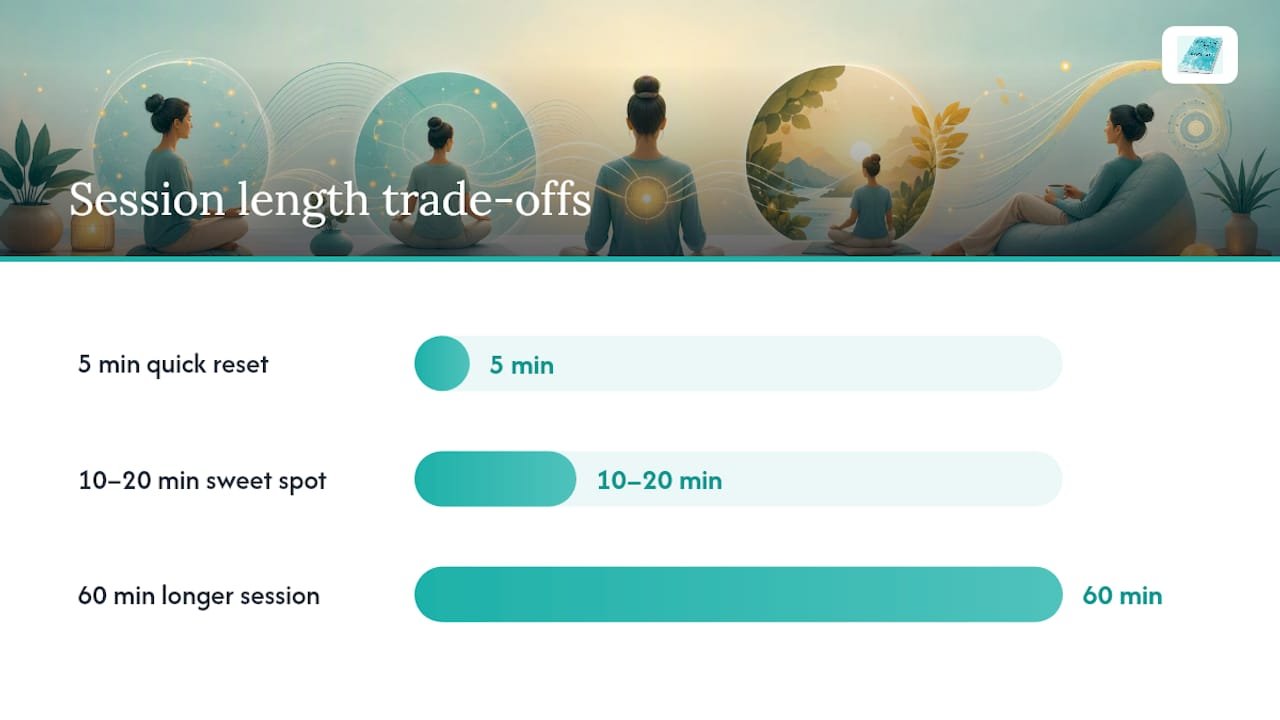
Beginner sessions commonly run 5 to 60 minutes, with 10 to 20 minutes cited as the sweet spot for daily stress reduction.
Key Takeaways
A short, consistent daily routine of 10 to 20 minutes builds more lasting benefit than infrequent long sessions, and grounding is the one practice with measurable physiological backing.
| Point | Details |
|---|---|
| Start small | A one to two minute breath and hand-over-heart reset is enough to begin today. |
| Stick to 10 to 20 minutes | Daily short sessions build sensitivity better than occasional hour-long ones. |
| Ground for real results | Barefoot contact with the ground for 5 to 10 minutes shows measurable effects on cortisol and HRV. |
| Know your limits | Stop and see a doctor for worsening pain, severe breathing trouble, or new neurological symptoms. |
| Use structured support | Spiritualmethod’s Inner Child Healing Practices ebook and Grounding Exercises guide turn these routines into printable daily plans. |
Table of Contents
- What Does Energy Healing at Home Actually Involve?
- How Do You Set Up a Space for Home Practice?
- What Does a 10 to 20 Minute Daily Routine Look Like?
- How Do You Practice a Body-Scan Meditation for Energy Awareness?
- What Breathing Pattern Calms Your Nervous System Fastest?
- How Do You Perform Self-Reiki at Home?
- What Are the EFT Tapping Points and a Sample Script?
- Can Sound, Crystals, and Grounding Work Without Expensive Tools?
- When Should You See a Doctor Instead of Practicing Alone?
- Ready-Made Guides That Support Your Daily Practice
- Sources
What Does Energy Healing at Home Actually Involve?
Energy healing is a group of practices built around the idea that attention, breath, and gentle touch can shift how your body feels and responds to stress. For a beginner, it looks less like ceremony and more like a short, repeatable habit that produces relaxation and a downshift in nervous system arousal. You are not trying to master a philosophy on day one. You are trying to notice whether ten quiet minutes change how tense your shoulders feel.
Several modalities fall under this umbrella, and most beginners eventually sample more than one:
- Reiki, a hands-on or hands-near practice using set placements over the body.
- Qigong and Tai Chi, slow movement paired with breath.
- Pranic healing, a no-touch method focused on the body’s energy field.
- EFT (tapping), combining acupressure points with spoken statements.
- Therapeutic or Healing Touch, often used in clinical and nursing settings.
- Sound work and grounding/earthing, using vibration or direct contact with the ground.
Evidence for these approaches is limited but not absent. Cleveland Clinic describes energy therapies as noninvasive and generally low risk, with some support for improved sleep and reduced stress when used alongside standard care, not instead of it.
How Do You Set Up a Space for Home Practice?
You don’t need a dedicated room. You need repeatability. Pick one corner, one cushion, one time of day, and use it consistently so your body learns to associate that spot with settling down.
Before you begin, run through this short checklist:
- A quiet spot where you won’t be interrupted for the session length.
- A timer set in advance, so you’re not checking the clock.
- A comfortable seat or cushion and loose, non-restrictive clothing.
- Water within reach and your phone on Do Not Disturb.
Setting an intention doesn’t require elaborate language. One sentence is enough: “I want to feel calmer” or “I’m releasing tension in my chest.” Simple, specific intentions outperform vague ones because your attention has something concrete to return to when your mind wanders.
Pro Tip: Attach your practice to something you already do, like right after brushing your teeth or right before your morning coffee cools. Habit stacking removes the decision fatigue of “when should I do this?”
If mornings feel rushed, evenings work just as well. There’s no universally correct time, only the one you’ll actually keep.
What Does a 10 to 20 Minute Daily Routine Look Like?
Consistency beats intensity here. A short daily practice does more for sensitivity and stress regulation than an occasional hour-long session, according to a step-by-step guide on home energy healing. Here’s a sequence you can follow almost exactly:
- Centering and grounding (2 minutes). Sit, feel your feet or seat against the floor, and take five slow breaths.
- Breath or body scan (5 to 8 minutes). Choose either box breathing or a slow scan from head to feet, noticing sensation without judging it.
- Hands-on or hands-near work (5 to 8 minutes). Move through self-Reiki placements or simply rest your palms wherever tension feels strongest.
- Closing and journaling (1 to 2 minutes). Bring your hands to your heart, take one deep breath, and jot down one sentence about how you feel.
Short on time? A 5-minute version keeps steps one and four and compresses the middle into a single breath cycle. Have more room in your schedule? Extend step three to 20 or 30 minutes for a 30 to 60 minute session.
Pro Tip: Set a recurring daily reminder for the first two weeks. After that, the habit tends to hold on its own.
How Do You Practice a Body-Scan Meditation for Energy Awareness?
A body scan is the easiest entry point because it asks nothing of you except attention.
- Sit upright or lie down, close your eyes, and take three slow breaths.
- Starting at the crown of your head, slowly move your attention downward, pausing a few seconds at each region: forehead, jaw, shoulders, chest, belly, hips, legs, feet.
- As you scan, picture warm light gathering wherever you notice tightness, then imagine it draining down through your feet into the floor.
- Finish at your feet, take one more breath, and open your eyes.
Five to ten minutes is plenty. Tingling, warmth, heaviness, or subtle pulsing are all common sensations. None of them mean anything is wrong.
What Breathing Pattern Calms Your Nervous System Fastest?
Box breathing is the fastest reset most beginners learn. The pattern: inhale for 4 counts, hold for 4, exhale for 4, hold for 4. Repeat for one to five minutes for a quick shift, or up to ten to fifteen minutes for deeper work.
If box breathing feels effortful, try an exhale-weighted pattern instead: inhale for 4, exhale for 6. Longer exhales activate the body’s relaxation response more directly than equal-count breathing.
- Start with one minute if you’re new to breathwork.
- Never force the hold phases to the point of strain.
- Stop immediately if you feel lightheaded or your fingers start tingling.
Pro Tip: Practice box breathing seated, not lying down, until you know how your body responds. Hyperventilation-related dizziness is rare but real, and some heart or respiratory conditions warrant a conversation with your doctor first.
How Do You Perform Self-Reiki at Home?
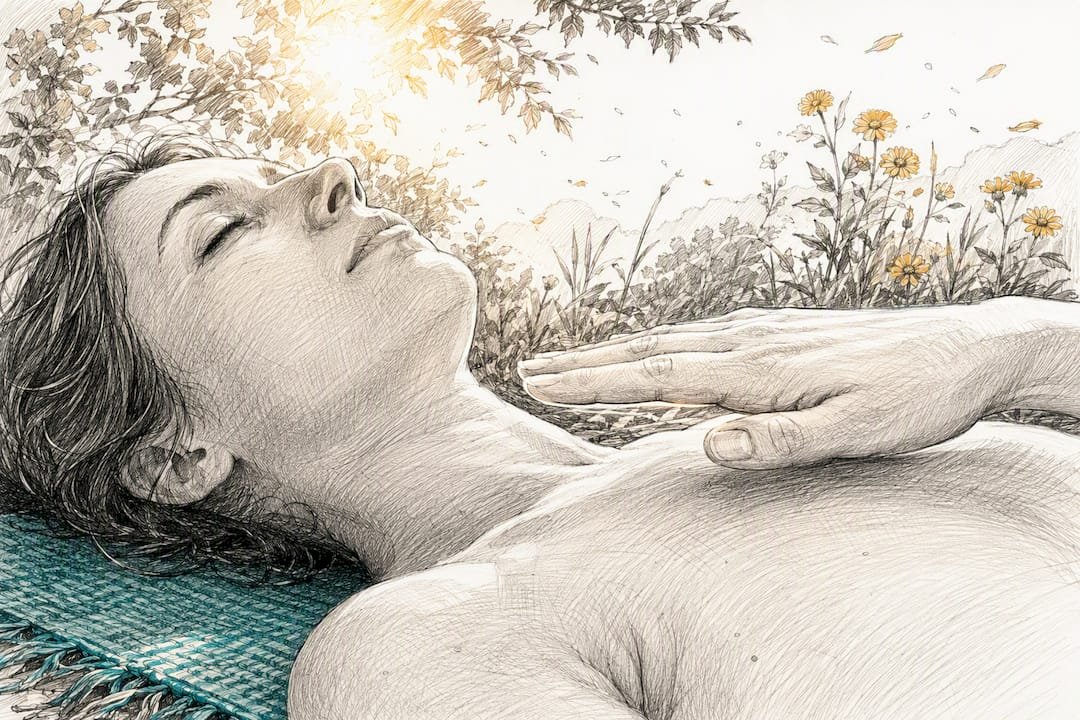
Self-Reiki uses a sequence of hand placements, each held for roughly two to five minutes, based on beginner self-Reiki guidance.
- Center and ground with three breaths, feet flat on the floor.
- Head and forehead, hands resting lightly, palms cupped.
- Throat, one hand or both, whichever feels natural.
- Heart center, both palms crossed or stacked.
- Solar plexus and abdomen, palms flat.
- Base of spine, hands behind you or simply intending energy there.
- Close with hands back over your heart, a moment of gratitude, and a glass of water.
A full sequence typically runs 10 to 20 minutes. For a modality overview beyond Reiki, our beginner’s guide to energy healing modalities walks through the differences in more depth.
Pro Tip: If a placement feels awkward physically, hold your hand an inch or two above the body instead of directly on it. The technique still works hands-near.
What Are the EFT Tapping Points and a Sample Script?
EFT, often called tapping, combines acupressure points with a spoken phrase. The standard points run: karate chop (side of the hand), eyebrow, side of eye, under eye, under nose, chin, collarbone, under arm, and top of head.
A short script for stress: while tapping the karate chop point, say, “Even though I feel stressed, I deeply accept myself.” Then tap through the remaining points repeating a shorter version, “this stress,” at each one.
- Run 2 to 3 rounds, about 60 to 90 seconds each.
- Use it mid-routine when tension spikes, or as a standalone reset during a stressful moment.
Pro Tip: Say the phrase out loud, even quietly. Vocalizing the statement seems to anchor the intention more firmly than thinking it silently.
Can Sound, Crystals, and Grounding Work Without Expensive Tools?
You don’t need a $200 singing bowl to use sound. Humming for sixty seconds, a free singing-bowl app, or simple rhythmic drumming on your knees all produce the same low-cost effect: vibration that interrupts racing thoughts.
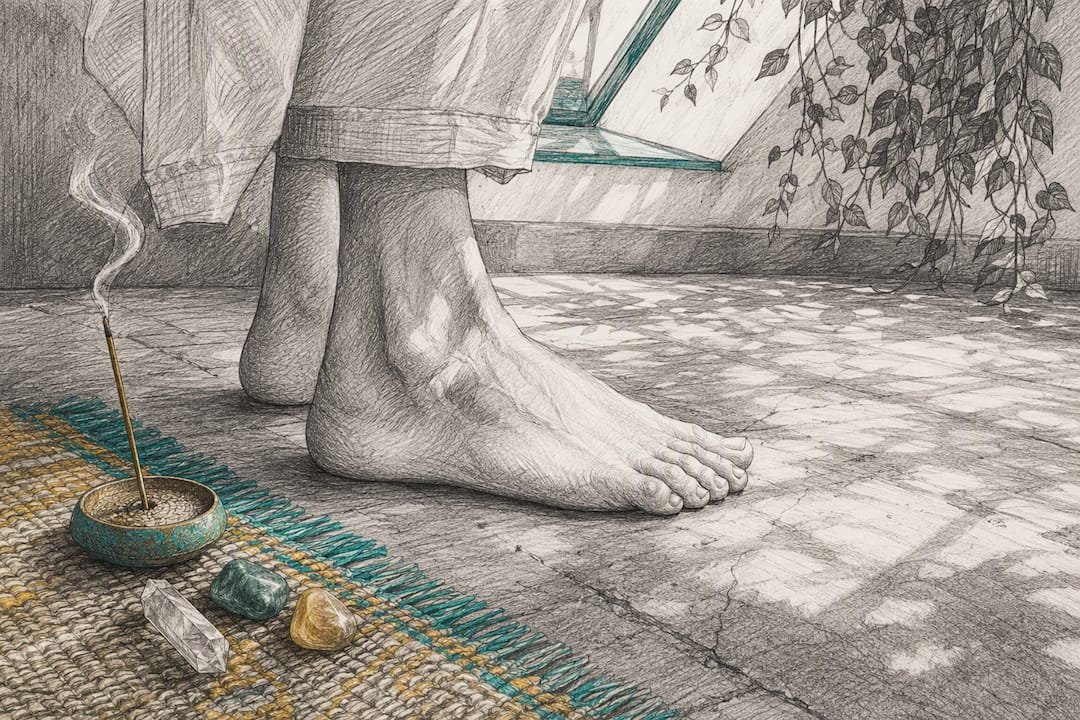
Crystals work as a focus object more than a technical requirement. Cleanse common stones under running water or moonlight overnight, and keep them somewhere visible, like a nightstand, so recharging becomes part of an existing habit rather than a separate chore. Our crystal healing starter guide covers specific stones if you want to go deeper.
Grounding, meanwhile, has the strongest physiological backing of the bunch. Standing barefoot on grass, soil, or sand for 5 to 10 minutes has been linked to measurable shifts in inflammatory markers and heart-rate variability. No yard? Sit with both feet flat on a hard floor and visualize roots extending downward. Our grounding exercises guide breaks down indoor and outdoor versions in more detail.
Pro Tip: If you catch yourself troubleshooting a “blocked” session, don’t force it. Switch to a different exercise entirely. Sometimes the block is fatigue, not energy.
When Should You See a Doctor Instead of Practicing Alone?
Energy work is not a substitute for medical or psychiatric treatment. Use it alongside your regular care, not in place of it, and talk with your primary care provider about any persistent symptoms.
Certain signs mean it’s time to stop the home routine and seek professional care instead:
- Worsening or unexplained pain.
- Any thoughts of suicide or self-harm.
- New neurological symptoms, like numbness, confusion, or vision changes.
- Severe breathing difficulty during any breathwork exercise.
For everyday tracking, keep it simple: a one-line journal entry after each session noting mood, energy level, and any physical sensation. Ten to twenty minutes daily, tracked loosely over a few weeks, tells you more than a single long session ever will.
Pro Tip: Rate your calm on a 1 to 10 scale before and after each session. The pattern over two weeks matters more than any single day’s number.
What Does the Research Actually Show?
Grounding practiced for just 5 to 10 minutes daily has been linked to measurable changes in cortisol, heart-rate variability, and inflammatory markers in published research.
That’s a rare case of an energy-adjacent practice with real physiological data behind it. Most other modalities rest on thinner evidence, though typical session-length guidance puts effective daily practice at 10 to 20 minutes. Low risk and modest, plausible benefit make these practices worth trying even where the science is still catching up.
Why Small, Consistent Practice Beats Occasional Big Efforts
Simple, daily energy work matters because the body responds to repetition, not intensity. A five-minute breathing reset done every day for a month will likely change how you feel more than one ambitious ninety-minute session done once and forgotten.
Track small shifts. Sleep, mood, tension. Be patient. Sensitivity to this kind of practice tends to build gradually, not overnight.
Ready-Made Guides That Support Your Daily Practice
Building a routine from scratch works, but a structured plan removes the guesswork of what to do on day twelve when motivation dips. Spiritualmethod’s Grounding Exercises for Healing guide turns the earthing practice covered above into a printable, step-by-step routine you can follow without rebuilding it from memory each morning.

The Inner Child Healing Practices ebook runs over 50 pages and expands the routines in this article into structured daily plans, printable hand-placement charts for self-Reiki, and journaling templates for tracking your sessions over weeks instead of days. Where this article gives you the starting sequence, the guide gives you the full month. If tracking your progress is the part you know you’ll skip without a system, the journaling templates alone are worth the download. Get the guide and start your next session with a plan instead of a blank page.
Sources
- Earthing: Health Implications of Reconnecting the Human Body to the Earth’s Surface Electrons
- What can I expect? Typical session | Taking Charge of Your Health & Wellbeing
- Energy Healing (Energy Medicine): Definition, Types & Benefits | Cleveland Clinic
- A Step-by-Step Guide on How to Do Energy Healing at Home | Hannah Brites