
The most effective empath protection routine combines three repeatable steps: a 60-second morning shield, a midday grounding reset, and a nightly clearing practice. Together, these empath protection rituals work because they address three distinct phases of your energy cycle: prevention, stabilization, and release. You do not need elaborate tools or hours of solitude to make them work.
Your one-minute protection script (speak silently or aloud anywhere):
“I am grounded in my own body. I allow only what serves my highest good. I release what is not mine to carry.”
Three elements make this script effective:
- Intention — stating clearly what you are doing activates focused attention.
- Breath — take one slow inhale before and after the script to anchor it physically.
- Boundary — the phrase “not mine to carry” creates a cognitive distinction between your emotions and absorbed ones.
When to use it: Before entering a crowded space, during a difficult phone call, or immediately after an draining interaction.
Pro Tip: Avoid fear-based framing in your scripts. Phrases like “block all negativity” or “protect me from evil” activate a threat response that keeps your nervous system on alert. Neutral, affirming language (“I allow only what serves me”) produces a calmer, more sustainable result.
A small, repeatable routine of morning shielding, midday grounding, and nightly clearing can take 15–20 minutes per day once established and build lasting resilience over time.
Key Takeaways
The most effective empath protection practice combines three daily rituals — morning shielding, midday grounding, and nightly clearing — supported by consistent boundary habits and the understanding that protecting your energy is a form of responsible self-care, not withdrawal.
| Point | Details |
|---|---|
| Three-phase daily routine | Morning shield, midday grounding reset, and nightly clearing take 15–20 minutes once established. |
| Shielding filters, not blocks | Visualizations like the golden-egg and white-light shield allow connection while preventing emotional absorption. |
| Crystals as anchors | Black tourmaline, obsidian, labradorite, and fluorite support protection as intentional reminders, not standalone fixes. |
| Seek clinical support when needed | Persistent fatigue, panic, or crisis symptoms require a licensed therapist or crisis line (988), not stronger rituals. |
| Spiritualmethod structured guides | Downloadable daily templates, printable scripts, and crystal-care checklists support consistent practice week by week. |
Table of Contents
- What are the best empath protection rituals for public spaces?
- How does grounding stop you from absorbing other people’s emotions?
- Which shielding visualizations protect without shutting down your empathy?
- How to clear your energy after an intense interaction
- Which crystals and charms actually support energy protection for empaths?
- Simple protection spells, mantras, and chants you can adapt
- How to build a daily empath routine that prevents energy drain
- When rituals are not enough: recognizing the signs
- Why grounding, shielding, and clearing actually reduce empath overload
- What most empath guides get wrong about protection
- A structured guide for empaths who want a repeatable system
- Sources
What are the best empath protection rituals for public spaces?
Not every protective practice requires candles, crystals, or privacy. Some of the most effective energy protection for empaths fits inside a 10-second window between floors on an elevator.
Quick rituals ranked by time and setting
The breath anchor (10 seconds): Inhale for four counts, hold for two, exhale for six. This activates the parasympathetic nervous system and pulls your attention back into your own body. Use it the moment you feel someone else’s anxiety beginning to register in your chest.
The light-wrap (30 seconds): Close your eyes briefly or soften your gaze. Visualize a warm, golden light starting at your feet and rising slowly to the top of your head, wrapping around you like a second skin. Silently say: “This light is mine. I move through this space whole.”
The mirror mantra (15 seconds): Useful on a crowded subway or at a party. Subvocalize: “What is yours returns to you. What is mine stays with me.” Pair it with pressing your feet firmly into the floor.
The cord-tap (20 seconds): Lightly tap the center of your sternum three times. This physical gesture interrupts the absorption cycle and signals your body that you are present and separate from the emotional field around you.
The one-line spell (adaptable): “I walk in my own light.” Whispered, silent, or written on your wrist in the morning. Simple spells work because they compress intention into a repeatable form your mind recognizes quickly.
A few practical notes on smudging and incense in public or shared spaces:
- White sage smudge bundles are effective for home clearing but are not appropriate in offices, apartments with shared ventilation, or spaces where others have respiratory sensitivities.
- Use a room spray made with distilled water and a few drops of frankincense or cedar essential oil as a smoke-free alternative.
- Palo santo, cedar, and lavender are culturally distinct plant medicines. Use them with awareness of their origins and avoid treating them as interchangeable commodities. If you are not from a tradition that uses white sage ceremonially, cedar or rosemary are accessible, respectful alternatives.
- Practical boundary-setting and mindfulness are consistently recommended alongside physical tools, not instead of them.
How does grounding stop you from absorbing other people’s emotions?
Grounding returns your attention to your own physical body, which is the most direct way to interrupt the absorption cycle. When you are ungrounded, your awareness diffuses outward, making you more susceptible to registering and internalizing the emotional states of people around you. Grounding anchors you, shielding filters incoming energy, and clearing releases what never belonged to you — these are three distinct and complementary skills.
Concrete grounding exercises you can use daily:
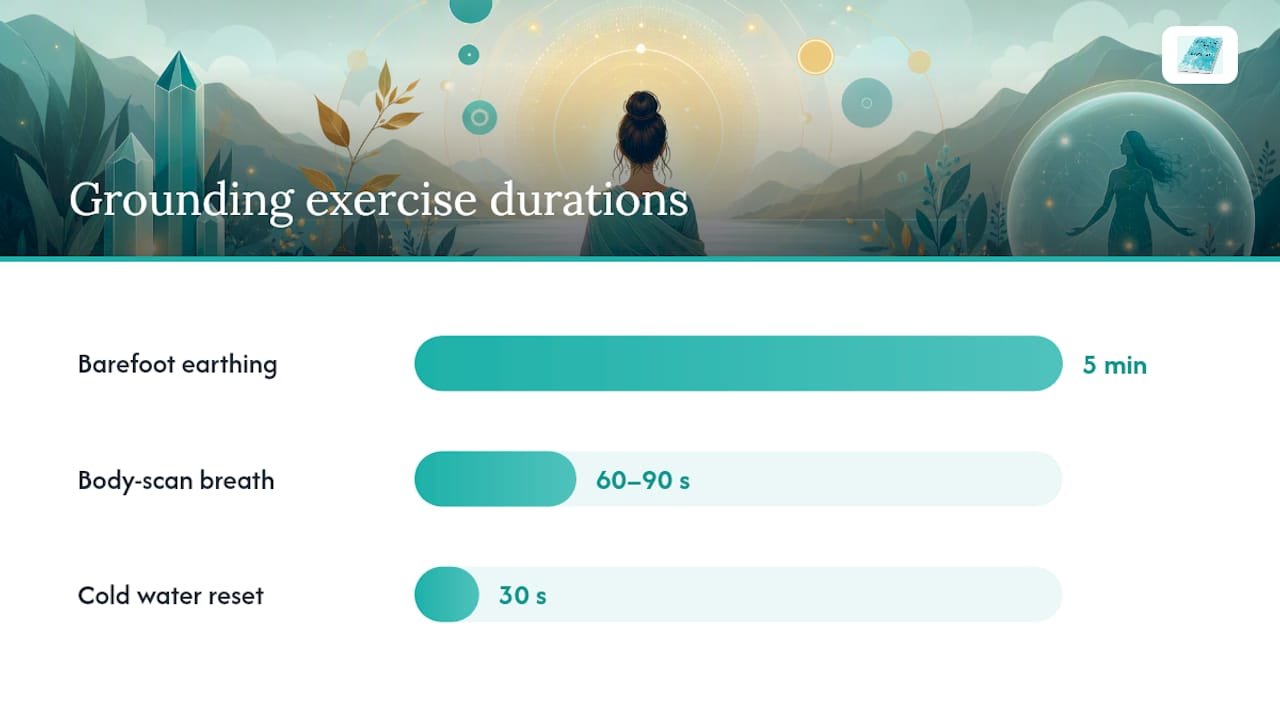
- Barefoot earthing: Stand on grass, soil, or sand for five minutes. Direct contact with the ground has a measurable calming effect on the body’s stress response.
- Tree-root visualization: Sitting or standing, imagine roots extending from the soles of your feet deep into the earth. With each exhale, send excess energy down through those roots. With each inhale, draw up stable, neutral earth energy.
- Body-scan breath: Starting at the crown of your head, slowly move your awareness down through your body to your feet. Notice sensation without judgment. This takes 60–90 seconds and reorients your attention inward.
- The 3-senses check: Name three things you can feel physically (your chair, your feet on the floor, the temperature of the air). This interrupts emotional absorption by anchoring sensory attention.
- Cold water reset: Run cold water over your wrists and hands for 30 seconds. The temperature shift activates the body’s orienting response and pulls awareness back into the present moment.
- Slow walking: Take ten deliberate steps, feeling each footfall. This is particularly useful between meetings or after a difficult conversation.
- Breath counting: Count each exhale from one to ten, then restart. When your mind wanders to someone else’s emotional state, the count resets — which itself becomes a grounding cue.
For a structured library of grounding exercises for healing, Spiritualmethod offers step-by-step guidance organized by situation and intensity.
Pro Tip: Time your grounding practice deliberately. Two minutes before a known trigger (a difficult meeting, a family call, a crowded commute) is more effective than grounding afterward when you are already depleted. Think of it as putting on a seatbelt before the car moves.
For workplace settings where you cannot close your eyes or remove your shoes, the body-scan breath and 3-senses check are both invisible and take under two minutes.
Which shielding visualizations protect without shutting down your empathy?
Shielding filters incoming energy; it does not seal you off from connection. The practical difference matters: a well-constructed shield allows you to remain present, warm, and perceptive while preventing other people’s emotional states from registering in your body as your own. Shielding visualizations and brief meditations can stop emotional overload in the moment, and specialist-guided versions are a recognized technique in clinical-adjacent empath work.
Three full visualization scripts
1. The white-light shield
- Close your eyes or soften your gaze.
- Imagine a sphere of bright white light forming at the center of your chest.
- With each inhale, let it expand outward until it surrounds your entire body, about an arm’s length in every direction.
- Set the intention: “This light allows love in and reflects harm away.”
- Open your eyes. The shield remains active until you consciously release it.
2. The golden-egg shield
- Visualize a golden, translucent egg encasing your body from head to foot.
- The shell is permeable to warmth, joy, and genuine connection.
- It is impermeable to anxiety, anger, and energetic intrusion.
- Silently affirm: “I am whole within this light. I choose what enters.”
3. The mirror-reflective shield
- Imagine a smooth, silver mirror surface surrounding you, facing outward.
- Any energy directed at you reflects back to its source — not as an attack, but as a neutral return.
- This shield is best used in situations involving deliberate emotional pressure or manipulation.
- Affirm: “What is not mine returns with ease.”
For a guided audio version, record yourself reading one of these scripts at a slow, steady pace and save it as a three-minute track on your phone. Apps like Voice Memos (iOS) or Google Recorder (Android) work well for this.
| Scenario | Best shield type | Why it fits |
|---|---|---|
| Quick (under 5 minutes) | White-light sphere | Fast to build, easy to recall under stress |
| Sustained (several hours) | Golden-egg | Stable, permeable to positive connection |
| High-conflict or manipulative setting | Mirror-reflective | Returns pressure without absorbing it |
How to clear your energy after an intense interaction
Clearing releases energy that does not belong to you. It is the completion step that grounding and shielding cannot fully replace, because those practices prevent absorption while clearing removes what has already accumulated. A practical guide to releasing negative energy covers cord-cutting and cleansing alternatives in detail.
Step-by-step clearing rituals
Smudging alternatives (smoke-free):
- Fill a small spray bottle with distilled water, a pinch of sea salt, and five drops of frankincense or cedar essential oil.
- Mist the air around your body from head to foot, moving in a slow arc.
- Speak or think: “I release all energy that is not mine. My field is clear.”
- Open a window for two minutes to allow the space to breathe.
Epsom salt bath (nightly or after intense interactions):
- Add one to two cups of Epsom salt to a warm bath.
- Soak for 15–20 minutes. Epsom salt (magnesium sulfate) draws tension from the muscles and supports physical relaxation alongside the ritual intention.
- As the water drains, visualize the accumulated energy draining with it.
- Follow with a brief cold rinse to close the energetic field.
Cord-cutting visualization:
- Sit quietly and bring to mind the person or situation you want to release.
- Visualize a cord of light connecting your solar plexus to theirs.
- Using your dominant hand, make a slow cutting motion across the cord while exhaling fully.
- Affirm: “I release this connection with compassion. I reclaim my energy.”
- Visualize your end of the cord retracting and sealing with golden light.
Cultural respect and safety notes:
- White sage is a sacred plant in many Indigenous North American traditions. If you are not from those traditions, cedar, rosemary, or lavender are respectful alternatives with their own long histories of use.
- Always ventilate the space when burning any plant material. Check your building’s fire code and lease terms before burning anything indoors.
- If you or anyone in your household has asthma or respiratory sensitivities, use spray alternatives exclusively.
Pro Tip: Schedule a deeper weekly cleanse, not just nightly micro-clears. Sunday evenings work well: a full Epsom salt bath, a cord-cutting visualization, and five minutes of sound clearing (a singing bowl or a simple hand clap through each room) resets your field before the week begins.
For weekly upkeep, Epsom salt baths suit accumulated emotional residue well, while smudging alternatives are better for clearing a physical space after conflict or illness.

Which crystals and charms actually support energy protection for empaths?
Crystals and charms function as energetic reminders and psychological anchors, not as standalone solutions. Carrying a stone that you have intentionally charged focuses your attention on protection each time you touch or see it, reinforcing the internal skill you are building. Black tourmaline and labradorite are among the most widely recommended stones for empaths precisely because they serve this anchoring function effectively.
- Black tourmaline: Grounding and protective. Carry it in your left pocket (the receiving side of the body) or place it near your front door. Best for environments with high stress or conflict.
- Obsidian: Deeply grounding and truth-revealing. Use it during cord-cutting rituals or journaling sessions. Handle with care — its energy can surface buried emotions, so it is better suited to private practice than all-day wear for sensitive individuals.
- Labradorite: Protective and boundary-reinforcing without being heavy. Its iridescent surface is a useful visual reminder of your own energetic field. Wear it as a pendant or keep it on your desk.
- Fluorite: Clarifying and stabilizing. Particularly useful when mental fog or emotional confusion follows an absorbing interaction. Green fluorite supports heart-centered boundaries; purple fluorite supports mental clarity.
For a broader guide to crystals for healing and protection, Spiritualmethod offers practical usage guidance organized by intention and situation.
Charging and cleansing your stones
Place crystals in indirect moonlight overnight (the full moon is traditional but any clear night works). Avoid prolonged direct sunlight for labradorite and fluorite, as it can fade their color. Do not submerge obsidian or labradorite in salt water — it damages their surface. Instead, use a dry salt bed: fill a small bowl with sea salt and rest the stone on top for four to eight hours.
DIY three-ingredient charm ritual
- Choose a small stone (black tourmaline works well), a short length of black or white cord, and a drop of protective essential oil (frankincense, cedar, or clove).
- Hold the stone in both hands, close your eyes, and state your intention clearly: “I charge this stone to anchor my protection and remind me of my own boundaries.”
- Anoint the stone with one drop of oil, then tie the cord loosely around it or carry both together in a small pouch.
- Recharge monthly or whenever the stone feels energetically dull.
Pro Tip: For workplace use, a small tumbled stone in your pocket is entirely discreet. You do not need to display your practice to benefit from it. The physical act of touching the stone during a stressful moment is the reminder that matters.
Simple protection spells, mantras, and chants you can adapt
Short, intention-focused spells and mantras are most effective when combined with breath and a moment of physical centering. The words themselves are less important than the clarity of intention behind them. Speak them aloud in private, subvocalize in public, or write them in a journal as a morning practice.
Six adaptable spell templates
“I am protected, grounded, and whole. Only what serves my highest good may enter my field.” (Full voice, morning ritual)
“My energy is my own. I move through this day in my own light.” (Subvocal, before entering a crowded space)
“I release what is not mine. I return to myself.” (Silent, after an absorbing conversation)
“Roots below, light above, shield around. I am here.” (Three-breath version for acute overwhelm)
“I send this back with love. It is not mine to hold.” (Cord-cutting companion, spoken during the cutting gesture)
“Peace within, peace without. My boundaries are clear and kind.” (Evening clearing, full voice or whispered)
Ethics note: Effective protection spells work on your own energy field, not on other people’s behavior. Never direct a spell toward another person without their consent, and avoid language that attempts to control, bind, or coerce. Translating a spell into a daily affirmation is straightforward: remove any ritual framing and state the core intention as a present-tense declaration. “I release what is not mine” becomes “I release what is not mine” — the affirmation and the spell are often identical.
Pro Tip: Tempo matters. In private, a slow, deliberate pace with pauses between phrases deepens the felt effect. In public, a rapid subvocal repetition (almost like a breath rhythm) keeps the practice invisible while still anchoring your attention. Neither is more valid than the other.
How to build a daily empath routine that prevents energy drain
A sustainable daily practice does more for protecting your energy than any single ritual performed occasionally. The structure is simple: morning shield, midday check-in, evening clear. Protecting your energy is a form of conservation — social engagement and emotional buffering are finite resources, and scaling back when depleted is not selfish.
Sample daily routine
Morning (5–7 minutes):
- Before checking your phone, sit upright and take three slow breaths.
- Run the one-minute protection script from the opening of this article.
- Set one boundary intention for the day: “Today I will leave the group chat on mute” or “I will take a five-minute walk after my 2 PM call.”
- Hold your protection stone briefly if you use one.
Midday (3–5 minutes):
- Step away from your screen and your social environment, even briefly.
- Run the body-scan breath (crown to feet, 60–90 seconds).
- Ask yourself: “What am I feeling right now, and is it mine?” If the answer is uncertain, do the cord-tap (three taps on the sternum) and take two grounding breaths.
Evening (7–10 minutes):
- Epsom salt bath or a brief shower with the intention of releasing the day’s accumulated energy.
- Cord-cutting visualization for any interaction that still feels present.
- Two minutes of journaling: What drained you today? What restored you?
Boundary phrases for real situations:
- “I need to step away for a few minutes.” (Neutral, no explanation required)
- “I’m not available for that right now.” (Work or social)
- “I hear you, and I need some time before I can respond well.” (Family)
Journal prompts to identify energy drains:
- Which interaction today left me feeling smaller or more tired than before it started?
- Where did I say yes when I meant no?
- What would I do differently tomorrow to protect my attention?
Combining ritual with practical self-care compounds the effect. Consistent sleep, regular meals, and deliberate device breaks are not separate from your protection practice — they are part of it. A depleted nervous system absorbs more, not less.
When rituals are not enough: recognizing the signs
Rituals help regulate and maintain your energy field, but they are not a substitute for clinical support when symptoms become persistent or severe. If you are experiencing chronic exhaustion that sleep does not resolve, frequent panic responses, an inability to function in daily life, or thoughts of self-harm, those are signals that require professional attention, not a stronger spell.
Red flags that indicate the need for clinical support:
- Persistent fatigue lasting more than two weeks despite adequate sleep and rest
- Panic attacks or dissociative episodes that occur regularly
- Inability to maintain basic daily functioning (work, relationships, self-care)
- Suicidal thoughts or thoughts of harming yourself or others
- Substance use as a primary coping mechanism for emotional overwhelm
Immediate resources (U.S.):
- 988 Suicide and Crisis Lifeline: Call or text 988 for immediate mental health crisis support.
- Crisis Text Line: Text HOME to 741741.
- SAMHSA National Helpline: 1-800-662-4357 for substance use and mental health referrals.
For ongoing support, a licensed therapist, particularly one trained in trauma-informed care or somatic approaches, can address the root patterns that make emotional absorption so intense. Therapists who work with highly sensitive people (HSPs) or use modalities like EMDR, Internal Family Systems (IFS), or somatic experiencing are often a strong fit for empaths. Ask your primary care provider for a referral, or search the Psychology Today therapist directory filtered by “highly sensitive person” or “trauma.”
Pro Tip: Seeking therapy is not an admission that your spiritual practice has failed. Many practitioners combine ritual work with clinical support and find that each strengthens the other. The goal is resilience, and resilience is built on multiple foundations.
For building emotional resilience alongside your ritual practice, Spiritualmethod’s guides offer structured frameworks that complement professional support.
Why grounding, shielding, and clearing actually reduce empath overload
These practices reduce emotional absorption by stabilizing attention, restoring physiological baseline, and removing lingering stimuli. The mechanism is not purely metaphysical. Attention is a finite resource, and when it is diffused across multiple people’s emotional states simultaneously, cognitive and emotional fatigue accumulates rapidly. Grounding practices redirect that attention inward, which reduces the bandwidth available for passive absorption.
Rituals that combine breath, embodied posture, and stated intention have an outsized effect on felt safety because they engage multiple regulatory systems simultaneously. Slow, controlled breathing activates the vagus nerve and shifts the autonomic nervous system toward a parasympathetic (rest-and-digest) state. Embodied posture, such as pressing feet into the floor or sitting upright with a relaxed spine, sends proprioceptive signals that reinforce a sense of physical presence and boundary. Stated intention focuses cognitive attention on a specific protective frame, reducing the mind’s tendency to wander into other people’s emotional fields.
Research on attention management supports this framing. Rescheduling meetings and protecting focused time blocks can reclaim significant attention each month, and the same principle applies to emotional attention: deliberate structure prevents passive drain. The rituals in this article are, at their core, structured attention-management practices dressed in the language of spiritual tradition. Both framings are valid, and both point to the same underlying mechanism.
Understanding what spiritual grounding is and why it matters provides a useful foundation for anyone building a consistent practice.
What most empath guides get wrong about protection
Most guides frame protection as defense against threat. That framing is counterproductive. When you approach your practice from a posture of threat, you keep your nervous system in a low-grade alert state, which actually increases sensitivity to other people’s emotional signals rather than reducing it. The practices in this article are designed around a different premise: you are not under attack. You are managing a perceptual gift that requires maintenance, the same way a musician tunes an instrument before playing.
The second common error is treating one-off rituals as solutions. A single salt bath after a difficult week does not build lasting resilience any more than one gym session builds physical strength. The daily routine structure outlined here matters precisely because repetition is what trains the nervous system to return to baseline more quickly after absorbing interactions. Steady practice, not intensity, is what produces lasting change.
What actually works, based on the practices outlined here, is a combination of internal skill-building (grounding, shielding, clearing as learned capacities) and external supports (crystals, mantras, structured routines) that reinforce those skills. The external tools are useful. They are not the point. Spiritualmethod’s structured guides are built around this same principle: the downloadable frameworks are designed to support the development of internal skill, not replace it.
A structured guide for empaths who want a repeatable system
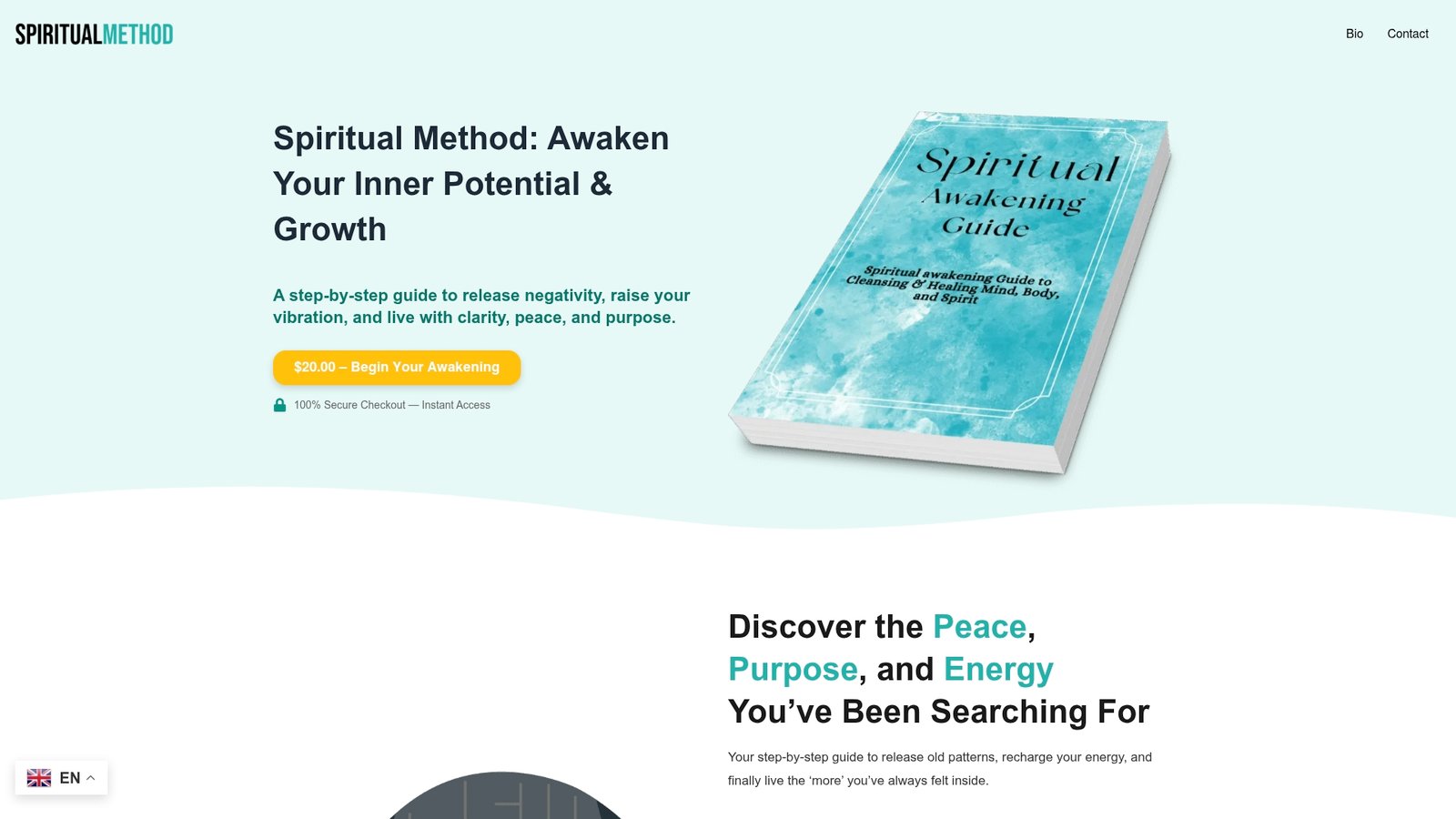
Spiritualmethod’s downloadable guide bundle gives you a complete, week-by-week protection practice in one place. Where this article gives you the framework, the guide gives you the daily templates, printable ritual scripts, and a crystal-care checklist you can follow without having to reconstruct the routine from memory each morning.
Three concrete benefits for readers who want a structured program:
- Daily routine templates with morning, midday, and evening practices already mapped out, including time estimates and adaptation notes for workplaces.
- Printable protection scripts covering shielding visualizations, cord-cutting language, and boundary phrases, formatted for a journal or a phone screenshot.
- Crystal-care checklist covering charging, cleansing, and when to replace or rest each stone.
The guides are delivered instantly as downloadable PDFs after purchase, with a one-time payment and no subscription. For empaths who want a grounding exercises guide with structured daily practice built in, that is the natural next step. For a broader self-help bundle for spiritual seekers that includes boundary work, ritual planning, and inner healing practices, Spiritualmethod’s full collection covers the complete range.
Sources
The following references informed the practices in this article and offer additional depth for readers who want to continue building their protection practice.
- Why Protecting Your Energy Isn’t Selfish or Shameful – Tiny Buddha
- Grounding, Shielding, and Clearing for Empaths
- How to Protect Your Energy as an Empath A step-by-step guide to protecting your energy
- How to Protect Your Energy
This article is for informational and educational purposes only. It is not a substitute for professional mental health, medical, or clinical advice. For persistent or severe symptoms, consult a licensed mental health professional or contact a crisis line such as the 988 Suicide and Crisis Lifeline.