
For most practical learners, Energy Medicine by Donna Eden is the single strongest starting point among the best energy healing books, offering a five-minute daily routine and hands-on meridian and chakra exercises that build consistency from day one. Readers training aura perception should go to Hands of Light by Barbara Ann Brennan; those mapping emotions to physical health will find Anatomy of the Spirit by Caroline Myss the most precise framework. For a comprehensive reference, Vibrational Medicine by Richard Gerber functions as a textbook. Reiki practitioners need either the Original Reiki Handbook of Dr. Mikao Usui or the Hayashi Reiki Manual for lineage-accurate protocols. Readers still exploring modalities before committing to one will get the clearest map from The Essential Guide to Energy Healing by Ben Andron & Dr. Michael Andron.
Quick “best-for” shortlist:
- Best structured daily practice (guided): Spiritualmethod — Self Help for Spiritual Seekers (downloadable guide bundle)
- Best daily self-practice book: Energy Medicine — Donna Eden
- Best aura and energy-field training: Hands of Light — Barbara Ann Brennan
- Best spiritual-psychological mapping: Anatomy of the Spirit — Caroline Myss
- Best comprehensive reference: Vibrational Medicine — Richard Gerber
- Best Reiki lineage manual: The Original Reiki Handbook of Dr. Mikao Usui / The Hayashi Reiki Manual
- Best multi-modality overview: The Essential Guide to Energy Healing — Ben Andron & Dr. Michael Andron
- Best chakra system deep-dive: Wheels of Life — Anodea Judith
Pro Tip: If you want to build a consistent daily practice rather than read theory, pair any book on this list with a structured practice planner. Most readers who stall do so because the book gives knowledge but no daily accountability system.
Key Takeaways
The strongest single principle across this list is that the best energy healing book is the one that matches your specific learning goal, not the most popular title overall.
| Point | Details |
|---|---|
| Match book to goal | Practice-first readers need Eden or a structured guide; reference readers need Gerber; Reiki students need Usui or Hayashi lineage manuals. |
| Pair knowledge with structure | A daily planner or guided download prevents the common gap between reading and consistent practice. |
| Verify author credentials | Traceable lineage, clinical research, or disclosed professional background are the baseline trust signals for any energy-healing text. |
| Treat books as complementary | No energy-healing book replaces medical or mental health care; consult a licensed professional for any persistent or acute symptoms. |
| Spiritualmethod as a practice companion | The Spiritualmethod downloadable guide bundle provides structured daily routines, journaling prompts, and a practice planner for readers who want guided application alongside their books. |
Table of Contents
- How the best energy healing books compare at a glance
- Why each pick made the list and what to watch for
- How to pick the right energy-healing book for your goal
- What each recommended book actually teaches and who it suits
- Where to buy, what format to choose, and which edition matters
- Safety, evidence limits, and when to see a health professional
- Why structured practice resources complement these books
- Spiritualmethod’s downloadable guide as a practical starting point
- Sources
How the best energy healing books compare at a glance
| Title | Best for | Level | Primary focus | Format & length | Exercises vs. theory | Availability |
|---|---|---|---|---|---|---|
| Energy Medicine — Donna Eden | Daily self-practice routines | Beginner–intermediate | Meridians, chakras, five rhythms | Paperback/ebook/audio | Strong hands-on | Widely available |
| Hands of Light — Barbara Ann Brennan | Aura perception and field training | Intermediate–advanced | Human energy field, aura layers | Paperback | Perceptual training + case studies | Widely available |
| Anatomy of the Spirit — Caroline Myss | Spiritual-psychological mapping | Intermediate | Seven centers, belief-illness link | Paperback/ebook/audio | Reflective framework | Widely available |
| Vibrational Medicine — Richard Gerber | Encyclopedic reference | Advanced | Subtle-energy therapies, multi-modality | Paperback, ~600 pp | Reference/theory heavy | New/used/library |
| The Essential Guide to Energy Healing — Andron & Andron | Comparing modalities before committing | Beginner–intermediate | Multi-modality survey | Paperback/ebook | Evaluative overview | Widely available |
| The Original Reiki Handbook of Dr. Mikao Usui | Classic Reiki lineage protocols | Beginner–advanced | Usui Reiki Ryoho positions | Paperback/archive | Practice positions | New/used/archive |
| The Hayashi Reiki Manual | Lineage-accurate hand positions | Intermediate–advanced | Hayashi Ryoho Shishin | Paperback, illustrated | Hand-position photos | Amazon/used |
| Wheels of Life — Anodea Judith | Chakra system study | Beginner–intermediate | Chakras, psychology, yoga | Paperback/ebook | Exercises + theory | Widely available |
| The Energy Codes — Dr. Sue Morter | Seven-step awakening system | Intermediate | Body-centered awakening | Paperback/ebook/audio | Structured steps | Widely available |
| Eastern Body, Western Mind — Anodea Judith | Chakra-psychology integration | Intermediate–advanced | Chakras and Western psychology | Paperback | Reflective exercises | Widely available |
One-line picks by goal:
- Practice: Energy Medicine (Eden) or the Spiritualmethod downloadable guide for immediate structure
- Reference: Vibrational Medicine (Gerber)
- Reiki: Original Reiki Handbook or Hayashi Reiki Manual
- Overview: The Essential Guide to Energy Healing (Andron & Andron)
Why each pick made the list and what to watch for
Spiritualmethod — Self Help for Spiritual Seekers
- Pros: Instant access; structured daily routines with journaling prompts and progress tracking; no reading-to-practice gap.
- Con: Digital only; not a narrative read for those who prefer a traditional book format.
Energy Medicine — Donna Eden
- Pros: Five-minute daily routine is genuinely usable from week one; covers meridians, chakras, and five rhythms in accessible language; updated edition includes new resources.
- Con: Some advanced practitioners find the depth insufficient for clinical application.
Hands of Light — Barbara Ann Brennan
- Pros: Brennan’s background as a physicist and psychotherapist gives the aura-perception training a grounded, case-study framing; medically verified client work adds credibility.
- Con: Dense and demanding; not a casual read. Readers who want quick routines will find it slow-moving.
Anatomy of the Spirit — Caroline Myss
- Pros: Fifteen years of research underpin the seven-centers model; synthesizes Hindu chakras, Christian sacraments, and Kabbalah in a coherent framework.
- Con: Primarily conceptual; readers seeking step-by-step physical exercises will need a companion practice resource.
Vibrational Medicine — Richard Gerber
- Pros: Encyclopedic scope covering chakras, acupuncture, homeopathy, crystal healing, and psychic healing; chapter-end summaries support retention.
- Con: Length and density make it a reference text, not a daily-practice guide. Budget several months for a thorough read.
The Essential Guide to Energy Healing — Andron & Andron
- Pros: Surveys magnet therapy, light therapy, sound/cymatics, therapeutic touch, Reiki, pranic healing, crystal healing, and distant healing in one volume; helps readers avoid committing to a lineage before understanding the options.
- Con: Breadth over depth; practitioners already committed to one modality will find it too introductory.
The Original Reiki Handbook of Dr. Mikao Usui
- Pros: Presents traditional Usui Reiki Ryoho treatment positions and numerous Reiki techniques; accessible via archive sources for free review.
- Con: Translation quality varies by edition; verify the edition before purchasing.
The Hayashi Reiki Manual
- Pros: Photographic illustrations of hand positions; documents Hayashi’s Ryoho Shishin with direct lineage content; well-regarded among lineage-aware practitioners.
- Con: Specialist focus means limited value for readers not specifically pursuing Hayashi-lineage Reiki.
Wheels of Life — Anodea Judith
- Pros: Thorough chakra-by-chakra structure with yoga poses, meditations, and psychological exercises; accessible for beginners.
- Con: Yoga-centric framing may not suit readers focused on non-movement energy practices.
The Energy Codes — Dr. Sue Morter
- Pros: Seven-step system integrates breath, movement, and meditation into a structured awakening sequence; practical and progressive.
- Con: The framework is proprietary to Morter’s system; readers seeking cross-tradition grounding may find it narrow.
Eastern Body, Western Mind — Anodea Judith
- Pros: Bridges chakra theory with Western developmental psychology; reflective exercises support deep self-inquiry.
- Con: Psychological depth makes it more suitable for intermediate readers than absolute beginners.
Red flags to watch across any energy-healing title: claims of guaranteed medical cures, no practical exercises whatsoever, and authors with no traceable training lineage or published research background.
How to pick the right energy-healing book for your goal
The single most useful question to ask before buying is: Do I want to practice, or do I want to understand? That one distinction narrows the field faster than any other criterion.
Four buyer criteria to assess:
- Goal: Practice-first readers need books with explicit short routines (Eden’s five-minute daily sequence is a benchmark). Theory-first readers can absorb Gerber’s encyclopedic reference or Myss’s conceptual framework without frustration.
- Experience level: Beginners benefit from books that define terms and include step-by-step instructions. Intermediate and advanced readers can handle Brennan’s perceptual training or Judith’s psychological depth.
- Modality interest: Reiki practitioners need lineage-accurate manuals. Chakra-focused readers do well with Judith or Myss. Readers still exploring should use a multi-modality survey like The Essential Guide to Energy Healing before committing to a single system.
- Time available: A 600-page reference like Vibrational Medicine suits readers with a semester-style study plan. A 50-page downloadable guide or Eden’s daily routine suits readers with 10–20 minutes per day.
Decision checkpoints before buying:
- Does the book include at least one short, repeatable daily practice?
- Is the author’s background traceable (training lineage, published research, or clinical work)?
- Does the book distinguish between complementary practice and medical treatment?
- For Reiki books specifically: does it name original Usui or Hayashi protocols, or is it a modernized Western summary?
- Is there a used or library copy available for a low-risk first read?
Red flags: Grand claims of curing named medical conditions, no exercises or practice sequences, and no author credentials or lineage disclosure. A multi-modality overview read before committing to a single lineage can prevent wasted time and money.
What each recommended book actually teaches and who it suits
Spiritualmethod — Self Help for Spiritual Seekers (downloadable)
Teaches grounding, energy clearing, sacred bathing rituals, intention-setting, and journaling through structured daily routines. Three takeaways: daily practice accountability, progress tracking, and reflective journaling prompts. Who it suits: beginners and intermediates who want guided structure without waiting to finish a long book. Estimated cost: one-time purchase price at checkout; instant delivery.
Energy Medicine — Donna Eden
Teaches meridian tracing, chakra balancing, five rhythms, and a five-minute daily energizing routine. Three takeaways: how to read your body’s energy signals, how to use daily movement-based routines, and how to adapt techniques for self-care. Who it suits: beginners and intermediates wanting practical daily use. Study timeline: 2–4 weeks for the core routine; full book over 6–8 weeks. Estimated cost: $15–$20 new paperback; $5–$10 used; audiobook available.

Hands of Light — Barbara Ann Brennan
Teaches aura-layer anatomy, perceptual training to see and interpret energy fields, and healing guidelines for self and others. Three takeaways: the structure of the human energy field, how to develop perceptual sensitivity, and how to apply field-based healing guidelines. Who it suits: intermediate to advanced readers committed to perceptual skill-building. Study timeline: 3–6 months with regular practice. Estimated cost: $18–$25 new; $8–$15 used.
Anatomy of the Spirit — Caroline Myss
Teaches the seven-centers model connecting emotional and belief patterns to physical illness, drawing on Hindu, Christian, and Kabbalah traditions. Three takeaways: how specific belief patterns correlate with energy-center stress, how to map personal history to the seven centers, and how spiritual maturity relates to physical wholeness. Who it suits: intermediate readers interested in the mind-body-soul connection. Study timeline: 4–6 weeks. Estimated cost: $14–$18 new; $4–$10 used; audiobook available.

Vibrational Medicine — Richard Gerber
Teaches subtle-energy theory across chakras, acupuncture, homeopathy, crystal healing, psychic healing, and more. Three takeaways: the theoretical basis of multiple healing modalities, how to cross-reference systems, and how to use chapter summaries for retention. Who it suits: serious students and practitioners who need a reference handbook. Study timeline: semester-style, 3–6 months. Estimated cost: $20–$30 new; $8–$15 used.
The Essential Guide to Energy Healing — Andron & Andron
Surveys magnet, light, sound, therapeutic touch, Reiki, pranic healing, crystal healing, and distant healing. Three takeaways: how to evaluate each modality’s claims, what distinguishes one system from another, and how to identify which approach matches your goals. Who it suits: beginners still mapping their options. Study timeline: 2–3 weeks. Estimated cost: $14–$20 new.
The Original Reiki Handbook of Dr. Mikao Usui
Presents traditional Usui Reiki Ryoho treatment positions and numerous Reiki techniques. Three takeaways: original hand positions, treatment protocols for specific conditions, and the foundational principles of Usui’s system. Who it suits: Reiki students and practitioners seeking lineage accuracy. Study timeline: ongoing reference use. Estimated cost: free via archive; print editions $15–$25.
The Hayashi Reiki Manual
Documents Hayashi’s Ryoho Shishin with photographic illustrations of hand positions and translated original material. Three takeaways: Hayashi-lineage hand positions, treatment protocols, and the historical bridge between Usui and Western Reiki. Who it suits: lineage-aware Reiki practitioners. Estimated cost: $15–$22 new on Amazon.
Wheels of Life — Anodea Judith
Teaches the seven-chakra system with yoga poses, meditations, and psychological exercises for each center. Three takeaways: chakra anatomy, how to identify and work with blocked centers, and how movement and breath support energetic balance. Who it suits: beginners to intermediates with an interest in yoga or body-based practice. Estimated cost: $14–$18 new; audiobook available.
The Energy Codes — Dr. Sue Morter
Teaches a seven-step system integrating breath, movement, and meditation to support spiritual awakening and physical well-being. Three takeaways: body-centered practices for each of the seven codes, how to use breath as an energy tool, and how to track personal progress through the system. Who it suits: intermediate readers ready for a structured multi-week program. Estimated cost: $16–$22 new; audiobook available.
Eastern Body, Western Mind — Anodea Judith
Integrates chakra theory with Western developmental psychology and includes reflective exercises for each center. Three takeaways: how childhood developmental stages map to chakra imbalances, how to use self-inquiry for healing, and how Eastern and Western frameworks reinforce each other. Who it suits: intermediate to advanced readers with a psychological orientation. Estimated cost: $18–$25 new.
Additional titles worth noting: The Emotion Code by Dr. Bradley Nelson addresses trapped emotional energy through muscle testing; Light Emerging by Barbara Ann Brennan is a practical companion to Hands of Light; Essential Reiki by Diane Stein offers a broad Reiki overview for beginners; Becoming Supernatural by Joe Dispenza combines neuroscience framing with meditation and energy practices; The Subtle Body by Cyndi Dale serves as an encyclopedic anatomy reference; and Energy Work by Robert Bruce covers subtle-body development for independent practitioners. Each of these appears regularly on community-curated Reiki and energy-work reading lists.
Where to buy, what format to choose, and which edition matters
New vs. used: For practice-focused books like Energy Medicine or Wheels of Life, a new or recent edition is worth the modest premium because updated editions often include revised routines or new resource sections. For reference texts like Vibrational Medicine, a used copy in good condition works perfectly well.
Library copies: Most titles on this list are available through public library systems and through apps like Libby and Hoopla. Borrowing before buying is a practical first step, especially for longer reference texts.
Audiobook considerations: Anatomy of the Spirit, Energy Medicine, and Wheels of Life all have audiobook editions and work well in that format for conceptual sections. Practice-heavy books are harder to follow on audio alone; a physical or ebook copy is preferable when you need to reference hand positions or diagrams.
Edition notes:
- For Energy Medicine, prefer the updated edition, which includes revised resources and a new foreword.
- For Reiki lineage manuals, translation quality matters. The Hayashi Reiki Manual is a well-regarded translation with photographic documentation. The Original Reiki Handbook is available in print and via archive sources; verify the translator’s lineage credentials before purchasing a print edition.
- For Vibrational Medicine, the third edition is the standard reference version.
Estimated cost ranges across the list run from free (archive access for the Usui Handbook) to $15–$30 for new paperbacks, with used copies typically available for $4–$15. Audiobooks generally run $15–$25 through Audible or are included with an Audible subscription.
Pro Tip: Before purchasing a long reference book, check whether your local library system carries a digital copy through Libby. You can assess whether the depth suits your learning style before spending $25 on a 600-page text.
Safety, evidence limits, and when to see a health professional
Energy-healing books are complementary resources. They are not substitutes for medical diagnosis, treatment, or professional mental health care. The frameworks in books like Anatomy of the Spirit or The Energy Codes offer reflective and practice-based tools for personal development; they do not constitute medical advice, and no book-based practice should replace evaluation by a licensed health professional for any physical or psychological symptom.
Consult a licensed health professional promptly if you experience:
- Sudden severe or unexplained pain
- Unexplained bleeding or rapid physical deterioration
- Suicidal thoughts or acute psychiatric distress
- Symptoms that persist or worsen despite self-care
When evaluating a book’s medical claims: treat any title that promises to cure named medical conditions as a red flag. Credible energy-healing authors frame their work as supportive and complementary, not curative. Caroline Myss, for example, explicitly frames her seven-centers model as a tool for self-awareness and spiritual maturity, not a replacement for medical care. Understanding what mind-body medicine is and how it works helps readers place these books in their proper context.
Pro Tip: Check the author’s credentials before purchasing. A traceable training lineage (for Reiki), published clinical research (for field-based approaches), or a clearly disclosed professional background (for psychological frameworks) are the baseline signals of a credible text.
Why structured practice resources complement these books
Reading about energy healing and building a consistent practice are two different activities. The books on this list provide knowledge, frameworks, and techniques. What most readers discover, however, is that knowledge without a daily structure rarely becomes habit. Donna Eden’s five-minute routine is one of the few book-based practices that addresses this gap directly, which is a significant part of why Energy Medicine consistently appears at the top of recommended energy healing literature.
For readers who want a structured daily system from the start, Spiritualmethod’s downloadable guides are designed to fill exactly that gap. The guides include step-by-step grounding and energy-clearing routines, journaling prompts for reflective practice, a spirituality planner, and a moon manifesting ritual guide, all organized for self-guided daily use. They pair naturally with conceptual books like Anatomy of the Spirit (which benefits from a journaling companion) and with practice books like Energy Medicine (where a planner supports routine-building). The editorial selection of books on this list is based on fit for the reader’s learning goal; Spiritualmethod’s offering is presented as a practical option for readers who want guided structure alongside their reading.
Spiritualmethod’s downloadable guide as a practical starting point
The books on this list are the canonical texts in energy healing. They are worth reading. And for many readers, the most practical next step is a structured daily guide they can use while working through those books.
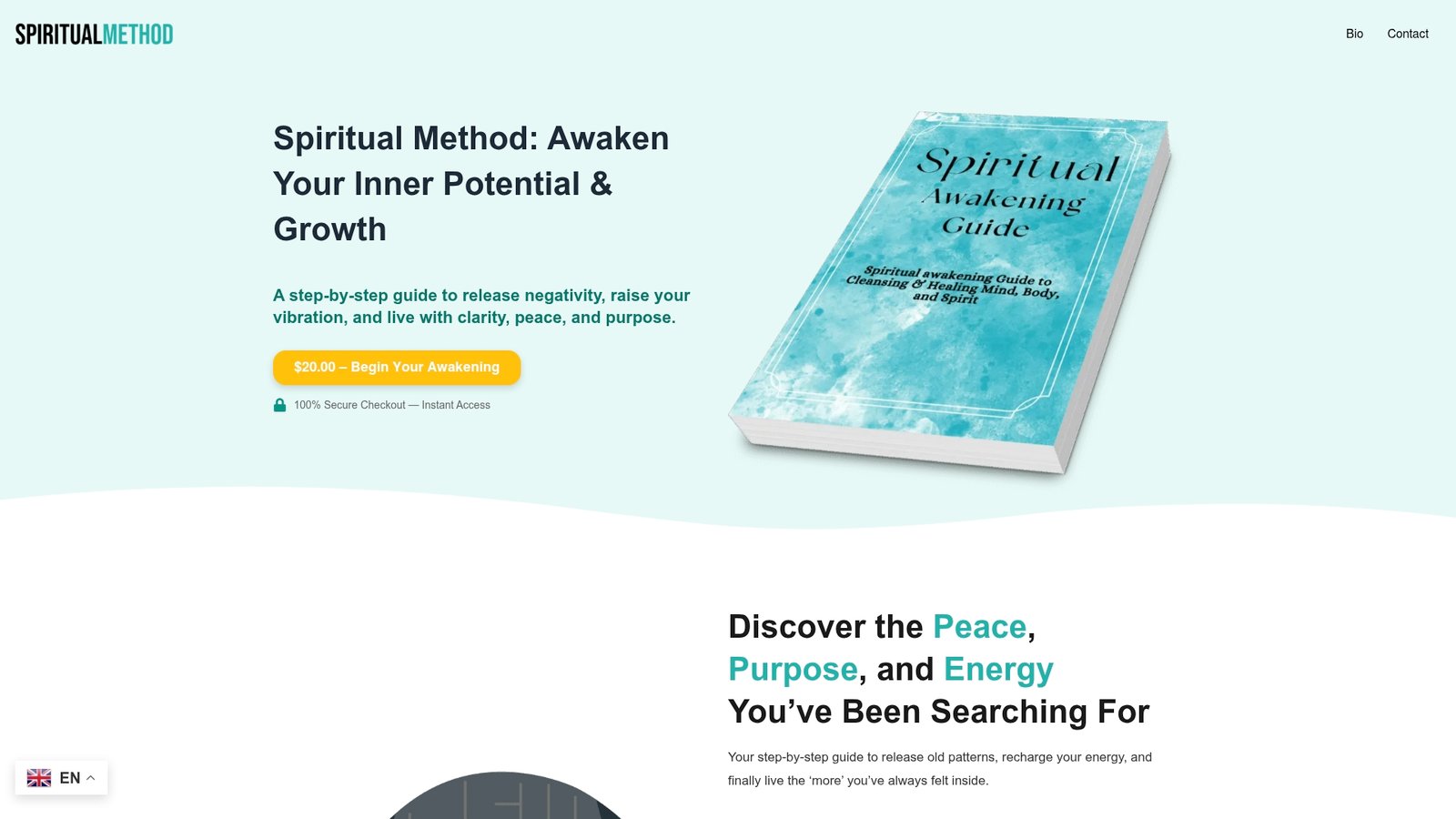
Spiritualmethod’s Self Help for Spiritual Seekers guide bundle delivers a 50-plus-page downloadable PDF with grounding exercises, energy-clearing routines, sacred bathing rituals, intention-setting practices, a spirituality planner, and journaling templates, all designed for self-guided daily use. It pairs directly with Energy Medicine for readers building a daily routine, with Anatomy of the Spirit for readers who want a journaling framework alongside Myss’s reflective model, and with any Reiki manual for practitioners who want a broader spiritual healing practices structure around their lineage work. The bundle is available as an instant download at checkout, with no subscription required. Visit the Self Help for Spiritual Seekers guide to review what is included and make a one-time purchase.
Sources
- Energy Medicine by Donna Eden and David Feinstein
- Vibrational Medicine by Richard Gerber
- The Original Reiki Handbook of Dr. Mikao Usui (archive item)
- The Hayashi Reiki Manual: Traditional Japanese Healing Techniques from the Founder of the Western Reiki System
- Best Reiki Books (Goodreads list)
This article is general information, not a substitute for advice from a qualified doctor. Consult a qualified healthcare professional about your own circumstances before acting on anything here.