
A regular, intentional bath ritual delivers measurable stress reduction, lower cortisol, improved sleep quality, muscle relaxation, pain relief, and improved peripheral circulation, with large observational cohorts suggesting possible long-term cardiovascular associations. Cleveland Clinic and Harvard Health both support these short-term wellbeing effects. People with unstable heart conditions, uncontrolled hypertension, or certain stages of pregnancy should consult a clinician before beginning a thermal bathing practice.
Key Takeaways
Regular, intentional bath rituals deliver measurable short-term benefits for stress, sleep, muscle recovery, and mood, with large observational cohorts suggesting possible long-term cardiovascular associations when practiced frequently.
| Point | Details |
|---|---|
| Core short-term benefits | Stress reduction, lower cortisol, better sleep, muscle relaxation, and improved peripheral circulation are well-supported. |
| Cardiovascular associations | A large Japanese cohort linked near-daily bathing to approximately 28% lower CVD risk, though observational confounding is possible. |
| Safe parameters | Keep water at 36–40°C, soak for 10–20 minutes, hydrate before and after, and exit slowly. |
| Ritual structure matters | Intention-setting, a distraction-free environment, and post-soak journaling convert a soak into a trackable, restorative practice. |
| Spiritualmethod resource | The downloadable mind-body-soul guide provides a complete ritual framework, journaling prompts, and a four-week tracking log. |
Table of Contents
- What bath ritual benefits cover: mental, physical, and lifestyle gains
- Why warmth and immersion produce these effects
- What the key studies actually show
- Who should be cautious and how to bathe safely
- How to build a step-by-step bath ritual tonight
- Adapting the ritual for specific goals
- How often to bathe and how to track results
- Spiritualmethod’s downloadable ritual guides take the guesswork out of starting
- Sources
What bath ritual benefits cover: mental, physical, and lifestyle gains
The advantages of bathing intentionally span three interconnected domains. Each entry below reflects a distinct, evidence-supported category.
- Stress and cortisol reduction: Warm water activates the parasympathetic nervous system, lowering stress hormones. Cleveland Clinic notes that a short soak creates a setting suited for meditation and mental escape.
- Sleep promotion: A bath taken 1–2 hours before bed accelerates the core-to-skin heat transfer that signals the brain to initiate sleep onset.
- Mood lift: Warm immersion supports serotonin and endorphin activity, contributing to improved emotional regulation and reduced anxiety.
- Muscle relaxation and pain relief: Passive heating reduces musculoskeletal tension and has shown benefits for pain markers in several studies, making it a practical post-exercise recovery tool.
- Peripheral vasodilation: Warmth dilates blood vessels near the skin surface, improving circulation throughout the extremities.
- Metabolic and cardiovascular associations: Passive heating from baths and hot tubs is associated with lower diastolic blood pressure and improved blood-sugar markers in some study samples.
- Routine formation: A consistent self-care bath routine builds habit structure that supports broader wellness adherence over time.
Why warmth and immersion produce these effects
The core mechanism is straightforward. Warm water raises skin temperature, which triggers peripheral vasodilation: blood vessels near the surface dilate, drawing blood away from the core. This reduces core body temperature after you exit, a physiological signal the brain interprets as a cue to initiate sleep. Simultaneously, the autonomic nervous system shifts from sympathetic (alert, stress-responsive) to parasympathetic (rest-and-digest) dominance.
At the molecular level, thermal exposure stimulates heat shock protein expression and circulatory responses that are plausibly relevant to cardiovascular regulation. Neurotransmitter activity also shifts: serotonin production tends to increase, while cortisol output decreases during and after a warm soak.
“Baths help lower stress hormones and support sleep. They offer a mental escape that showers simply don’t replicate.” — Cleveland Clinic medical commentary
The table below summarizes the primary physiological chain from water contact to measurable outcome.
| Mechanism | What happens | Observed outcome |
|---|---|---|
| Peripheral vasodilation | Blood vessels dilate near skin | Improved circulation, lower BP in some samples |
| Core temperature drop post-soak | Heat dissipates after exiting | Faster sleep onset |
| Parasympathetic activation | Autonomic shift to rest state | Lower cortisol, reduced anxiety |
| Heat shock protein expression | Cellular stress-response proteins activated | Plausible cardiovascular and metabolic effects |
| Serotonin and endorphin activity | Neurotransmitter release supported | Improved mood, pain modulation |
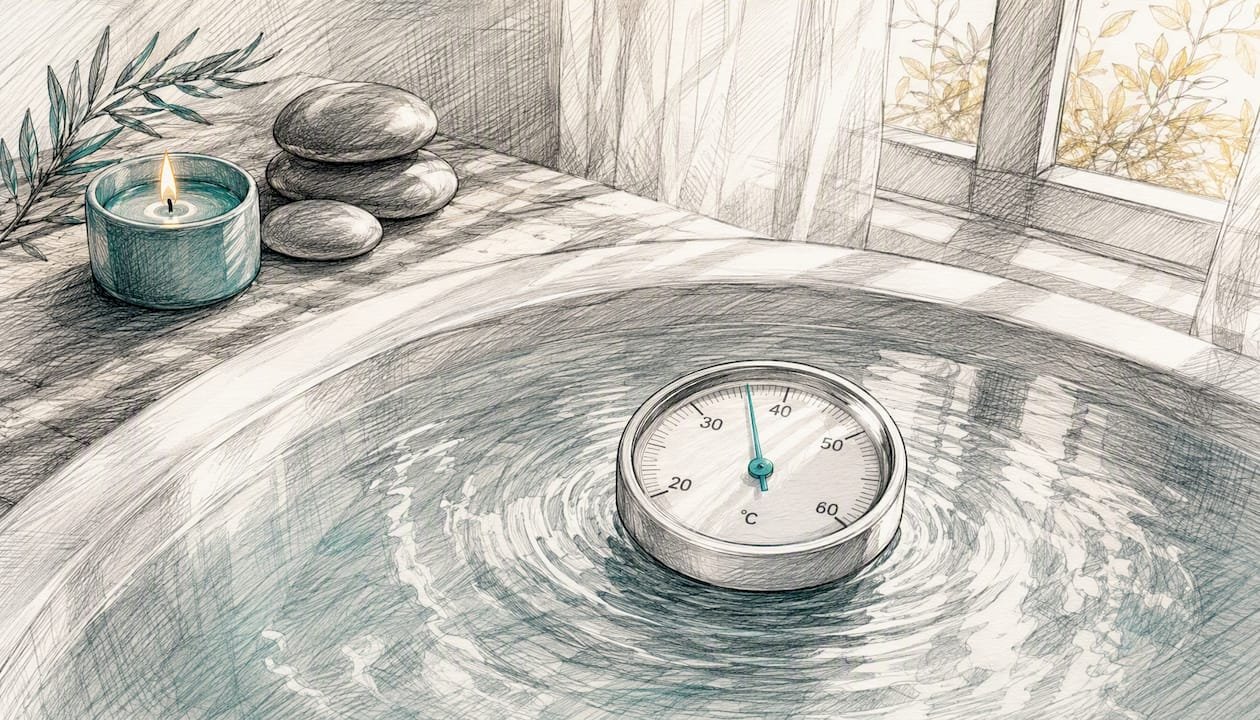
One practical note: hotter is not better. Temperatures above 40°C (104°F) do not reliably increase benefit and can cause cardiovascular stress in people with underlying conditions.
What the key studies actually show
The evidence base for bath ritual benefits is promising but uneven across outcome types.
A small randomized crossover trial with 38 participants found that 10-minute immersion bathing at approximately 40°C produced better visual-analog scores for fatigue, stress, pain, and mood compared with showering without immersion. That is a meaningful signal, though the sample is small.
At the population level, a large Japanese cohort summarized by Harvard Health found near-daily bathing linked to lower cardiovascular disease and stroke risk compared with infrequent bathing. A narrative review published in MDPI confirms that thermal bathing produces vasodilation and heat shock protein expression with mechanistic plausibility for vascular benefit, while noting that prospective clinical-endpoint evidence for domestic bathtubs remains limited compared with sauna cohorts.
Limitations to keep in mind: The Japanese and Finnish cohort data are observational, meaning lifestyle factors beyond bathing likely contribute to the associations. Sauna evidence differs from domestic bathtub evidence in temperature, duration, and cultural context. More prospective trials are needed before making strong clinical-endpoint claims for bathtub bathing specifically.
The practical summary: solid evidence supports short-term wellbeing benefits (stress, sleep, mood, muscle recovery). Long-term cardiovascular associations are promising but not yet conclusive for domestic bathing alone.
Who should be cautious and how to bathe safely
Safe temperature and duration guidance applies to most adults, but specific populations need additional care.
Temperature and duration guidelines:
| Parameter | Recommended range | Notes |
|---|---|---|
| Water temperature | 36–40°C (104°F) | Above 40°C increases cardiovascular stress risk |
| Soak duration | 10–20 minutes | Avoid prolonged soaking to prevent skin dehydration |
| Entry pace | Slow, gradual immersion | Prevents sudden blood pressure drop |
| Hydration | Drink water before and after | Thermal exposure increases fluid loss |
Contraindications and cautions:
- Unstable angina or recent myocardial infarction: avoid thermal bathing until cleared by a cardiologist.
- Uncontrolled hypertension: consult a clinician; hot water can cause rapid blood pressure changes.
- Low baseline systolic blood pressure (approximately 110 mm Hg or below): risk of lightheadedness on exit.
- History of fainting or vasovagal episodes: have someone nearby or keep the door unlocked.
- Pregnancy: warm baths at moderate temperatures are generally considered safe in early pregnancy, but very hot water raises core temperature and warrants medical guidance, particularly in the first trimester.
- Alcohol consumption: avoid bathing after drinking; alcohol impairs thermoregulation and increases fall risk.
Pro Tip: Test water temperature with your elbow or forearm before entering. Keep a glass of water within reach and exit slowly, pausing at the edge of the tub for a few seconds before standing.
This guide is educational and not a substitute for personalized medical advice. If you have a diagnosed heart condition, blood pressure disorder, or are pregnant, consult your clinician before starting a thermal bathing practice.
How to build a step-by-step bath ritual tonight
A well-structured ritual accomplishes more than a passive soak: it shifts the nervous system, sets a reflective tone, and creates a repeatable self-care framework. Here is a practical sequence.
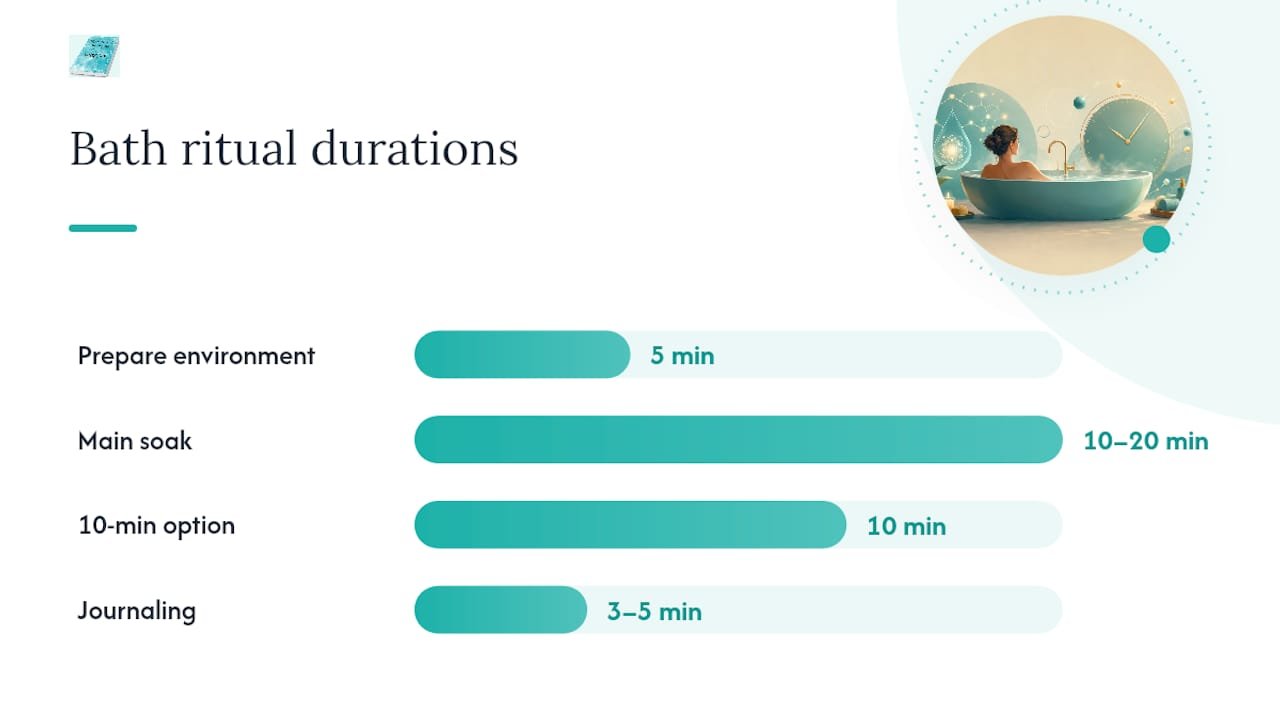
- Prepare the environment (5 minutes before): Dim the lights or use a candle. Queue a playlist of low-tempo music or nature sounds. Set your phone to Do Not Disturb.
- Set an intention: Before entering, state one clear intention aloud or in writing. Examples: “I release the tension from today” or “I am preparing my body for rest.” Pairing this with a brief intention-setting practice deepens the effect.
- Draw the bath: Fill to a comfortable level at 36–40°C. Add 1–2 cups of Epsom salt (magnesium sulfate) for muscle relaxation. For sleep, add 5–8 drops of lavender essential oil diluted in a carrier oil or a tablespoon of whole milk before adding to water. For respiratory clarity, eucalyptus oil works well at the same dilution.
- Enter slowly and soak for 10–20 minutes: Focus on breath. Inhale for four counts, exhale for six. Let the warmth do its physiological work.
- Exit and aftercare: Rise slowly. Pat skin dry and apply a light moisturizer while skin is still slightly damp. Drink a glass of water.
- Journal for 3–5 minutes: Note your mood before and after on a simple 1–10 scale. Record one thought or intention you want to carry forward. This brief reflective practice, supported by grounding and energy-clearing methods, converts a single soak into a trackable habit.
Ingredient safety note: Always dilute essential oils before adding them to bathwater. Undiluted oils can irritate skin and mucous membranes. For sensitive skin, start with 3 drops and assess tolerance. Epsom salt is generally well-tolerated at 1–2 cups per standard tub; people with kidney conditions should check with a clinician first.
Pro Tip: If 20 minutes feels too long on a busy night, a 10-minute version at the same temperature with just the intention-setting and one journaling prompt delivers most of the stress-reduction benefit, as the RCT evidence suggests even a 10-minute soak produces measurable improvements.
Adapting the ritual for specific goals
Not every bath serves the same purpose. Adjusting a few variables shifts the outcome significantly.
- Sleep support: Time the bath 60–90 minutes before bed. Use cooler water toward the end of the soak (gradually reduce temperature in the final 2–3 minutes) to accelerate the core temperature drop that signals sleep onset. Lavender oil and low lighting reinforce the circadian cue. Avoid stimulating music or screen use immediately after.
- Muscle recovery: A longer warm soak of 15–20 minutes at 38–40°C with 2 cups of Epsom salt is appropriate post-exercise. Gentle stretching of the legs and shoulders while submerged helps release residual tension. Avoid very hot water immediately after intense training, as extreme heat can temporarily increase inflammation.
- Anxiety relief: Extend the intention-setting phase to 3–5 minutes. Add breathwork (box breathing: four counts in, four hold, four out, four hold) during the soak. Calming oils such as lavender or chamomile support parasympathetic activation. Note: if you experience panic disorder, very hot water can sometimes heighten physiological arousal; a moderate temperature of 36–37°C is preferable.
- When full immersion isn’t possible: A 15-minute foot soak in warm water with Epsom salt and a few drops of lavender oil produces localized vasodilation and a measurable relaxation response. A warm shower with intentional breathwork and a brief pre-shower intention statement preserves the ritual structure even without immersion. Pairing either option with mindfulness-based daily practices maintains the habit framework.
How often to bathe and how to track results
Frequency depends on skin sensitivity, goals, and schedule. The Japanese cohort data that showed cardiovascular associations defined “habitual” bathing as approximately five or more times per week. For most people pursuing stress reduction and sleep support, 3–5 sessions per week is a practical and sustainable target. Those with dry or sensitive skin may find 2–3 times per week more appropriate, supplementing with foot soaks or shower rituals on other days.
Building the habit:
- Pair the bath ritual with an existing evening anchor (after dinner, before reading) to reduce the activation energy required to start.
- Track four simple metrics each session: mood before (1–10), mood after (1–10), sleep latency estimate, and any physical tension notes.
- Run a four-week micro-experiment. After 28 days, review your log for patterns in sleep quality, perceived stress, and physical recovery. The data you collect personally is more actionable than any population average.
- Combining the bath ritual with a broader self-care practice framework supports long-term adherence by embedding it within a larger wellness structure.
About the evidence and a medical note
Sources prioritized for this guide include peer-reviewed studies (the PubMed RCT, the Japanese cohort), major medical centers (Cleveland Clinic, Harvard Health), and a recent narrative review (MDPI). Observational data are subject to residual confounding; sauna evidence differs from domestic bathtub evidence in temperature, duration, and cultural context. More prospective trials are needed before drawing clinical-endpoint conclusions for bathtub bathing specifically.
A note from Sean
Intentional bathing has been part of my spiritual practice framework for years, and it consistently appears as one of the most accessible entry points for people beginning a structured inner-healing routine. What separates a restorative ritual from a simple soak is not the ingredients or the duration. It is the deliberate shift in attention: setting an intention, removing distractions, and reflecting afterward. Readers who pair this practice with broader spiritual healing work tend to report the most durable results. I encourage you to run your own four-week experiment and let the data from your own experience guide the practice.
Spiritualmethod’s downloadable ritual guides take the guesswork out of starting
Knowing the science is one thing. Having a structured template to follow on a tired Tuesday evening is another. Spiritualmethod’s downloadable mind-body-soul guide includes a complete sacred bathing ritual framework, step-by-step intention-setting prompts, journaling templates with mood and sleep tracking sheets, and a four-week progress log. The entire bundle is available as an instant PDF download, so you can begin a structured practice tonight without building the framework from scratch.
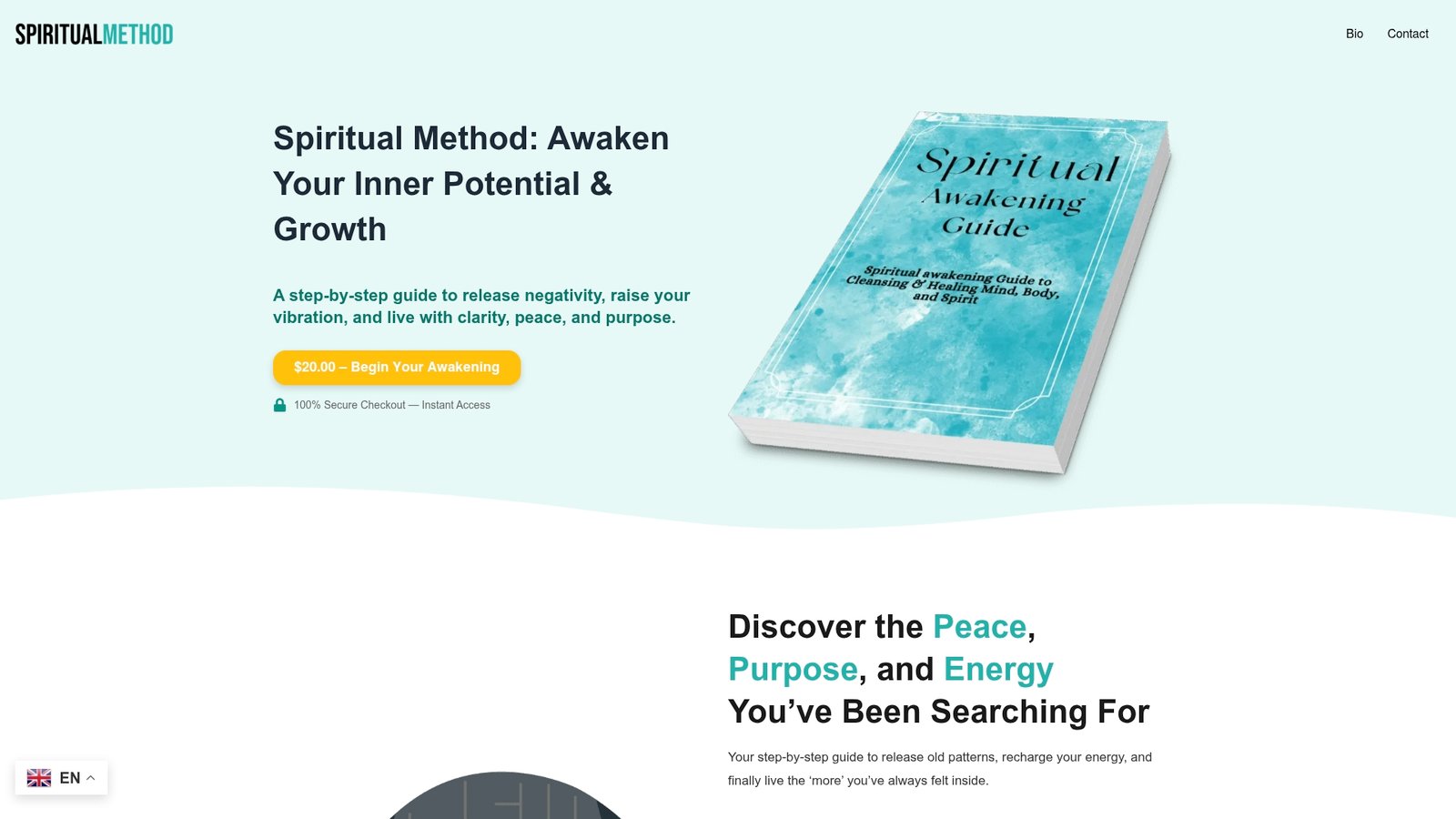
For readers who want to go deeper, the journaling for soul healing guide pairs directly with the bath ritual tracking method described in this article. Both are one-time purchases with no subscription required.
Sources
- Why Taking a Bath Is Good for You | Cleveland Clinic
- Effects of Bathtub Bathing and Sauna Practices on Cardiovascular and Systemic Health: A Narrative Review
- Physical and Mental Effects of Bathing: A Randomized Intervention Study
- Hot baths and saunas: Beneficial for your heart? – Harvard Health
- Hot bath benefits: sento, furo, and hot bathing traditions | Healthline