
The best altar offerings are simple, personal and safe: water, flowers, fruit, a candle, incense, a written intention, or an object that carries meaning for the person, ancestor or purpose you are honoring. Cost matters far less than attention and relevance. What you place should match the type of altar you are building, and anything that burns should be arranged with fire safety first.
This guide covers what to put on an altar, how to choose offerings for different kinds of altars, how to present them, how long to leave them, and where cultural context should guide your choices.
TL;DR
- Reliable starting offerings are water, fresh flowers or herbs, fruit, bread or sweets, a candle, incense, and a handwritten note or intention.
- Match the offering to the altar: photographs and favorite foods for an ancestor altar, stones and grains for a nature altar, a lamp and prayer for a devotional one.
- Tools and materials differ by tradition, so identify yours before borrowing a correspondence list from another.
- There is no universal time limit. Remove perishable food before it spoils, and never leave flames unattended.
- Use a flameless candle whenever your practice does not specifically require an open flame.
Table of Contents
- What an Offering Actually Is
- Offering Ideas by Category
- Choosing Offerings for Your Type of Altar
- Why Tradition Changes the List
- How to Make an Offering, Step by Step
- How Long Should an Offering Stay on the Altar?
- Fire Safety for Candles and Incense
- Starter Sets for Common Situations
- Our Perspective
- Take the Next Step With a Structured Guide
- Frequently Asked Questions
- Sources
What an Offering Actually Is
An offering is a gesture of attention. In nearly every tradition, it says: you are remembered, you are respected, you are welcome here. That is why a handful of berries placed with intention can mean more than an expensive purchase placed without thought.
It also means an offering does not have to be physical. Prayers, songs, a poem you wrote or a quiet five minutes of gratitude count in many practices, and you do not need an altar at all to give them. The altar simply gives the gesture a consistent place and a visible rhythm.
Two questions will narrow your choices quickly:
- Who or what is the offering for? A deceased relative, a deity, the natural world, or your own intention or growth.
- Which tradition, if any, shapes the practice? A Tibetan Buddhist altar, a Mexican ofrenda, a Wiccan altar and a secular reflection corner each use different materials.
Offering Ideas by Category
The table below groups common offerings by what they express. Treat it as a menu, not a checklist. Most altars need only three or four items.
| Category | Ideas | What it expresses |
|---|---|---|
| Elements | A small bowl of water, a stone, a feather, a candle or lamp | Presence, grounding, the natural world |
| Living things | Fresh flowers, potted herbs, a sprig of rosemary, a seashell | Life, seasons, gratitude |
| Food and drink | Fruit, bread, grains, sweets, tea, coffee, a favorite dish | Hospitality, nourishment, remembrance |
| Scent | Incense, dried herbs, a few drops of essential oil on a cloth | Prayer rising, clearing, transition |
| Words | A prayer, petition, letter, journal page, a sacred text | Intention, dialogue, commitment |
| Personal objects | A photograph, jewelry, a coin, fabric from your heritage | Relationship, memory, lineage |
Water, flowers and herbs
Water is the most widely shared offering. It is simple, safe and appears across traditions. Fresh flowers and herbs add color and a sense of time passing, since they fade and need replacing. If you keep an altar in a small space, a single stem in a small vase does the same work as an arrangement.
Food and drink
Food is an act of hospitality. Choose something you or the recipient would genuinely enjoy: a piece of fruit, a slice of bread, a small sweet, a cup of tea. Place it in a dedicated bowl or dish rather than directly on the altar surface, which keeps the space clean and makes removal easy.
Light and scent
Candles, lamps and incense are among the most common offerings, and also the ones that carry real risk at home. They deserve their own section below.
Words and meaningful objects
A written intention or a letter to someone you have lost is a complete offering. So is a personal object: a ring that belonged to a grandparent, a coin from a trip, a scarf. The test is relevance. Ask whether the person or presence you are honoring would recognize the gift as meant for them.
Choosing Offerings for Your Type of Altar
Ancestor and memorial altars
The guiding idea is to recall the person. A photograph, a flower, a candle, a glass of water, and something they loved to eat or drink make a complete, moving altar. NPR’s guide to building an ofrenda lists common elements as photos of friends and family, candles and incense, water, marigolds, sweets and the favorite foods of the people being remembered.
A caution on cultural context: an ofrenda is a specifically Mexican tradition, and practices vary by community. Mexico’s National Institute of Anthropology and History describes how Nahua communities in Veracruz build Xantolo altars with offerings such as coffee, chocolate, bread, water, fruit and prepared foods, later carried to graves and shared among families and neighbors. If you borrow from that tradition, say so, learn its meaning, and do not present it as a template for every ancestor altar. Photographs of the deceased also belong only on an ancestor or memorial altar, not on every altar by default.
Nature and earth altars
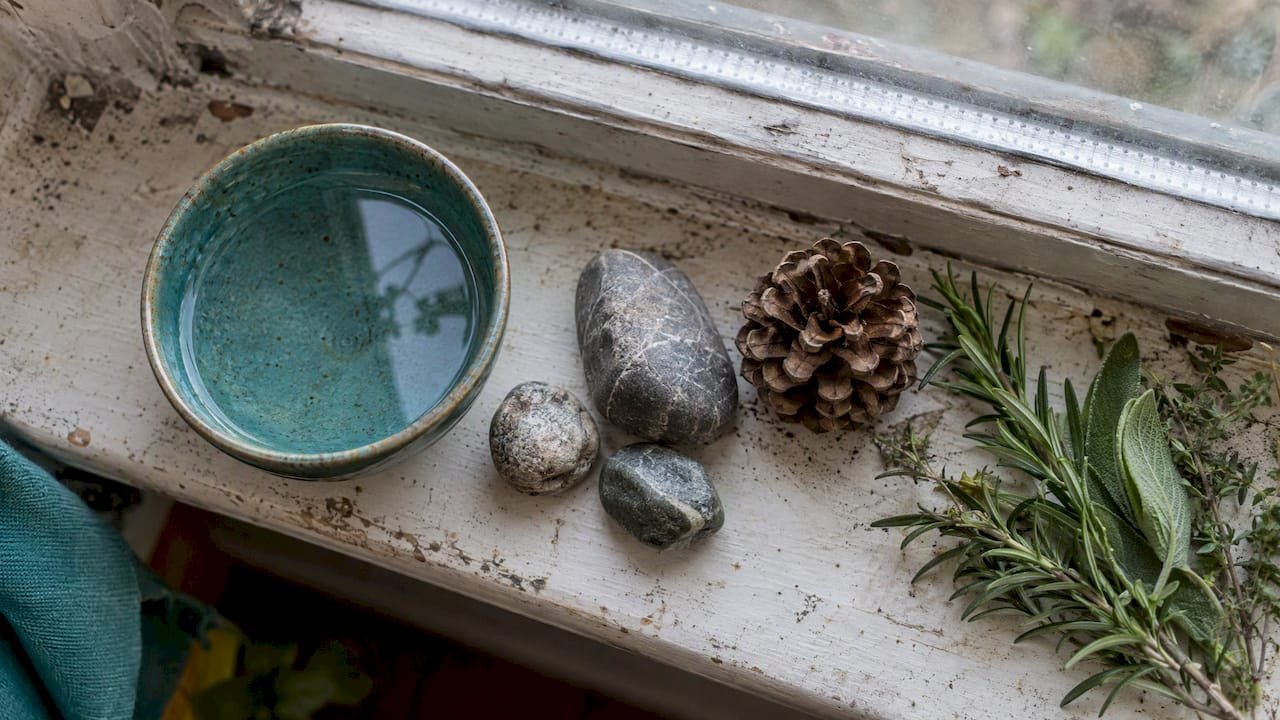
Choose what the season gives you: stones, a bowl of grain, flowers, fruit, herbs, a small dish of water. Replace items as they change. A nature altar works best when it reflects where you live, such as pinecones in autumn or the first wildflowers in spring, rather than imported symbols.
Devotional altars
If you honor a deity, saint, angel or spirit, a typical set includes an image or statue (only when your tradition uses them), incense, a lamp or candle, an offering bowl and a prayer. Follow your tradition’s guidance on what is appropriate to give, and what is not.
Personal and secular altars
An altar does not need a religious frame. Many people use one as a place for reflection: a candle or flameless light, a plant, a stone from a meaningful trip, and a journal. Your offerings might be a daily sentence of gratitude or a weekly intention. Our guide to a beginner’s home altar setup for religious and secular use walks through placement and layout, and our seven-day sacred space setup suits small homes and renters.
Why Tradition Changes the List
A correspondence list copied from one source can quietly mix practices that do not belong together. The Philadelphia Museum of Art’s documentation of a Tibetan altar is a good example. It describes water, milk, alcohol, grains, incense and butter lamps as offerings placed on or beside the altar, and notes that daily practice includes changing the water and lighting fresh incense or lamps. The same documentation shows offerings can be both consumable materials and symbolic objects, such as scarves, prints and ritual cakes.
That is a specific, living system with its own rules. If you follow a tradition, learn from a teacher or a community that practices it. If you are building something eclectic, be honest with yourself about that, and choose items for personal meaning rather than claimed authenticity.
How to Make an Offering, Step by Step
- Prepare the surface. Wipe it clean and clear away dust or old items.
- Choose a dedicated bowl or dish for food and drink, so it stays separate from everyday dishes.
- Place the offering with care. Set it down slowly. Arrange it so nothing can tip or touch a flame.
- Name who or what it is for. Say it aloud or silently: the person, deity, ancestor or intention you are honoring.
- Pause. Sit quietly, pray, or read a line from a text that matters to you.
- Close the offering. When the time comes, remove it following your tradition’s disposal practice, or compost food if you have no specific custom.
Some people attach the practice to a daily routine, such as a morning glass of water or an evening candle. Our article on daily spiritual practices shows how to build that habit without making it a burden.
How Long Should an Offering Stay on the Altar?
There is no single rule. The practice itself varies: in Tibetan practice documented by the Philadelphia Museum of Art, water is changed daily, while Nahua Xantolo observances described by INAH unfold over several days. A simple modern approach is to leave food and drink for a short, intentional period, for example from the end of a ritual to the end of the evening, then remove it.
Two practical guidelines apply regardless of tradition:
- Do not let perishable food spoil. Remove it within a sensible window, especially in a warm room or a home with pets or small children.
- Do not dump offerings outdoors. Food left outside can attract wildlife and harm it, and liquids or non-biodegradable items can pollute waterways. Compost plant matter or discard it responsibly.
Flowers, stones and objects can remain as long as you wish. Replace flowers when they wilt.
Fire Safety for Candles and Incense
This is the part most altar guides skip, and it matters. Fire officials treat a ritual flame like any other open flame. The Seattle Fire Department reports that U.S. fire departments responded to an estimated 7,400 home structure fires started by candles each year from 2015 to 2019, with an annual average of 90 deaths, 670 injuries and $291 million in direct property damage.
Practical rules drawn from fire-service guidance:
- Use flameless candles when you can. Seattle’s guidance names battery-operated candles as the safest choice, and they work well when your practice does not require a real flame.
- Keep flames and incense at least 12 inches away from anything that can burn, including curtains, paper, cloth and dried flowers.
- Build on a stable, nonflammable, uncluttered surface. A ceramic tile, a metal tray or a stone slab under the candle is a simple upgrade.
- Never leave a flame unattended. Extinguish it before you leave the room or go to bed.
- Keep flames away from children and pets.
The National Fire Protection Association figure cited by Loudoun County, Virginia is worth remembering when arranging an altar: three of every five candle fires start when something combustible sits too close to the flame. That is exactly the situation a crowded altar with cloths, paper petitions and dried herbs can create. Fairfax County’s fire marshal also publishes guidance on open-flame decorative devices, and local fire codes may apply additional limits to public gatherings or worship spaces. Home practice and public events are not the same, so check with your local fire department if you plan to host a gathering.
If you are also clearing your space with smoke, read our guide to responsible sage cleansing and our notes on home energy cleansing, both of which cover ventilation and sourcing.
Starter Sets for Common Situations
If you want something concrete to begin with, these combinations are small enough to set up in ten minutes.
A grief or remembrance altar
A framed photograph, a glass of water, a small vase of flowers, a flameless candle, and a cup of the person’s favorite tea or coffee, removed at the end of the day.
A gratitude altar
A bowl of fruit, a stone, a plant, and a notebook. Offering: one written line of thanks each evening.
A seasonal nature altar
A small dish of water, a handful of grain or seeds, whatever is blooming outside, and a candle or lamp. Refresh at each new moon or season.
A devotional altar
An image or statue consistent with your tradition, incense, a lamp, an offering bowl with fresh water, and a short daily prayer.
A small-space or portable altar
A tray or a box that holds a stone, a small cloth, a flameless candle and a card with your intention. Set it up when you need it and put it away afterward.
Our Perspective
We see the same pattern in readers who are new to altar work: they search for the right list, then worry they have chosen incorrectly. In our experience, the list matters less than the routine. An altar that is tended for two minutes a day does more for reflection and steadiness than an elaborate one visited twice a year.
Our approach to healing practices is built around structured, sustainable habits, and altars fit that logic well. Pick a small number of offerings, attach them to something you already do each day, and let the practice grow only when it has proved easy to keep. If you miss a day, begin again without judgment. A gentle, forgiving rhythm is more durable than strict perfection.
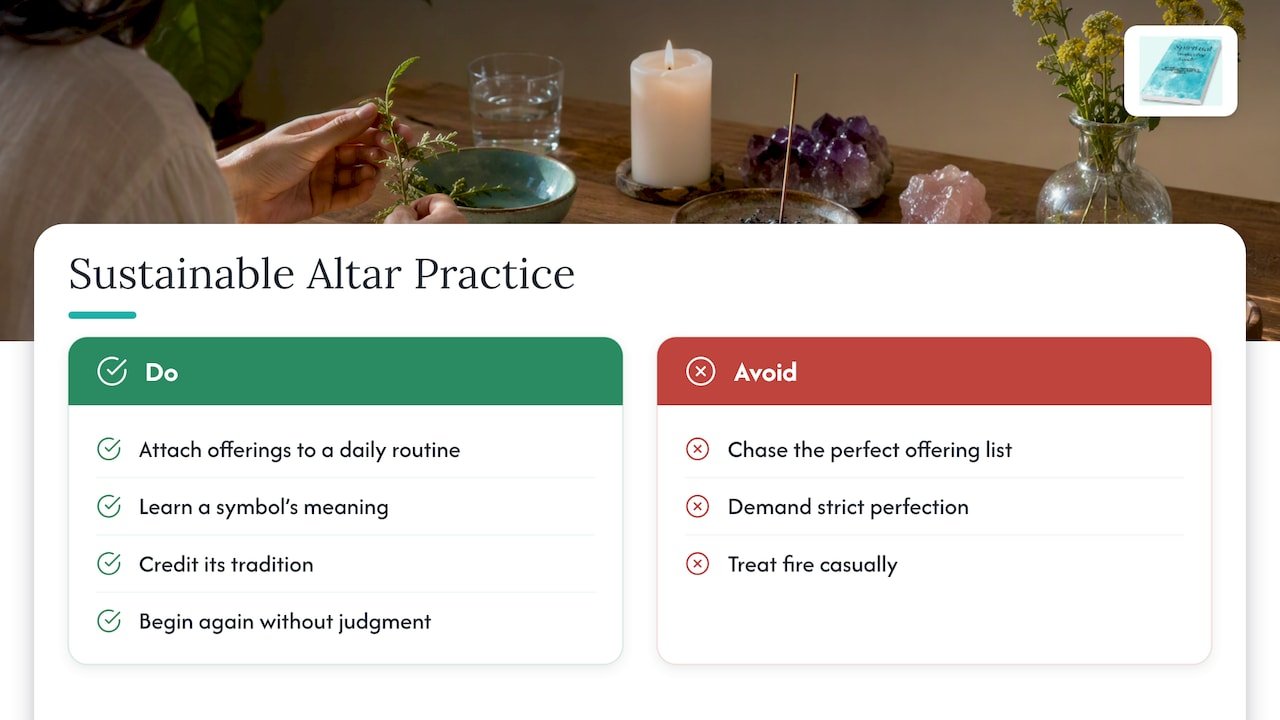
We also encourage honesty about where your practice comes from. Borrowing respectfully means learning the meaning behind a symbol, crediting its tradition, and recognizing that some materials carry weight for communities that use them every day. When in doubt, choose offerings from your own life and your own place, because those carry meaning that no borrowed list can.
And please treat fire seriously. A flameless candle gives up nothing important in most home practices.
— Sean
Take the Next Step With a Structured Guide
If you would like altar work to sit inside a wider routine of grounding, intention-setting and reflection, our Spiritual awakening guide is a downloadable PDF with step-by-step practices, a planner and journal, and templates for tracking your progress. It is a one-time purchase of $20, delivered instantly online.
Frequently Asked Questions
What are some good things to put on my altar?
Start with a few items that carry meaning: a candle or flameless light, a small bowl of water, fresh flowers or herbs, a stone, and something personal such as a photograph or a written intention. Add food only if you will remove it promptly. Three or four items are enough to begin.
What are some examples of spiritual offerings?
Common examples include water, flowers, fruit, bread or sweets, incense, candles, prayers, letters, and meaningful objects. In specific traditions they may include grains, milk, butter lamps or scarves, as described in documentation of Tibetan altar practice. Non-physical offerings such as song, prayer and gratitude also count.
How long should you leave an offering on an altar?
There is no universal duration, because traditions differ. For food and drink, a few hours to the end of the day is a practical default at home, and perishable items should never be left until they spoil. Flowers and objects can stay as long as you like.
What four elements must an altar contain?
No rule requires it. Some traditions, such as certain Wiccan and nature-based practices, represent earth, air, fire and water, often with a stone, a feather or incense, a candle and a bowl of water. If you use those, a flameless candle can stand in for fire. Other traditions organize altars entirely differently.
Sources
- How to make an ofrenda, or altar, for Día de los Muertos (NPR)
- Nahuas de Chicontepec, Veracruz, colocan altar de muertos y recrean el Xantolo (INAH)
- Conserving a Tibetan Altar (Philadelphia Museum of Art)
- Candles & Incense: Staying Safe this Holiday (Seattle Fire Department)
- Open-Flame Decorative Devices (Fairfax County Fire and Rescue)