
Energy detox symptoms usually show up as emotional waves, body sensations such as vibration or heat, and sometimes dissociative states like feeling unreal, and many people who practice meditation report some of them. Monitor what you feel, use grounding, and pause or reduce practice if symptoms worsen or interfere with daily life. Seek qualified help when your safety or functioning is at risk.
TL;DR:
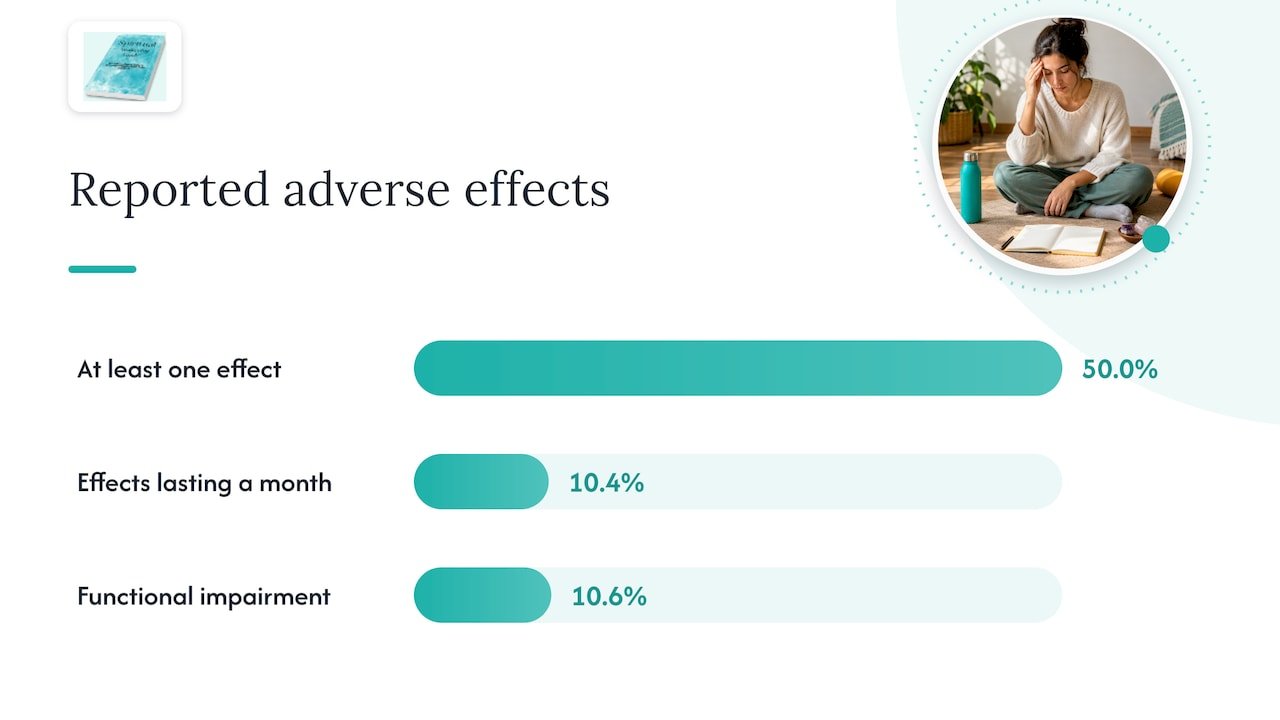
- Among 434 U.S. respondents, 50.0% reported at least one adverse effect tied to meditation; 10.4% reported effects lasting a month, and 10.6% reported impairment.
- Retreats and psychological distress are associated with adverse experiences; during symptoms, shorten sessions and favor embodied attention over open practice or forceful breathing.
- Seek professional support when symptoms last a month or disrupt work, meals, or sleep; suicidal thoughts or severe dissociation require urgent help.
- Chest pain, fainting, sudden severe headache, weakness, or trouble speaking calls for prompt medical care; thyroid, sleep, and medication problems can mimic spiritual experiences.
Table of Contents
- Which energy detox symptoms are people reporting?
- Why does energy clearing trigger these symptoms?
- When should you pause and get help?
- How do you steady yourself during an episode?
- How do energy detox symptoms map onto the chakras?
- What psychological changes come with an energy detox?
- Which supportive practices help beyond grounding?
- How should you adjust breathwork and meditation during symptoms?
- How is sensation different from interpretation?
- What physical symptoms do people link to energy clearing?
- How do you tell awakening symptoms from medical ones?
- How long do energy detox symptoms last?
- A compassionate note on meaning and safety
- Where can you find a guide to support your integration?
- FAQ
- Sources
Which energy detox symptoms are people reporting?
When people say they are going through an energy detox, they usually describe one or more of four clusters. Energy language and clinical language often point to the same experience, so we list both.
- Emotional: anxiety, heightened emotional sensitivity, waves of crying or joy, and mood swings that seem out of proportion to events.
- Somatic: bodily vibration or flow, pressure, heat-like sensations, involuntary movements, muscle tension or pain, and changes in appetite or digestion.
- Sleep and arousal: insomnia, vivid dreams, and a wired, hyperaroused feeling that makes rest difficult.
- Dissociative and cognitive: derealization (the world feels unreal), depersonalization (you feel detached from yourself), emotional blunting, trouble concentrating, and intrusive memories or traumatic re-experiencing.
Research gives these experiences a measurable footing. A population-based U.S. study found that 50.0% of 434 follow-up respondents endorsed at least one meditation-related adverse effect, 10.4% reported effects lasting at least one month, and 10.6% reported some functional impairment, with anxiety, traumatic re-experiencing, and emotional sensitivity the most common reports.
Those numbers cut two ways. Unusual experiences are common, so you are not alone or broken. A smaller group has effects that last or get in the way of life, and that group deserves attention rather than reassurance.
Why does energy clearing trigger these symptoms?
Spiritual traditions and psychology describe the same events in different words. We find it most useful to hold both views at once.
The research frame we lean on is the window of tolerance. A Harvard-affiliated review of meditation-related adverse effects explains that many difficult experiences arise when nervous-system arousal exceeds your capacity to regulate it. Too much arousal produces anxiety, panic, or agitation (hyperarousal). Too little produces numbness or detachment (hypoarousal and dissociation).
Several factors shift where your window sits:
- Practice intensity and context: retreats and long, intensive sessions are associated with more unusual and adverse experiences. In a representative U.S. survey of meditators, retreat participation was among the predictors, alongside psychological distress and unusual beliefs.
- Technique type: a pre-registered survey linked null-directed methods with more psychotic-like experiences, while strongly embodied, attentional methods correlated with fewer.
- Tradition-specific models: kundalini and subtle-body vocabularies describe heat, tremors, spontaneous movement, and emotional extremes. These accounts are interpretive frameworks, not clinical proof, and we cover the background in how Kundalini awakening works.
- Trauma and mental-health history: people with pre-existing conditions are more likely to report unpleasant effects and to experience them more severely.
Pro Tip: Treat intensity as information about your window of tolerance, not as a measure of spiritual progress. If an experience pushes you past it, shorten the practice rather than push through.
When should you pause and get help?
Pausing practice is a sound response, not a failure. Use these thresholds as a clear line.
- Functional impairment: you struggle with work, self-care, eating, or daily tasks.
- Duration: symptoms last a month or more, or keep getting steadily worse.
- Danger signs: suicidal thoughts, severe dissociation that disrupts your sense of what is real, or an inability to eat or sleep safely.
- Who to contact: a trauma-informed mental-health professional for emotional and dissociative symptoms, a primary care clinician for severe physical symptoms, and emergency services if there is imminent risk.
- How supporters can help: clinical guidance recommends listening without dismissing or pathologizing, asking what help the person wants, creating a crisis plan together, and involving clinicians or emergency services when safety or functioning deteriorates.
A longer-lasting pattern is worth taking seriously. In that same population-based sample, about one in ten respondents reported effects lasting a month or longer, so the one-month line is a practical threshold, not an arbitrary one.
How do you steady yourself during an episode?
You do not need an elaborate protocol. A short toolkit, used consistently, does most of the work.
- Ground first: pace your breath so the exhale is longer than the inhale, press your feet into the floor, hold something cold, or walk slowly. The 5-4-3-2-1 technique (name five things you see, four you feel, three you hear, two you smell, one you taste) pulls attention back to the room. Our walkthrough of grounding techniques for anxiety covers these step by step.
- Pace your practice: pause intensive sessions, favor embodied and attentional methods over open or null-directed ones, and drop retreat-level intensity.
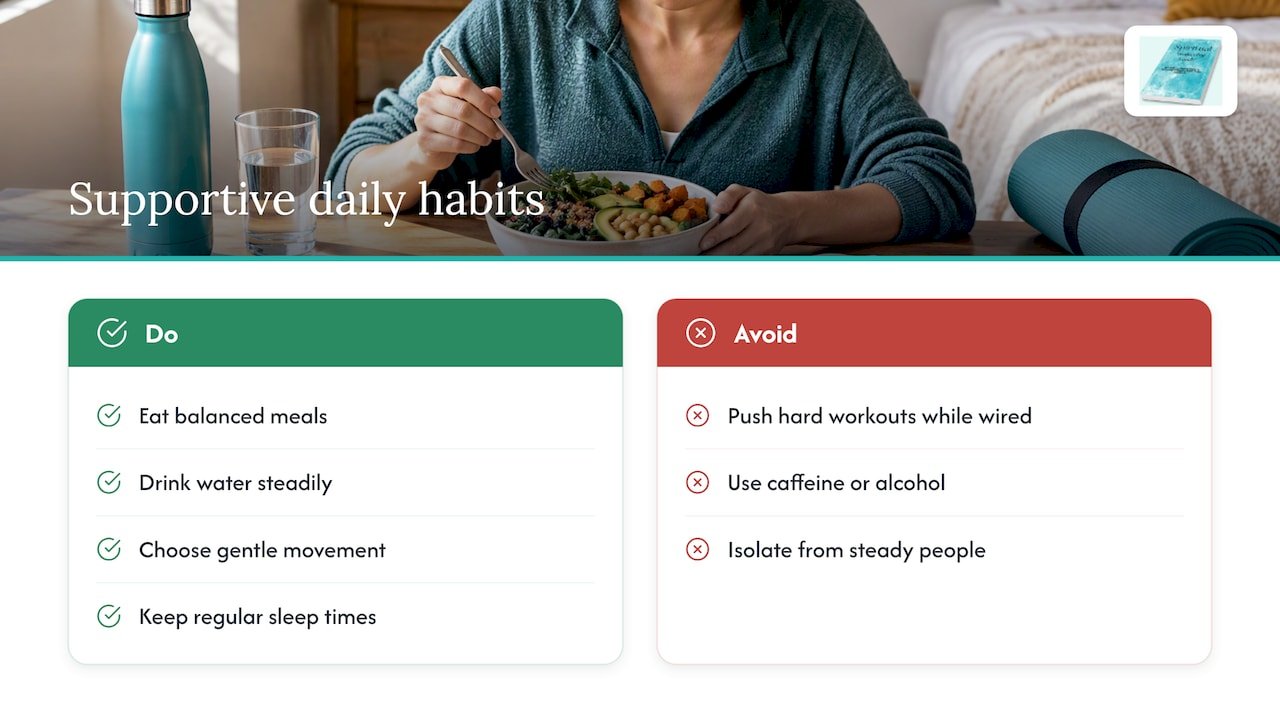
- Protect the basics: keep a regular sleep schedule, eat at regular times, move gently, cut back on stimulants, and avoid isolating yourself.
- Integrate with a routine: journal about what happened and what it might mean, check in with someone you trust, and track short daily habits so you can see what helps.
- Prepare to describe it: when you talk to a clinician or teacher, bring a timeline, the details of your practice, your mental-health history, and what made symptoms better or worse.
Pro Tip: Write down the date, what you practiced, and what you felt right before and after. A brief log gives a clinician or teacher far more to work with than memory does.
How do energy detox symptoms map onto the chakras?
Many seekers organize their experiences through the chakra system, which assigns emotional and bodily themes to points along the body’s center line. Within that vocabulary, pressure or tightness at the throat is read as a blocked voice, heat in the belly as stirred willpower, and chest tenderness or crying as the heart opening.
This map can be a useful language for noticing where you feel things, and it is a meaning-making tool rather than a diagnostic one. Qualitative research on Vajrayāna practitioners found that bodily vibration, pressure, heat, and involuntary movement are reported across traditions, and that researchers note multiple possible interpretations rather than proof of cleansing.
A practical way to use the chakra frame safely:
- Note which region of the body feels most active and what emotion travels with it.
- Treat the pairing as a prompt for curiosity, not a verdict about a “blocked” center.
- If one area keeps producing pain, tremor, or distress, shift attention to a neutral, comfortable area of the body and ease the practice.
If a sensation at any energy center is severe, sudden, or frightening, the chakra label matters far less than getting it checked, as we cover below.
What psychological changes come with an energy detox?
Beyond sensations, many people notice shifts in how they see themselves. Old roles feel less fitting. Friendships and habits that once felt natural can seem strange. Beliefs you held for years may loosen, and a new worldview can feel exciting and unsettling in the same week.
Some of this is ordinary growth. Some of it is strain on a nervous system that is processing more than it can hold. The qualitative work on Buddhist practitioners cautions against a single “release” explanation, because meaning depends on trauma history, cultural framework, and interpersonal context.
Common adjustments include:
- Identity questions: “Who am I without my old story?” can arrive suddenly and feel destabilizing.
- Shifting values: priorities around work, relationships, and money may change faster than your life can follow.
- Social distance: people around you may not share your vocabulary, which can feel lonely.
- Emotional blunting or flooding: both can appear in the same month.
Go slowly with big decisions while this is happening. Wait for stability before quitting a job or ending a relationship. A journal, a trusted friend, and a teacher or therapist who respects your spiritual framework all help you hold the change without being carried off by it.
Which supportive practices help beyond grounding?
Grounding calms the moment. Daily habits keep your window of tolerance wide enough that fewer moments need calming.
Nutrition. Eat regular, balanced meals with protein and complex carbohydrates so blood sugar does not swing and amplify anxiety or shakiness. Skipping meals during an intense phase is a common mistake.
Hydration. Drink water steadily through the day. Headaches and fatigue that people attribute to clearing are often simple dehydration.
Gentle movement. Walking, stretching, easy yoga, or a slow swim discharge nervous energy without overstimulating you. Avoid pushing hard workouts when you already feel wired.
Rest and rhythm. A fixed bedtime and wake time give your nervous system a predictable anchor. Dim light and screens before bed help when sleep is disrupted.
Stimulants. Caffeine and alcohol can intensify anxiety and sleep disruption, so reduce them while symptoms are active.
Connection. Spend time with people who steady you. Isolation tends to magnify intensity.
Many readers pair these habits with a short ritual, such as a warm bath or a few minutes of journaling. Our essential guide to spiritual awakening and grounding rituals gives a longer primer on building that routine.
How should you adjust breathwork and meditation during symptoms?
Breathwork and meditation can bring symptoms on, and they can also settle them. The difference is in how you adjust the practice.
When symptoms are active, make practice shorter, gentler, and more anchored to the body:
- Shorten sessions to a few minutes, and stop when intensity rises rather than waiting it out.
- Keep eyes open or soften your gaze, since closing them can deepen dissociation for some people.
- Choose attentional, embodied methods, such as feeling your feet, counting breaths, or a slow walking meditation. The PLOS One survey found that strongly embodied, attentional methods correlated with fewer psychotic-like experiences.
- Avoid forceful breathing such as rapid or prolonged breath holds while you feel unstable, because they push arousal higher.
- Pause open, formless practices that ask you to dissolve the sense of self.
The goal is to stay inside your window of tolerance. The systematic review of adverse events reported a pooled prevalence of 8.3% overall, and many events were transient and tied to the time during or just after practice. Adjusting how you practice is often enough to keep an uncomfortable episode from turning into a lasting one.
How is sensation different from interpretation?
This distinction does more for your safety than any technique. A sensation is what your body and mind actually report: a buzzing in the hands, pressure in the chest, a wave of grief. An interpretation is the story attached to it: “my energy is clearing,” “my heart chakra is opening,” or “my nervous system is overloaded.”
Researchers describe this directly. The same vibration, heat, or involuntary movement can be framed as purification in one tradition and as a practice-related difficulty in another, depending on context and trauma history, as the practitioner-level analysis of Vajrayāna accounts notes.
You do not have to choose between meaning and caution. Try holding both:
- Describe the sensation plainly first, in words anyone could verify: “tight chest, fast heartbeat, hands tingling.”
- Then add your interpretation, if you have one: “this feels like grief moving.”
- Ask what the sensation needs, not only what it means. Does it need grounding, rest, a conversation, or a doctor?
A clinical research review of mindfulness programs advises against treating every uncomfortable experience as proof that clearing is working. Distress that persists is a signal to adjust, regardless of the story you tell about it.
What physical symptoms do people link to energy clearing?
People commonly attribute fatigue, headaches, muscle aches, digestive upset, and changes in appetite or sleep to energy clearing. These are real experiences, and they overlap with ordinary physical causes.
A few patterns come up repeatedly:
- Fatigue: a nervous system working hard through emotional release or poor sleep can leave you drained for days.
- Headache and pressure: tension, dehydration, caffeine changes, and prolonged intense concentration are frequent contributors.
- Digestive changes: stress responses affect the gut, and a changed diet during a “cleanse” adds to it.
- Heat, tremor, or shakiness: these appear in the somatic accounts across traditions, and they can also reflect anxiety or low blood sugar.
Here is where the physical sense of “detox” needs care. We use the word to describe a spiritual process, and no spiritual framework should stand in for a medical evaluation. Restrictive eating, fasting, or herbal protocols adopted in the name of clearing can themselves cause symptoms.
Support the body with water, regular meals, rest, and gentle movement first. If a physical symptom is new, severe, or does not ease, treat it as a health question before a spiritual one.
How do you tell awakening symptoms from medical ones?
A spiritual reading is only one possible explanation, and some symptoms must be ruled out medically before any other frame is applied. Our guide to the signs of a spiritual awakening helps with the ordinary end of the range. This section covers the other end.
See a medical professional promptly, rather than waiting for the symptom to pass, if you notice:
- chest pain, fainting, or a racing heart that does not settle
- sudden severe headache, vision changes, weakness, numbness, or trouble speaking
- seizures, confusion, or loss of consciousness
- unexplained weight loss, persistent fever, or symptoms that keep worsening
- hallucinations, paranoia, or losing track of what is real
Several medical conditions mimic awakening experiences, including thyroid problems, anemia, vitamin deficiencies, sleep disorders, anxiety and panic disorders, and medication or substance effects. A clinician can check for these in a routine visit.
You can still honor the spiritual meaning of what you are going through. Telling a doctor about your practice is useful information, not an admission of something wrong. Get the medical question answered first, and your spiritual path will rest on steadier ground.
How long do energy detox symptoms last?
Onset varies. Some people notice effects during a session or within hours, others after days of intense practice or a retreat, and some after a stretch of emotional stress with no change in practice at all.
For most, episodes are short. The systematic review found that many adverse events were transient and occurred during or immediately after practice. A smaller group has longer effects. In the mindfulness-program study, 6–14% had lasting bad effects associated with hyperarousal or dissociation, such as sleep disruption, escalating anxiety, derealization, and emotional blunting.
A useful way to sort your own timeline:
- Hours to a few days: usually tied to a recent session or stressor. Ground, rest, and ease off practice.
- Weeks, with gradual improvement: common after intense practice. Keep routines steady and keep a log.
- A month or more, or getting worse: time for professional support, as described in the section on getting help above.
Duration matters more than intensity. A dramatic night that resolves is a different situation from a mild but unrelenting change that keeps eroding your sleep or concentration. Trust the calendar and your daily functioning.
A compassionate note on meaning and safety
Many seekers find real meaning in these experiences, and I won’t tell you otherwise. A wave of grief, a surge of heat, a sense that something old is leaving can all be part of a path worth taking seriously.
Meaning and safety can both be true. Treat intense experiences as signals to adjust your practice, not as certificates of progress. If you have a trauma history, move more slowly and keep support close.
Habit-based rituals, short grounding routines, and a simple journal do more over time than any dramatic breakthrough. They build the steadiness that lets insight land without costing you your footing.
— Sean
Where can you find a guide to support your integration?
We offer a downloadable spiritual awakening guide for readers who want this article’s advice in a structured, daily form.

- What it includes: grounding rituals, energy-clearing practices, journaling templates, and forgiving habit trackers.
- How it supports this article: daily grounding, paced practice, journaling prompts, and integration templates.
You can get the guide for $20 on our downloads page. A good next step is to start with one grounding ritual and a short journal entry tonight.
FAQ
What are the most common energy detox symptoms?
The most common reports are emotional sensitivity, anxiety, body sensations like vibration or heat, and sleep disruption. In a U.S. population-based study, anxiety, traumatic re-experiencing, and emotional sensitivity were the most frequent. Dissociative experiences such as derealization are less common but well documented.
Are energy detox symptoms normal?
Unusual experiences are common among people who meditate, so having them does not mean something is wrong. A representative U.S. survey documented unusual experiences among meditators. What matters is whether symptoms impair your daily life or last beyond a month.
How long do energy detox symptoms last?
Most episodes are short and tied to practice or stress, and many resolve within days. A smaller group has lasting effects, and in one mindfulness-program study, 6–14% had lasting bad effects. Symptoms lasting a month or more call for professional support.
When should I stop meditating because of symptoms?
Pause or reduce practice if symptoms worsen, disrupt your sleep, or interfere with work, eating, or self-care. Stop and seek help right away if you have suicidal thoughts or lose touch with what is real. You can return gradually with shorter, more embodied practices once you feel steady.
Can energy detox symptoms be something medical?
Yes, and a medical check is wise when symptoms are new, severe, or persistent. Thyroid issues, anemia, sleep disorders, anxiety conditions, and medication effects can all mimic these experiences. Telling your clinician about your practice helps them sort it out.
Sources
- Prevalence of meditation-related adverse effects in a population-based sample in the United States
- Meditation-related psychological adverse effects, challenging, unpleasant, and negative experiences: