
A spiritual shower ritual is a short, intentional shower practice that uses breath, imagery, and a closing grounding action to release emotional residue and reset your focus. The simplest version takes 30 to 60 seconds of focused intention layered over an ordinary shower. Practiced daily, it works as emotional first aid and a form of energetic hygiene, and research on brief mindful bathing supports its calming, stress-reducing effect.
TL;DR:
- A 60 to 90 second spiritual shower resets your emotional state with three grounding breaths, visualization, and a single intention phrase.
- Shorter routines are effective for busy mornings, while longer rituals with scents and visualization suit days with more emotional weight.
- Essential oils should always be properly diluted, and safety precautions like non-slip mats are essential for preventing accidents during the ritual.
- Repeating the same intention phrase weekly builds emotional association faster, making the ritual more effective over time.
- Consistently incorporating the ritual into existing shower habits or adjusting it for accessibility helps sustain the practice beyond initial enthusiasm.
Table of Contents
- How Do You Do a Spiritual Shower Ritual Step by Step?
- Which Version Fits Your Schedule Today?
- What Tools and Ingredients Actually Help?
- How Do You Make the Ritual Actually Stick?
- Where Does Ritual Bathing Come From Historically?
- What Safety Rules Should You Follow?
- How Do Spiritualmethod’s Guides Support This Practice?
- A Practitioner’s Note on Keeping It Small
- Ready to Go Deeper Than the Shower?
- Sources
- FAQ
How Do You Do a Spiritual Shower Ritual Step by Step?
A spiritual shower ritual follows a simple arc: prepare, arrive, cleanse, and close. You don’t need candles, playlists, or a Pinterest-worthy bathroom. You need water, a few minutes, and a clear intention.
1. Prepare before you step in. Tidy the shower space so nothing distracts you. Wipe down a slippery ledge, set out a towel within reach, and decide on one word or phrase for your intention. Something like “release,” “clarity,” or “I am letting go of today” works better than a vague wish for “good vibes,” because a specific intention gives your brain something concrete to act on.
2. Arrive with three grounding breaths. Before the water even hits you, stand still and take three slow breaths. On the exhalation, silently or out loud, name what you want to release. It might be a tense conversation, a low mood, or nothing in particular except the day’s static.
3. Let the water become a visualization. As the water runs over your head and shoulders, picture it as light or color washing away anything heavy. Some people imagine gray water swirling down the drain; others picture gold light settling into their skin while tension drains out through their feet. Wash in a deliberate order, starting at the crown of the head and moving downward, as if you’re literally rinsing the day off in sequence.
4. Use a simple phrase to anchor the moment. Repeat something short as you wash: “I release what isn’t mine to carry” or “This water clears my path.” Say it in your head or under your breath. The words matter less than the repetition, which keeps your mind from wandering back to your inbox.
5. Close with intention, not just a towel. Before you turn off the water, take one more breath and mentally seal the practice: “I am clear. I am ready.” Step out, dry off, and do one small grounding action, drink a glass of water, or write a single line in a journal (“Released: worry about Monday’s meeting”). If you used any physical materials, like herbs or petals, clean them out of the drain right away.
Here’s a condensed script you can memorize for the full three to five minute version:
- Stand in the water and take three breaths, naming what you want to release.
- Visualize the water as light, washing from your crown down to your feet.
- Repeat your phrase quietly with each pass of water over your body.
- Wash normally, keeping your intention in mind rather than rushing.
- Before stepping out, take one closing breath and state your intention as already true.
- Dry off, drink water, and jot one line about what you released.
Pro Tip: Keep your intention phrase the same for at least a week before changing it. Repetition builds the emotional association faster than switching phrases daily, so the ritual starts working faster the less you fuss with it.
Which Version Fits Your Schedule Today?
Not every day calls for the same depth of practice, and that’s the point. A spiritual bath ritual that only works when you have ten spare minutes will get abandoned the first busy week. Build flexibility in from the start.
- 60 to 90 second reset: Three breaths, one release phrase, one closing statement. Ideal before a stressful meeting or right after a hard conversation.
- 5 to 10 minute fuller ritual: Add a diluted essential oil scent on a washcloth (never directly on skin) and a slower visualization sequence. Good for days when you have more emotional weight to process.
- Morning version: Focus intentions on clarity and energy. Try phrases like “I welcome focus” or “I step into today steady.”
- Evening version: Focus on release and rest. Phrases like “I let go of what today demanded” work well before winding down for sleep.
- Before bed specifically: Pair the ritual with a warm shower, since warm water before sleep is linked to easier sleep onset when combined with a calming routine.
Choose the shorter version on chaotic mornings and save the fuller ritual for evenings when you actually have the ten minutes to spare. Consistency beats intensity here.
What Tools and Ingredients Actually Help?
Most of the value in a shower cleansing ritual comes from attention and breath, not props. But a few additions can deepen the sensory experience if used correctly.
- Salts: A small handful of sea salt or Epsom salt dissolved in a bowl of warm water, then poured over the shoulders, works well. Avoid rubbing raw salt crystals directly on skin.
- Herbs: Place dried rosemary, lavender, or bay leaf in a muslin bag and hang it under the shower stream so the water carries the scent, rather than scattering loose herbs that clog the drain.
- Essential oils: Never apply undiluted oil to skin. Mix a few drops into a carrier oil or unscented body wash first, since oils don’t dissolve in water on their own and will sit on the skin’s surface if added directly.
- Crystals: Keep them outside the direct water stream, on a shelf or windowsill nearby, and cleanse them separately afterward rather than soaking them under running water.
Statistic Callout: DermNet NZ’s clinical review confirms that undiluted essential oils are a documented cause of allergic contact dermatitis, which is why a patch test on your inner forearm 24 hours before first use is worth the extra step.
Pro Tip: If you’re unsure whether an oil will irritate your skin, skip it entirely for the first month. A ritual built on breath and water works fully without a single drop of oil.
How Do You Make the Ritual Actually Stick?
The rituals that survive past week one are the ones people shape around their own life, not a template copied from someone else’s routine. A few adjustments make a real difference.
- Refine your intention over time. Start broad (“I want peace”) and narrow it as you notice what you actually need (“I release comparing myself to coworkers”).
- Choose language that fits you. Some people prefer explicitly spiritual phrasing tied to a faith tradition; others prefer secular language focused on stress and mindset. Both work equally well.
- Adapt for accessibility. If standing in a shower isn’t comfortable, a seated shower chair or a basin foot soak with the same breathing and visualization steps carries the same benefit.
- Stack it onto an existing habit. Attach the ritual to a shower you already take, rather than trying to add a brand-new block of time to your day.
A daily habit-stacking approach tends to outlast rituals that depend on remembering to schedule something extra.
Where Does Ritual Bathing Come From Historically?
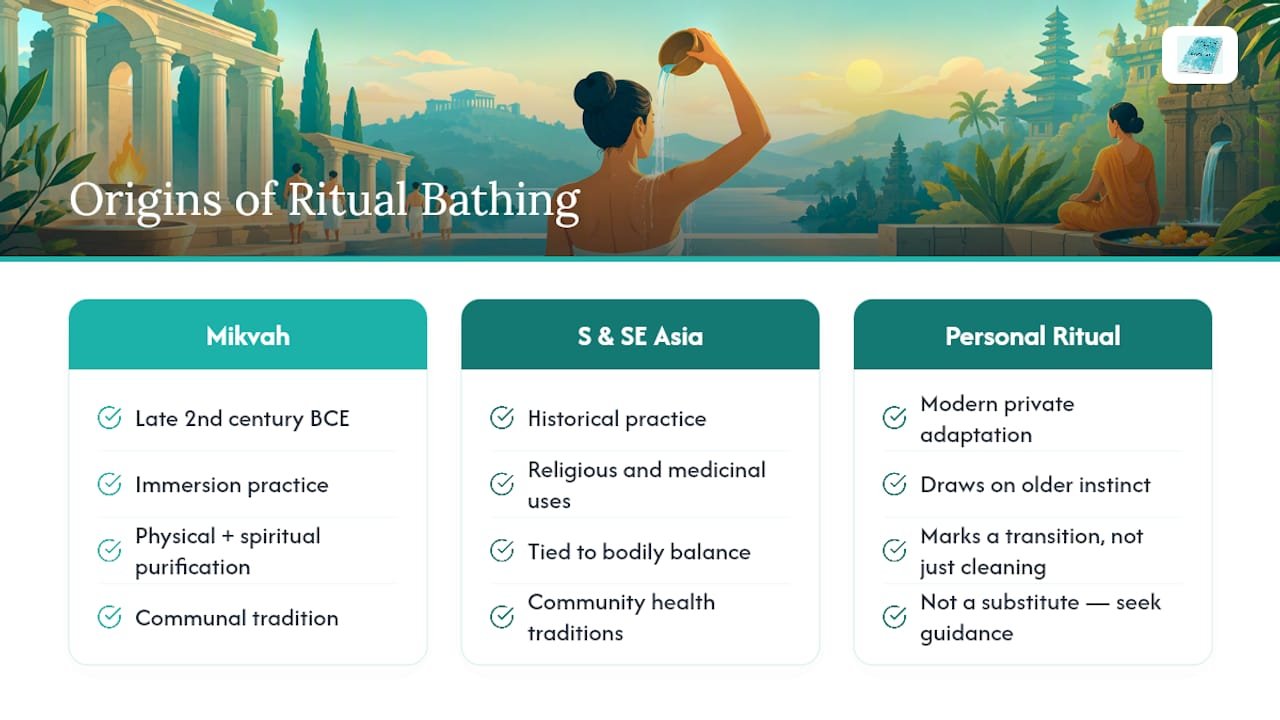
Intentional bathing isn’t a modern invention. Jewish immersion practices in the mikvah trace back to the late second century BCE, combining physical cleansing with spiritual purification long before “self-care” was a phrase anyone used. Across South and Southeast Asia, bathing has historically served both religious and medicinal purposes, tied to ideas of bodily balance rather than treated as separate from health practice.
A daily spiritual shower ritual isn’t a substitute for those communal, often multi-day traditions, and it shouldn’t be presented as equivalent to them. Think of it as a personal, private adaptation drawing on a much older instinct: that water can mark a transition, not just clean a body. If a specific tradition draws your interest beyond casual borrowing, seek guidance from someone who practices within that tradition rather than assembling pieces secondhand.
What Safety Rules Should You Follow?
Essential oils are the biggest overlooked risk in shower rituals. DermNet NZ documents allergic contact dermatitis as a real and recurring reaction to essential oils, which is why undiluted application is never advisable, regardless of how “natural” an oil is marketed as.
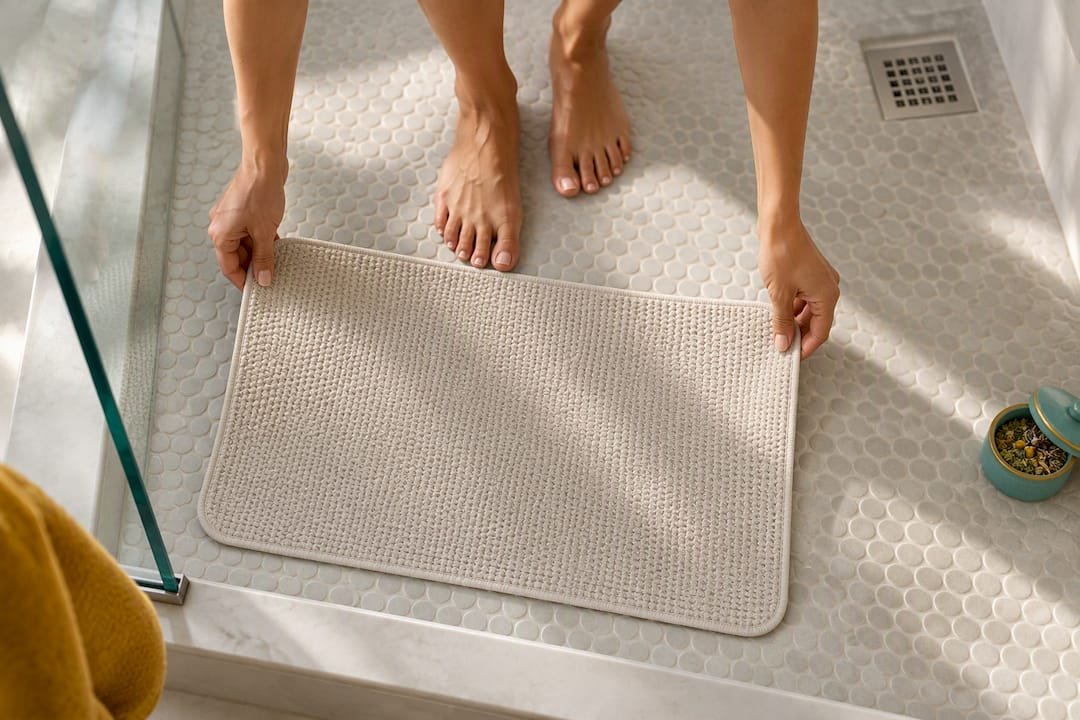
Beyond skin reactions, physical safety matters just as much. Oils, salts, and flower petals on a shower floor create real slip hazards, so a non-slip mat and battery-operated candles instead of open flame are worth the small investment. Clean petals, herbs, and salt residue out of the drain right after each ritual to avoid buildup and clogging.
If you’re pregnant, have a diagnosed skin condition, or are managing a chronic illness, check with a doctor before introducing new essential oils or herbal ingredients into your routine.
How Do Spiritualmethod’s Guides Support This Practice?
Structured, repeatable frameworks can treat sacred bathing rituals as part of a broader daily hygiene system rather than a one-off experiment. The grounding rituals covered in Spiritualmethod’s guide to spiritual awakening extend the same principles used in a shower ritual, intention, breath, and closing action, into other parts of a daily routine.
Downloadable materials including ritual templates and habit trackers can help make practices like this sustainable past the first enthusiastic week, which tends to be where most self-guided routines quietly fall apart.
A Practitioner’s Note on Keeping It Small
The rituals that last aren’t the elaborate ones. Keep the tools minimal, the time short, and the self-judgment out of it entirely. A realistic week might look like a 60 second reset most mornings, a fuller ritual on Sunday evening, and nothing at all on the day you’re too exhausted to bother. That’s not failure. That’s a sustainable practice adjusting to a real life, and it’s worth treating every version of it, even the shortest one, as good enough.
— Sean
Ready to Go Deeper Than the Shower?
A downloadable guide can provide a full framework for building daily spiritual practice without burning out on ambition by week two. The Spiritual Awakening Guide costs $20 as a one-time purchase and includes step-by-step practices for grounding, energy clearing, and intention-setting, along with habit trackers built to be forgiving rather than punishing when you miss a day.
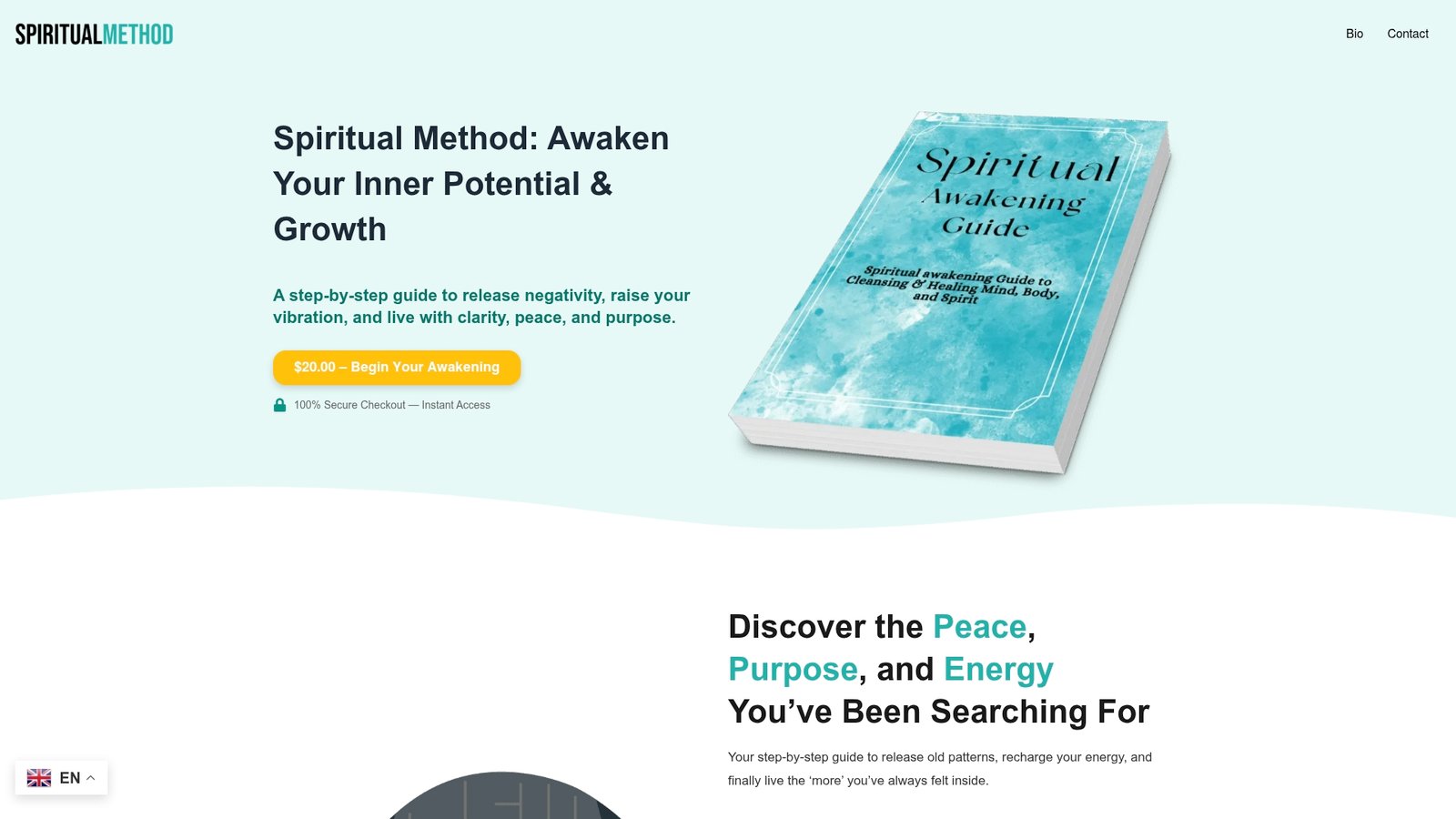
If the shower ritual above is your entry point, the guide is the next layer: printable ritual templates, a spirituality planner and journal, and extended practices that connect what you’re doing in the shower to the rest of your day. It’s built for people who want structure without rigidity, actionable steps without guilt trips. Head to the download page to see the full contents and get instant access.
Sources
- Bathing practices as a religious and medical encounter: Water, climate and health across Monsoon Asia (MDPI)
- Allergic contact dermatitis to essential oils — DermNet NZ
- Spiritual Shower Cleansing: A Grounded Ritual to Release Stress and Reset Your Energy — Inner Divine Path
- Spiritual Bath: Salts, Herbs and How to Do One — Lunar Haus
FAQ
How Do You Do a Spiritual Cleansing Shower?
Stand under the water, take three grounding breaths, and name what you want to release either silently or aloud. Wash your body in a deliberate order while repeating a short phrase, then close with one grounding action like drinking water or writing a single journal line.
How Do You Remove Negative Energy From Your Body While Bathing?
Visualize the water as light or color pulling tension out through your feet and down the drain as you wash. Pairing this with slow breathing and a repeated release phrase gives your mind a clear signal that the practice has a beginning and an end, which supports the stress-reducing effect of brief, intentional bathing.
What Are the Rules for a Spiritual Bath?
There’s no single universal rulebook, but the consistent guidance across practical resources is to dilute any essential oils in a carrier before adding them to water, keep salts and herbs in a muslin bag rather than loose, and always follow with basic hygiene first. A spiritual bath typically runs 20 to 30 minutes, while a shower version is usually a shorter, adapted take on the same principles.
What Does a Shower Do Spiritually?
A shower ritual gives you a repeatable, low-effort way to mark an emotional transition, closing out a hard day or opening a new one with intention rather than autopilot. Practiced consistently, it functions as a form of daily energetic hygiene rather than a one-time fix.
Does Spiritualmethod Offer Guidance Beyond the Shower Ritual?
Yes. The Spiritual Awakening Guide is a $20 one-time download that expands on rituals like this one with structured practices, journaling prompts, and habit trackers for ongoing spiritual self-care.