
Most manifestation mistakes trace back to one root problem: a mismatch between what you feel and what you do. You visualize a goal but take no action, or you take frantic action while feeling lack and doubt underneath it. The fix is not more affirmations. It is closing that gap, starting with one small aligned step today.
TL;DR:
- Rigidly controlling the method and timeline of your goal can block opportunities and hinder manifestation progress.
- Visualizing without emotional engagement or inspired action prevents the brain from recognizing and acting on real opportunities.
- Underlying subconscious limiting beliefs and fears often sabotage efforts despite positive affirmations and intentions.
- Practicing vague, unrealistic, or overly rigid goals reduces clarity and emotional buy-in, making progress less likely.
- Inconsistent practice, impatience, and premature sharing drain motivation and weaken the internal alignment necessary for manifestation.
Table of Contents
- The Most Common Manifestation Mistakes (And What They Signal)
- Practical Fixes for Each Manifestation Mistake
- Why These Mistakes Block Manifestation, Psychologically
- Ignoring the Importance of Gratitude in Manifestation
- Neglecting Underlying Subconscious Blocks
- Focusing Only on Positive Thinking Without Addressing Fears
- Setting Vague or Unrealistic Goals
- Not Practicing Visualization Techniques Effectively
- Lack of Patience and Trust in the Process
- A Personal Note on Getting This Wrong Before Getting It Right
- A Structured Way to Practice These Fixes Daily
- Sources
- FAQ
The Most Common Manifestation Mistakes (And What They Signal)
Recognizing a pattern is the first step to breaking it. Here are the manifestation mistakes that show up most often, along with the quick signs you’re doing them.
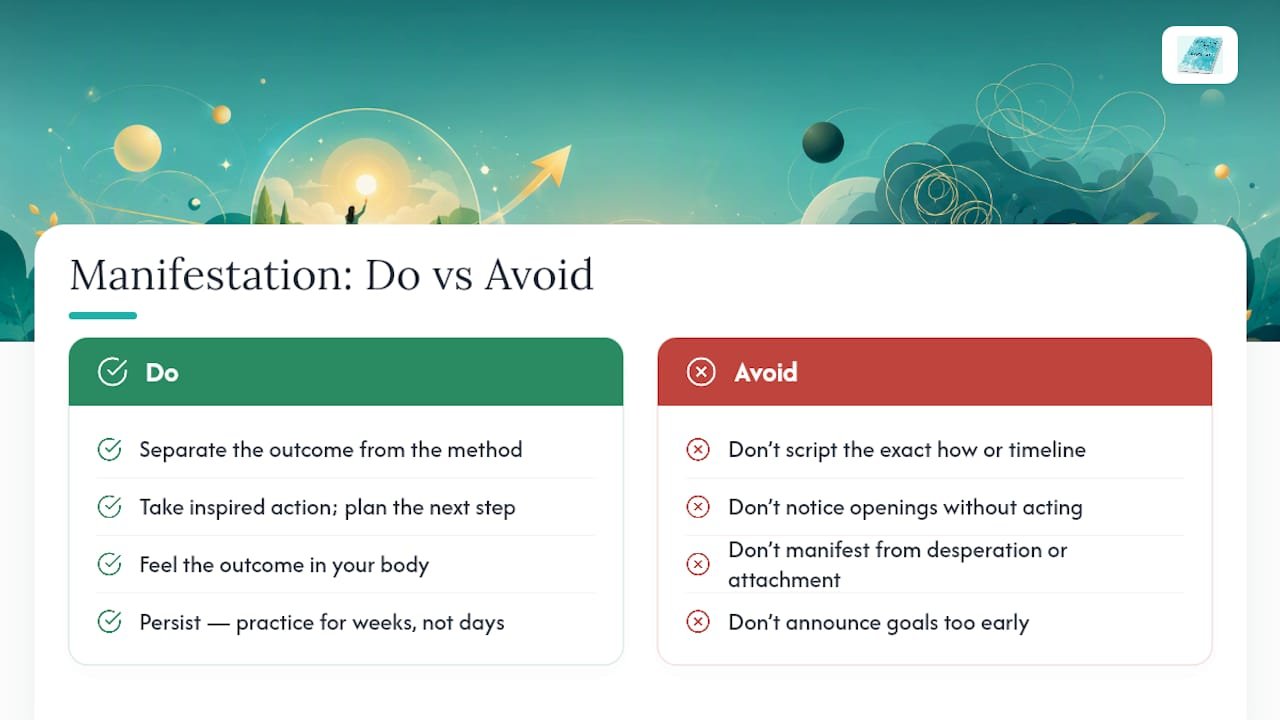
1. Confusing control with clarity. You know the goal but insist on scripting exactly how it arrives, down to the timeline and the messenger. This blocks you because rigid control over the “how” narrows your attention to one path and filters out every other opportunity. The fix: separate the outcome you want from the method that delivers it.
2. Not taking inspired action. You meditate on the goal daily but never respond to the nudge, the opportunity, or the invitation that shows up afterward. Visualization primes your brain to notice openings, but noticing without moving accomplishes nothing. Mental contrasting research shows that pairing visualization with a concrete action plan consistently outperforms visualization alone.
3. Lacking emotional engagement. You picture the goal like a checklist item, flat and detached, rather than feeling it in your body. Emotion is what tells your brain a thought matters enough to encode and act on. Without it, the exercise is mental noise.
4. Competing limiting beliefs. You say “I am open to abundance” while a quieter, older belief insists you don’t deserve it. This inner misalignment cancels out conscious intention because the subconscious belief usually wins the tug of war.
5. Inconsistency and quitting too soon. You practice hard for four days, see nothing, and stop. Genuine belief change tends to take weeks, not days, of repeated practice to override old default responses.
6. Manifesting from desperation or attachment. You need this outcome so badly that every day without it feels like proof it’s not coming. That anxious grip narrows cognitive bandwidth, making you worse at spotting the very opportunities you’re trying to attract.
7. Being too literal or rigid about outcomes. You demand the exact job title, the exact person, the exact timeline, and dismiss anything that doesn’t match precisely. This blocks adjacent, sometimes better, versions of the outcome from registering as progress.
8. Oversharing goals too early. You tell everyone about the plan the moment it forms, and the praise feels so good that the motivation to actually do the work quietly evaporates. Public announcement can trigger a premature sense of accomplishment, which reduces follow-through.
Each of these has a direct corrective cue, covered next.
Practical Fixes for Each Manifestation Mistake
Small, specific practices correct these patterns faster than trying to “think more positively.” Try these: feeling-first visualization: Before picturing the outcome, spend a brief moment naming a body sensation you associate with having it already (like relaxed shoulders or a steadier breath). Feeling before imagining anchors the visualization in something real.
- The “one thing by noon” rule: Each morning, name a single small action tied to your goal and complete it early in the day. This is an implementation intention, a technique shown to convert intention into follow-through far more reliably than visualization by itself.
- Habit stacking for consistency: Attach your manifestation practice to an existing daily habit, like brushing your teeth or making coffee, to help it survive low-motivation days.
- Journaling prompts for limiting beliefs: Ask yourself, “What beliefs about myself make this goal feel impossible?” Write the answer honestly without editing.
- Mini-experiments for detachment: Pick a small, low-stakes desire and practice wanting it without constant checking. Notice how it feels to release attachment on something minor before applying it more broadly.
- A privacy protocol for new goals: Keep a fresh intention private until you reach an initial milestone to avoid premature social rewards that can reduce motivation.
Pro Tip: Do a 30-second somatic check before committing to any goal: place a hand on your chest, state the desire out loud, and notice whether your body relaxes or tightens. A tight, resistant response usually points to a hidden belief that needs attention before the goal will move.
Why These Mistakes Block Manifestation, Psychologically
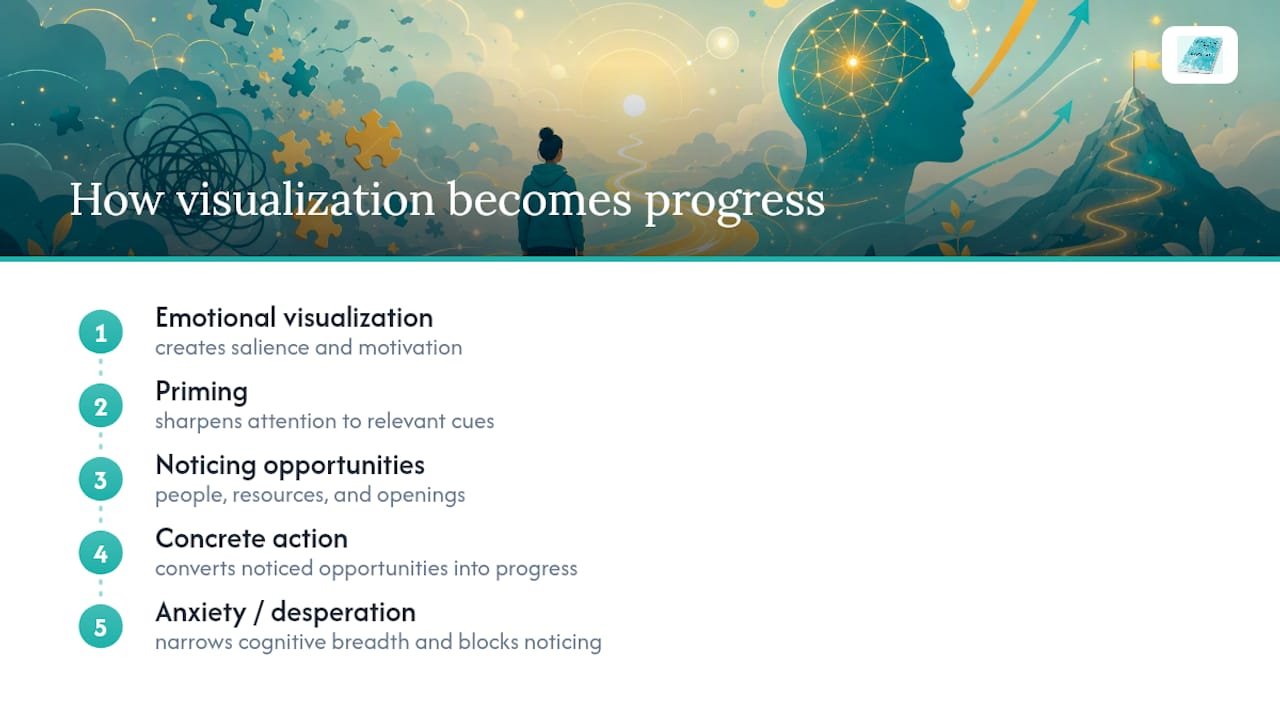
Every mistake above maps to a real cognitive mechanism, not superstition. Emotion strengthens memory consolidation and motivation, which is why visualization without emotional engagement produces flat results: the brain simply doesn’t tag a neutral thought as important.
Visualization also works through priming, sharpening your attention so you notice relevant people, resources, and openings you’d otherwise scroll past. But priming only surfaces the opportunity; it doesn’t act on it for you, which is why skipping the action step wastes the priming entirely. Meanwhile, desperation and anxiety measurably narrow cognitive breadth, making it harder to think flexibly or notice paths that don’t look like what you expected.
Ignoring the Importance of Gratitude in Manifestation
Skipping gratitude keeps your baseline emotional state anchored in lack, even while you’re visualizing abundance. That contradiction is one of the quieter manifestation pitfalls, because the two signals cancel each other out: you picture having more while your body still feels like it has too little.
Gratitude acts as a calibration tool. Naming a few specific things you’re genuinely thankful for each morning shifts your emotional state from scarcity toward sufficiency, enhancing feeling-first visualization effectiveness. It’s not about forcing positivity over real problems. It’s about giving your nervous system evidence that good things already exist, so new good things have somewhere to land.
A short daily practice works better than an occasional grand gesture. Spiritualmethod’s gratitude ritual walks through a simple seven-step version designed to take a few minutes and fit before or after your main practice. Consistency here matters more than elaborate wording. Three honest sentences beat one polished paragraph you write once a month.
Neglecting Underlying Subconscious Blocks
Surface-level affirmations often fail when deeper subconscious beliefs contradict them. This common error is subtle: you may repeat positive words for weeks without progress if unexamined older beliefs silently dominate.
These blocks usually formed early, often from a single painful experience or a repeated message absorbed in childhood (“money is hard to come by,” “people like us don’t get opportunities like that”). They don’t announce themselves. They show up as a strange resistance to the very thing you claim to want, or a pattern of self-sabotage right when progress starts.
Journaling is the most accessible way to surface them. Ask direct questions like “What am I afraid will happen if I get this?” and let the answer come without editing it. If a recurring theme keeps surfacing, a structured process for breaking negative thought patterns can help you work through it methodically rather than hoping willpower alone will override it. Subconscious work is slower than positive thinking, but it’s usually the difference between a practice that finally sticks and one that keeps quietly failing.
Focusing Only on Positive Thinking Without Addressing Fears
Positive thinking without addressing fears is a persistent myth about manifestation. Adding affirmations over unexamined fear buries it temporarily, but the fear typically resurfaces as procrastination, self-doubt, or urges to quit before improvement.
A more effective approach treats fear as information rather than an enemy to suppress. If you’re afraid success will change your relationships, or that visibility will invite criticism, that fear is telling you exactly where your inner alignment is shaky. Naming it out loud, or in writing, takes away much of its charge. The 7-step guide to spiritual awakening walks through this kind of honest inventory, pairing it with practical steps for releasing what surfaces rather than just observing it.
Genuine confidence comes from having faced the fear and found it survivable, not from refusing to look at it. That’s a meaningfully different foundation than forced positivity, and it holds up far better under pressure.
Setting Vague or Unrealistic Goals
“I want to be happy” or “I want more abundance” gives your mind nothing concrete to work with. Vague goals are one of the easiest manifestation mistakes to fall into because they feel safe. There’s no specific failure point to worry about. But that safety comes at a cost: without specificity, you can’t recognize progress, and your attention has nothing precise to prime toward.
Unrealistic goals cause a different problem. Demanding a six-figure raise in thirty days with zero groundwork sets up a gap so large that your subconscious rejects it as implausible, which undercuts the emotional buy-in the goal needs to work.
The fix sits between those two extremes: specific enough to visualize in sensory detail, realistic enough that part of you actually believes it’s achievable soon. Instead of “more money,” try “an extra $500 a month from a source I haven’t identified yet by the end of the quarter.” Instead of “true love,” try naming the specific qualities and the kind of daily connection you want. Specificity gives your action planning something to grab onto, which is exactly what separates goals that move from ones that stay stuck as wishes.
Not Practicing Visualization Techniques Effectively
Most people visualize the finish line and stop there, picturing the trophy without ever picturing the training. That’s a mistake with real neurological consequences. Research cited by Mel Robbins points to work showing that visualizing the actions and steps toward a goal activates similar brain regions as physically performing them, which is part of why athletes rehearse the full sequence, not just the medal ceremony.
When you only visualize the outcome, you skip the mental rehearsal of the actual behaviors that get you there. The practice becomes wishful rather than functional. Effective visualization walks through the process: the conversation you’ll need to have, the version of yourself who shows up prepared, the small daily actions stacking into the result.
Effectiveness also depends on frequency and sensory richness, not duration. A vivid ninety-second visualization that engages sight, sound, and body sensation most days beats an unfocused ten-minute session once a week. If you consistently struggle to hold a mental image, try narrating the scene out loud instead, or writing it as a short present-tense scene in a journal. The goal isn’t a perfect mental movie. It’s a rehearsal specific enough that your brain treats the steps as familiar territory when the real moment arrives.
Lack of Patience and Trust in the Process
Checking obsessively for signs, then feeling defeated when nothing visible happens by day ten, is one of the fastest ways to derail an otherwise solid practice. Manifestation advice often undersells how much patience the underlying work actually requires, which sets people up to quit exactly when consistency would have paid off.
Impatience usually stems from treating manifestation as transactional: do the ritual, get the result, on a predictable schedule. But replacing that transactional frame with steady, co-creative participation tends to produce more sustainable results than treating each session like a vending machine transaction. Trust doesn’t mean passivity. It means continuing the aligned actions and the feeling-work even during the stretch where nothing visible is happening yet, because that stretch is usually where the internal shift is happening quietly.
A useful reframe is to commit to a consistent practice window (such as several weeks) and measure success by showing up consistently rather than by immediate outcomes. Reviewing progress weekly, rather than daily, also reduces the anxious checking that keeps undermining the very patience you’re trying to build.
A Personal Note on Getting This Wrong Before Getting It Right
The mistakes above aren’t theoretical for most practitioners. Nearly everyone who takes manifestation seriously has visualized without feeling, shared a goal too soon, or quit right before consistency would have paid off. What changes outcomes isn’t discovering a secret technique. It’s noticing the gap between feeling and action, then closing it one small step at a time. Frameworks like those offered by some spiritual practitioners exist to make that gap easier to see and easier to close through daily practice, not through more wishful thinking.
— Sean
A Structured Way to Practice These Fixes Daily
Knowing the fixes and building them into a daily habit are two different challenges, and the second one is where most people stall. Spiritualmethod’s downloadable spiritual awakening guide is built around exactly that gap. It’s a 50-plus page resource with structured rituals for grounding, energy clearing, sacred bathing, and intention-setting, paired with a spirituality planner and journal for tracking the small daily actions this article recommends.
Rather than asking you to remember six different micro-practices from memory, the guide sequences them into a routine with forgiving habit trackers, so a missed day doesn’t derail the whole effort. That structure matters because inconsistency, as covered above, is one of the fastest ways a manifestation practice quietly falls apart. If you want a deeper, multi-step version of this approach, the site’s 7-step transformative guide walks through a longer program, and the journaling for soul healing resource pairs well with the belief-surfacing prompts mentioned earlier. The one-time guide is $20, available for instant download, and works well as the structured starting point for putting today’s fixes into practice this week.
Sources
- Manifestationroutine
- 5 manifestation mistakes and how to fix them
- 4 Steps to Manifest Anything You Want – Mel Robbins
FAQ
Can Manifestation Go Wrong?
Manifestation itself doesn’t “go wrong” so much as get undermined by mismatched feeling and action, desperation, or unexamined limiting beliefs that quietly override conscious intention.
What Is the 777 Rule in Manifestation?
Definitions of the 777 rule vary across sources, and there’s no single verified origin or standard version, so it’s best treated as informal manifestation folklore rather than a proven technique.
What Not to Do During Manifestation?
Avoid visualizing without feeling, forcing a specific “how,” oversharing the goal before any progress, and manifesting from a place of desperation rather than trust.
What Are the Signs That Your Manifestation Is Close?
There’s no scientifically verified checklist of “signs,” but consistent small opportunities aligning with your goal, and a growing sense of ease rather than anxiety around it, often indicate your actions and beliefs are finally working together instead of against each other.